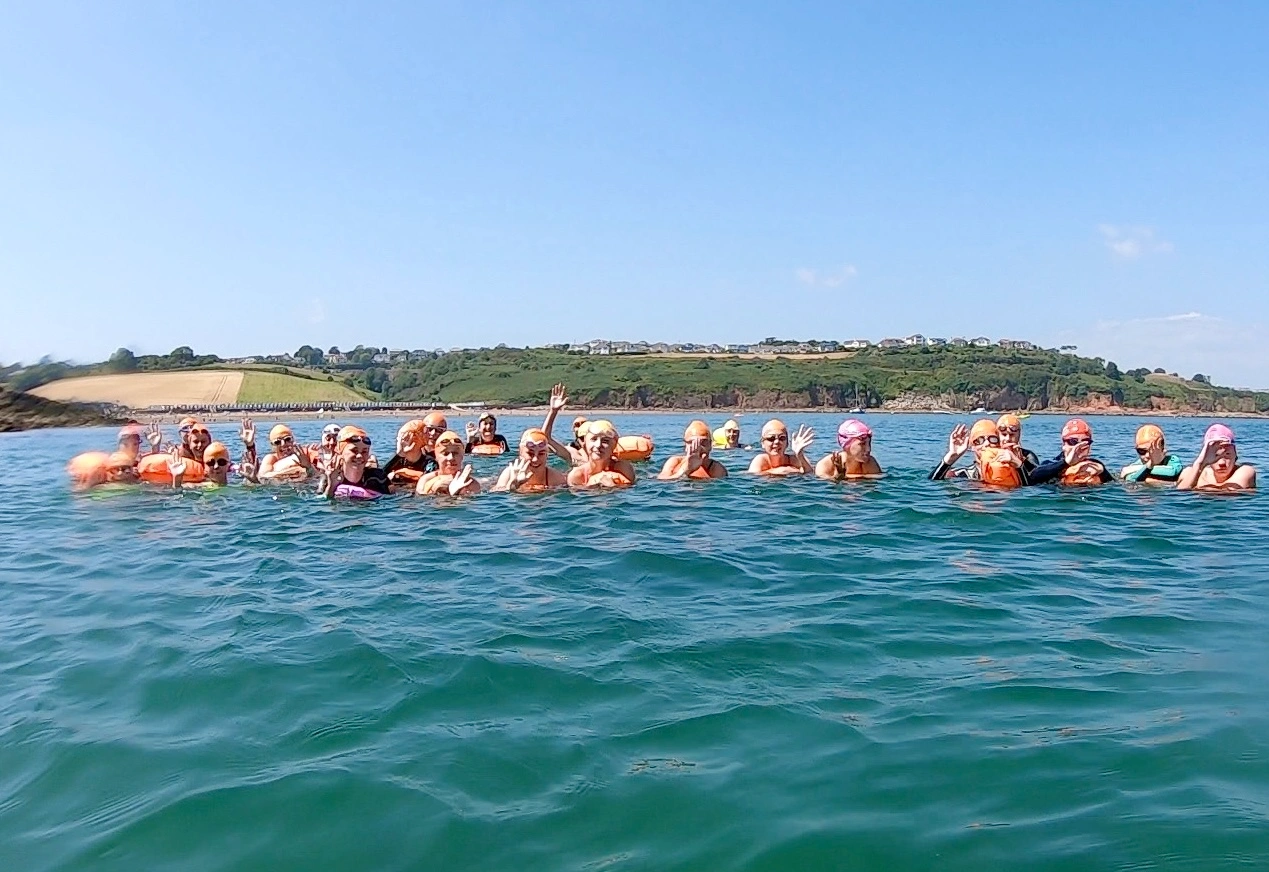
Taunton Preparatory School has built one of the country’s most striking youth open-water swimming programmes, with pupils taking on Channel relays, Solent crossings and cold-water training under the guidance of coach Hamish McCarthy. Ben Hooper reports on how ordinary schoolchildren are being prepared for some of Britain’s toughest open-water challenges
There are, I should think, easier ways to build confidence than asking children to swim through cold, dark, moving water.
At Taunton Preparatory School, however, open-water swimming has become part of school life. What began as a long-distance swimming club in 2015 has grown into a serious open-water swimming programme built on training, safety, teamwork and a clear belief that children can do much more than they often imagine.
Since 2016, pupils from the school have completed 13 English Channel relay swims, crossed the Solent with 36 swimmers, undertaken three team swims around Jersey and raised close to £100,000 for charity.
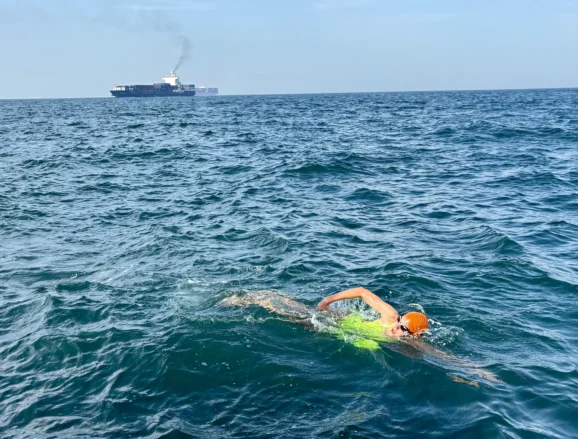
The numbers are impressive, but they are not really the point. The more interesting story is how ordinary pupils, many of whom do not come through elite swimming clubs, are being taught to take on extraordinary endurance challenges in the sea.
Some arrive barely able to swim four lengths of front crawl. Over time, through early pool sessions, sea training, cold-water acclimatisation and careful coaching, they learn not only to swim further, but to manage fear, fatigue, discomfort and doubt in the process.
The programme is led by Hamish McCarthy, whose approach is rooted in preparation, discipline and trust.
“To stand on the back of our Channel pilot boats, Sea Satin or Gallivant, at night waiting for the ‘Standby Go’ order takes courage; taking the leap into the dark takes confidence. In most children, this confidence is built, not born,” he tells me.
“Developing self-confidence is an integral part of every swimming training session I lead, and it is an incremental process. Training the physical component through sets, drills, and conditioning is, in many ways, the easier part. Developing the moral component is far harder, and it is where I focus most of my efforts.”
McCarthy’s work, then, is about producing stronger swimmers while helping children become calmer, braver and more dependable under pressure.
“My fellow staff and lifeguards, all of whom have been through the same process themselves, train alongside the swimmers in both the pool and the sea, assist onboard the safety boat, witnessing the children’s reactions to situations in real time and sharing the adventure,” he explains.
“This is vital in helping us assess their confidence, resilience, and readiness whilst leading by example. It is also what builds trust: trust in themselves, trust in the staff, and trust in the process.”
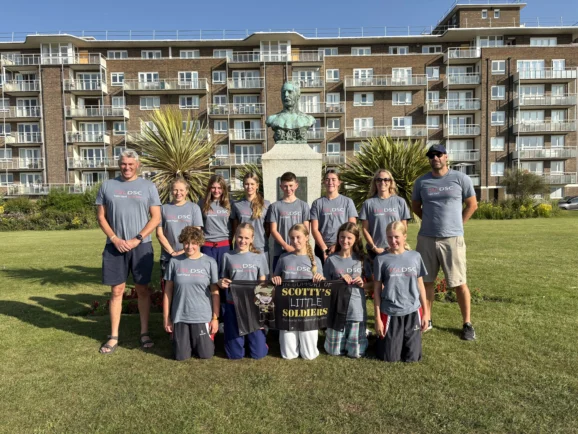
The idea that confidence can be trained runs through the whole programme, Hamish says.
“Strong teams build one another up. That is what we do here, from the headmaster to the youngest swimmer. It is what makes the ordinary, extraordinary.”
And extraordinary it is. Open-water swimming has become fashionable in recent years. It is often talked about as wellness, toughness or escape. For children, however, it represents a serious challenge.
Young swimmers need gradual exposure, close supervision, proper safety cover and capable adults who understand both the physical and psychological demands of the sport.
Professor Mike Tipton, one of the UK’s leading experts on cold water and extreme environments, has helped shape international thinking on drowning prevention and the body’s response to cold-water immersion. I trained with him myself while preparing for my own attempt to swim the Atlantic.
Studies by Tipton and colleagues found that children and adults cooled at similar rates in cold water, although acclimatisation may help children develop better insulation over time. The same research also found that children can be less aware that they are getting cold, even while their heart rate and breathing rise on entering the water. While swimming, the body cooling rate was measured at 2.5C per hour.
Those findings support the careful, gradual approach used at Taunton, where cold-water exposure is built up over time and swimmers are closely monitored by trained adults.
It is a crucial point for any youth open-water programme; children may not always know when they are getting too cold. Coaches and safety teams have to know what they are looking for.
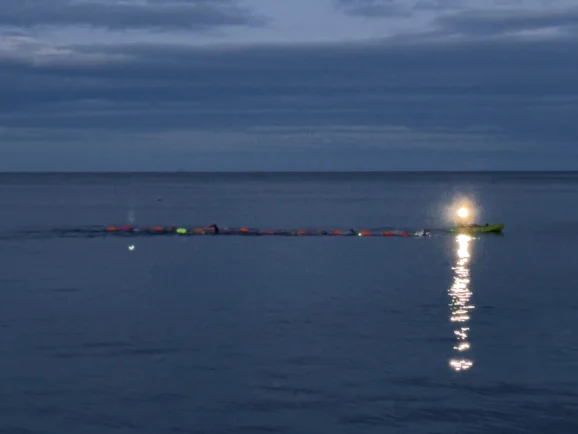
The physical challenge is only part of it. The younger swimmers also learn to wait, listen, follow instructions, trust others and keep going when conditions become difficult. And ‘difficult’ it is thanks to training sessions in the frigid waters off Clevedon in Somerset, Lyme Bay, Beer and the Jurassic Coast. These are beautiful places, but they are also changeable, cold and unpredictable. Tide, wind and temperature can alter the whole character of a swim.
“Our values are simple… Courage, (moral and physical) Loyalty, Integrity, Discipline, Respect for others Selfless commitment,” McCarthy says.
Unlike many open-water swimming programmes, McCarthy’s isn’t built around children who arrive as experienced club swimmers. Many start with little confidence in the water, and some can barely manage four lengths of front crawl when they join. It makes the school’s record of Channel relays, Solent crossings and Jersey swims all the more striking.
The next chapter in the club’s history is even more ambitious. There is, I’m told, talk of “major challenges” in the year ahead including possible world record attempts.
Whatever comes next, McCarthy says the club’s purpose remains unchanged: “The Long-Distance Swimming Club is focused on what you can do, not on what you can’t. The ethos is about achieving great things together.”
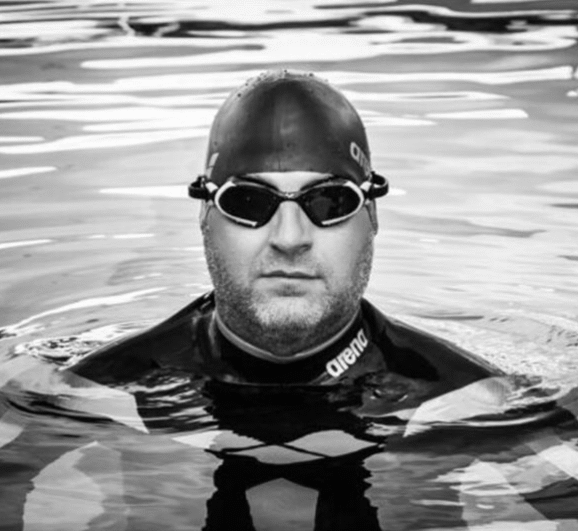
Ben Hooper made global headlines with his bid to swim every mile of the Atlantic Ocean – a challenge Sir Ranulph Fiennes OBE called “the last great bastion to be conquered.” His four-month, 2,000-mile route from Senegal to Brazil, known as Swim the Big Blue, was halted mid-Atlantic after his support vessel was damaged by storms. During the attempt, he also survived a near-fatal encounter with thousands of Portuguese Man O’War. He remains the only person with a WOWSA-verified attempt at the feat. His forthcoming project, Around the UK in 20 Wild Swims, will explore some of Britain’s most striking open-water locations.
READ MORE: The hidden cost of wild swimming: how our cold water craze is harming the planet. From neoprene wetsuits to car emissions and polluted rivers, the boom in wild swimming comes with an environmental toll. On World Environment Day, Ben Hooper reports on the carbon footprint, ecological risks and sustainability challenges of the UK’s fastest-growing fitness trend.
Do you have news to share or expertise to contribute? The European welcomes insights from business leaders and sector specialists. Get in touch with our editorial team to find out more.
Main image: Open-water swimmers train off the coast as part of Taunton Prep School’s long-distance swimming programme, which has seen pupils take on Channel relays, Solent crossings and Jersey swims under the guidance of coach Hamish McCarthy. Credit: Supplied