With demand locked in months ahead and expectations rising earlier each year, Christmas leaves little margin for error. Drawing on her experience running a fully booked estate, Deborah Lyon, The European’s Travel, Hospitality & Culture Correspondent, sets out ten practical lessons on planning, cost control and execution
When you’re running a hospitality business, the countdown to Christmas starts early. Bookings often come in more than a year in advance, as guests seek to ensure they get the particular cottage or house they love for the prized Christmas or New Year getaway slot. We are often completely booked up by September for this popular period. So it’s important to book early. Christmas and New Year in the Lakes is such a special time of year that it’s wise to get ahead of the curve and ink that stay in the diary well in advance.
Then, it’s down to us to make the estate as festive and jolly as possible for our guests. These days, clients expect Christmas decorations from late November. This has definitely changed over recent years, as 1 December used to always be the expectation for the festive launch. But now people come to the Lakes for early Christmas shopping at the beautiful artisan fairs and craft markets from November onwards, so we need to be Yule-ready far earlier than used to be the case.
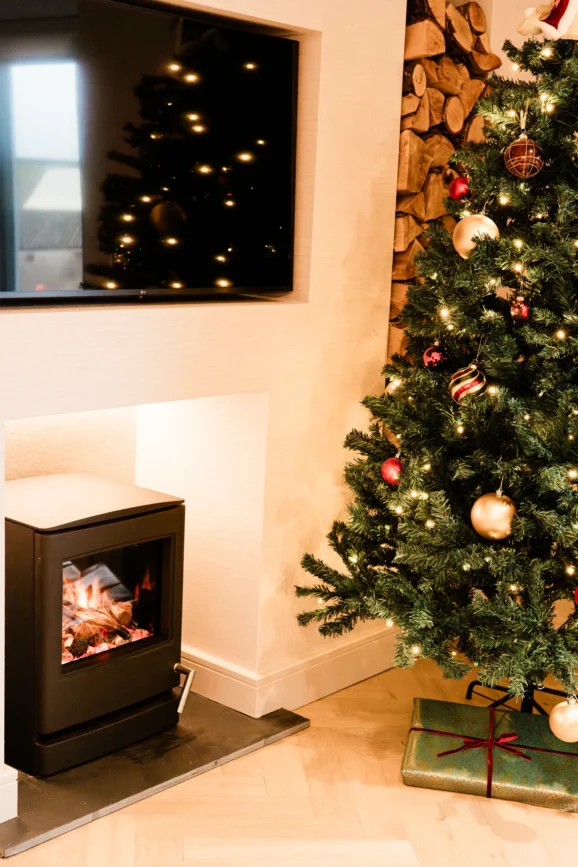
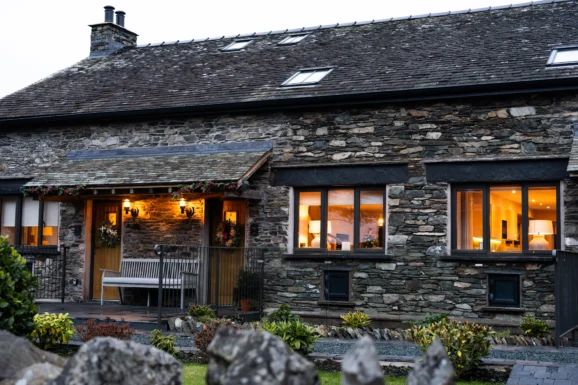
We begin by decking out each of our eleven properties with trees, wreaths and beautiful baubles in festive tones that reflect our branding. Everything is carefully stored away each year then painstakingly unwrapped, polished and hung on the trees, cottage by cottage, so that everyone can have their dream photo moment in a cosy Lakeland home.
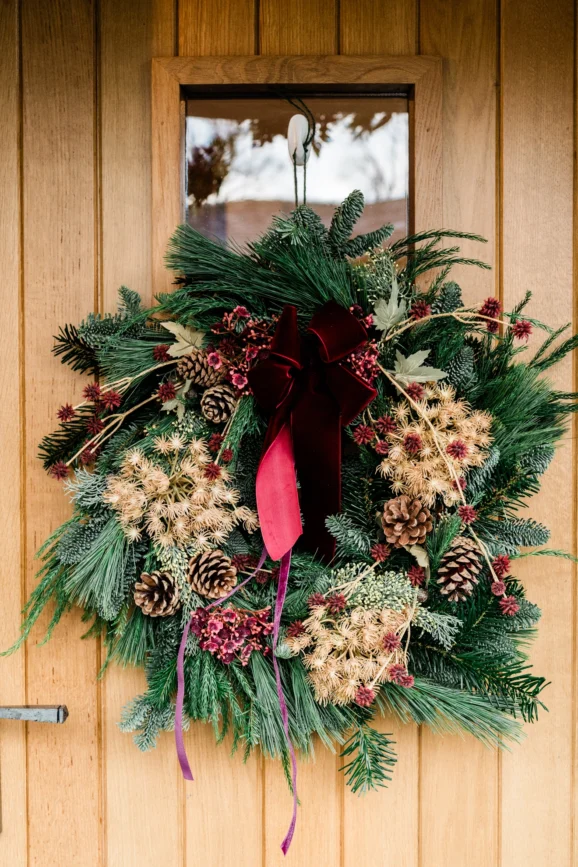
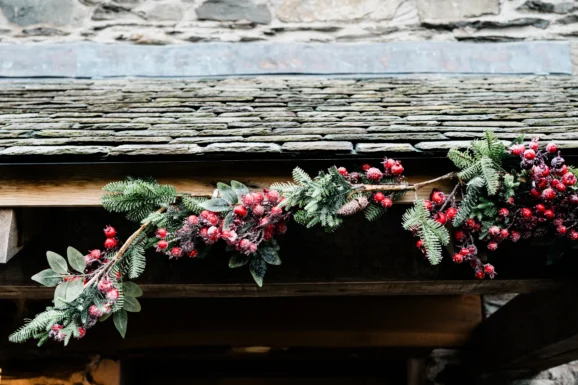
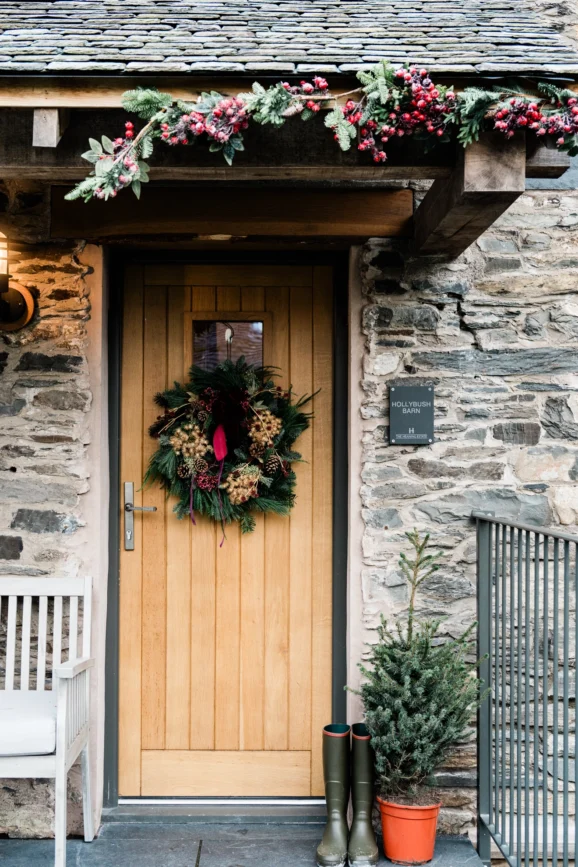
Then, it’s onto the exteriors. The local florist in Ambleside supplies our Christmas wreaths and every property’s door is festooned with its own arrangement. Windowsills and ancient stone lintels are dressed with berries and garlands to add an extra special touch. This year, we’ve gone for a mix of holly and a deep pink hydrangea – it looks spectacular and the colours lift the estate, from the slate greyness of late November through December’s dark mornings.
Our water feature, a beautiful bespoke commission in copper by local sculptor Andrew Kay, sits outside the main house, framing the dramatic fellside landscape behind. We dress its circular stone base in hundreds of twinkling white fairy lights which sparkle against the night sky. When the trickling water freezes solid, as it sometimes does in the harsh winters of the Lakes, it looks magically ethereal and is a firm favourite for photo ops with our guests.
Then, it’s onto the trees. Two three metre firs are delivered in late November on the back of a lorry and hoisted into place by our estate team. A cherry picker rises up and round and round the team go, entwining more fairy lights around the spiky green branches, until it really is beginning to feel a lot like Christmas here at The Heaning.
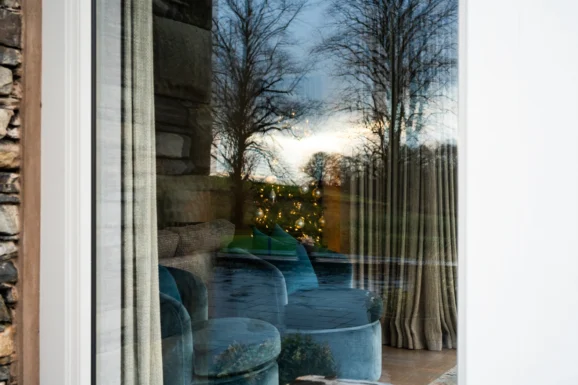
When everything is switched on at night, the estate becomes a welcoming beacon of festive cheer for guests and locals alike, standing out against the pitch-black Lakeland sky in the depths of winter.


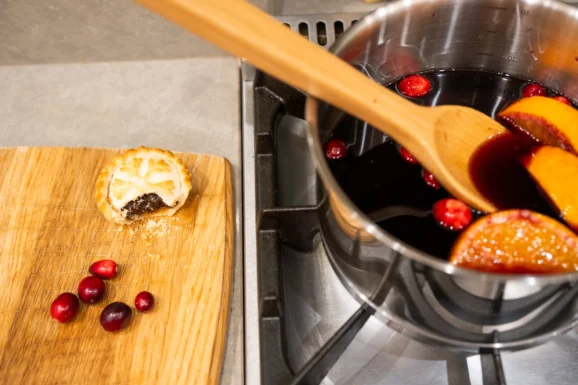

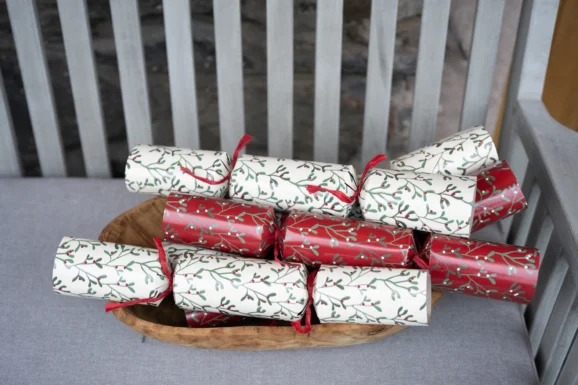
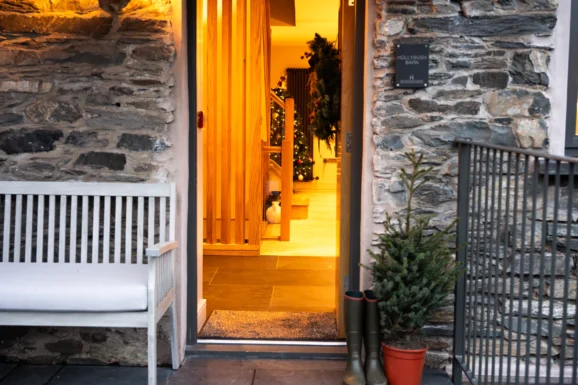
Guests who stay with us during the period are greeted with lots of treats – mince pies, fizz and little hampers of goodies, depending upon how close we are drawing to the big day itself. Each day our team stock up the larders from local suppliers to make sure everyone gets something extra special to remember their festive stay. We also have branded Heaning baubles for each guest to take a memory of the Lake District home.
To round it off, there’s our Heaning Carol Service, where we invite dozens of local friends, staff, suppliers and guests to join us for drinks and nibbles before a local band of players accompanies us to sing some of our traditional favourites. It’s a beautiful highlight to the season and a chance to catch up with and thank our supportive community.
New Year’s Eve often sees guests mingling and mixing in the beautiful shared external spaces to welcome in the first of January together. We love hearing about this impromptu building of friendships among strangers, which our visitors often post about on social media. What a way to start the year.
So, the winter season is a busy time in the hospitality industry, but a hugely rewarding one. Seeing the estate look so beautiful in all its Christmas glory is one of the highlights of the entire year. The tough part, of course, is taking it all down again… but that is the beauty of the cyclical nature of the changing seasons, nowhere more evident than here in the wild and stunning Lake District.
Here are 10 practical lessons we’ve learned from running Christmas at a fully booked hospitality estate. They focus on timing, consistency and operational control, and are intended to help newer operators avoid the most common festive-season mistakes.
How to Get Christmas Right in Hospitality
1. Treat Christmas as a long-lead trading period
Festive demand is locked in far earlier than most operators expect. Premium dates are often sold more than a year in advance, which means pricing, availability and capital commitments need to be decided well ahead of time. Leaving these decisions late compresses margin and limits flexibility.
2. Assume guest expectations will keep moving earlier
Seasonal delivery now begins in November rather than December. This is driven by retail behaviour, destination travel and social media visibility. Operators should plan for a longer festive window and budget accordingly, rather than treating early demand as an anomaly.
3. Standardise seasonal presentation across the estate
Consistency matters so much more than cheap novelty. Guests expect each property to reflect the same level of care and identity. Reusable, well-catalogued decorations reduce waste, control cost and ensure quality remains predictable year on year.
4. Build reliable local supply chains before peak season
Florists, food producers and specialist trades are under pressure in December. Securing local suppliers early improves resilience and reduces last-minute compromises. Long-term relationships matter more than spot pricing during peak demand.
5. Plan exterior installations as operational projects
Large trees, lighting and exterior features require equipment, trained staff and weather contingency. These should be scheduled like any other technical operation, with clear timelines and safety oversight, rather than treated as cosmetic add-ons.
6. Design guest ‘extras’ with discipline
Festive welcome packs and added touches are valuable, but only if they are scalable and consistent. Clear rules around timing, content and sourcing prevent generosity from turning into operational drift.
7. Use the season to reinforce brand memory
Small branded items or distinctive local elements help anchor the stay in guests’ long-term memory. The aim is recognition and recall, not extravagance.
8. Factor community engagement into the business model
Seasonal events that include staff, suppliers and neighbours strengthen relationships that pay dividends well beyond December. In rural hospitality, community goodwill supports recruitment, reliability and reputation.
9. Expect informal guest interaction and plan for it
Shared spaces tend to come into their own over Christmas and New Year. Layout, lighting and access should encourage interaction without creating management or security issues.
10. Review January as carefully as December
The post-Christmas period is when operational lessons become clear. What worked under pressure, what failed, and what created unnecessary cost should all be documented while fresh. Christmas exposes systems more honestly than any other trading period.
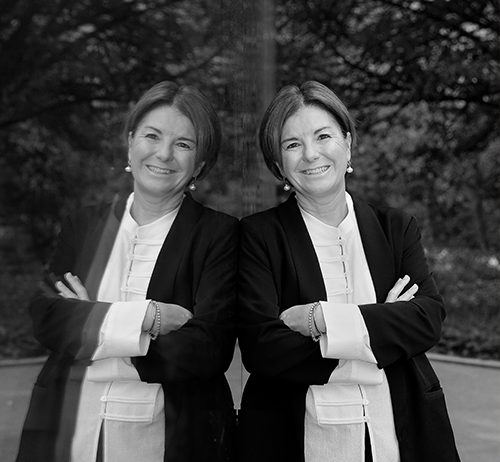
Deborah Lyon is an entrepreneur and writer based in the Lake District, with a background in financial communications. She runs a hospitality business on the shores of Windermere alongside her editorial work, and writes on the commercial and operational realities of travel, hospitality and British heritage. She is the author of Lake District Unlocked and the children’s novel Timewaif.
READ MORE: ‘Confidence holds in European hospitality, but skills and tech gaps persist‘. Booking.com’s fifth European Accommodation Barometer reveals a sector broadly confident ahead of the 2025 peak season, but facing widening disparities in training capacity, recruitment capabilities and digital uptake.
Do you have news to share or expertise to contribute? The European welcomes insights from business leaders and sector specialists. Get in touch with our editorial team to find out more.