A US company has successfully landed a spacecraft on the moon, paving the way for mankind’s exploration of deep space
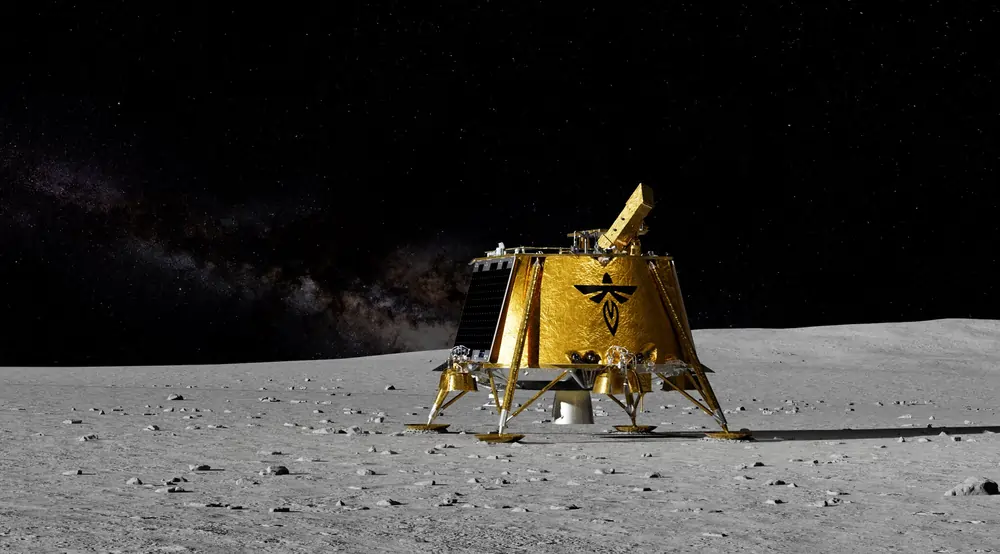
Firefly Aerospace’s Blue Ghost touched down at 8.34am UK-time on Sunday on a volcanic plain called Mare Crisium, or The Sea of Crises, near a solitary lunar mountain called Mons Latreille.
The robotic lander autonomously navigated the uneven, pockmarked surface to land within just 100 metres of its target, slowing from thousands of miles an hour to just two.
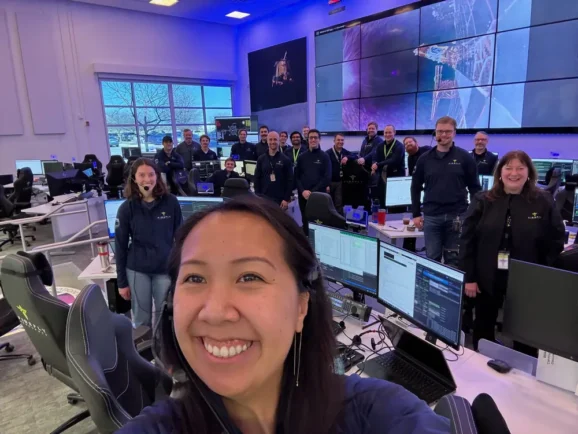
As it touched down, cheers erupted at mission control in Austin, Texas, after the flight controller announced, “We’re on the moon!”.
The mission, called ‘Ghost Riders in the Sky’, formed part of a $2.6bn Nasa partnership that aims to support its Commercial Lunar Payload Services (CLPS) initiative to return astronauts to the moon.
It launched on 15 January aboard a SpaceX Flacon 9 rocket, obtaining spectacular video footage and pictures of Earth and the moon on its 45-day, 2.8million-mile journey.

Jason Kim, CEO of Firefly Aerospace, suggested it was now only a matter of time before mankind ventured deeper into space.
“Firefly is literally and figuratively over the Moon,” he said.
“Our Blue Ghost lunar lander now has a permanent home on the lunar surface with 10 NASA payloads and a plaque with every Firefly employee’s name.
“This bold, unstoppable team has proven we’re well equipped to deliver reliable, affordable access to the Moon, and we won’t stop there.
“With annual lunar missions, Firefly is paving the way for a lasting lunar presence that will help unlock access to the rest of the solar system for our nation, our partners, and the world.”
Blue Ghost is the second privately funded craft to land on the moon – but the first to stay upright.
Houston-based Intuitive Machines’ mission – the first since the crewed Apollo 17 mission of 1972 – ended early after its lander toppled over in 2024.
Blue Ghost will now begin surface operations and support several NASA science and technology demonstrations over the next 14 days – equivalent to a full lunar day.
Its tasks include subsurface drilling, sample collection, X-ray imaging, and dust mitigation experiments.
On March 14, it also hopes to capture high-definition imagery of a total eclipse when the Earth blocks the sun above the Moon’s horizon.
And two days later, on March 16, Blue Ghost will film the lunar sunset, providing data on how lunar dust levitates and creates a lunar horizon glow – a scene first documented by the Apollo astronaut Eugene Cernan.
“With the hardest part behind us, Firefly looks forward to completing more than 14 days of surface operations, again raising the bar for commercial cislunar capabilities,” Shea Ferring, Chief Technology Officer at Firefly Aerospace, added.
“Just through its transit to the Moon, Firefly’s mission has already delivered the most science data to date for the NASA CLPS initiative.
“CLPS has played a key role in Firefly’s evolution from a rocket company to a provider of launch, lunar, and on-orbit services from LEO to cislunar and beyond.
“We want to thank NASA for entrusting in the Firefly team, and we look forward to delivering even more science data that supports future human missions to the Moon and Mars.”
Images and video courtesy Firefly Aerospace/SpaceX