As geopolitical tensions, price shocks and rising electricity demand continue to expose the fragility of Europe’s energy system, solar power, battery storage and flexible grids are becoming central to the continent’s economic resilience and energy security, argues Sarah Hommel de Mendonça
Europe’s energy supply is under pressure. Price shocks, geopolitical conflicts, rising demand for electricity and competition for industrial value creation show that we need to rethink supply security. It is not just power plant capacities that count: The system must keep costs affordable, reduce dependencies and provide electricity when households, companies and industry need it.
These are precisely the issues that will be discussed at The smarter E Europe in Munich in June. Europe’s largest alliance of exhibitions for the energy industry shows how photovoltaics, battery storage, grids, charging infrastructure, energy management and flexible consumers have to work together to turn renewable generation into a resilient energy system. The study Solar+: An EU Pathway to Achieve Renewable Targets, Price Affordability, and Energy Security by SolarPower Europe provides the data to prove that solar and storage are not just technologies for the energy transition — they are the building blocks for Europe’s resilience.
Europe’s vulnerability in numbers
As long as fossil fuels dominate most of our electricity generation and determine its price, Europe will remain vulnerable. Having to import fossil energy carriers makes countries dependent on markets which they cannot properly control. At the same time, electrification, digitalisation, heat pumps, electromobility and industrial processes are driving electricity demand. SolarPower Europe expects the EU’s hunger for electricity to grow to over 3,000 terawatt hours by 2030.
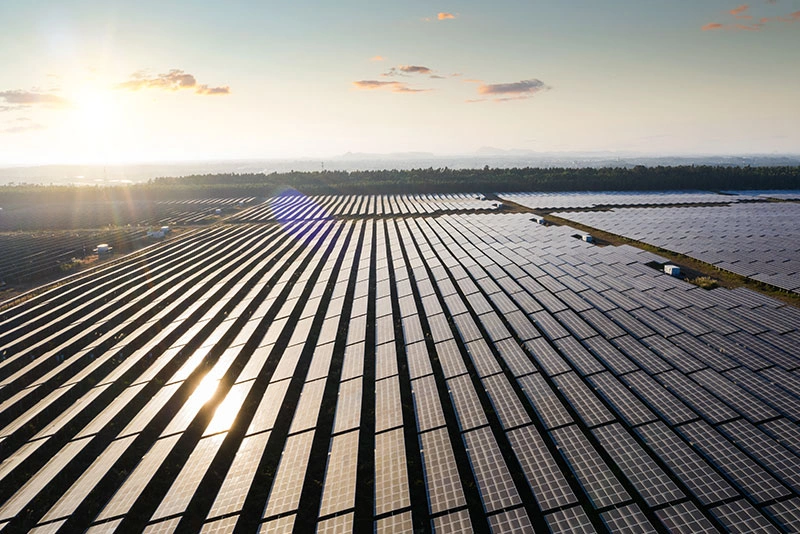
In the study’s Solar+ scenario, which projects a faster deployment of solar energy and analyses its benefits, this growth boosts the system’s robustness rather than presenting a risk. Renewable energies would meet 68 percent of the EU’s electricity demand and solar energy would become the largest single source of electricity, covering more than a quarter of consumption. The installed solar capacity would increase to 732 gigawatts AC by 2030. Meanwhile in the baseline scenario, the total installed solar capacity would be 594 gigawatts AC. The difference between these scenarios illustrates how fast solar energy could expand, provided approvals, grid access and market rules are aligned with the quick deployment of domestic renewable generation.
Storage systems turn solar power into a system resource
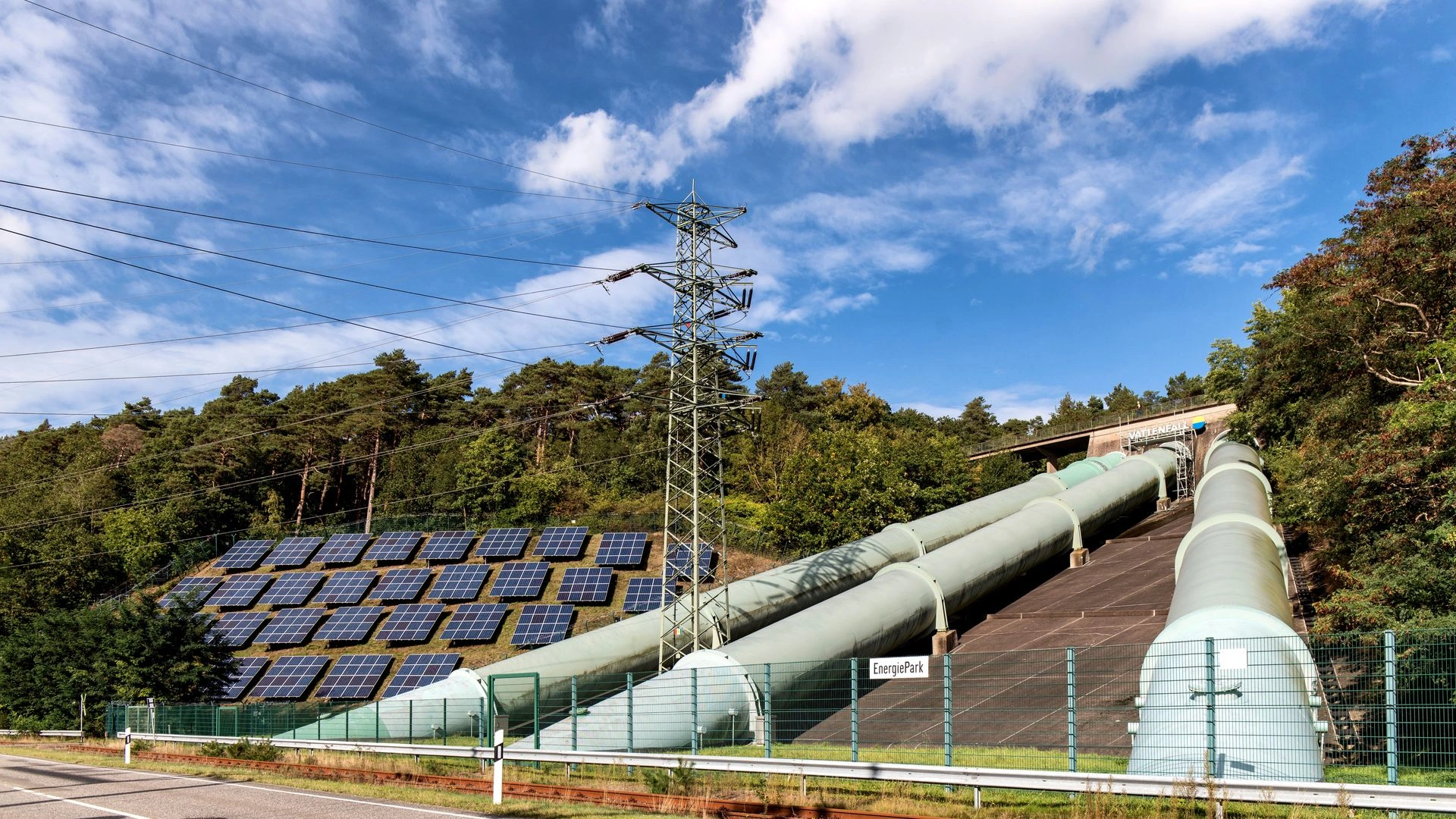
Resilience is not just a matter of ramping up generation, it needs flexibility. Battery storage systems make electricity generated during hours of high solar or wind production available at times when the demand is high, which levels out price peaks, reduces curtailment and relieves the load on grids. They make renewable energies easier to plan, reducing the need for fossil fuel power plants, which still determine electricity prices during large parts of the day and night.
The scope is considerable: In the Solar+ scenario, EU battery storage capacity will grow to 171 gigawatts of capacity and 598 gigawatt hours of electricity by 2030. This is a fourfold increase in output and an eightfold increase in storage capacity compared to 2025. In this scenario, the average storage duration would increase to 3.5 hours. This transforms the role of batteries from an add-on to specific projects to infrastructure elements for an electricity system that relies more heavily on domestic renewable sources.
Price stability strengthens the local economy
A resilient energy system must be affordable. The Solar+ analysis shows that an ambitious expansion of solar energy and storage can almost halve the operating costs of the EU electricity system by 2030. Compared to 2025, costs could fall by 55 billion euros per year in the Solar+ scenario, mainly because of the drop in fossil fuel power plant usage and the resulting drop in demand for fuel imports.
Wholesale prices would also change. In some EU markets, the average day-ahead price in the Solar+ scenario is 63.4 euros per megawatt hour, 14 percent below the 2025 level. At the same time, price spreads are expected to fall by 42 percent. For energy-intensive companies, data centres, charging infrastructure and electrified heating processes, this is more than just a statistical improvement — more predictable electricity prices create investment security. Intelligently combining production, storage and flexible demand helps protect against price shocks.
Less gas imports, more autonomy
Reduced reliance on gas is the key driver of greater resilience. According to SolarPower Europe, in 2025 solar power prevented gas imports worth 27.2 billion euros. In the Solar+ scenario, the annual savings could go up to 53.3 billion euros by 2030. Cumulatively, from 2026 to 2030, this would eliminate the need for 223 billion euros worth of gas imports for electricity generation.
This makes energy policy a strategy for strengthening Europe’s security. Every euro that is saved on fossil fuel imports can be invested in grids, storage, industrial electrification, digital control and European value creation. At the same time, the vulnerability to geopolitical shocks is mitigated. Solar energy is thus emerging as a technology that combines competitiveness and supply security.
Flexibility determines the pace
The key task at hand is integration. Networks need to be expanded, but also utilised more efficiently. To build more storage devices, we need reliable business models. Flexible consumers need to receive clear market signals. Electric vehicles, heat pumps, industrial plants and buildings can stabilise the system If rules, tariffs and digital infrastructure permit.
This is why SolarPower Europe speaks of a flexibility-first approach: To prevent new bottlenecks from arising, grid planning, market design and investment frameworks should include storage, demand-side flexibility and intelligent control. Considering the deployment of solar power and storage systems as a combined issue is key. Europe’s much-needed resilience relies on the combination of electrification and digital energy management.
The smarter E Europe 2026
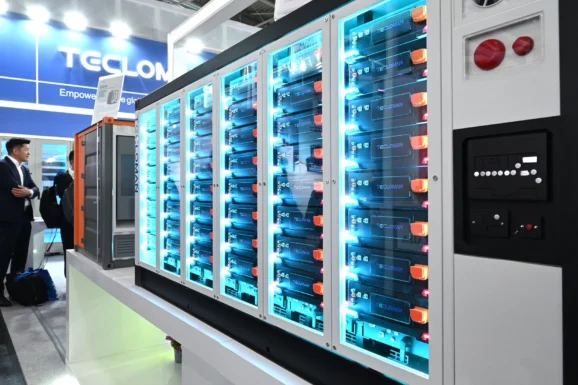
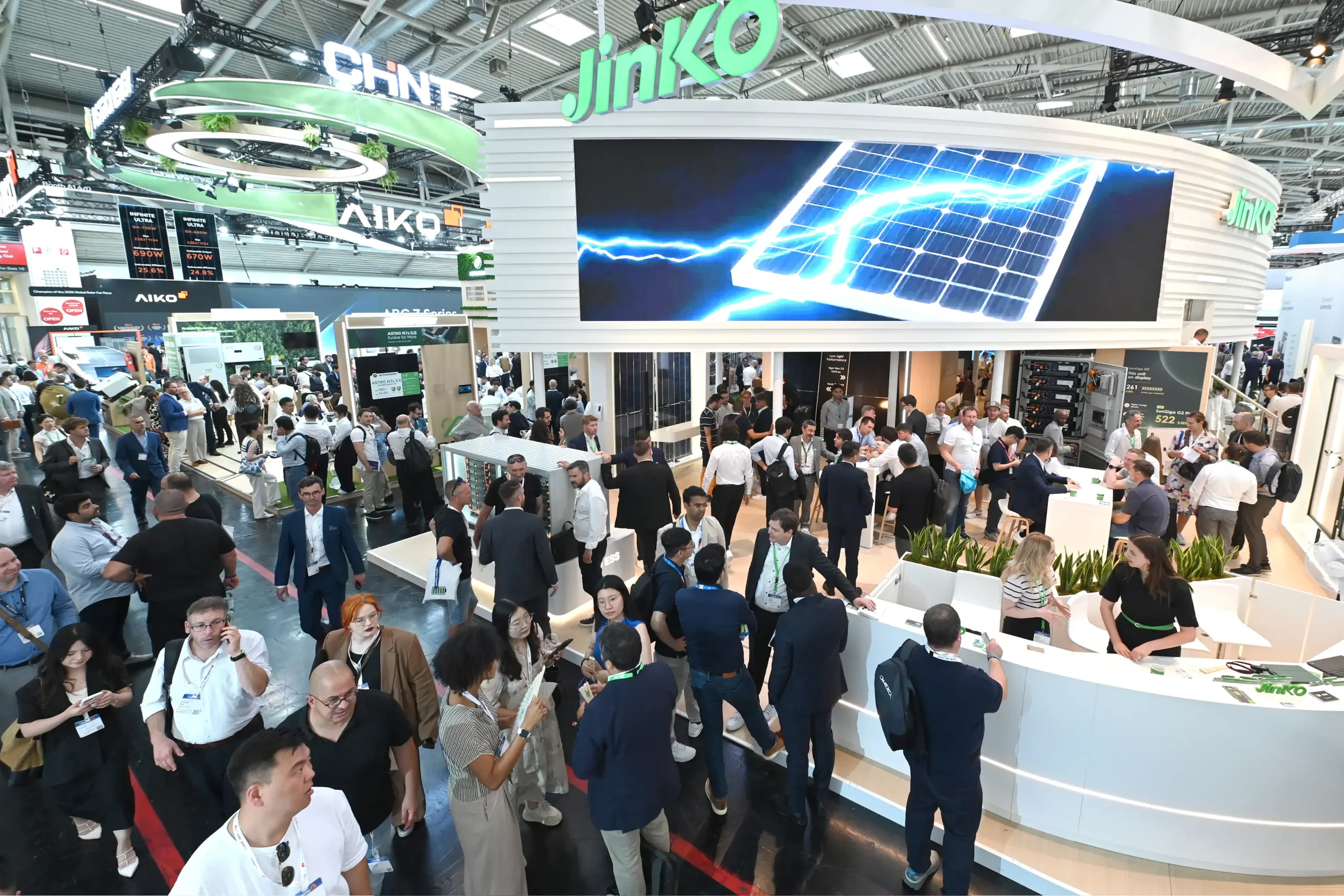
The smarter E Europe brings these topics together at Messe München from June 23–25, 2026. The four exhibitions Intersolar Europe, ees Europe, Power2Drive Europe and EM-Power Europe cover the key elements of an integrated energy system: photovoltaics, battery storage, charging infrastructure, electromobility, energy management, grids and solutions for buildings, industry and municipalities. Around 2,800 exhibitors and over 100,000 visitors are expected, and the exhibition space will cover 200,000 square metres.
Conferences and forums
The conferences will take place at the ICM – Internationales Congress Center München on June 22–23, 2026, before the start of the exhibition. The Intersolar Europe Conference, ees Europe Conference, Power2Drive Europe Conference and EM-Power Europe Conference address companies, investors, utility companies, project developers, policymakers and researchers. Around 2,600 participants are expected. In addition, the exhibition forums offer practical presentations on power plant technologies, prosuming, grid integration and flexible energy systems on all exhibition days. This makes Munich a meeting place for all those who want to make Europe’s energy supply more secure, cheaper and more resilient.
Further information
Produced with support from The smarter E Europe. Technologies, business models and digital solutions including bidirectional charging and hybrid PPAs will be presented at The smarter E Europe, Europe’s largest alliance of exhibitions for the energy industry, taking place from 23–25 June 2026 at Messe München.
To find out more about the exhibition and its programme, visit www.TheSmarterE.de
READ MORE: ‘Middle East tensions expose Europe’s energy vulnerability as flexibility reshapes clean energy investment‘. The latest tensions in the Middle East have delivered another warning to Europe about the fragility of fossil-fuel dependence and the strategic urgency of the energy transition. In this exclusive analysis, The smarter E Europe sets out why flexibility is becoming a key factor in future clean-energy investment.
Do you have news to share or expertise to contribute? The European welcomes insights from business leaders and sector specialists. Get in touch with our editorial team to find out more.