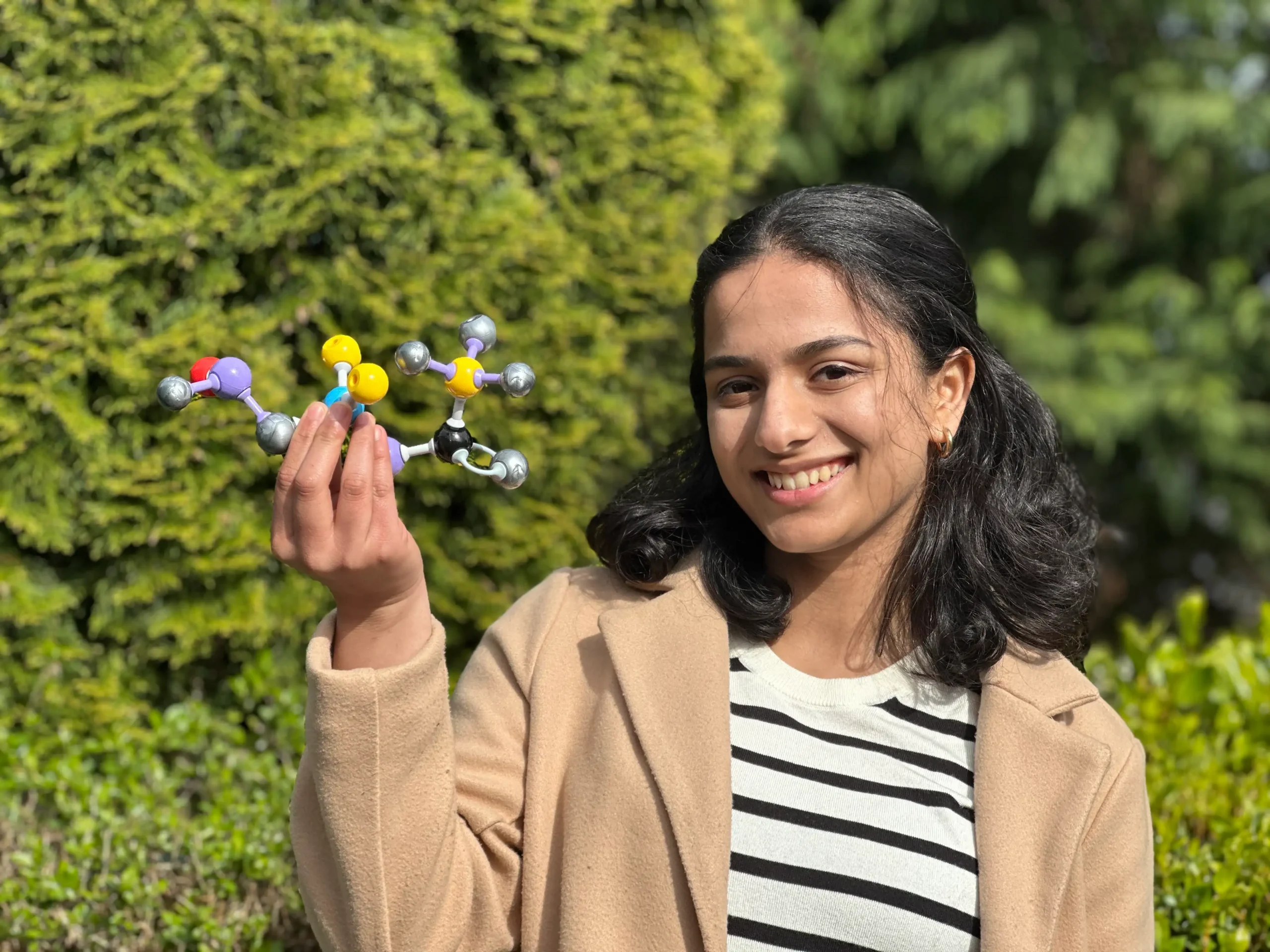
Arya Satheesh, 18, has been named European winner of The Earth Prize 2026 for Eco Purge, a biodegradable plastic prototype designed to release enzymes that help break down existing microplastic pollution
A teenager who invented a plant-based plastic to tackle microplastics has been crowned the European winner of the 2026 Earth Prize.
Arya Satheesh, 18, developed Eco Purge, a biodegradable plastic prototype designed to replace some everyday plastic while helping break down tiny plastic particles already polluting soil, fresh water and salt water.
She created the project while still at school, and has since worked with researchers at UCD Dublin, ATU Letterkenny and the BiOrbic Bioeconomy Research Centre.
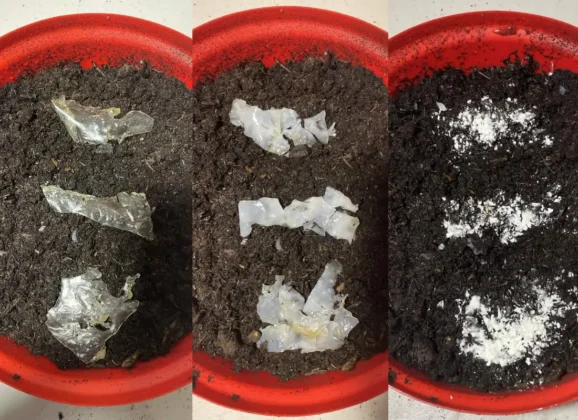
Unlike ordinary plastic, which can linger in the environment and break into tiny fragments, Eco Purge is designed to biodegrade safely while carrying enzymes inside the plant-based material.
The enzymes remain stable while the product is in use, then are gradually released as the plastic breaks down, allowing them to attack microplastics already present in the surrounding soil or water.
Arya developed Eco Purge after earlier work monitoring water quality showed that while microplastics could be detected, they were far harder to remove.
She will now receive $12,500 in prize funding to help develop the prototype for possible real-world use in products including packaging and compost bags.
Arya, who lives in Ireland, said: “Plastic pollution doesn’t just disappear, it breaks into tiny pieces that stay in our environment.
“I wanted to create something that could help tackle that problem directly. Eco Purge is designed to both replace plastic and help remove existing microplastics, and this is just the beginning, and I hope it can become a scalable solution that makes a real difference.”
The Earth Prize is an environmental competition for young people aged 13 to 19. It is run by The Earth Foundation, a Geneva-based non-profit founded during the School Strike for Climate movement in 2019.
Organisers describe it as the world’s largest environmental competition and “ideas incubator” for teenagers, offering mentoring, learning resources and shared funding to help young people develop practical environmental solutions.
Now in its fifth year, the prize says it has reached more than 21,000 students across 169 countries and territories and awarded more than $500,000.
Seven regional winners are being announced across North America, Africa, Asia, Central and South America, Oceania and Southeast Asia, Europe and the Middle East. Each winning team receives $12,500 to develop and implement its idea.
A public vote will decide the Global Winner, who is due to be announced on 29 May.
Peter McGarry, founder of The Earth Foundation, said: “The Earth Prize winners 2026 represent seven outstanding teams across seven global regions, each tackling environmental challenges with distinct and impactful solutions.
“Once again, these young innovators demonstrate that age is no barrier to meaningful change. Their work reflects a powerful combination of creativity, determination and a deep understanding of the communities they serve.”
The foundation said the prize was created to help young people move from concern about the environment to practical action.
Microplastics are tiny pieces left behind when plastic waste such as bags, bottles and packaging breaks apart. They have been found in oceans, rivers, soil, food and water, and are difficult to remove once they have spread.
According to EU-funded researchers, they are now so widespread they have been detected in the air people breathe, the water they drink and the food they eat.
Scientists are still trying to understand the long-term health risks, but recent European research has found early warning signs including inflammation, DNA damage and cellular stress after exposure to micro- and nanoplastics.
Researchers have also warned that the particles may act like a “Trojan horse” inside the body, picking up pollutants, heavy metals, bacteria or viruses from the environment and carrying them with them when they are inhaled or swallowed.
READ MORE: Mycelium breakthrough shows there’s mush-room to grow in greener manufacturing. With the Packaging and Packaging Waste Regulation set to tighten scrutiny of green claims, S.Lab’s mycelium-based packaging has become the first of its kind to gain TÜV Austria’s OK Home Compost certification.
Do you have news to share or expertise to contribute? The European welcomes insights from business leaders and sector specialists. Get in touch with our editorial team to find out more.
Main image: Irish student Arya Satheesh, 18, has been named European winner of The Earth Prize 2026 for Eco Purge, a biodegradable plastic prototype designed to help break down existing microplastic pollution. Credit: The Earth Prize