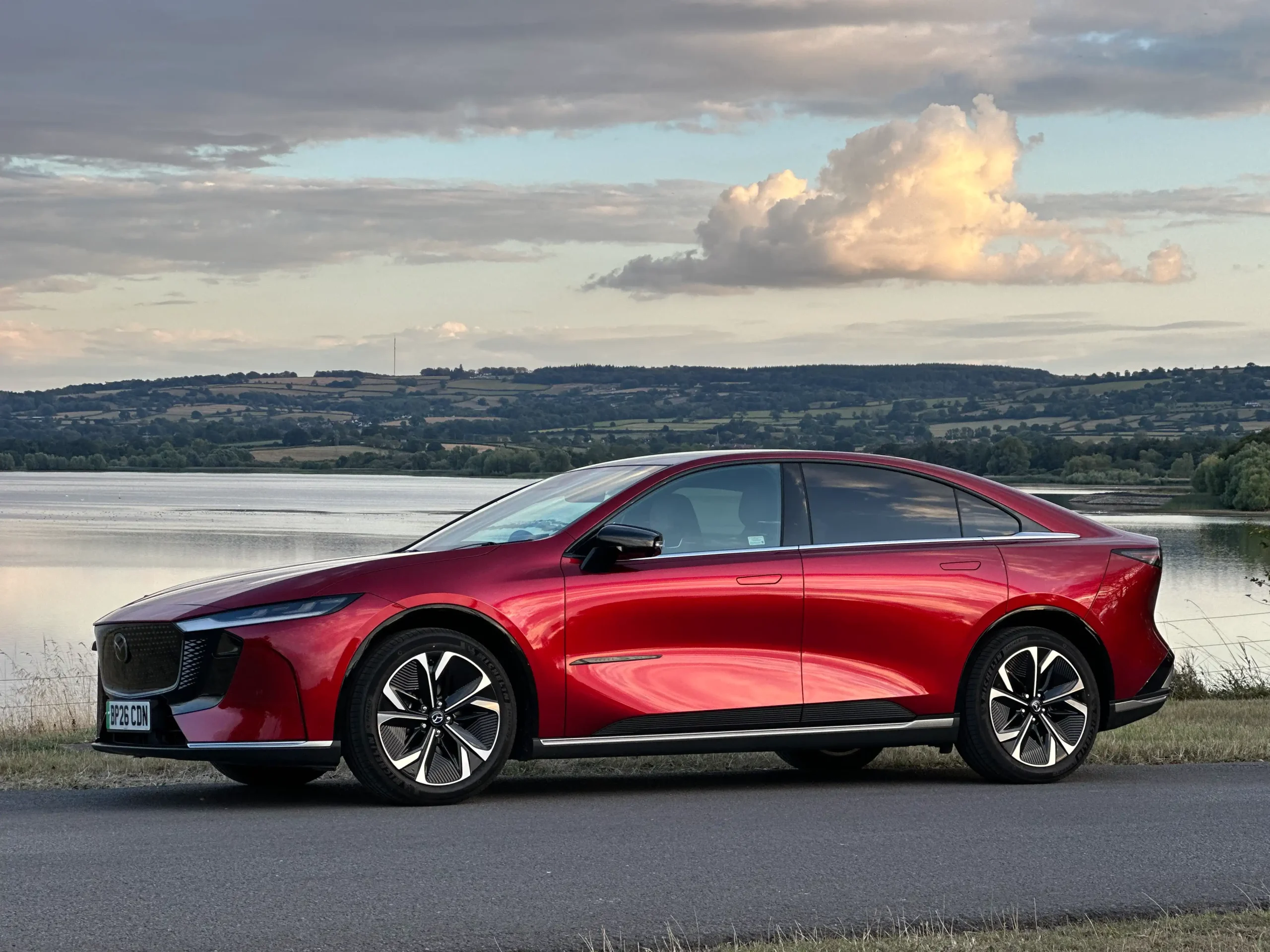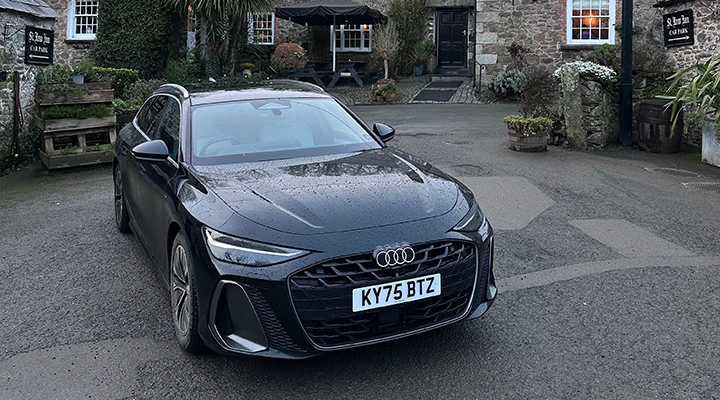
Motoring editor Mark G Whitchurch takes the 2026 Audi A6 Avant Hybrid to North Cornwall, pairing a springtime coastal escape with a close look at Audi’s refined new executive estate
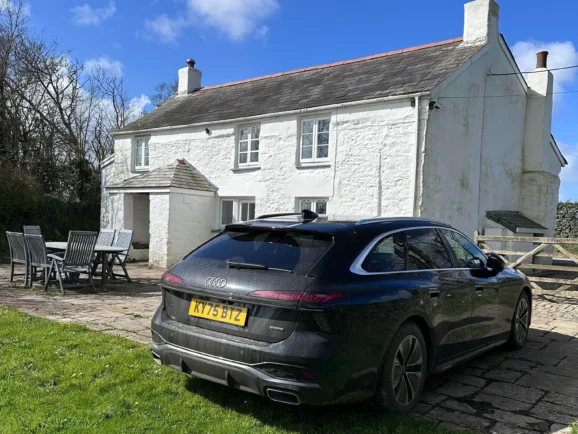
Cornwall in spring is a kind of soft awakening from the winter blues. The hedgerows thicken with new green, the air carries that unmistakable Atlantic salt, and the roads – those narrow, single-track lanes that meander like old smugglers tails – seem to breathe again after the winter. It was the perfect moment to test the new Audi A6 Avant Hybrid, a car on paper designed for long European journeys but equally perfectly suited to the intimate drama of the Cornish landscape.
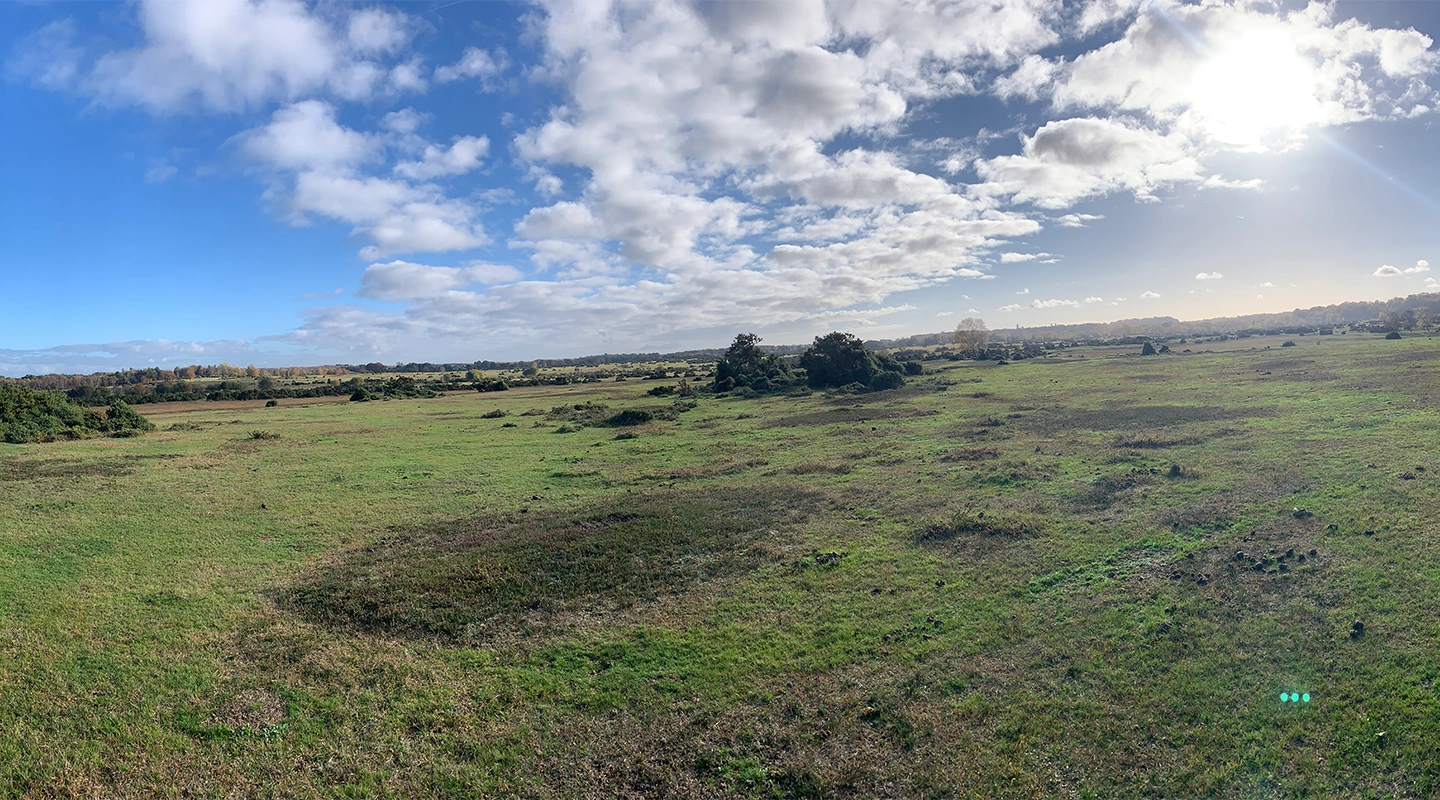
Leaving the A30 behind, the Audi A6 settled into its rhythm as we crossed the bleak and rugged expanse of Bodmin Moor. The hybrid system glided between electric and petrol power with a kind of quiet intelligence; on the long, rising straights, the petrol engine stretched its legs, while the tighter, slower sections through the moorland hamlets were handled almost entirely in electric silence. In reality you couldn’t tell the difference other than the graphics on the prominent central screen.
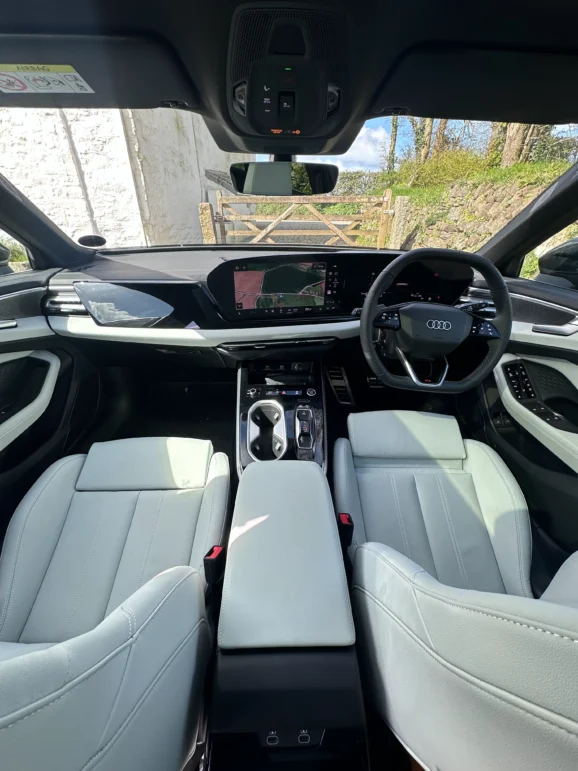
The sky, always a character in Cornwall, shifted between silver and blue always visible through the panoramic roof. The A6’s cabin felt like a travelling study: calm, uncluttered, and beautifully insulated from the world outside. Yet the moor still seeped in through the windows, through the light, through the sense of space. It was the perfect prologue to a long weekend of exploration.
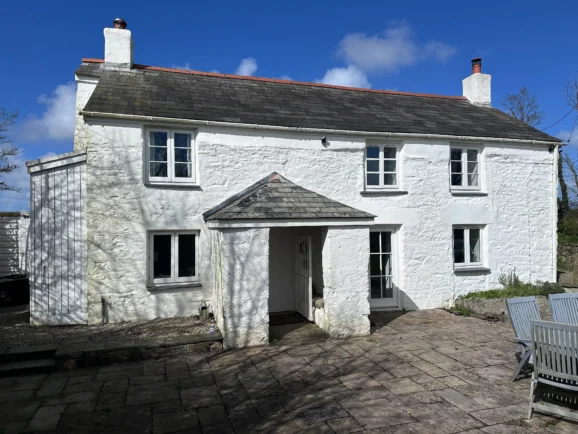
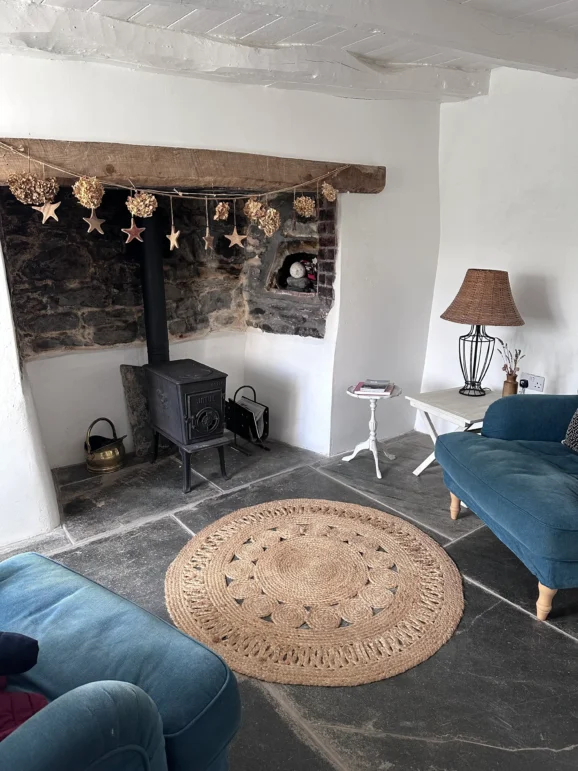
Our base was Bokelly Cottage in St Kew, a place that feels almost too idyllic to be real. Isolated from the world and tucked in amongst the rolling fields, its garden framed by mature trees and the soft chatter of birds returning for spring. Inside, it’s all warm, thick white washed walls, exposed timbers, and the kind of understated comfort that encourages you to exhale.
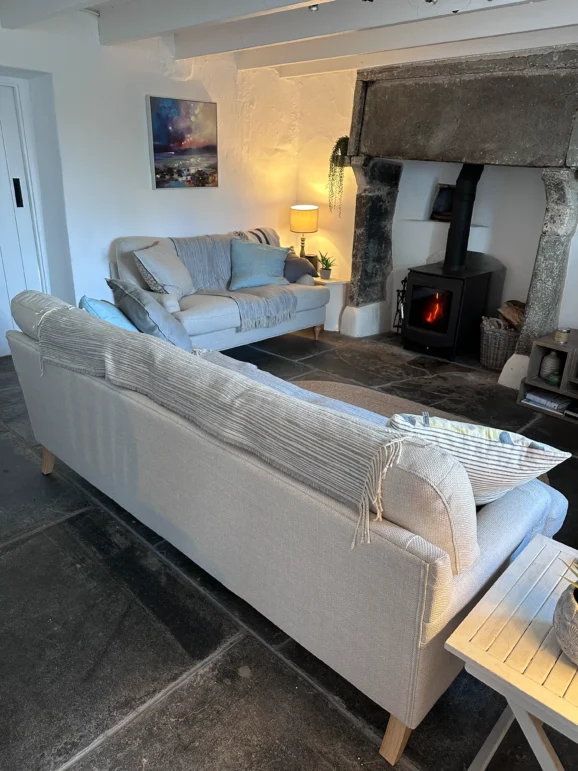
Evenings here became a ritual, a fire crackling in the log burner, relaxing music drifting through the rooms, a good book open on the sofa and the scent of woodsmoke mixing with the cool spring air from the slightly open window. The perfect antidote to the modern world. It was the sort of place where time stretches, where you find yourself reading for hours without noticing the light change.
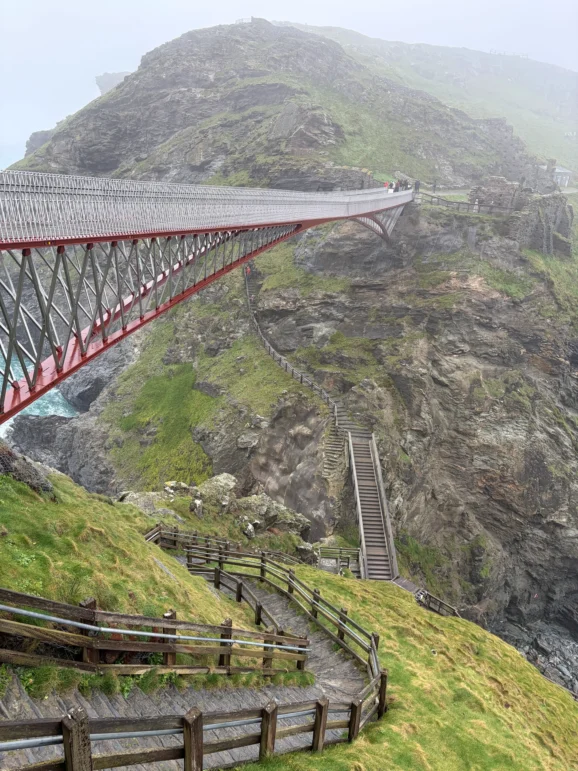
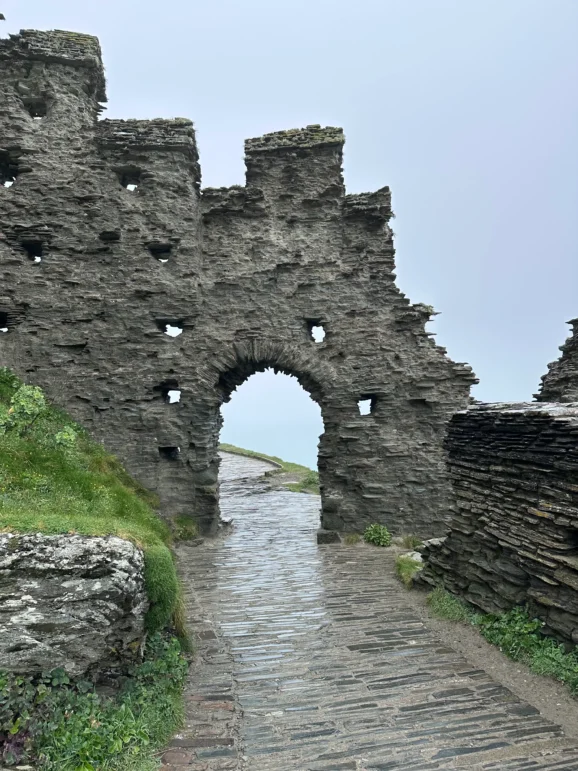
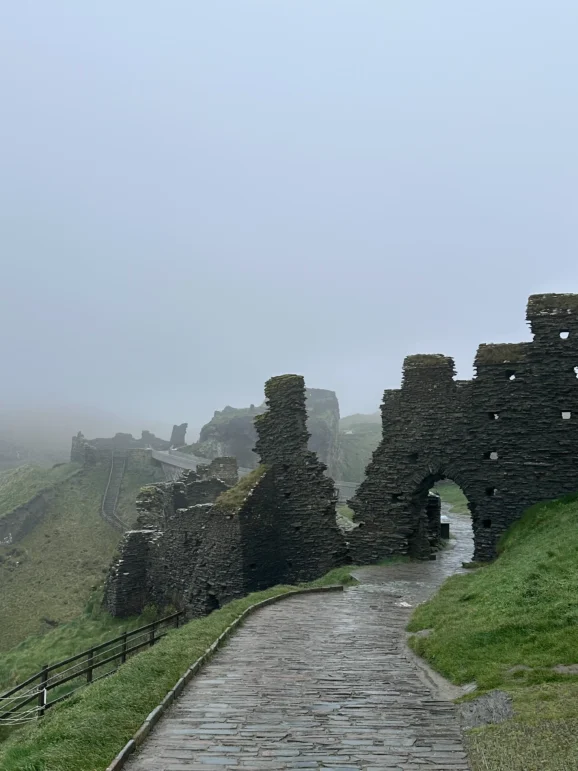
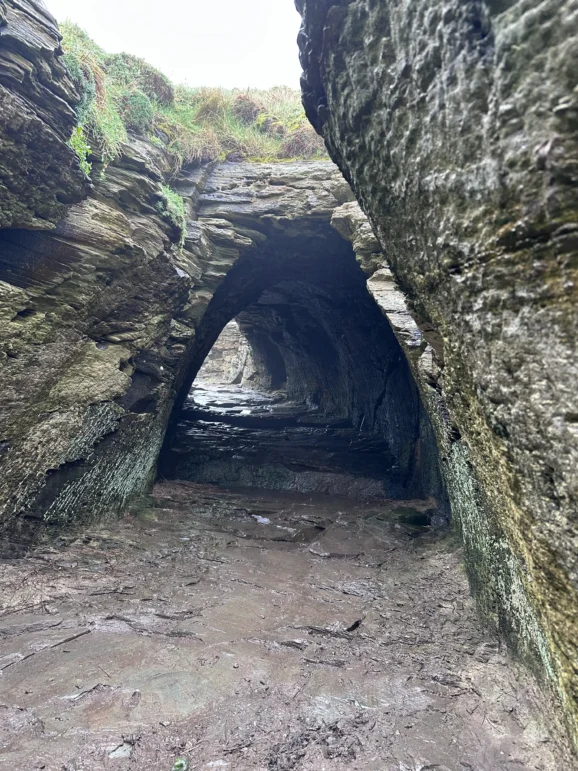
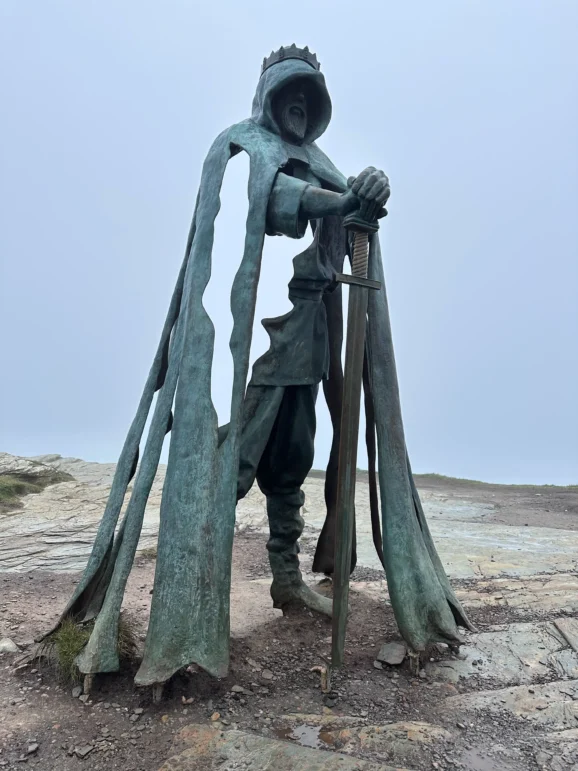
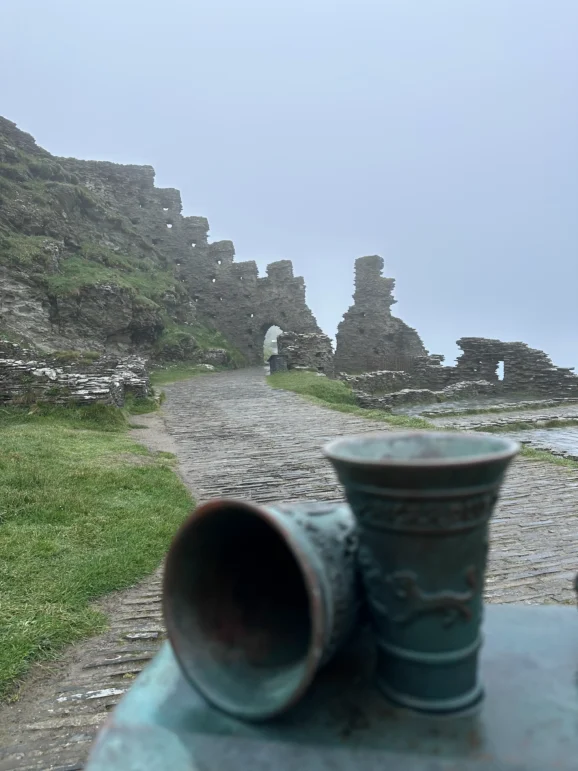
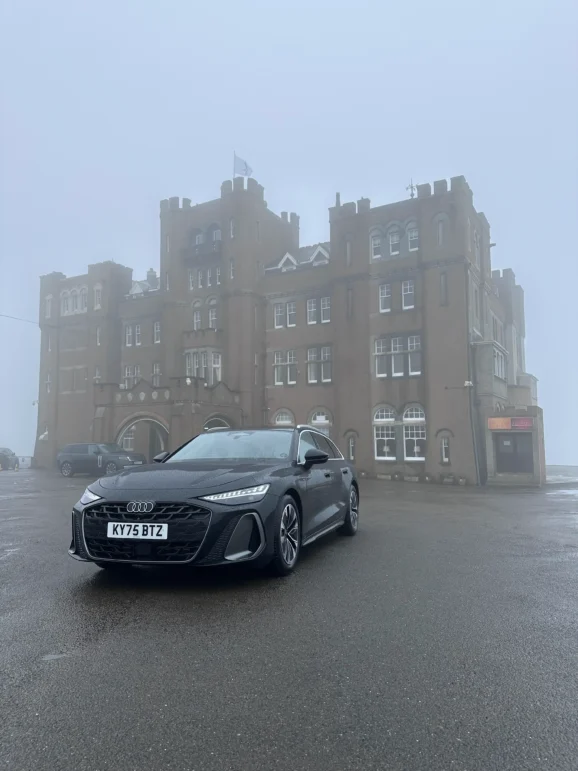
No trip to North Cornwall is complete without a pilgrimage to Tintagel Castle. We arrived early, the morning mist still clinging to the cliffs. The new footbridge–an elegant, modern span that reconnects the two halves of the medieval site emerged from the fog like something out of myth.
English Heritage’s work here is remarkable. Their conservation efforts have stabilised the cliffs, preserved the remaining structures, and created pathways that allow visitors to explore without damaging the fragile landscape. The interpretation is thoughtful, blending archaeology with storytelling, acknowledging the power of myth without sacrificing historical rigour.
As the sun finally broke through, the sea turned a deep, impossible blue. Gulls wheeled overhead. The castle walls warmed in the light. It felt like stepping into a story that had been waiting for us. Just up the hill stands Camelot Castle, a Victorian hotel with a personality as bold as its name. Built in 1899, it was intended as a grand statement overlooking the Atlantic, and it still carries that sense of theatricality. The lobby is a swirl of marble, sweeping staircases, and dramatic views.
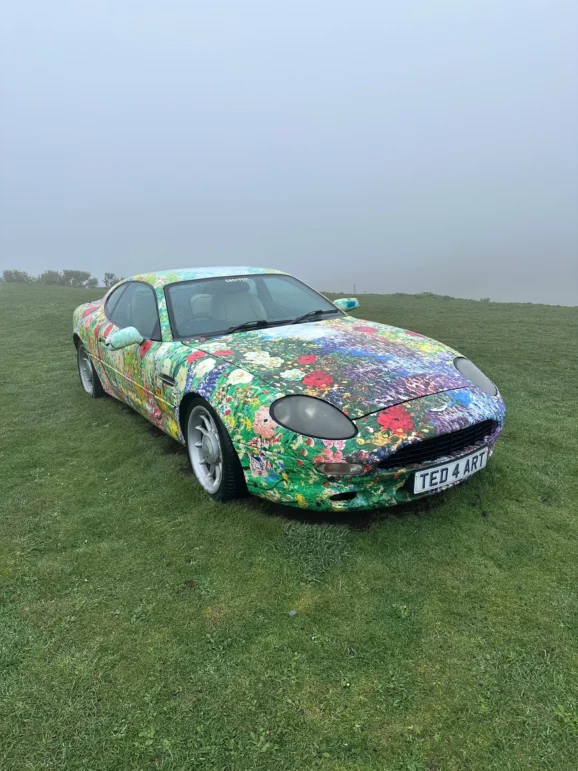
But the real surprise was meeting Ted Stourton, the resident artist whose work fills the castle. His paintings–abstract, luminous, often shimmering with metallic pigments–seem to capture the energy of the coastline itself. Stourton spoke with the enthusiasm of someone who sees art not as decoration but as a kind of spiritual technology. The Aston Martin DB7 turn art-car now part of the garden furniture spoke volumes!
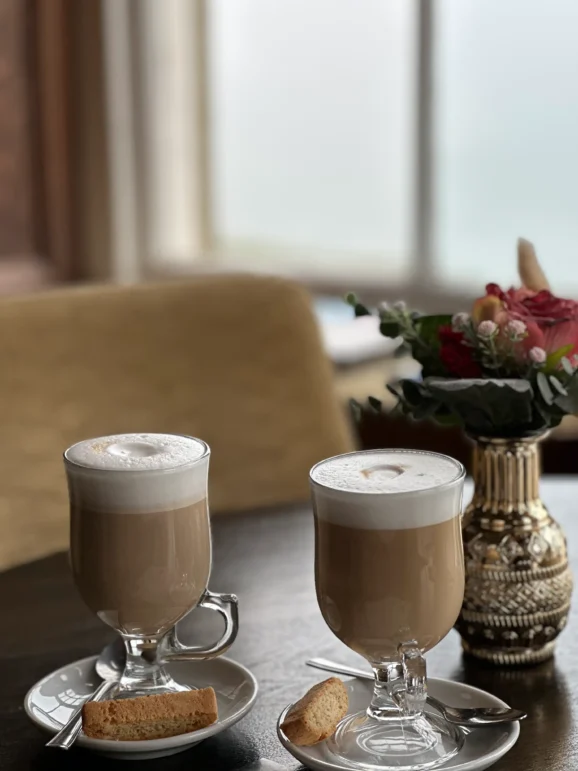
There’s something wonderfully eccentric about Camelot Castle: part hotel, part gallery, part dreamscape. The coffee was rather good too!
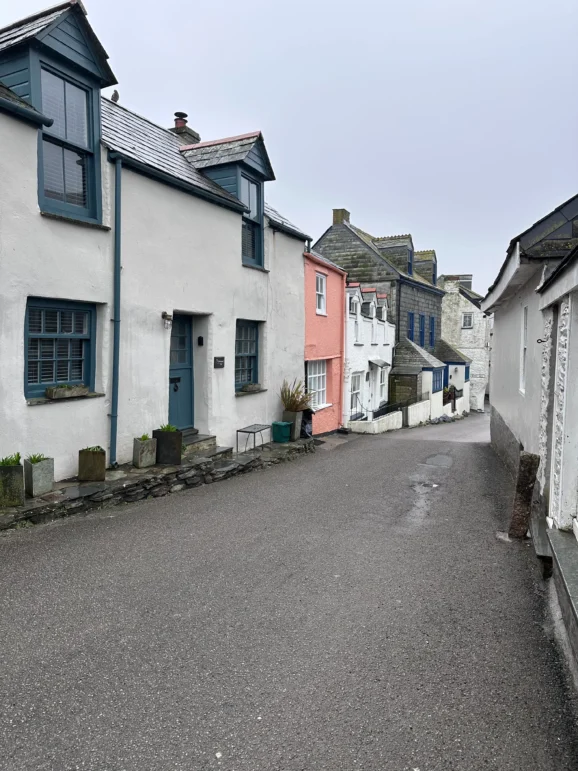
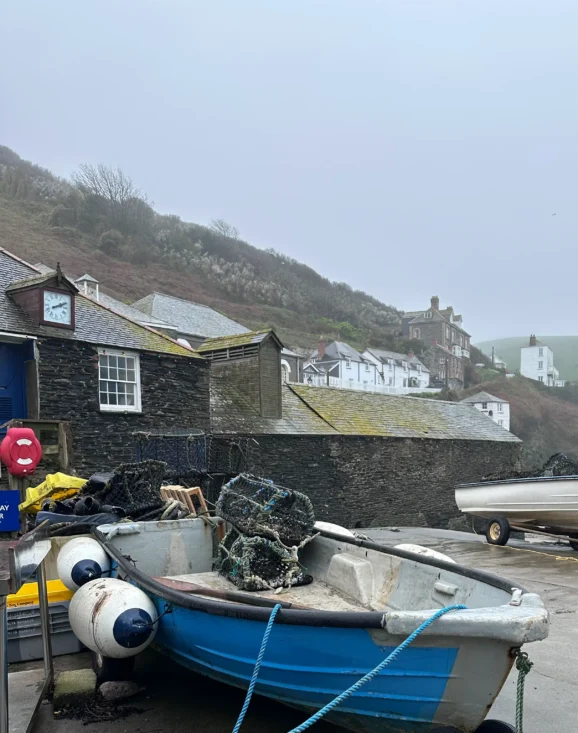
From Tintagel, the Audi A6 carried us smoothly along the coast to Port Isaac, the fishing village famous for its steep lanes, whitewashed cottages, and the television series Doc Martin. But beyond the fame, Port Isaac remains a working harbour, its boats bobbing in the tide, its fishermen hauling in crab and lobster as they have for generations.
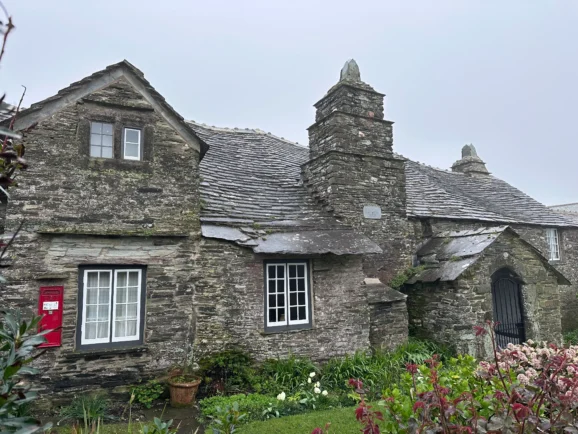
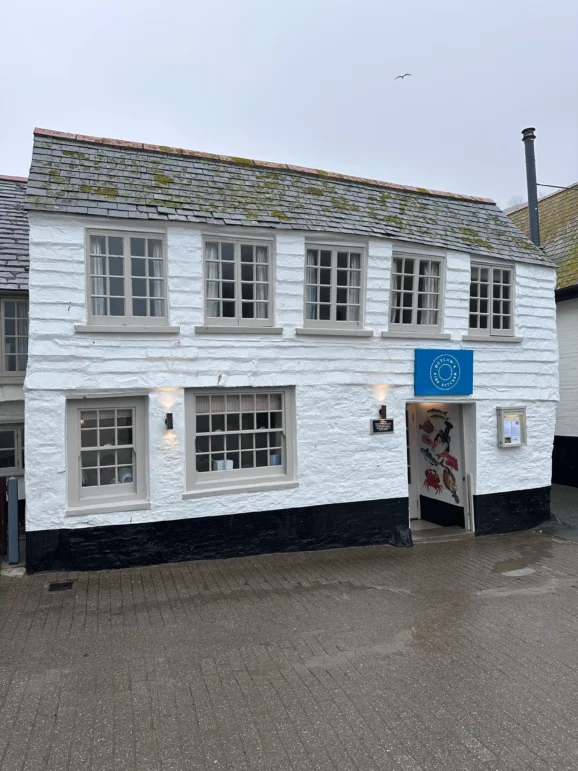
We wandered through the narrow streets–some barely wide enough for a single person–past boutique shops, bakeries, and houses that seem to lean conspiratorially toward one another. The harbour was alive with spring light, the water catching the sun in quicksilver flashes. There’s a timelessness to Port Isaac, a sense that life here moves to the rhythm of tides rather than clocks. In the nucleus of the harbour sits Nathan Outlaw’s Fish Kitchen, a tiny restaurant housed in a 15th century fisherman’s cottage. The space is intimate–stone walls, wooden beams, the faint scent of the sea drifting in whenever the door opens. It’s the perfect setting for Outlaw’s philosophy: simple, precise cooking that lets the fish speak for itself.
We chose the seven-course tasting menu, a procession of small plates that felt like a love letter to the Cornish coast. Cuttlefish Fritters with Rhubarb Ketchup, Cured Brill, Pistachio, Tarragon and Anchovy and Baked Disco Scallop with a Mushroom and Aubergine Curry were stand outs.
The wine pairing was a revelation, a 2024 Bedoba White Kakheti from Georgia, deep, textured, slightly tannic–that danced beautifully with the richer fish dishes. It was unexpected, bold, and exactly the kind of pairing that makes a meal memorable.
By the time dessert arrived, the harbour outside had fallen quiet, the tide creeping in under the moonlight. One of the most memorable meals in a very long time.
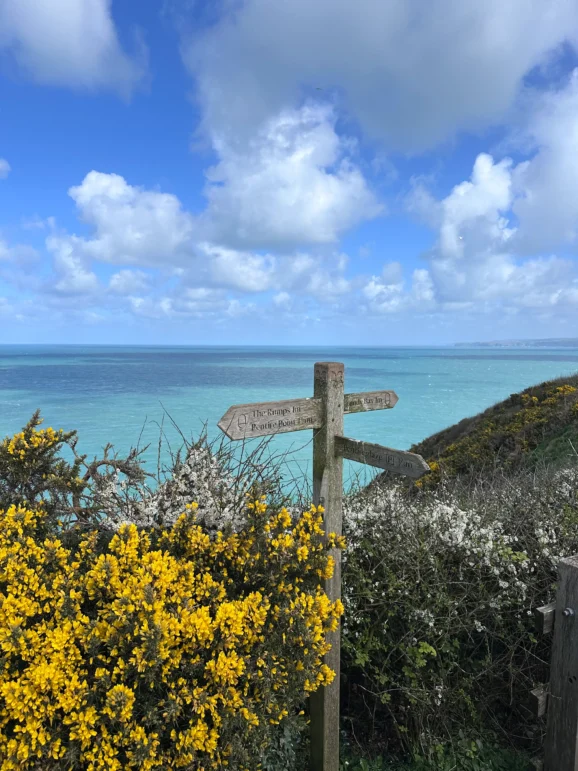
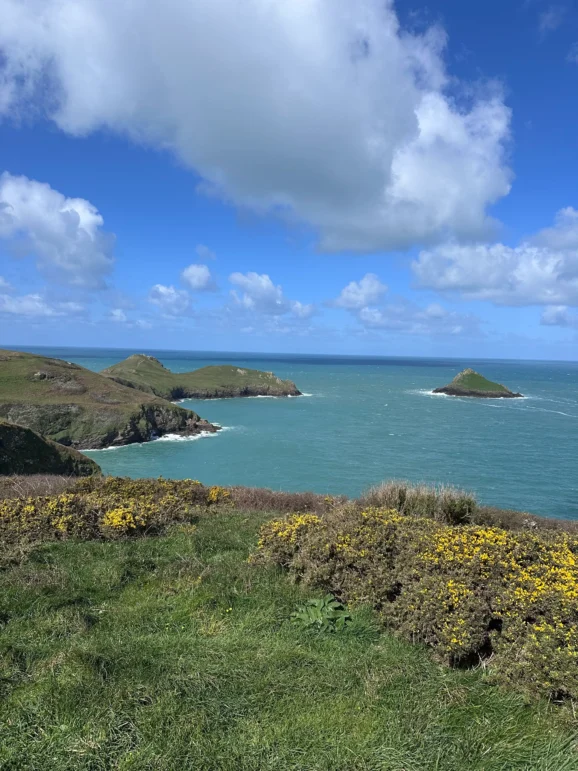
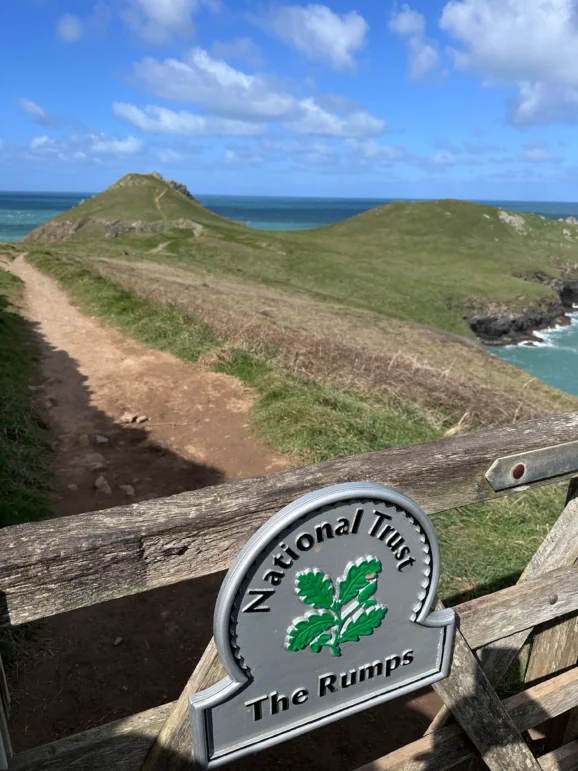
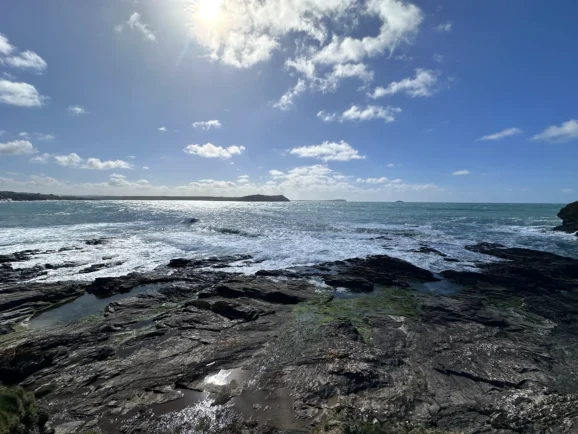
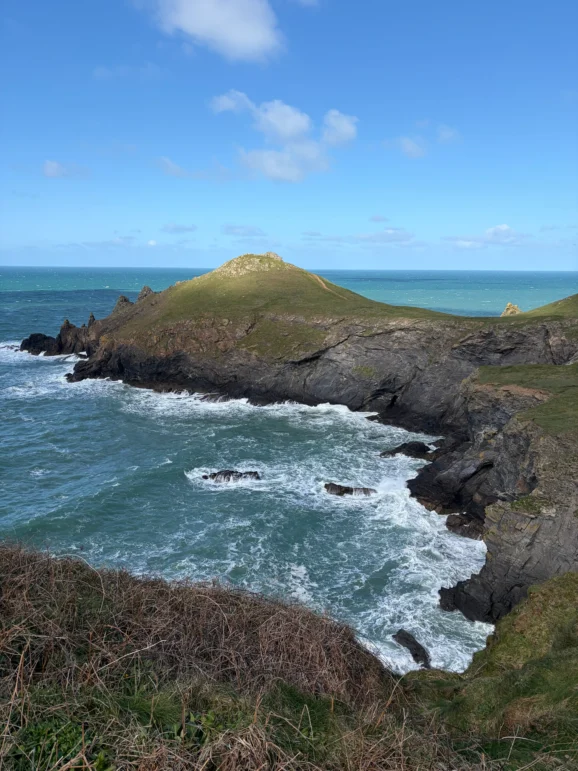
The next day was equally as memorable – sunshine, the kind of bright, generous light that transforms the Cornish coast into something almost Mediterranean. We drove the Audi A6 to Pentire Point, the National Trust managed headland that juts into the Atlantic like a great green prow.
The walk here is one of Cornwall’s finest, clifftops carpeted with spring flowers, Skylarks rising in spirals of song. The sea shifting from turquoise to deep cobalt. The distant silhouette of The Rumps, those twin headlands shaped by ancient volcanic activity beckoned us toward them along winding paths where we found a secluded spot under the rock to watch the breaking waves with the occasion glimpse of seals play in the surf.
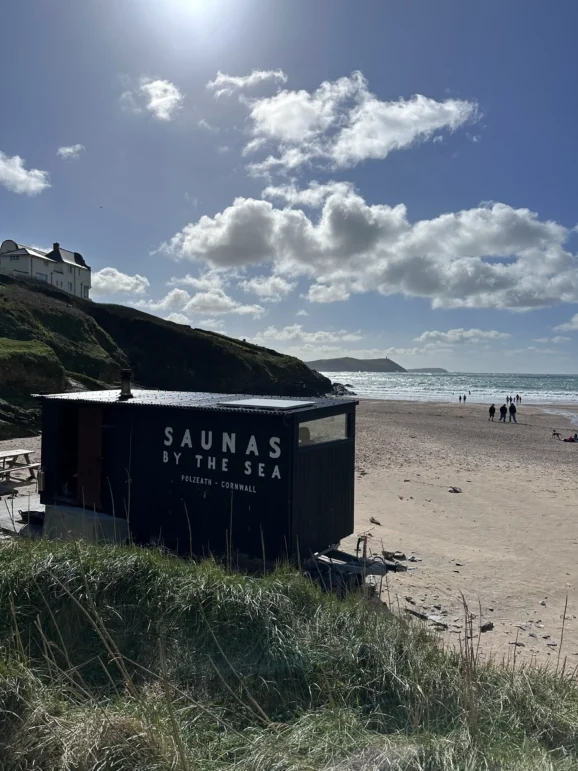
We walked on – heading to Polzeath, where surfers danced across the waves and families played cricket on the sand. We found a beach bar overlooking the bay and ordered chips and a cold drink, sitting in the sunshine as the tide rolled in. It was simple, perfect, and utterly Cornish.
After days spent exploring cliffs and castles, returning to Bokelly Cottage became a pleasure in itself. We’d light the fire, pour a glass of wine, and let the warmth fill the room. The Audi rested outside under a sky thick with stars–Cornwall’s dark nights are a luxury in their own right.
There was something deeply restorative about those evenings, the soft crackle of logs, jazz music drifting through the cottage with pages of a magazine turning slowly in the lamplight. It was a sense of being far from everything, yet completely at home. It made me think, travel isn’t just about movement; it’s about stillness too. And this trip to Cornwall offered both.
St Kew itself is a village that seems to have slipped free from the modern world. The lanes are narrow, the cottages immaculate, and the church, St James, with its 15th century tower and stands watch over everything. But the village’s beating heart is its pub.
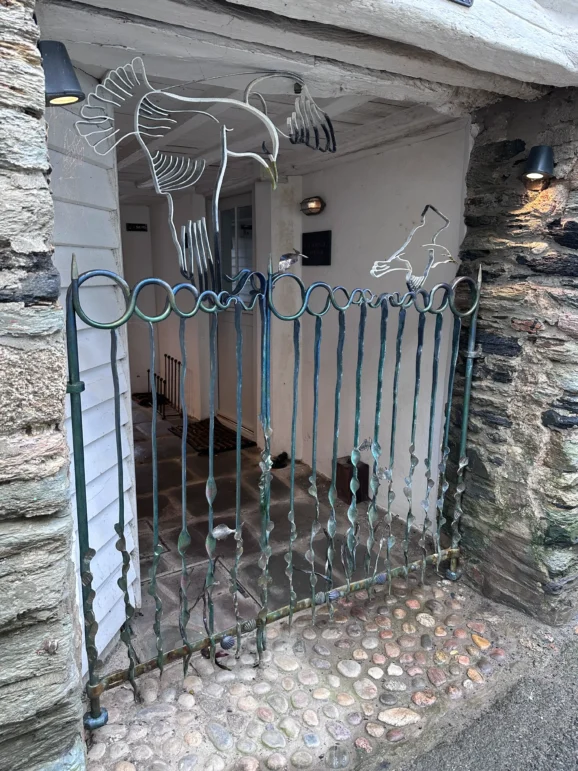
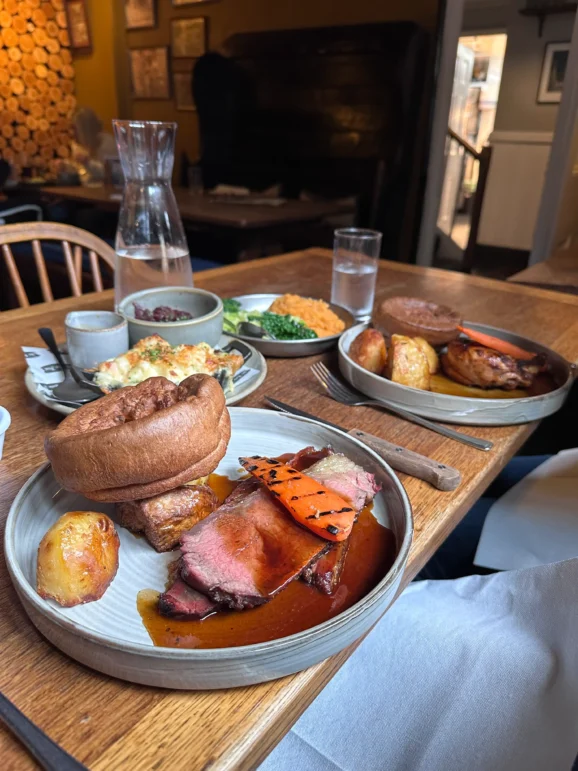
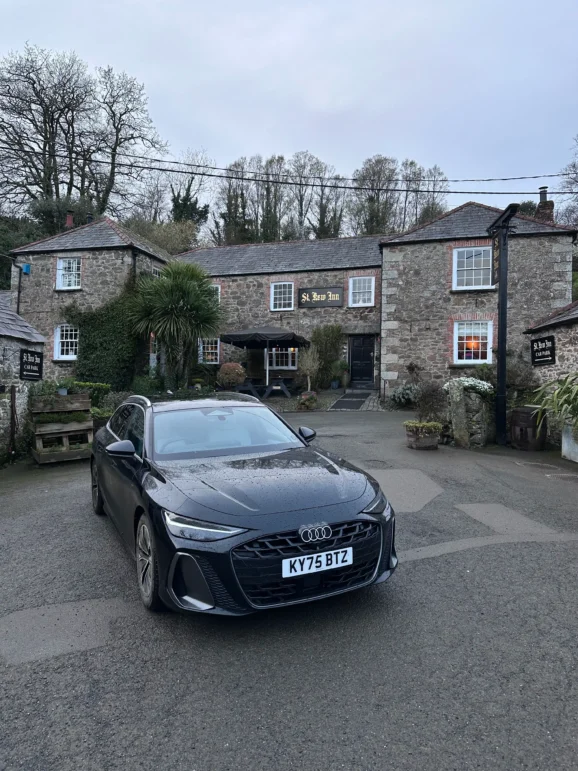
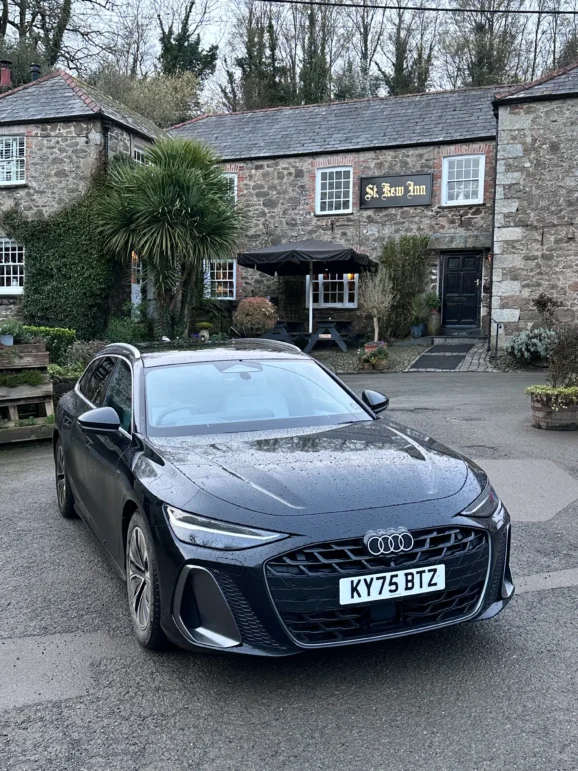
The St Kew Inn is one of those pubs that feels like a discovery even if you’ve been before. Low ceilings, flagstone floors, a fire that never seems to go out and a sense of history that clings to the beams. It dates back centuries, once serving farm labourers, travellers, and parishioners; today it attracts food lovers from across Cornwall and beyond.
Their Sunday roast is the stuff of local legend. Roast Beef, perfectly pink, with a depth of flavour that only slow cooking and good husbandry can achieve. Chicken Supreme, tender and aromatic, served with crisp skin and rich gravy. Yorkshire puddings that rise like golden sculptures and vegetables roasted until sweet and caramelised. It was the kind of meal that anchors you, that reminds you why pubs matter, not just as places to eat, I just didn’t want to leave!
On our final morning, the sun rose over St Kew in a wash of gold. We packed the car, closed the cottage door, and eased the Audi A6 back onto the main road. Bodmin Moor looked different now–greener, brighter, full of spring’s promise.
The drive home felt like part of the journey, relaxed thanks to the Audi sophisticated ambiance. As we left Cornwall behind the memories lingered: mist over Tintagel, sunlight on Pentire Point, the taste of Georgian wine with Cornish fish, the warmth of the St Kew Inn, the quiet luxury of evenings by the fire.
Cornwall in spring is a reminder that some places don’t just offer scenery–they offer stories. And sometimes, if you’re lucky, they let you become part of them.
The 2026 Audi A6 Avant Hybrid arrives at a moment when the traditional executive estate is becoming something of an endangered species, yet Audi has doubled down on the format with a car that feels more relevant than ever. This latest A6 Avant is a reminder that a well engineered estate still offers a blend of refinement, efficiency and everyday usability that SUVs struggle to match. It’s a car aimed squarely at professionals who want something premium and practical without the visual bulk or image baggage of a crossover, and it delivers that brief with impressive confidence.
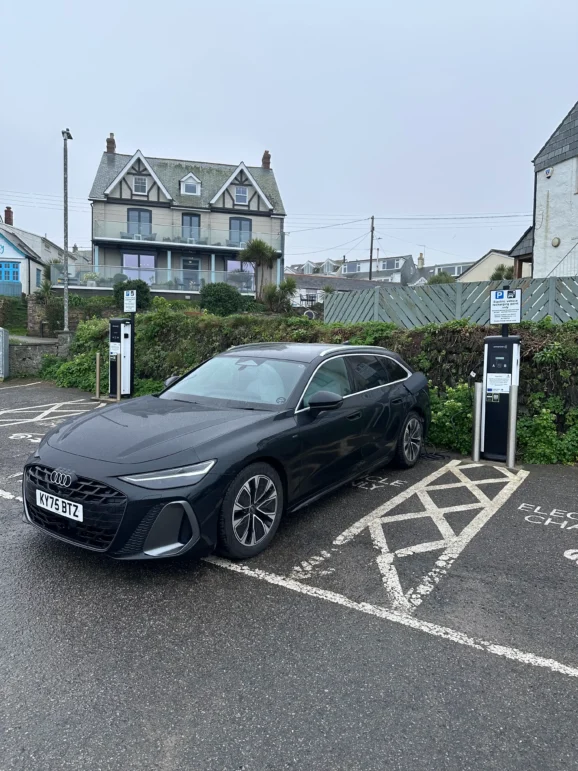
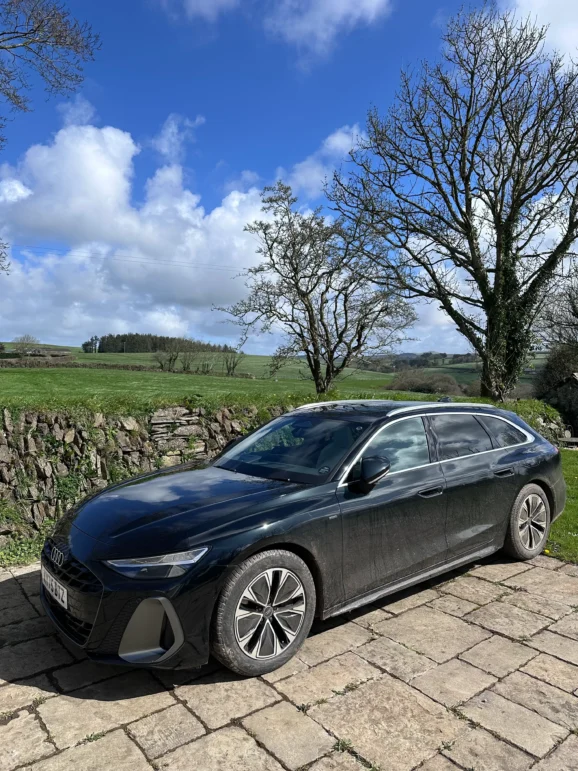
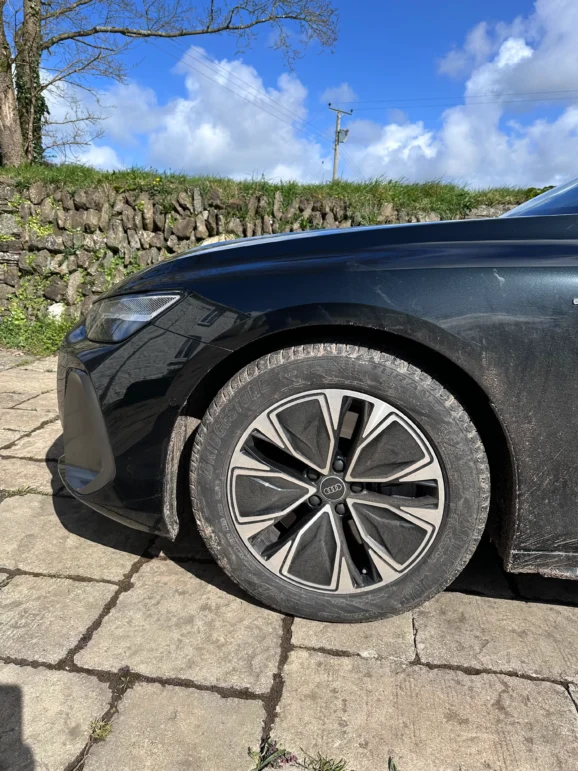
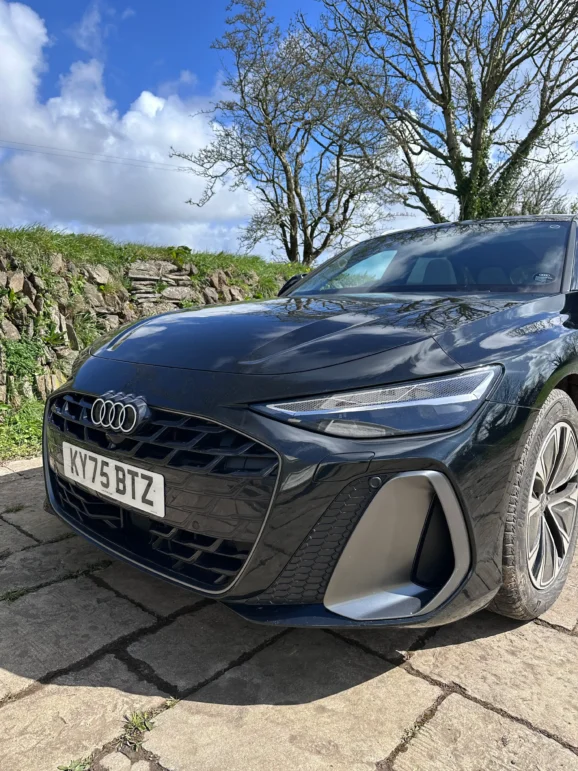
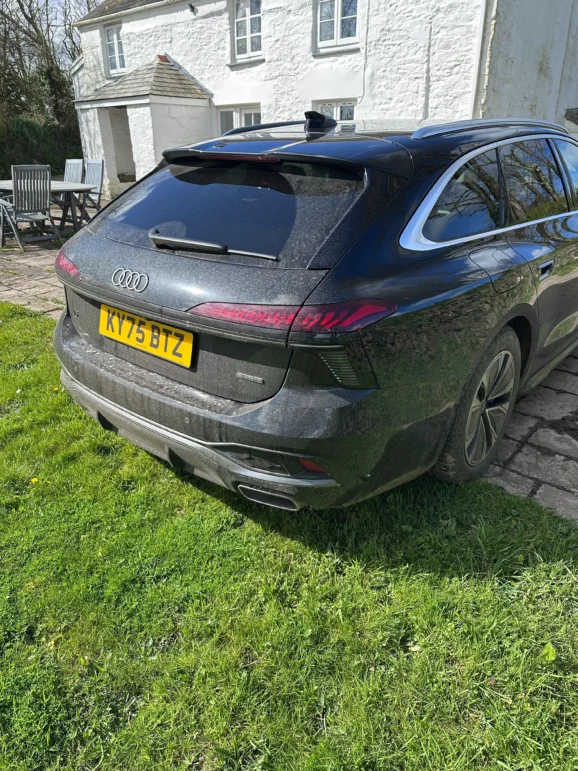
Visually, the A6 Avant is a study in restraint. Audi hasn’t attempted to reinvent the wheel here; instead, the design team has refined the familiar silhouette with cleaner surfacing, sharper lighting signatures and a more aerodynamic profile. The proportions are spot on, with a long bonnet, a crisp shoulder line and a rear end that manages to look both purposeful and elegant. Nothing feels over styled or gimmicky. It’s modern, but not attention seeking.
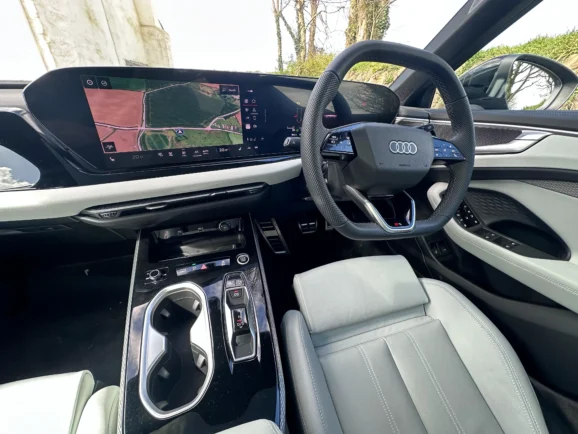
Inside, Audi continues to set the benchmark for build quality and ergonomic discipline. The cabin feels solid in a way that only European premium manufacturers seem to achieve consistently. Materials are high grade, the fit and finish are impeccable, and everything you touch has a reassuring weight and precision. Crucially, Audi has resisted the industry trend toward all touchscreen minimalism. The A6 Avant offers a clear, high resolution central display and a crisp digital instrument cluster, but it also retains physical controls for audio and other frequently used functions. The result is a cabin that feels modern without sacrificing usability. Even small details, like the rotary volume controller reinforce the sense that this is a car designed by people who actually drive!
One of the standout ergonomic features is the dedicated button on the indicator stalk that instantly disables lane assist. It’s a simple, thoughtful solution to a common frustration in modern cars, and it shows that Audi still prioritises driver control. Navigation and cruise control functions are similarly intuitive, with clear menus and well placed controls that don’t require a learning curve. It’s a cabin that works with you rather than against you.
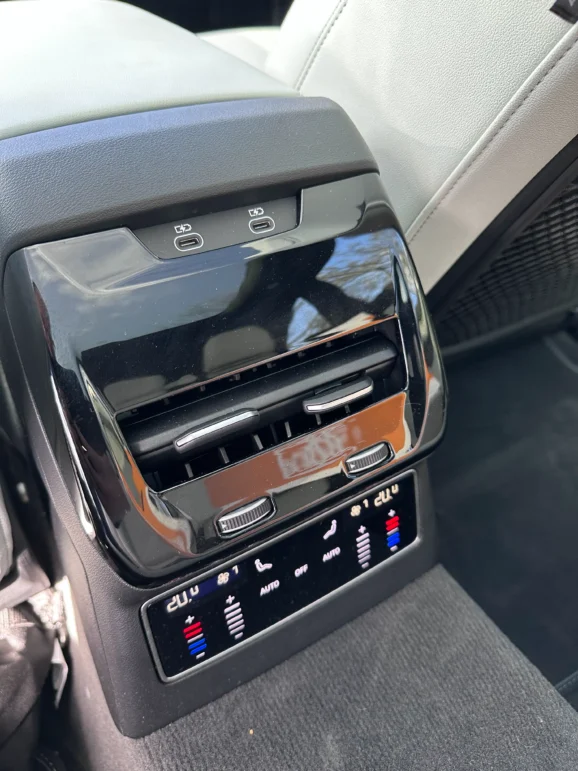
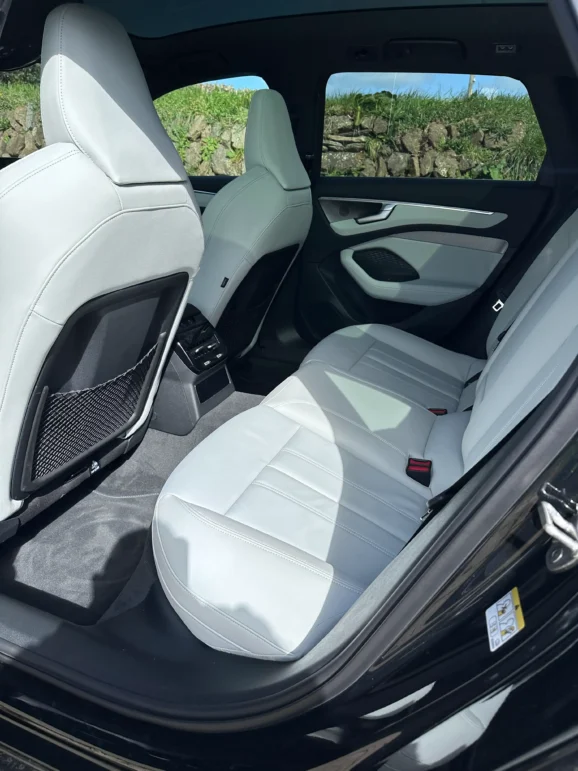
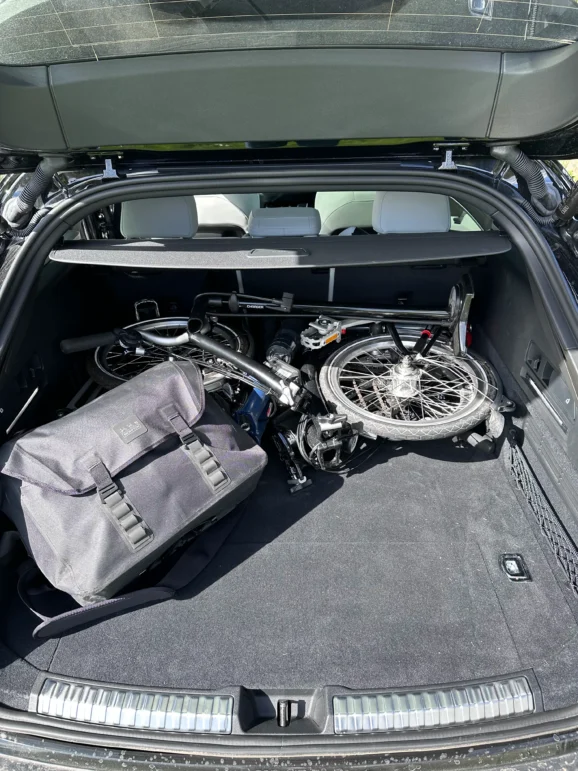
Space is another strong point. Rear passengers enjoy generous legroom, making the A6 Avant a genuinely comfortable family car rather than a driver focused compromise. The boot remains wide, square and easy to load, with enough room to accommodate two Brompton folding bicycles without any creative packing. Some rivals may offer slightly larger volumes on paper, but the A6’s load area is exceptionally usable thanks to its shape and low loading lip. For day to day family life, it’s more than up to the task.
Under the bonnet, the A6 Avant Hybrid pairs a 2.0 litre turbocharged petrol engine with an 105kW electric motor and a 25.9 kWh battery, of which 20.7 kWh is usable. Combined output stands at 295 bhp and 332 lb ft, giving the car enough performance to feel brisk without ever pretending to be a sports wagon. The 0–62 mph time of 6.0 seconds is perfectly respectable, but what stands out more is the smoothness of the power delivery. The transition between electric and petrol power is almost seamless, and the hybrid system feels well integrated rather than bolted on.
Electric only range is quoted at 62 miles, which places the A6 Avant among the strongest plug in hybrids currently available. For many drivers, that means the daily commute can be completed without using petrol at all. In urban driving, the car operates as a near silent EV, gliding through traffic with a level of refinement that suits its executive brief. On the motorway, the petrol engine settles into a quiet, low rev cruise while the electric motor assists during overtakes or climbs. Regenerative braking is well calibrated, offering useful energy recovery without the grabby feel that affects some hybrids.
On the road, the A6 Avant prioritises comfort and stability over outright sportiness, and that’s entirely appropriate for its role. The ride is supple and controlled, absorbing poor surfaces with ease while maintaining composure at higher speeds. Optional adaptive dampers further improve body control without compromising comfort. The steering is accurate and predictable, offering enough feedback to inspire confidence without trying to mimic a sports saloon. Grip levels are strong, and the chassis feels balanced and secure in all conditions. This is a car engineered for real world driving rather than Nürburgring lap times, and it excels in that environment.
Refinement is another area where the A6 Avant impresses. Cabin noise is kept to a minimum thanks to the aerodynamic work and the hybrid system’s ability to run silently at lower speeds. Even at motorway pace, wind and road noise are well suppressed, creating a calm, composed environment that makes long journeys genuinely relaxing. It’s the kind of car that encourages you to cover big distances without fatigue.
Technology is comprehensive but not overwhelming. Audi’s latest Multi Media Interface system is fast, clear and easy to navigate, with wireless Apple CarPlay and Android Auto included as standard. The optional Bang & Olufsen sound system is excellent, offering clarity and depth that suit the car’s refined character. Driver assistance systems are well tuned and avoid the intrusive behaviour that plagues some competitors. Adaptive cruise control, traffic sign recognition and 360 degree cameras all work smoothly in the background, enhancing safety without dominating the driving experience.
In day to day use, the A6 Avant Hybrid proves easy to live with. The battery can be fully charged overnight from a home wallbox, and public charging is straightforward thanks to the relatively modest battery size. Running costs can be impressively low if the car is charged regularly, with official economy figures reaching 119.4 mpg. Real world results will vary, but the potential for low fuel use is clear. For family duties, the A6 Avant is well equipped, with wide opening rear doors, ISOFIX points, plenty of cabin storage and a quiet, comfortable ride that makes long trips with children far less stressful.
The A6 Avant’s image remains one of its strongest assets. It has long been the thinking person’s executive car – a choice that signals good taste, practicality and an appreciation for engineering over fashion. It avoids the bulk and flashiness of an SUV while offering more usability compared to saloons. For drivers who want something premium, understated and genuinely useful, it hits a sweet spot that few rivals can match.
Ultimately, the 2026 Audi A6 Avant Hybrid is not a radical reinvention, and that’s precisely why it works so well. It’s a polished, mature, intelligently engineered estate that excels in the areas that matter most: build quality, ergonomics, refinement, efficiency and practicality. It’s a car that integrates seamlessly into professional and family life, and one that rewards thoughtful drivers who appreciate engineering done properly. It’s easy to imagine living with this car day in, day out – and that may be the strongest endorsement of all.

Mark G. Whitchurch is a seasoned motoring journalist whose work—covering road tests, launch reports, scenic drives, major races, and event reviews—has appeared in The Observer, Daily Telegraph, Bristol Evening Post, Classic & Sports Car Magazine, Mini Magazine, Classic Car Weekly, AutoCar Magazine, and the Western Daily Press, among others. He won the Tourism Malaysia Regional Travel Writer of the Year in 2003 and is a member of The Guild of Motoring Writers.
READ MORE: ‘The European road test: The Jeep Wrangler Rubicon‘. A battlefield tool turned cultural icon, the Jeep Wrangler still carries the DNA of the 1941 Willys MB that helped shape the modern world. Eighty-five years after its debut, it remains one of the few vehicles built to prioritise capability and character over refinement, discovers Mark G. Whitchurch, who tests the latest £67,000 Rubicon V6.
Do you have news to share or expertise to contribute? The European welcomes insights from business leaders and sector specialists. Get in touch with our editorial team to find out more.