Stratospheric telecoms blimp completes “historic” record 12-day flight over Atlantic

John E. Kaye
- Published
- News, Technology
Sceye’s high-altitude aircraft travelled 6,400 miles from New Mexico to waters off Brazil in a test of technology designed to bring mobile signal to areas without ground coverage, with commercial trials now planned in Japan
A blimp designed to beam mobile signal to areas without ground coverage has completed a “historic” record flight over the Atlantic.
The high-altitude platform system (HAP) covered 6,400 miles and spent 12 days in the air while demonstrating the technology.
It flew from New Mexico to international waters off the coast of Brazil and spent more than 88 hours holding position over selected areas at altitudes higher than 52,000ft.
The aircraft, known as the ‘SE2’, used solar power during the day to charge batteries for night-time operation.during which it flew at altitudes higher than 52,000 ft.
Its U.S developer, Sceye, said the test marked the end of its Endurance Program and showed the platform could maintain power, position and altitude through repeated day-night cycles in the stratosphere.
Mikkel Vestergaard Frandsen, founder and chief executive of Sceye, said: “This is the defining step toward unlocking the stratosphere as a new layer of infrastructure.
“Endurance is what makes this possible. The ability to remain over an area for extended periods enables persistent connectivity and real-time monitoring where traditional networks and existing technologies fall short.
“Through the stratosphere, we can extend the reach of existing networks globally to billions of people that are unconnected and provide real-time actionable insights that significantly improve how we prepare for and respond to wildfires or other natural disasters.”
The test built on a 2024 programme in which the company said its platform became the first to stay powered through a full day-night cycle in the stratosphere while maintaining position over an area of operation.
Its latest mission proved the vehicle could maintain pressure through each cycle, validating the design of its first fully in-house manufactured hull.
Sceye said the flight was intended to help move the system closer to commercial deployment by providing the operating data, configuration and flight protocols needed for longer missions.
The firm, which is based in Moriarty, New Mexico, said it was now working towards flights lasting months and eventually years.
Frandsen said: “With this mission, we’re confidently moving forward to our pre-commercial test flights, the first of which is set to launch this summer.
“This milestone is everything we’ve worked towards. This is a huge accomplishment not just for Sceye, but for the fast-growing stratospheric industry. Thank you to our investors, partners, customers, team, and the agencies that made this success possible.”
The company is preparing for its first pre-commercial test flight in Japan this summer, where it aims to connect into SoftBank Corp.’s core network and demonstrate expanded connectivity for emergency and disaster response.
READ MORE: Fly Derri-Air: Giant ‘Mega Booty’ airship to join ‘Flying Bum’. A giant British-built airship capable of carrying 200 passengers and landing on water will hit the skies within a decade, The European understands.
Do you have news to share or expertise to contribute? The European welcomes insights from business leaders and sector specialists. Get in touch with our editorial team to find out more.
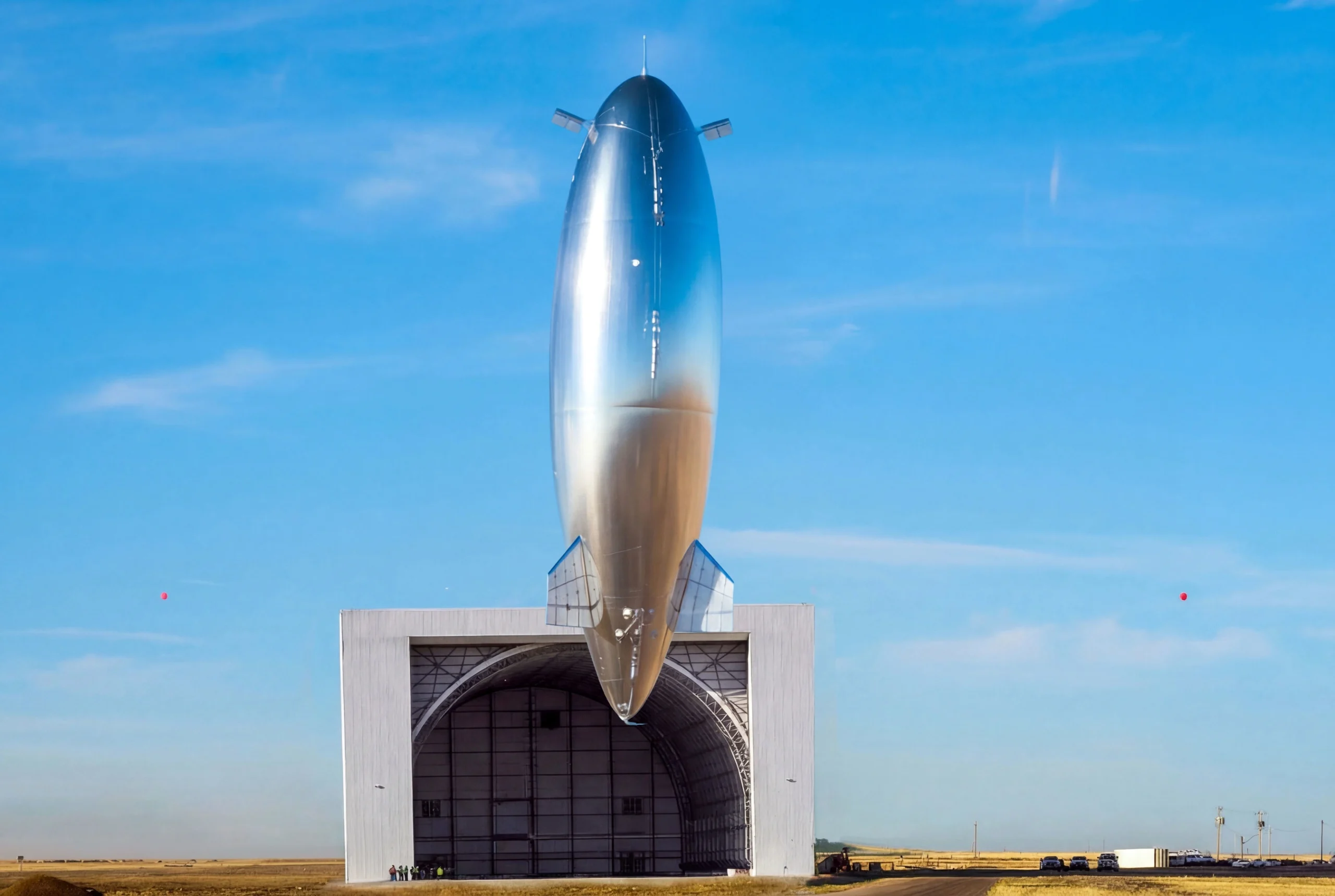
Main image: Image of Sceye’s “SE2” HAPS on ascent in New Mexico on March 25, 2026. Credit: Sceye
TOP STORIES
-
 North Korean agents are infiltrating Western businesses by posing as employees, security chief warns
 -
Route 66 turns 100 next month – and there’s never been a better excuse for Europeans to hit the road
-
Serbia erupts in celebration as student protesters end Vučić’s 14-year grip on power
-
Two killed as Storm Boelo batters Britain with 85mph winds and leaves 90,000 homes without power
-
Man arrested on suspicion of arson after fire destroys Hitler’s Eagle’s Nest retreat
-
Britain faces higher winter energy prices as reliance on European electricity imports grows
-
Andy Burnham to make special Gogglebox appearance for Stand Up To Cancer
-
WPSL Golf targets £120 million valuation as billionaire-backed corporate deals and other commercial deals drive explosive global growth
-
Hackers could bring Britain’s essential services to a standstill, security chief warns after global website shutdowns
-
We’re talking to almost twice as many people on the phone as a decade ago, study finds
-
TalkTalk sells majority stake in Telecom Acquisitions as founder Nigel Barnett regains control
-
Company closures soar ahead of tax rises as new Budget looms
-
An Italian affair – Stanley Johnson takes London’s society set on the Silk Road
-
Himalayan mountainside moved 40cm before avalanche killed 1,451 in Nepal, scientists reveal
-
Scientists and engineers quitting jobs as AI changes roles ‘beyond recognition’, study finds
-
UK profit warnings hit near two-year high as businesses struggle with rising costs
-
Microsoft pulls out of major UK AI data centre project amid power grid delays
-
Russia takes control of more European corporate assets amid Ukraine tensions
-
EU leaders resist calls to delay carbon rules as energy costs soar
-
‘A big step forward’ – PM Andy Burnham hails plans for Great British Railways HQ in Derby
-
UK economy grows just 0.1 per cent as construction falls and services stall
-
Germany risks losing €155bn a year under tighter AI data rules, new study warns
-
Pope Leo XIV diagnosed with lung cancer after surgery in Rome
-
France faces freezer meltdown as hackers strike supermarket chains
-
Bumble shares soar 50% amid $1bn takeover talks