
MICE market forecast to reach $2.3tn by 2032, report says

John E. Kaye
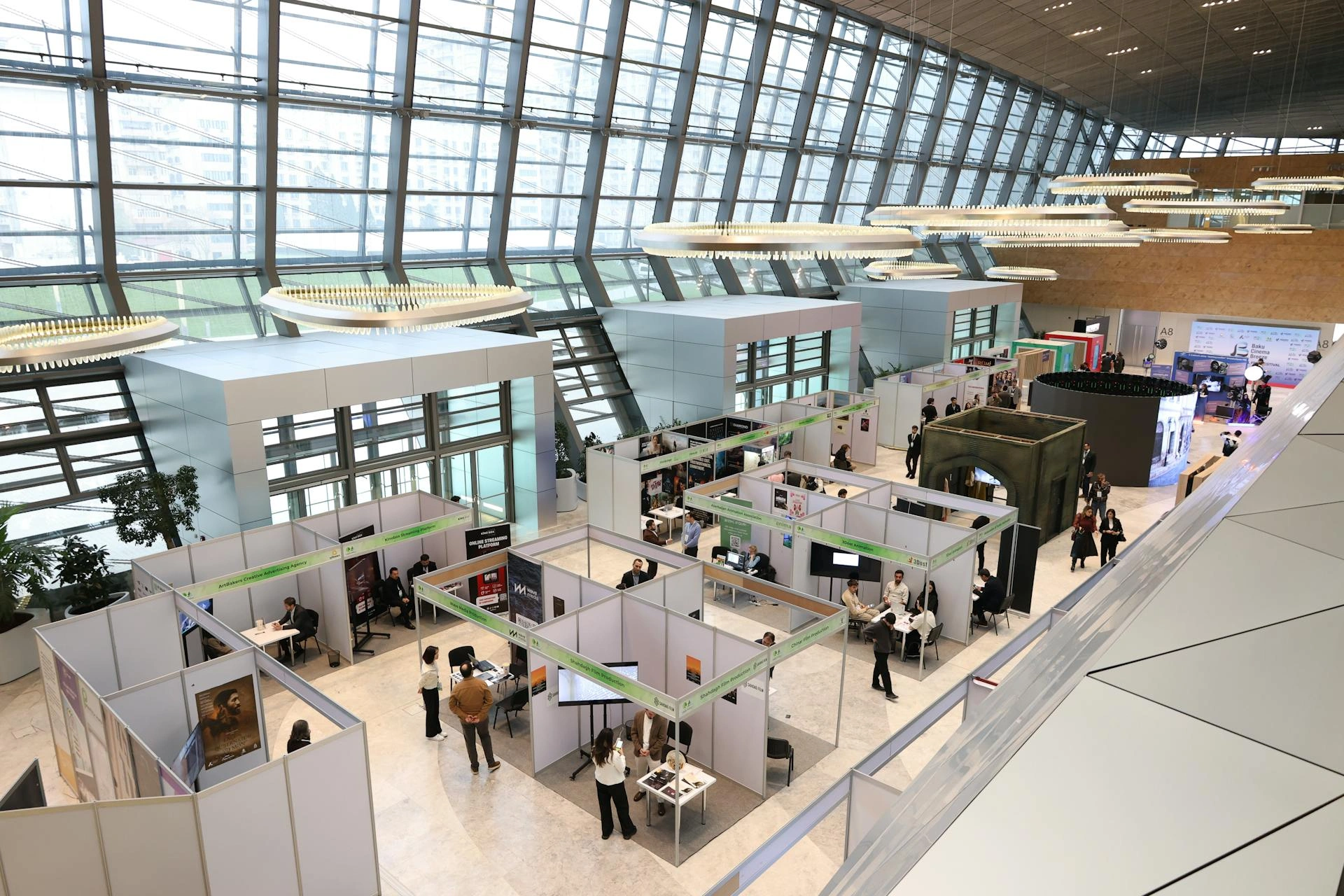
Global meetings, incentives, conventions and exhibitions sector set to quadruple in value over a decade, with growth driven by hybrid events, corporate travel and infrastructure investment
The global meetings, incentives, conventions and exhibitions market is projected to grow from $598.2 billion in 2022 to $2.31 trillion by 2032, according to new research.
A report by Allied Market Research suggests the sector is set to expand at a compound annual growth rate of 11.6 per cent from 2023 to 2032 as organisers, venues and governments invest in hybrid formats, tourism infrastructure and business event capacity.
Growth is expected to come from rising corporate activity, infrastructure development and wider use of hybrid and virtual events, alongside policies aimed at supporting business travel, tourism and foreign investment in some markets.
Meetings remained the largest segment of the market in 2022, accounting for more than three-fifths of revenue, the report said. It linked that dominance to the central role of meetings in corporate decision-making, training and planning, as well as the wider use of meeting apps and hybrid formats.
The incentives segment is also forecast to grow at a compound annual rate of 8.4 per cent over the period covered by the report, driven by demand for employee reward programmes, partner events and incentive travel.
Europe was the largest regional market in 2022, with more than three-fifths of global revenue, according to the report, which cited established business hubs including London, Frankfurt, Paris and Geneva. The Middle East is forecast to record the fastest growth, at 18 per cent a year, with venue development and government-backed event strategies helping drive expansion in cities including Dubai and Abu Dhabi.
The report also pointed to longer-term growth potential in Asia-Pacific, where countries including China, India, Singapore, Hong Kong, Japan and Thailand are attracting investment in hospitality and convention infrastructure.
Companies operating in the sector are investing in hybrid event platforms, sustainability-focused planning services and destination management as competition intensifies, the report said.
“Overall, the global MICE Industry market is expected to register strong double-digit growth during the forecast period, driven by rising corporate activity, expanding global trade linkages, government-backed tourism infrastructure investment, the proliferation of hybrid event technology, and the emergence of new high-growth MICE destinations across the Middle East, Asia-Pacific, and Africa”, Allied Market Research added.
READ MORE: Prague positions itself as Central Europe’s rising MICE powerhouse. The global Meetings, Incentives, Conferences and Exhibitions industry is forecast to reach USD 1.3 trillion by 2030 as corporate travel rebounds and hybrid formats reshape events. Europe remains the sector’s epicentre, and Prague is emerging as Central Europe’s strongest contender by combining modern venues, international connectivity and a cost profile that is winning over planners under pressure, discovers Ollie Crow.
Main image: Tahir Xəlfə/Pexels
TOP STORIES
-
 Putting a full stop to Brits’ bad grammar
 -
Britain faces higher winter energy prices as reliance on European electricity imports grows
-
Andy Burnham to make special Gogglebox appearance for Stand Up To Cancer
-
WPSL Golf targets £120 million valuation as billionaire-backed corporate deals and other commercial deals drive explosive global growth
-
Hackers could bring Britain’s essential services to a standstill, security chief warns after global website shutdowns
-
Why financial literacy looks different when you live between two countries
-
We're talking to almost twice as many people on the phone as a decade ago, study finds
-
TalkTalk sells majority stake in Telecom Acquisitions as founder Nigel Barnett regains control
-
Company closures soar ahead of tax rises as new Budget looms
-
A close shave with evolution – why humans are so hung up on hair
-
Copenhagen’s the European city break that keeps you coming back
-
Russia takes control of more European corporate assets amid Ukraine tensions
-
Can democracy survive the digital age?
-
Drowning costs the UK nearly £1 billion a year so why aren’t we doing more to prevent it?
-
EU leaders resist calls to delay carbon rules as energy costs soar
-
The David Attenborough of the 1600s who warned Britain was destroying its natural world
-
Credit beyond scoring: where to find fintech’s next big opportunity
-
‘A big step forward’ – PM Andy Burnham hails plans for Great British Railways HQ in Derby
-
UK economy grows just 0.1 per cent as construction falls and services stall
-
Hackers exploiting wars ‘to develop cyberattacks in minutes’
-
Britain should have a Ministry of Peace
-
Germany risks losing €155bn a year under tighter AI data rules, new study warns
-
Pope Leo XIV diagnosed with lung cancer after surgery in Rome
-
Albania's wild heart on a 560-kilometre road trip through the Balkans
-
A Thai queen’s solo jet flight shatters the male macho pilot stereotype

















TOP STORIES
-
Putting a full stop to Brits’ bad grammar
-
Britain faces higher winter energy prices as reliance on European electricity imports grows
-
Andy Burnham to make special Gogglebox appearance for Stand Up To Cancer
-
WPSL Golf targets £120 million valuation as billionaire-backed corporate deals and other commercial deals drive explosive global growth
-
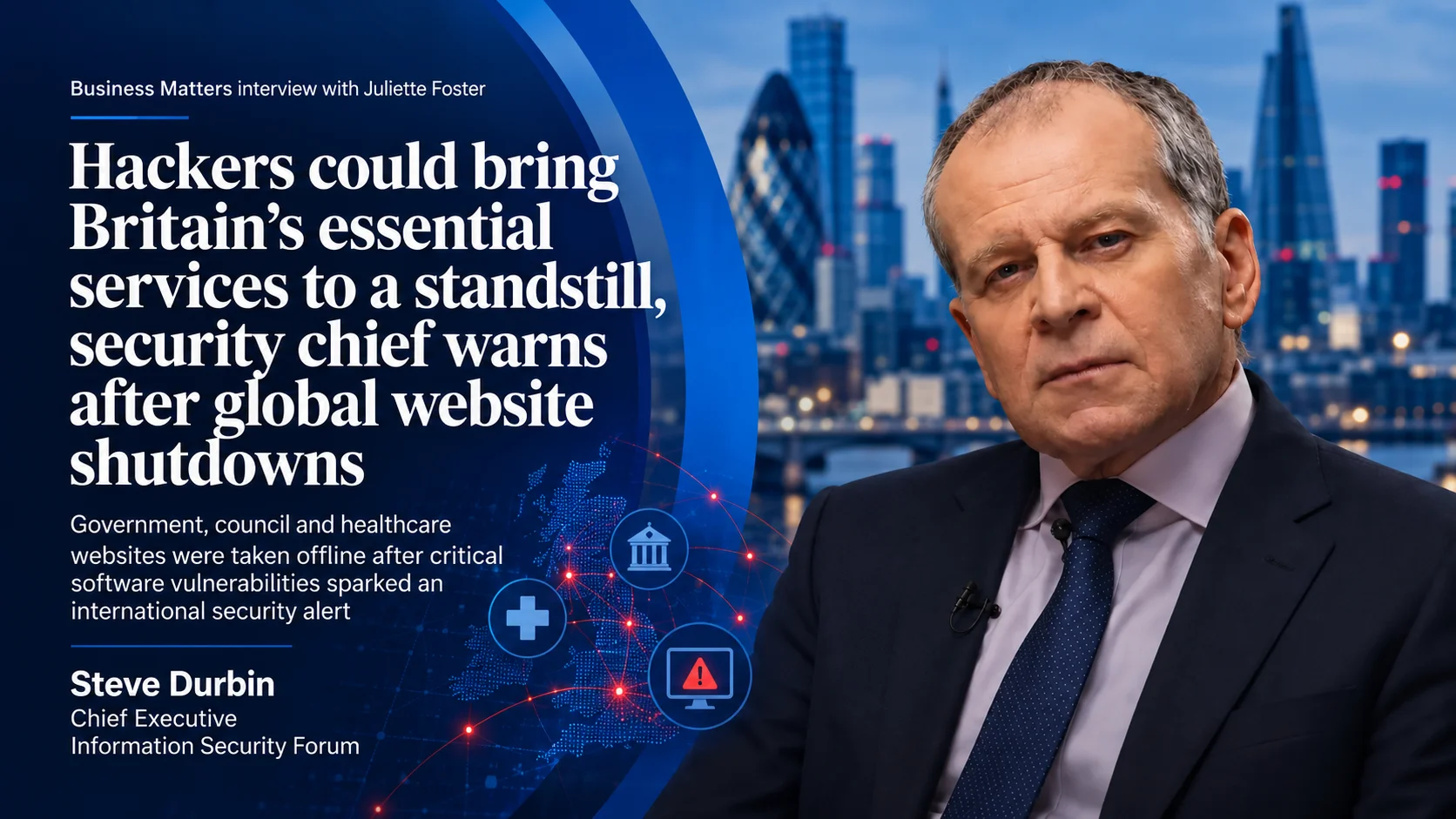
Hackers could bring Britain’s essential services to a standstill, security chief warns after global website shutdowns
-
Why financial literacy looks different when you live between two countries
-
We're talking to almost twice as many people on the phone as a decade ago, study finds
-
TalkTalk sells majority stake in Telecom Acquisitions as founder Nigel Barnett regains control
-
Company closures soar ahead of tax rises as new Budget looms
-
A close shave with evolution – why humans are so hung up on hair
-
Copenhagen’s the European city break that keeps you coming back
-
Russia takes control of more European corporate assets amid Ukraine tensions
-
Can democracy survive the digital age?
-
Drowning costs the UK nearly £1 billion a year so why aren’t we doing more to prevent it?
-
EU leaders resist calls to delay carbon rules as energy costs soar
-
The David Attenborough of the 1600s who warned Britain was destroying its natural world
-
Credit beyond scoring: where to find fintech’s next big opportunity
-
‘A big step forward’ – PM Andy Burnham hails plans for Great British Railways HQ in Derby
-
UK economy grows just 0.1 per cent as construction falls and services stall
-
Hackers exploiting wars ‘to develop cyberattacks in minutes’
-
Britain should have a Ministry of Peace
-
Germany risks losing €155bn a year under tighter AI data rules, new study warns
-
Pope Leo XIV diagnosed with lung cancer after surgery in Rome
-
Albania's wild heart on a 560-kilometre road trip through the Balkans
-
A Thai queen’s solo jet flight shatters the male macho pilot stereotype



