So-called vertical AI, context engineering, and the use of metadata operating systems are helping companies make smarter, more efficient decisions
It no longer makes sense to ask whether artificial intelligence will transform your business. If that question is still on your mind, the reality is stark: it may already be too late to secure your place in the future.
Companies currently find themselves at a decisive turning point. Economic uncertainty persists, yet this is precisely the moment to take the next step and act boldly.
The answer lies in adopting emerging technological solutions that can streamline processes and unlock efficiencies, always under human oversight.
Context engineering, metadata operating systems, and the deployment of so-called vertical AI are among the 10 key trends identified by global consultancy SDG Group in its strategic report Data, Analytics & AI Trends 2026, developed through its Orbitae AI innovation radar.
The analysis places businesses at a crossroads where technological infrastructure alone is no longer enough to guarantee success.
The report highlights that competitive advantage in the year ahead will depend, among other factors, on the shift towards systems in which data can interpret context, and AI can explain its own reasoning.
In this environment, the priority is moving beyond simply adopting AI technologies towards industrialising them, transforming raw data into semantically meaningful assets that enable more accurate, ethical, and strategically aligned decision-making.
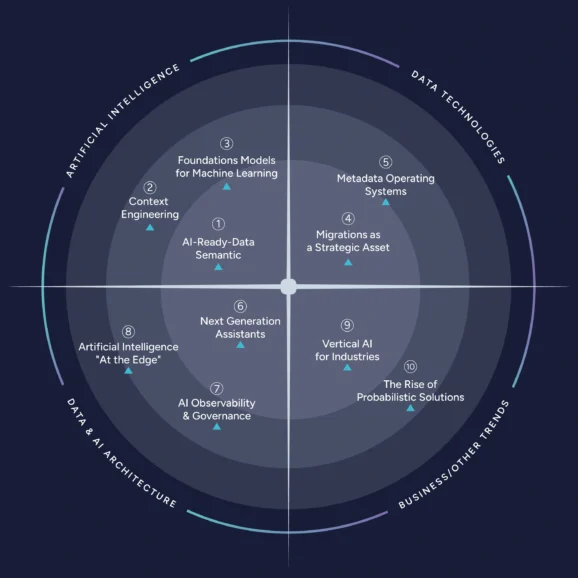
Predictions also point to the rise of edge AI, which improves privacy and speed by processing data locally. This evolution is being matched by a shift in how we power AI; while prompt engineering focuses on the input string, context engineering focuses on the agent, creating systems that feed AI agents the right data at the right time.
When paired with metadata operating systems, these technologies will redefine how organisations unlock the full potential of their data ecosystems.
Based on months of research by industry experts, the report also points to the emergence of next-generation agentic assistants and the consolidation of vertical AI tailored to specific industries, enabling businesses to operate more efficiently according to their unique characteristics.
Another clear trend is that the future of business intelligence will lie in managing probabilistic solutions and strengthening information governance.
These technologies, increasingly accessible to companies, will allow AI not only to automate processes but also to collaborate autonomously and transparently in complex, dynamic environments.
The ultimate goal is to foster best practices in which humans and AI work side by side.
Further Information
Produced with support from SDG Group. To find out more about the trends shaping data, analytics and artificial intelligence in 2026, and to explore SDG Group’s latest strategic insights, visit www.sdggroup.com
Main image: The next phase of AI in business will depend on how well companies turn data, context and governance into better decision-making. Credit: Pexels