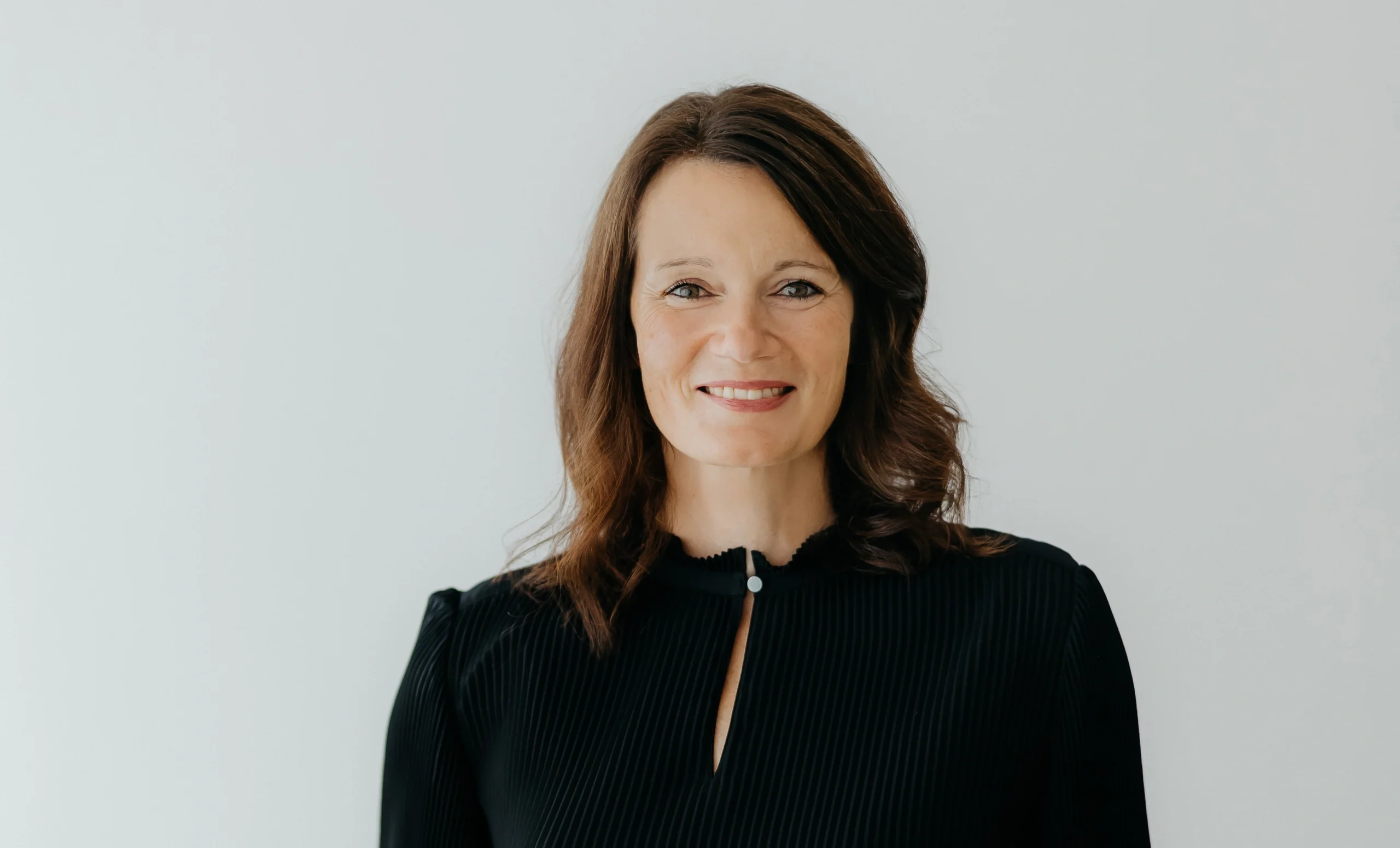
Liechtenstein’s renewed AAA rating, its access to the European single market and its reputation for disciplined innovation continue to shape one of Europe’s most resilient banking hubs. Christoph Reich, Group CEO of Liechtensteinische Landesbank and the new Vice President of the Liechtenstein Bankers Association, discusses how the sector is managing regulatory pressure, advancing digital transformation and adapting to shifting international client expectations
Liechtenstein’s financial centre has spent the past decade proving a point that larger jurisdictions often struggle to make — that stability still counts, and in periods of geopolitical and regulatory turbulence it counts more than ever.
The principality’s banking sector has become a reference case in how a small, export-oriented financial hub can turn conservative risk management, disciplined supervision and a culture of long-termism into a competitive advantage. Its recently renewed AAA rating, close ties to the European single market and Switzerland, and reputation for measured innovation underpin an economy that remains steady and well-anchored, even as global conditions grow more unsettled.
Christoph Reich, the Group CEO of Liechtensteinische Landesbank (LLB) and the newly appointed Vice President of the Liechtenstein Bankers Association (LBA), is at the forefront of a sector working to maintain its established strengths while responding to technological change, stricter regulatory requirements and shifts in client behaviour.
Reich’s role places him at the centre of several practical questions, including how to update services without diluting the banking centre’s core characteristics, how to manage the growing compliance burden for smaller institutions, and how to strengthen Liechtenstein’s international position through targeted engagement. His focus on proportional regulation, measured digital adoption and institutional cooperation reflects the issues currently shaping policymaking and strategy across the financial centre.

Here, he outlines how these pressures and opportunities are being addressed, and how the sector intends to preserve its stability while preparing for the next phase of development.
The European: What does stepping into the role of Vice President mean to you personally and professionally?
Christoph Reich: It is an honour for me to serve as Vice President of the LBA in addition to my role as Group CEO LLB. Taking on this role involves both a personal motivation and a professional commitment. On a personal level, it affords me the opportunity to contribute to the long-term stability and competitiveness of our financial centre, which is something I care deeply about. From a professional standpoint, it allows me to actively support the sustainable development and international positioning of Liechtenstein’s banking sector.
As Vice President, how will you balance continuity with fresh perspectives — bringing new ideas while respecting the Association’s established traditions?
Continuity means preserving the principles that have defined the Liechtenstein financial centre for decades: political and economic stability, trust, attractive framework conditions and long-term thinking. These fundamentals remain non-negotiable. At the same time, fresh perspectives are essential to stay competitive. Here, digital transformation is setting the direction, for example in the form of digital assets or new business models and forms of consulting. My guiding approach will be to modernise step by step, without losing the essence of our financial centre.
Liechtenstein is a member of various international financial institutions and associations. What do you hope to gain from participating in these organisations?
For a small country like Liechtenstein, international engagement and networking are crucial. That’s why we have most recently joined the International Monetary Fund (IMF). IMF membership strengthens our resilience and enhances our credibility and provides an institutional safety net, which is especially relevant given Liechtenstein’s lack of access to a national central bank in times of crisis.
Furthermore, active participation enables us to establish strategic partnerships, share knowledge and best practices, and ensure that our voice is heard in global discussions on regulation and financial stability. This is invaluable for us as a niche financial centre that depends on openness and international trust. As a small financial centre, we can contribute valuable insights, including for proportionate, innovation-friendly regulation.
What opportunities do you see for Liechtenstein’s banking sector in the next five years?
The opportunities lie in combining technological progress with the strengths that have always distinguished Liechtenstein. Digital transformation will help us to increase efficiency and develop new business models. For example, LLB’s investment of CHF 100 million in its “LLB One” programme illustrates how seriously we take this transformation.
At the same time, our positioning in the niche market between major financial hubs creates room for growth, particularly in the German-speaking markets, which are central to the strategies of many banks in Liechtenstein. Finally, our reputation as a stable and reliable partner for long-term wealth preservation remains a key strength in an increasingly uncertain world.
What are the biggest regulatory and geopolitical issues currently facing Liechtenstein’s banks?
Liechtenstein’s banks face a combination of geopolitical uncertainty, regulatory complexity and economic pressures. Prolonged periods of low interest rates affect earnings. These global tensions create risks but also opportunities. More clients are looking for safety and stability, qualities that Liechtenstein offers in abundance and which are becoming increasingly appreciated.
At the same time, European regulation continues to intensify. While regulation is crucial for stability, the belief that stability can be achieved primarily through ever more rules poses challenges, especially for smaller institutions that cannot easily scale compliance. A more pragmatic, proportionate approach would be desirable. We need smart regulation so that we can stay agile and competitive.
What is the model for success of Liechtenstein banks?
Our model for success is based on high political, economic and social stability, unrestricted access to the European single market and Switzerland, and our AAA country rating by Standard & Poor’s. Our innovation-friendly environment, high level of education, low-risk business models and excellent capitalisation are also decisive factors.
The core of Liechtenstein’s banking sector lies in long-term client relationships and conservative risk management. At the same time, we embrace innovation within a framework that prioritises security and trust, supported by robust supervision and close cooperation between banks, the Association and public authorities.
Have international customer needs changed?
Yes, customer needs have evolved considerably. International clients now explicitly seek safety, stability and asset protection, while also expecting digital convenience alongside personal advisory relationships. There is greater awareness of geopolitical risks and a stronger need for diversification. In response, banks in Liechtenstein have expanded their presence in key markets and invested in digital solutions that align with these expectations.
Further information: Produced with support from Liechtenstein Finance (www.finance.li/en). To find out more about the Liechtenstein Bankers Association’s work on industry development and international financial cooperation, visit www.bankenverband.li/en.
READ MORE: ‘Neue Bank’s CEO on stability, discipline and long-term private banking‘. Neue Bank is refining a long-standing private-banking model that prioritises disciplined growth, transparent risk management and sustainability backed by data. CEO Roman Pfranger discusses the principles guiding the bank’s next phase in conversation with The European’s John E. Kaye
Do you have news to share or expertise to contribute? The European welcomes insights from business leaders and sector specialists. Get in touch to find out more.
Main Image: Alpha Trade Zone/Pexels