Parked electric cars could help power island ferries in German trial

Matthew Burgos
- Published
- News, Sustainability
A new research project will test whether EV batteries can feed solar power into ferry charging systems, cutting fossil fuel use and easing pressure on local electricity grids
Parked electric cars could help charge island ferries under a German research project designed to make coastal transport cleaner and reduce pressure on local power grids.
The trial will use electric vehicles left in a ferry terminal car park as temporary batteries, storing solar power during the day and feeding it back when a ferry returns to port.
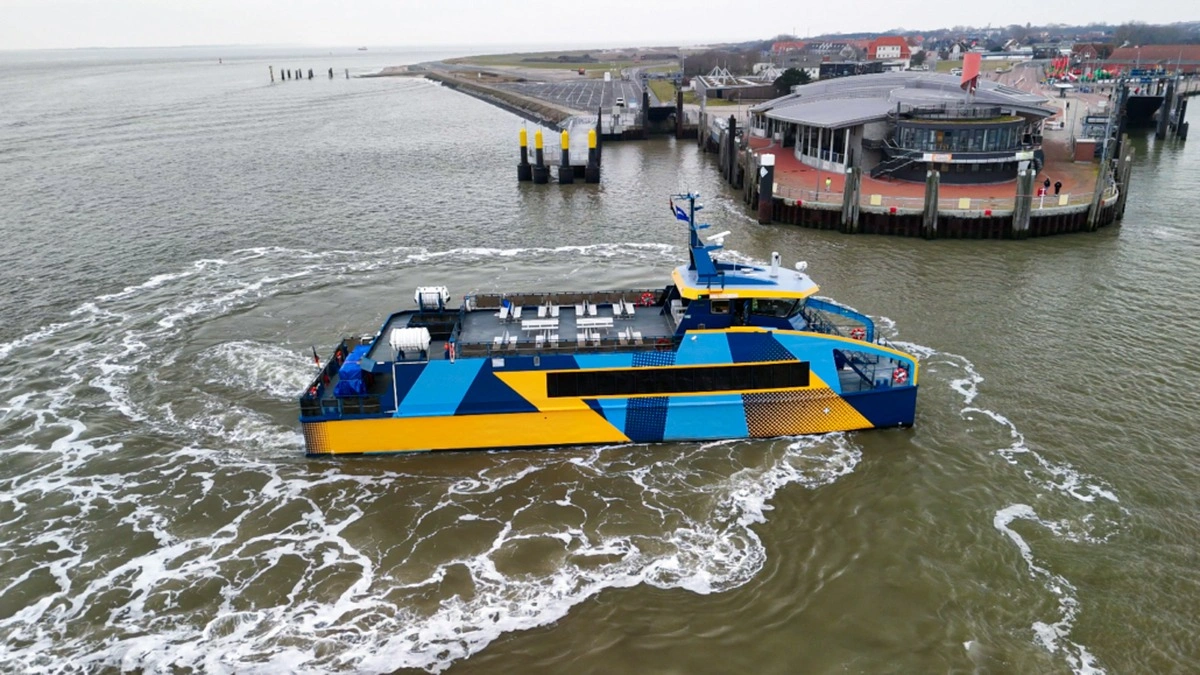
Osnabrück University of Applied Sciences and the Norden-Frisia shipping company are launching the project on Germany’s North Sea coast, where the operator already runs the region’s first fully electric passenger ferry.
The ferry has been operating since March 2025 between Norddeich Mole and the island of Norderney.
The new project, called Bi-directional Integration of Electric Vehicles, or BIDI-EL, will test whether the same clean power system can be extended beyond the ferry itself.
Electric cars parked at the shipping company’s terminal will be charged from solar panels installed on site. When the ferry arrives back in port and needs to recharge, electricity stored in the vehicles’ batteries can be sent back into the ferry’s charging system, alongside power from the solar panels.
The aim is to turn parked cars into small, decentralised energy stores that help run the ferry while reducing demand from the public electricity grid.
Researchers say the system could increase the amount of locally generated renewable energy used in ferry operations and support the gradual removal of fossil fuels from services to the East Frisian Islands.
Norden-Frisia installed a photovoltaic system with a peak output of 1,700 kilowatts at its premises in 2024, with further expansion planned.
A fixed electrical storage system is already in place in the company’s parking area, and the trial will add the battery capacity of electric vehicles parked there.
The project is being funded by the German Federal Environmental Foundation with €164,894 and will run until January 2027.
Prof Dr Hans-Jürgen Pfisterer, Professor of Electrical Engineering at Osnabrück University of Applied Sciences, is leading the technical side of the project.
He said: “The bidirectional integration of electric vehicles not only offers an environmentally friendly alternative to conventional mobility, but can also significantly contribute to relieving the strain on the energy supply grid.
“By using vehicles as decentralized energy storage units, the share of renewable energy is maximized, the grid is relieved, and the vehicle batteries are kept in a ‘wellness mode’.”
Prof Dr Kai-Michael Griese, Professor of Business Administration, is overseeing the business and sustainability aspects, including climate-adapted business models and the circular economy.
Pfisterer added: “Innovations like bidirectional charging are essential for creating future-proof mobility solutions.”
Griese said: “The goal of the project is to gain insights that go beyond the initial project results and to create the foundation for long-term, sustainable business models and energy supply solutions.”
Olaf Weddermann, managing director of Norden-Frisia, said the project was another step towards fossil-free ferry transport.
He said: “With this project, we are sending a strong signal for the sustainable transformation of our mobility.
“The combination of an electric ferry and bidirectional charging for electric vehicles is an important further step towards achieving a fossil-free future and reducing the environmental impact of our transport services.”
Norden-Frisia has operated ferry services to the East Frisian Islands for more than 140 years.
READ MORE: Electric air taxis take step towards passenger reality after San Francisco Bay flight. A piloted electric aircraft has flown from Oakland International Airport across San Francisco Bay and around the Golden Gate Bridge in a public demonstration of how short urban air taxi journeys could soon operate in some of the world’s most congested cities.
Do you have news to share or expertise to contribute? The European welcomes insights from business leaders and sector specialists. Get in touch with our editorial team to find out more.
Main image: Reederei Norden-Frisia’s fully electric ferry operates between Norddeich Mole and Norderney in the German North Sea, where a new research project will test how electric vehicles in port car parks could help feed power back into the ferry’s charging system. Credit: Reederei Norden-Frisia
TOP STORIES
-
 Bioweapons research, Russian-linked spies, guided rockets and cyber-attacks on Europe used Claude AI, Anthropic reveals
 -
Cadbury Takes a Break as KitKat tops Britain’s social media sweet rankings
-
European network alliance doubles in size as digital sovereignty drive accelerates
-
European insurance giants join New York summit on future of AI
-
Oxford leads £10m international study as resistance threatens new TB treatments
-
Inside the world’s wildest new mini golf course with caves, 13ft waterfalls… and sharks
-
Apple’s new boss bets £1,999 on first folding iPhone
-
‘Double delight’ as rare red pandas born at Whipsnade Zoo
-
This Japanese ski resort has just been named the world’s best place for seasonal work
-
Nearly 4m Londoners experienced mental health challenges last year, study finds
-
Card fraud accounts for more than one-in-three UK identity fraud cases
-
Breast cancer campaigners target Burnham at PMQs over £20m research fund
-
Europe leads world in quantum research despite deep industry scepticism
-
Australia plans social media algorithm ‘off switch’ in move Europe could follow
-
European central banks move gold out of U.S as 'geopolitical risks' mount
-
Volkswagen plans another 50,000 job cuts in sweeping overhaul
-
Uber launches UK’s first autonomous ride-hailing service in London
-
Hackers could plunge Britain into darkness in less than two minutes, report warns
-
BP appoints Ian Tyler chairman after Albert Manifold ousting
-
Del Boy’s bent cop nemesis inspired David Jason to become a TV detective
-
Products made in space move closer to commercial reality
-
Snickers creates ‘world’s first digital chocolate bar’ for misbehaving AI
-
Europe adds enough new wind power for 7m homes as record year beckons
-
Scotland’s £19bn food and drink industry faces ‘cliff edge’ as costs squeeze businesses
-
Lidl owner plans €5.6bn data centre as Germany pushes digital independence