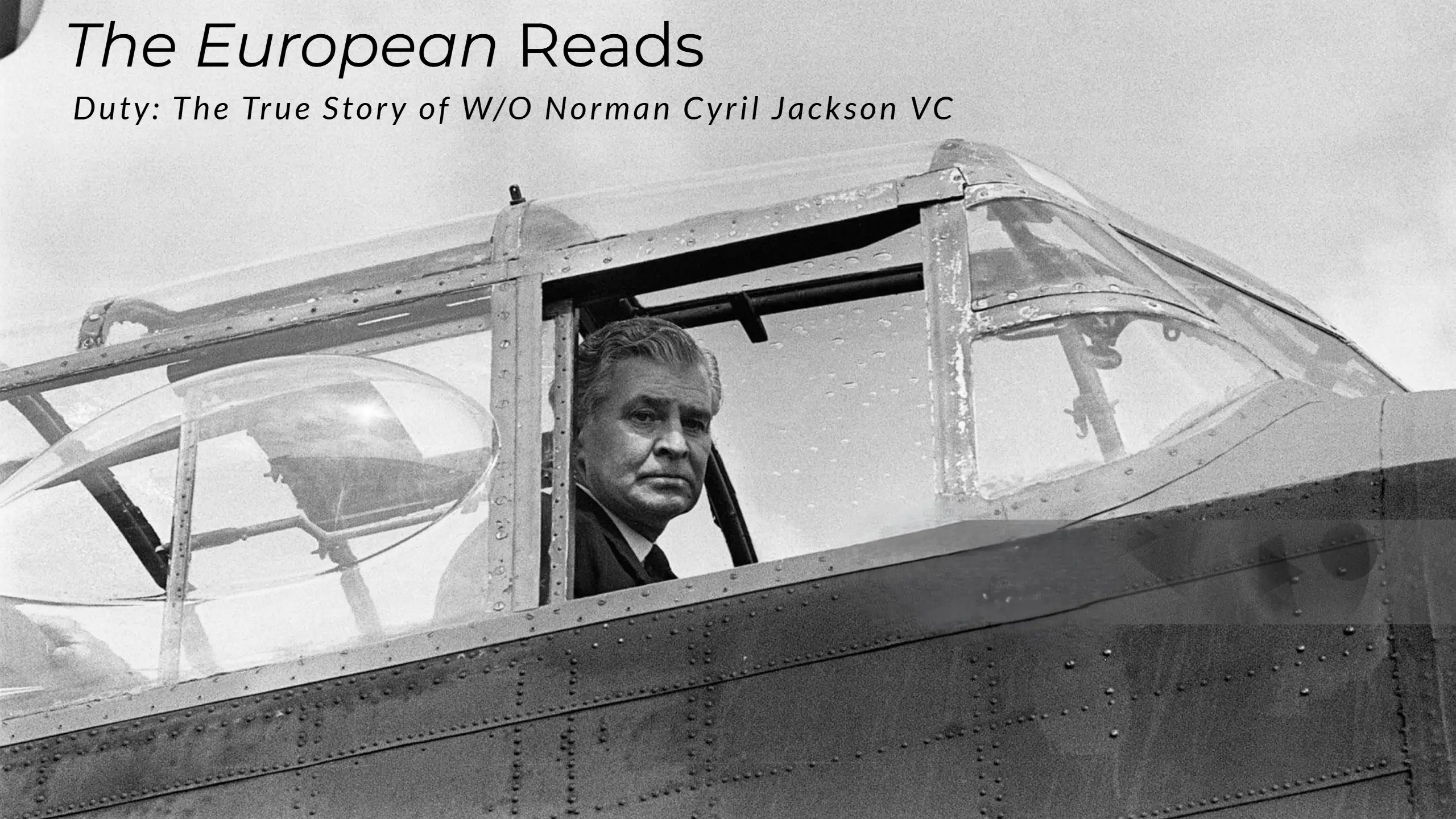
Hailed by leading military historians as one of Britain’s greatest war heroes, Flight Engineer Norman Cyril Jackson earned the Victoria Cross after climbing onto the wing of a blazing Lancaster over Germany in 1944 to save his crew. Here, The European examines Duty: The True Story of W/O Norman Cyril Jackson VC, the powerful new biography written by Jackson’s son David, which sets out the full story of that night and the life behind the medal
Flight engineer Norman Cyril Jackson inched along the wing of his burning Lancaster, his head arms and shoulders positioned over the leading edge of the wing so that he would not be swept of the wing by the slipstream as the aircraft tore through the night at close to 200 miles per hour.
Flames streamed from a ruptured starboard fuel tank and fanned back over the wing while 20,000 feet of darkness over occupied Europe lay beneath him. If the fire was not put out the main fuel tanks would explode, this was the only hope of the aircraft along with the remaining crew of getting back home.
During a raid on Schweinfurt on the night of April 26/27, 1944, the Lancaster had been attacked by a German night fighter whose exploding cannon shells tore open the wing and ignited the fuel tank as the pilot struggled to steady the stricken aircraft. Inside the fuselage the six remaining crew understood the position: unless the blaze could be extinguished the aircraft would be lost.
Norman did the unthinkable. He clipped on his parachute and yanked the rip cord allowing the canopy to spill open in the rear cockpit. Unbeknown to the rest of the crew Norman planned to use the chute for them to hold onto to begin his perilous mission. He seized a fire extinguisher, axe and portable oxygen tank and forced his way out through the hatch in a calculated attempt to extinguish the flames.
Flattened against the wing and edging to his right towards his goal of the leading-edge air intake, once reached he slipped his hands into the air intake and let himself slip back over the wing directly next to the fire, he then directed the extinguisher at the base of the blaze and checked its advance.
As the fire was coming under control a second night fighter then spotted them and unleashed another burst of explosive cannon fire from below the aircraft that ripped into the wing and through his legs body and arms, the explosive cannon shells ignited the fuel beneath him in a violent eruption, engulfing him in flames. With flames frying his face and hands, Norman could not maintain his grip. Momentarily the courageous airman was dragged behind the bomber by the remains of his chute still in the cockpit before he was torn from the aircraft and hurled into the night.
Thanks to his selfless bravery, four of the six other crew members survived after bailing out of the stricken Lancaster.
Norman himself descended in the charred remains of his parachute, survived the impact despite severe burns and broken ankles, and endured months of hospital treatment before captivity in a German prisoner-of-war camp.
Earlier that same day, having just turned twenty-five, he had been told he’d become a father for the first time.
Flight engineer Norman Cyril Jackson, who was awarded the Victoria Cross for his actions that night, was a Great British hero indeed.
DUTY: The True Story of W/O Norman Cyril Jackson VC is a fascinating new biography that introduces us to Norman, a man whose name rarely appears in popular retellings of the Second World War despite the scale and physical audacity of what he did that night.
Written by his son David Jackson and released this week, Duty tells the story of a life shaped long before the flames over Schweinfurt.
Born in 1919 and adopted into the Gunter family in Twickenham, Norman grew up aware of his beginnings as an illegitimate child.
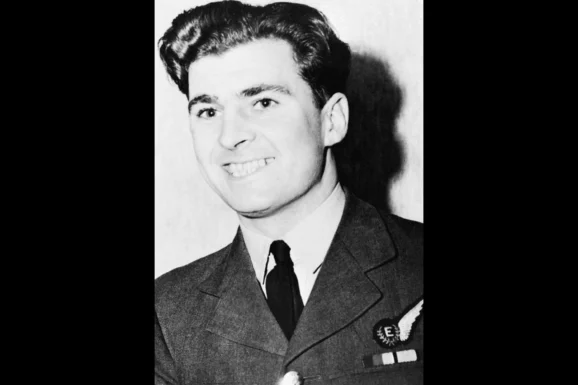
He trained as a fitter-turner, developed a deep understanding of machinery, and volunteered for the Royal Air Force after war broke out in September 1939, having initially considered the Royal Navy before deciding his engineering skills would be of greater use in the air.
He was posted to bases around Britain as he trained and served as an engineer before eventually transferring to Bomber Command, where the operational tempo was relentless and the risks ever present.
David describes a father whose principles were simple and enduring. “If you cannot do someone a good service, do not do them a bad one,” he writes. That sense of duty runs through the book and informs the portrait of a young airman whose courage emerged from discipline, training and selfless conviction.
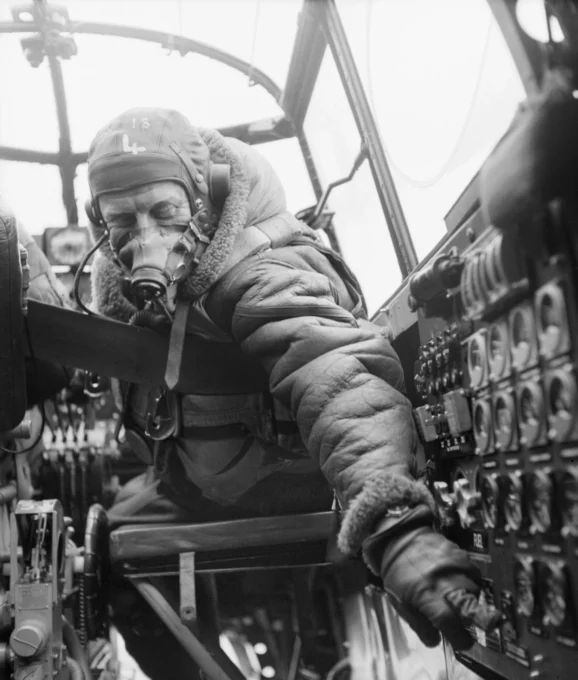
Before Schweinfurt, Norman was nearing the completion of a full operational tour with Bomber Command. By the 26th of April 1944 he had flown twenty-nine operations over occupied Europe and Germany, each one involving long night flights into heavily defended airspace, searchlights, flak corridors and the constant threat of interception by enemy fighters. The sortie to Schweinfurt would be his thirtieth, the milestone that marked the formal end of a tour for many aircrew, though survival to that point was never assured.
However, Norman had already agreed to stay with the crew for the mission following the one over Schweinfurt – his 31st – so he could see them safely through to their 30th operation, he had got one ahead of the rest of the crew by volunteering to fly with another crew on an earlier operation whose flight engineer was taken unwell and deemed not fit to fly.
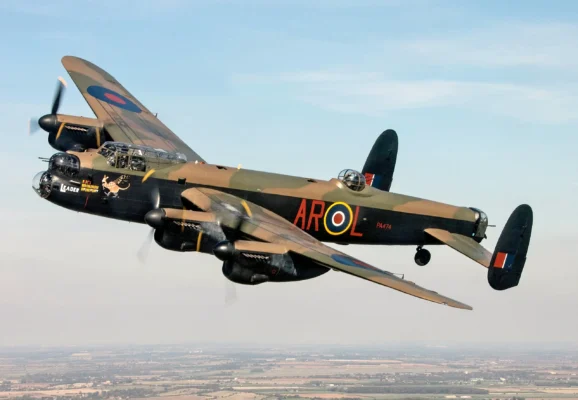
On the night of 26 April 1944, Norman climbed aboard Lancaster ME669, code name O for OBOE, at RAF Metheringham. Hours earlier he had learned he was a father. His crewmates congratulated him warmly and promised a proper celebration on their return from Schweinfurt. By dawn, two of those men would be dead.
The aircraft was airborne at 9.35pm and joined the bomber stream heading south. They reached the target area shortly after 2.30am, released their bomb load and turned for home through defended skies thick with flak and prowling night fighters. Somewhere over Germany, a Focke-Wulf closed in and opened fire. Cannon shells tore through the starboard wing and into the cockpit, striking Norman in the head, shoulder and leg and throwing him to the floor. When the aircraft levelled, he regained his footing and saw flames trailing backwards along the wing as the bomber pressed on at altitude.
Norman understood immediately what that meant. If the fire reached the remaining fuel, the aircraft would explode and fall from the sky and take them all with it. With the pilot fighting to hold the stricken Lancaster steady, Norman declared, “I have a plan…” and gathered a fire extinguisher, an axe and a portable oxygen bottle. He pulled the ripcord of his parachute, so the silk spilled into the rear cockpit, intending his crewmates to hold it fast as he made his way outside.
After asking Flight Sgt Ernest Sandelands to give him enough slack to reach the air intake, then hold the cords tight – blood now running down his face – the pilot closed the throttle on the inner starboard engine in front of the fire and Norman feathered the propellor. Norman then opened the hatch above him and climbed onto the top of the fuselage and made his way back and down towards the wing at 20,000 feet and close to 200 miles per hour.
He drove the ice-pick edge of the axe into the fuselage above the wing to create a handhold and edged towards the base of the flames while ‘Sandy’ paid out more of the parachute behind him. From the aircraft they watched him disappear from view against a background of fire and darkness.
For a brief period, his efforts checked the blaze. Then a second German fighter swept back into range and unleashed another burst of cannon fire from below the aircraft. The exploding shells tore through the wing and ignited the fuel beneath him in a violent eruption. The starboard tank burst, engulfing him in flames. Shrapnel ripped into his limbs and body. His grip failed and he was torn from the aircraft, falling into the night with the burnt remains of his parachute trailing behind him.
Norman survived the descent, breaking both ankles on impact, and endured months of hospital treatment before captivity as a prisoner of war.
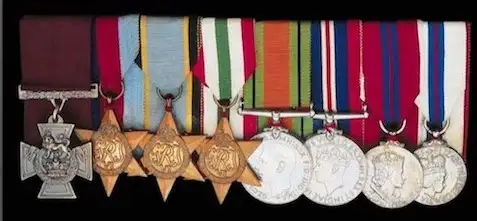
Norman’s gallantry was recognised on 26 October 1945 when he was awarded the Victoria Cross, the highest award for valour in the British and Commonwealth armed forces, an honour he accepted with characteristic modesty.
Lord Ashcroft, who owns the largest private collection of Victoria Crosses and contributes a moving foreword, writes that he considers Jackson’s action “arguably the greatest single act of gallantry in the entire history of the Victoria Cross,” and describes Duty as a labour of love that preserves the life of a man whose bravery deserves permanent record. Ashcroft adds: “I congratulate David on a labour of love and for taking such care to detail the life of a man whose bravery must never- and will never – be forgotten.”
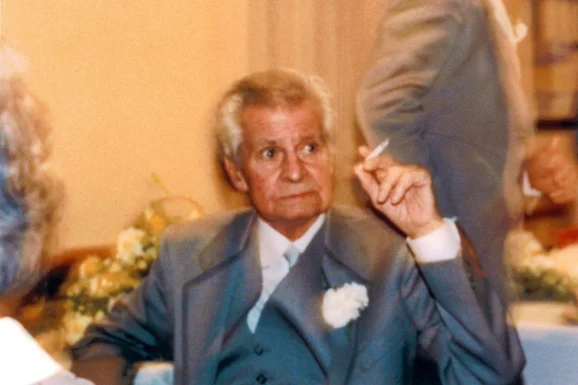
After surviving his injuries and captivity, Jackson remained in the RAF long enough to be promoted to Warrant Officer before returning to civilian life at the war’s end. He later worked as a sales representative, including for John Haig Whisky, whose clients – many of them ex-servicemen – were told they were being visited by the firm’s “top man, Norman Cyril Jackson VC”.
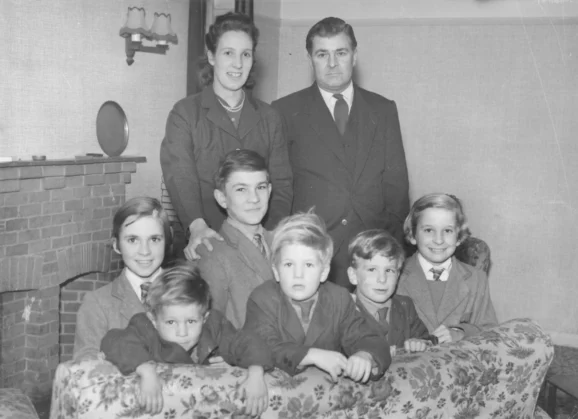
Norman and his wife Alma went onto have seven children and lived with characteristic modesty, rarely drawing attention to the medal Norman had earned in the skies over Germany. In later years, he also supported The Bomber Command Association and the Royal Air Force Benevolent Fund.
He died in 1994 at the age of seventy-four.
David wrote the book after years of encountering published accounts that did not match the version of events he had heard throughout his childhood. He writes that “much has been written” about my father’s action, yet “without exception these accounts either contain inaccuracies or are not the full story,” and that he had long believed “an accurate account… should be written and published, to put the record straight.”
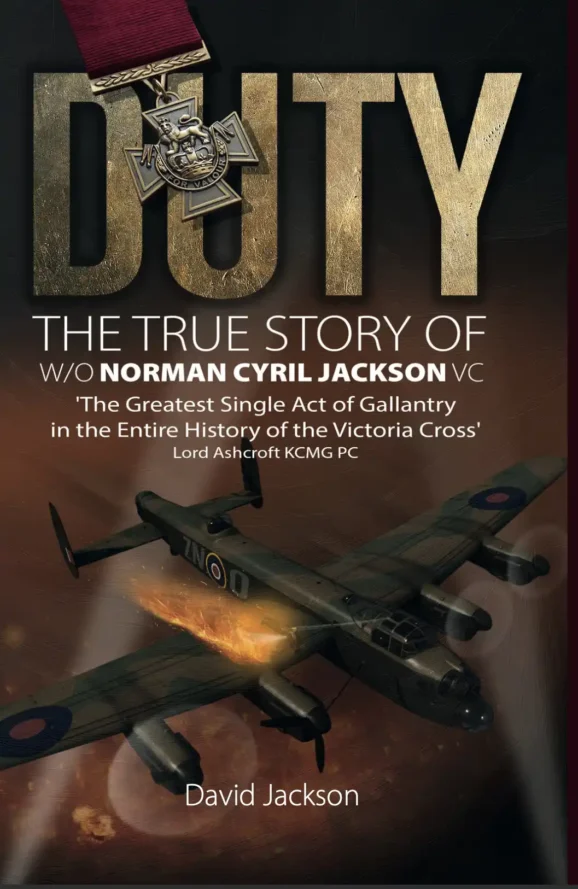
The result is an extraordinary biography that is detailed, unsparing and rooted in first-hand testimony, bringing readers as close as possible to the wing of a burning bomber and to the character of the young engineer who chose to climb out onto it. His book draws on flight logs and payload weights to crew lists, take-off times and route distances, placing one extraordinary act within the wider grind of Bomber Command’s war.
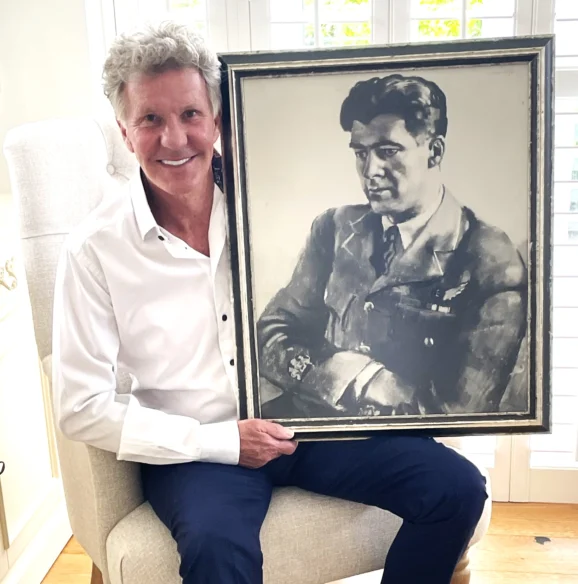
As a schoolboy, David was once allowed to take his father’s Victoria Cross into class at a teacher’s request. Leaving the house with the medals in his pocket, he recalled feeling ten feet tall – only for his father to remind him: “Remember, David, no showing off.”
Norman always maintained that he had “only been doing his job and his duty” and had “simply done what needed to be done”. But Duty leaves the reader in no doubt that he was wrong: what Norman did on the wing of that burning Lancaster exceeded any reasonable definition of duty and stands as one of the most remarkable acts of gallantry in the history of the Victoria Cross and the armed forces as a whole.
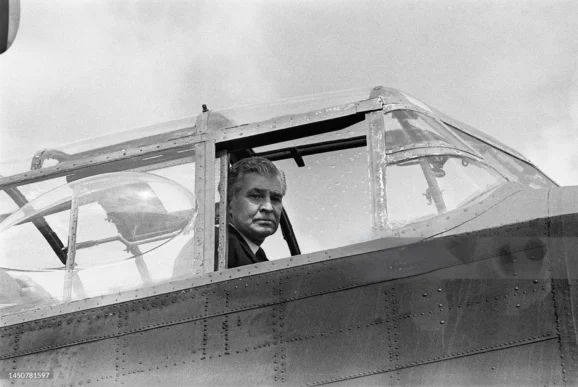
DUTY: The True Story of W/O Norman Cyril Jackson VC by David Jackson is out now and available from good bookshops and online retailers.