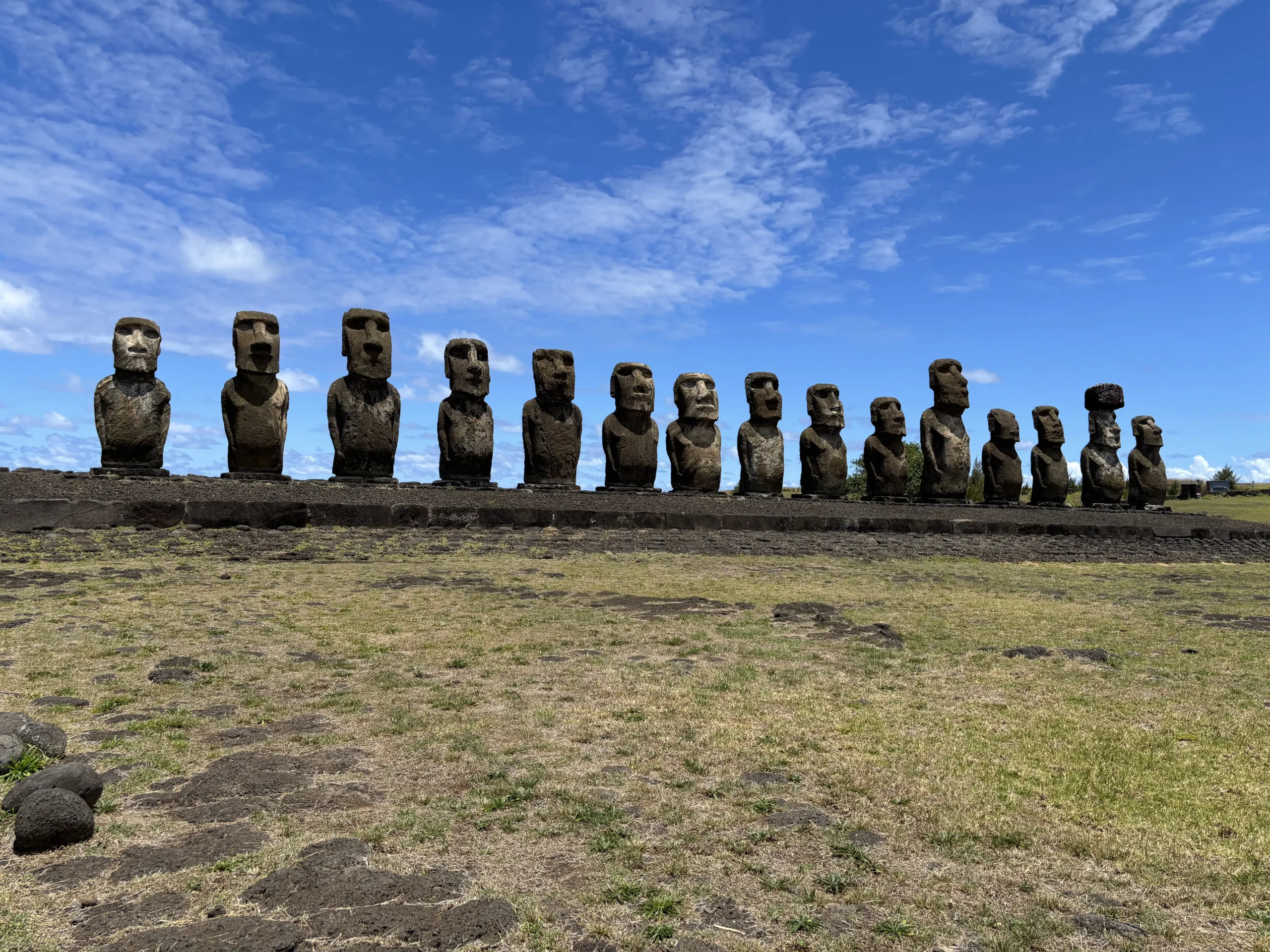
A childhood fascination takes The European’s Oggy Boytchev to Rapa Nui, the volcanic speck in the Pacific where ancestral stone figures, austere resources and strict land laws still define life on the most remote inhabited island on Earth
If your idea of travel includes awe, mystery and a genuine sense of disconnection from the everyday world, Easter Island, or Rapa Nui in the local language, will leave an indelible mark on you.
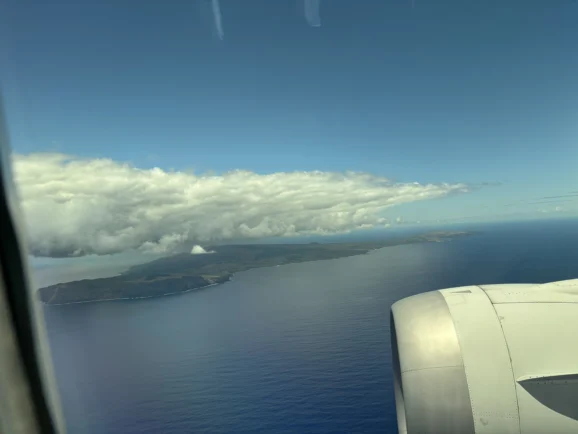
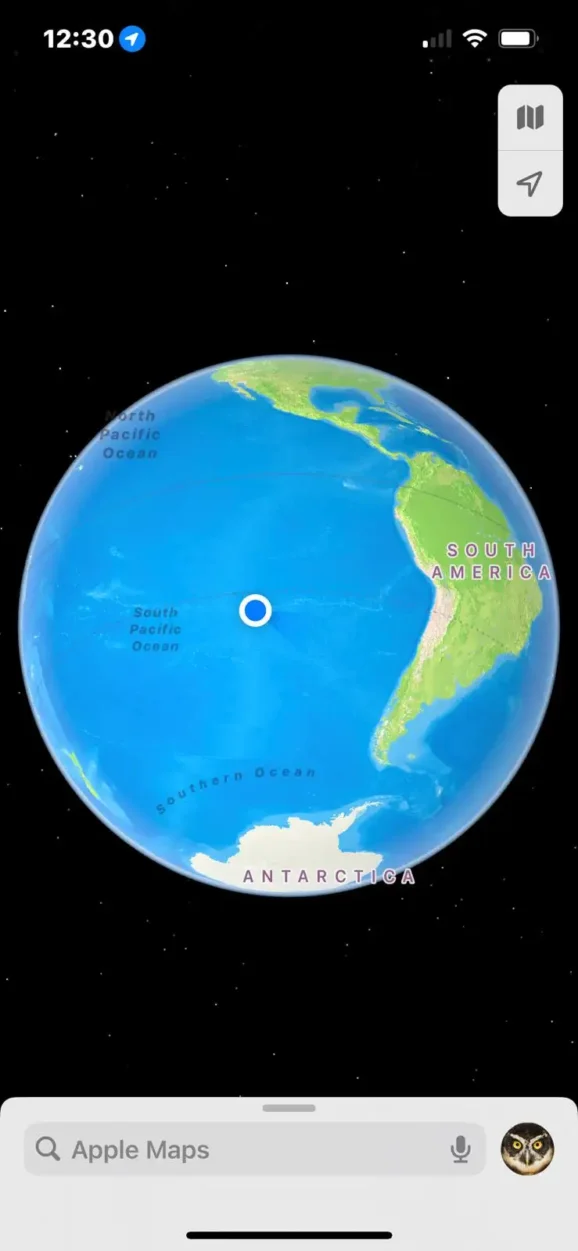
This is the most remote inhabited speck of land on the planet; a triangle of volcanic rock and ocean spray suspended in the South Pacific. The journey to reach it is part of the adventure. A long haul across the world – fourteen hours on the plane from London to Santiago de Chile, then another five-hour flight covering 3,700 kilometres of open ocean.
When you land, you feel it instantly – you’ve arrived at the edge of the map. Its nearest neighbour, the Pitcairn Islands, is more than 2,000 kilometres west. The horizon is so empty that you can see the curvature of the Earth.
It has been my childhood dream to visit the island. In the early seventies, growing up behind the Iron Curtain, I first came across an article about it in a popular science magazine. Fascinated by its remoteness and the mystery of the colossal statues, the moai, carved from tuff stone, I was eager to know about the civilisation that raised these figures, positioned along the coast and gazing inland with enigmatic dignity. As I found out during my visit, it was a society guided by celestial navigation, which lived in extreme isolation and thrived on clan identity and belief in ancestral powers.
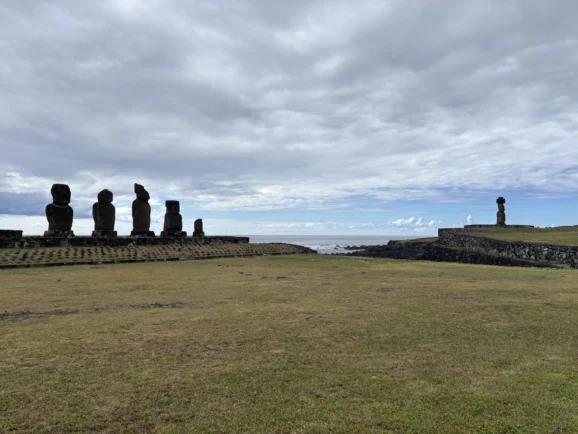
They carved their ancestors out of volcanic rock because the island demanded it. The moai were born at Rano Raraku, a quarry that looks less like a workplace and more like a ritual frontier, where the rock feels alive. The statues were not chiselled with metal – there was none. Instead, they were released from the rockface by toki, hand-held picks fashioned from dense basalt, harder than the volcanic tuff they struck. The carving was done while the statue still lay horizontal, etched into the volcano’s inner slope, the face emerging first – heavy brows, elongated nose, compressed lips, all chiselled patiently into being. Then the moai was lowered downslope on rotating tree trunks towards its ahu – the ceremonial platform – where the finer details were completed upright, the finishing sacramental stage.
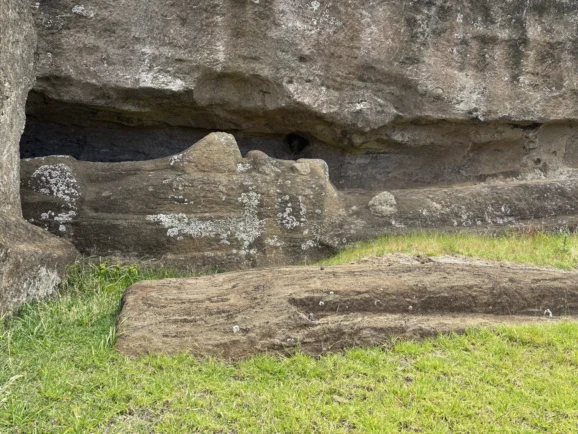
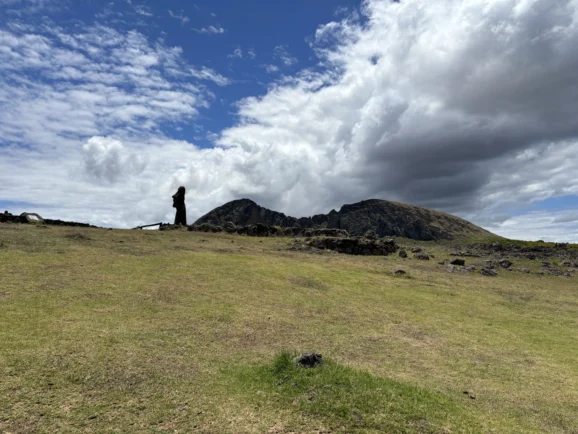
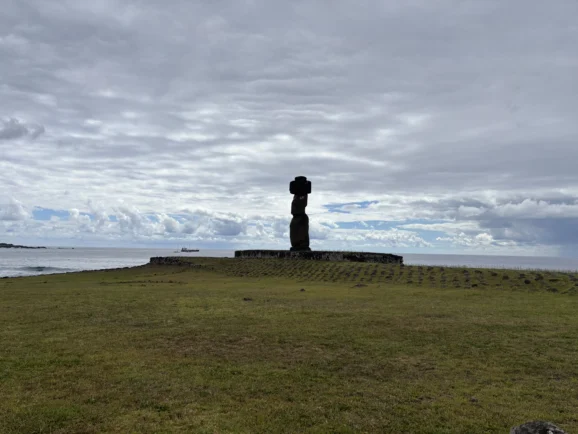
Their purpose was not aesthetic. The moai were vessels of mana – the ancestral authority. They stood along the coastline, backs to the Pacific, eyes turned inland, offering metaphysical protection for clans and territories, anchoring genealogy and hierarchy.
The first inhabitants were thought to have been Polynesian voyagers, masters of open-ocean navigation who pushed the limits of the known Pacific. Scientists originally placed the first settlement between AD 400–800, based on linguistic estimates and early archaeological finds. But more recent radiocarbon studies suggest the island may not have been inhabited until much later – possibly around AD 1200.
When the Dutch explorer Jacob Roggeveen and his crew arrived here on Easter Sunday in 1722, most of the moai were still standing. He was the first European to provide an eyewitness account of the upright statues, writing in his ship’s logs that the inhabitants performed rituals in front of them at sunrise.
By the time Captain Cook visited 50 years later, he reported that some of the moai had been toppled. In the mid-19th century, a British expedition noted that not a single statue remained standing on its platform.
Modern-day fascination with the moai was sparked by the legendary Norwegian explorer Thor Heyerdahl, famed for his 1947 expedition across the Pacific on an Inca raft, the Kon-Tiki. In 1955 he led an archaeological expedition to Easter Island which, although surrounded by controversy over the handling of artefacts and human remains, resulted in the raising of a 25-tonne moai onto its original platform using only indigenous tools and materials. Over the following fifty years, most moai have been painstakingly restored and erected on their platforms. A few have been deliberately kept toppled for the historical record.
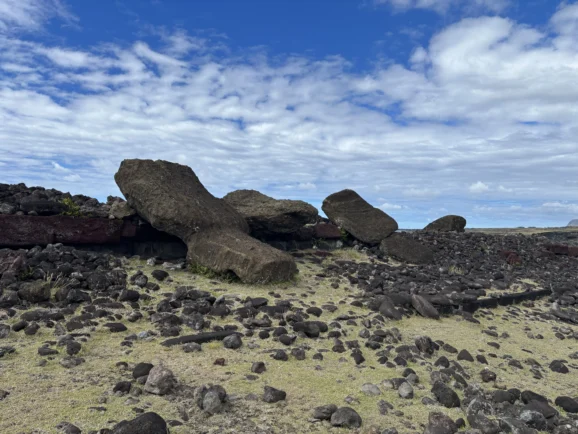
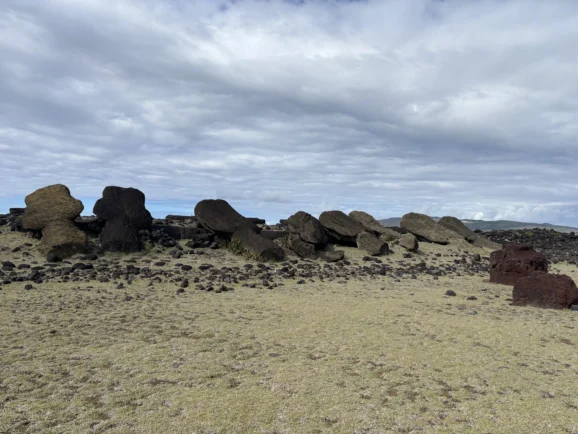
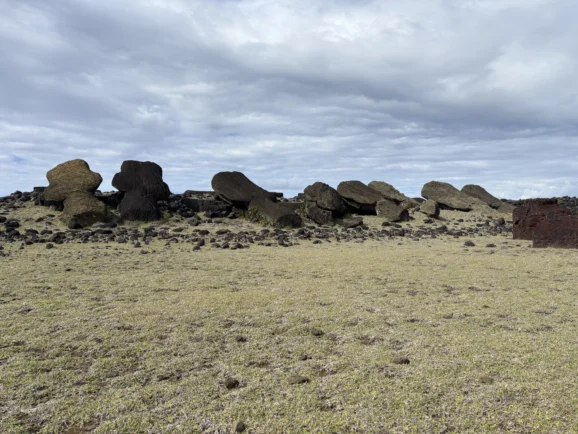
The reasons for the toppling are still debated. They range from earthquake and tsunami to the emergence of new religious cults and tribal warfare over resources. Toppling a rival clan’s moai was seen as a way to “blind” their ancestors and strip the group of its spiritual power.
Today the statues are at the core of the island’s main industry – tourism. The island was annexed by Chile in the late 19th century. The last census shows around 7,000 permanent inhabitants. About half of them are indigenous Rapa Nui. The rest are Chileans, often called continentales. Only ethnic Rapa Nui individuals are permitted to own land on the island. This restriction means that all private businesses require a Rapa Nui partner or a lease agreement. Technically, most of the island is owned by the Chilean state, because it holds title over the Rapa Nui National Park, covering most of the land outside the capital, Hanga Roa.
Non-indigenous Chileans and foreigners are not allowed to stay on the island for more than thirty days unless they meet certain criteria – for example, if they are family members of a Rapa Nui person or have a work permit.
The island has a very fragile ecosystem. There are no permanent rivers or streams. The volcanic soil is highly porous, meaning rainwater quickly sinks underground rather than forming surface rivers. Drinking water is supplied by a state-managed company. It is sourced from a shallow underground aquifer, a subterranean lake of rainwater that has filtered through the volcanic rock. It is pumped out through a series of wells located near the capital, Hanga Roa. Historically, the Rapa Nui people collected water from three volcanic crater lakes, or rano, or used “coastal seeps” – places where fresh groundwater leaks into the ocean at low tide, creating pockets of brackish but drinkable water.
Because Rapa Nui lacks a central sewer system, luxury hotels and affluent modern houses use sophisticated, self-contained on-site treatment units. The sewage is processed in stages where liquids are separated from solids. The solids, or sludge, are treated and stabilised. This nutrient-rich matter is composted and used strictly for non-edible landscaping such as lawns and ornamental gardens. The treated water is filtered thoroughly and used for irrigation, reducing the demand on the island’s limited freshwater aquifer.
However, most homes and hotels use individual septic tanks or soak pits. This is a major environmental concern because untreated waste can seep through the porous rock and contaminate the very aquifer used for drinking water.
The island has made significant strides in recycling. Non-recyclable waste is often baled and buried, while many recyclables are flown back to the mainland.
Getting There and Practicalities.
For those tempted to follow my trip to Easter Island, the following fact file may help. Reaching one of the world’s most remote inhabited islands takes planning, and it is well worth researching the journey and practicalities in advance.
Flights
Easter Island is reached by air from Santiago, with regular LATAM flights linking the Chilean capital to Rapa Nui. Booking well in advance is advisable, particularly in peak periods, as fares can be high and availability limited.
Entry requirements
Arriving on the island involves more paperwork than many travellers expect. Visitors must complete an online entry form for the authorities and be ready to show proof of authorised accommodation, a return ticket and a valid passport. Without the required documentation, boarding may be refused.
Costs
Life on Easter Island is expensive. Prices are typically around 60 per cent higher than on mainland Chile, reflecting the cost of transporting goods to one of the world’s most isolated inhabited islands.
Food and supplies
Most supplies arrive either by air or by monthly cargo ship, so choice can be more limited than on the mainland. Local production is modest, although seafood is a notable exception, with tuna and marlin among the island’s staples.
Medical care
Hanga Roa Hospital is the island’s only medical facility. It is modern and well-equipped for routine treatment, childbirth and minor surgery. In serious emergencies or major disasters, evacuation is carried out by Chilean Air Force aircraft based on the island.
Travel insurance
Comprehensive insurance is essential. Medical evacuation for visitors can be extremely costly, with private air ambulance transfers running to more than US$60,000.
What else to see and do
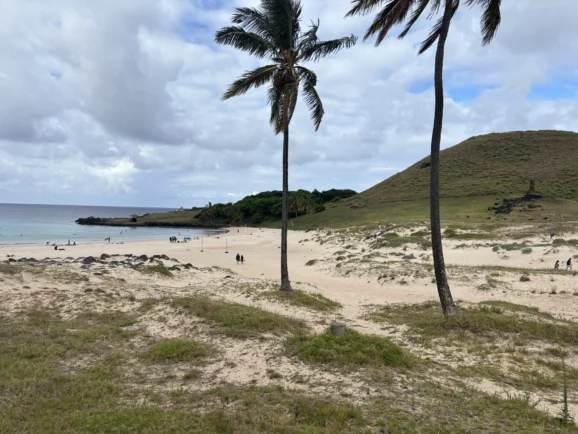
Beyond the island’s archaeological sites and the magnetism of the moai, Rapa Nui offers hiking, horse riding, surfing, diving, sailing and fishing. For those looking to slow the pace, Anakena’s white sand, palm trees and clear Pacific water provide the island’s most inviting beach setting.
Good luck and bon voyage. It is worth it.
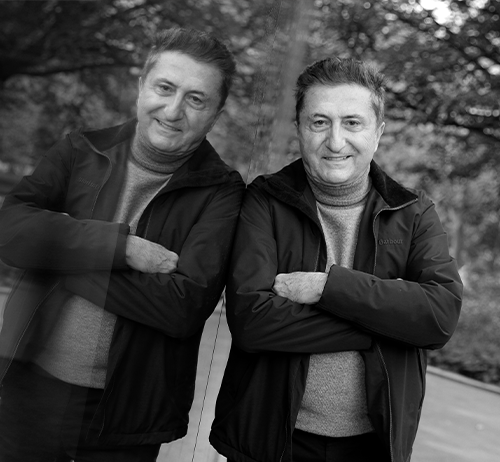
Oggy Boytchev, The European’s Travel Correspondent, is a celebrated former BBC journalist and producer who has covered the majority of international conflicts over the last 30 years, often with the BBC’s World Affairs Editor, John Simpson. His critically acclaimed book Simpson & I lifts the lid on the untold stories behind the headlines and documents some of the most memorable reports to appear on BBC News. Today, Oggy is an in-demand public speaker and author. His latest novel, The Istanbul Connection, is out now.
READ MORE: ‘Oggy Boytchev on Sardinia, an island of contrasts‘. Former BBC journalist Oggy Boytchev explores Sardinia, from Berlusconi’s fortified estate and Porto Cervo’s billionaire playground to medieval hill towns and quiet coastal villages. What he finds is an island of contrasts, at once wealthy and weathered, glamorous and authentic, where curated luxury sits alongside rugged landscapes and centuries of history.
Do you have news to share or expertise to contribute? The European welcomes insights from business leaders and sector specialists. Get in touch with our editorial team to find out more.
Main image: A row of restored moai at Ahu Tongariki, the island’s largest ceremonial platform, on Rapa Nui’s south coast. Credit: All images, Oggy Boytchev