From spacesuit drills and radiation shelter tests to a close pass of the lunar far side, NASA’s Artemis II crew face a packed 10-day schedule after the first crewed launch towards the Moon in more than 50 years
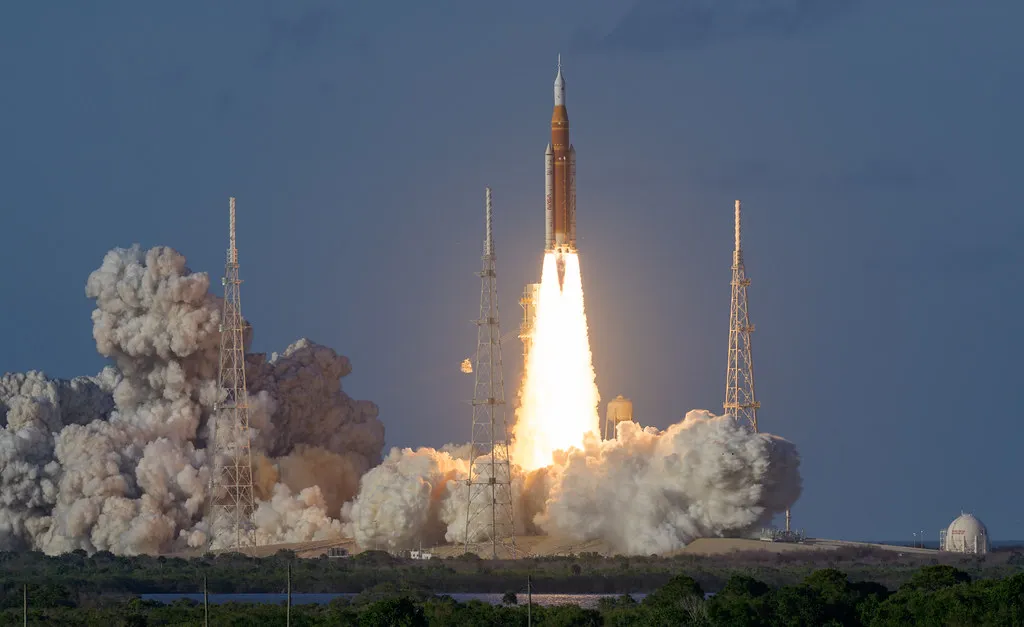
NASA has launched four astronauts on the Artemis II mission, sending a crew around the Moon for the first time in more than half a century and beginning a 10-day test flight that will serve as the first crewed outing for both the Space Launch System rocket and the Orion spacecraft.
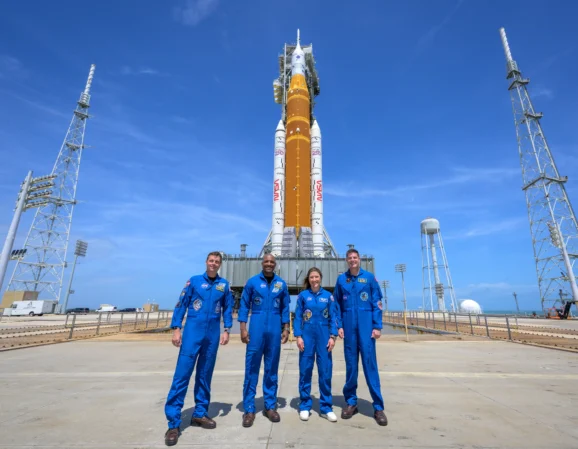
The rocket lifted off from Kennedy Space Center in Florida at 6.35pm EDT on Wednesday, carrying NASA astronauts Reid Wiseman, Victor Glover and Christina Koch, alongside Canadian Space Agency astronaut Jeremy Hansen.
The mission is designed to test the systems that NASA says will underpin later journeys to the lunar surface.
But for the four astronauts now aboard Orion, the trip is anything but a simple lap around the Moon.
Their schedule is tightly planned from launch to splashdown, with each day focused on a different set of tasks. Here’s what they’ll be doing.
Day One
About eight minutes after launch, Orion and its crew were in space.
The first day is about getting the spacecraft into the right orbit and making sure the basic systems are working. Roughly 49 minutes after launch, the rocket’s upper stage is due to fire to raise Orion’s orbit, followed by a second burn to push it into a high Earth orbit.
With the spacecraft still relatively close to home, the astronauts begin a full checkout of Orion’s living systems. That includes testing the drinking water dispenser, the toilet and the system that removes carbon dioxide from the air. They also swap out of their orange launch suits and begin turning Orion’s interior from a launch capsule into somewhere four people can live and work for the next 10 days.
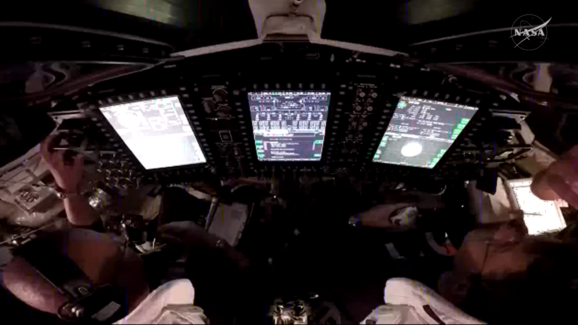
There is also an early handling test. The rocket stage is used as a stand-in docking target so the crew can practise flying Orion towards and around it. Later, after another engine firing, the astronauts get a short sleep before waking again to help prepare the spacecraft for the next big move.
Day Two
The second day is built around the mission’s most important engine firing so far – the translunar injection burn that sends Orion on its way to the Moon.
Before that, the crew starts settling into life in space. Wiseman and Glover begin work with Orion’s exercise device and start the first workouts of the mission. Koch and Hansen have their own exercise session later in the day.
Koch’s main job is helping prepare for the burn itself. This is the firing that puts Orion on the path around the Moon and back to Earth. Once it is complete, the spacecraft is no longer simply circling Earth. It is heading for deep space.
After that, the pace eases slightly, giving the crew time to adjust to the space environment and take part in the first planned video link back to Earth.
Day Three
By the third day, Orion is well on its way and the focus shifts to fine-tuning the route.
The first outbound trajectory correction burn is scheduled for this day, helping keep the spacecraft on track for its lunar flyby. Hansen prepares for that manoeuvre.
Elsewhere, the crew works through a mix of practical tests and medical exercises. Glover, Koch and Hansen demonstrate CPR in space, while Wiseman and Glover check parts of Orion’s medical kit, including the thermometer, blood pressure monitor, stethoscope and otoscope.
Koch also tests Orion’s emergency communications system, and the full crew rehearses the choreography for the lunar observation work they will carry out when they reach the Moon.
Day Four
Day four brings another correction burn, but much of the day is about getting ready for the most visually important part of the mission.
Each astronaut spends time reviewing the parts of the lunar surface they may be asked to photograph when Orion closes in on the Moon. Those targets can vary depending on the exact launch time, so the crew has to study the geography they are likely to see.
NASA has also set aside time for dedicated photography through Orion’s windows.
Day Five
The fifth day marks a major milestone as Orion enters the Moon’s sphere of influence – the point where lunar gravity becomes stronger than Earth’s pull.
Much of the day is devoted to testing the astronauts’ suits in space. These orange Orion crew survival system suits are mainly designed for launch and re-entry, but they could also keep a crew member alive in an emergency if the cabin lost pressure.
That means the astronauts have to test how quickly they can put the suits on, pressurise them, fit into their seats while wearing them, and even eat and drink through the helmet ports.
A final outbound correction burn is also scheduled before the flyby.
Day Six
This is the big one.
On day six, Orion makes its closest approach to the Moon, passing between about 4,000 and 6,000 miles from the lunar surface as it swings around the far side.
The crew will spend most of the day taking photographs, shooting video and recording what they see. NASA says they will become the first people to see some parts of the Moon directly with their own eyes.
Depending on the exact launch time, Artemis II could also set a new record for the farthest humans have travelled from Earth, beating the Apollo 13 mark set in 1970.
The lighting on the lunar surface will depend on the Sun’s angle, which means the astronauts may see anything from stark shadows and crater rims to flatter, more washed-out terrain. As Orion passes behind the Moon, communications with Earth will drop out for between 30 and 50 minutes.
Day Seven
Day seven begins with Orion leaving the Moon’s sphere of influence and starting the journey home.
Scientists on the ground are expected to speak with the astronauts while the lunar flyby is still fresh in their minds. The spacecraft then carries out the first of three return trajectory correction burns.
After that, much of the day is set aside as downtime. It is the nearest thing the crew gets to an off-duty day before the final run back to Earth.
Day Eight
The eighth day includes two of the mission’s more unusual tests.
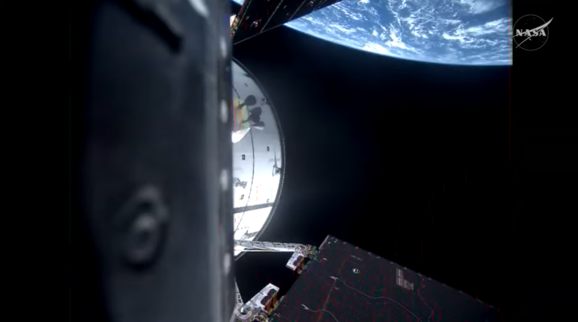
First, the astronauts will practise how they might protect themselves from intense radiation events such as solar flares. Using supplies and equipment already on board, they will build a shelter inside Orion.
Later, they will try manual piloting, steering the spacecraft through a series of tasks and comparing different control modes. In simple terms, this is where the crew gets to see how Orion handles when they take a more active role in flying it.
Day Nine
By the ninth day, attention turns firmly towards getting home.
The crew studies re-entry and splashdown procedures and speaks with the flight control team. Another return trajectory correction burn is scheduled to keep Orion on the right line for Earth.
There are also some less glamorous but necessary final checks. The astronauts will test back-up waste collection procedures in case the toilet fails, and try on compression garments designed to reduce dizziness and light-headedness when they return to gravity.
Day 10
The final day is all about re-entry and recovery.
A last correction burn puts Orion on the right path for splashdown. The crew stows equipment, restores the cabin to its original layout and gets back into their suits.
The crew module then separates from the service module, exposing its heat shield for the plunge through Earth’s atmosphere. Temperatures outside will reach up to about 3,000F.
Once through re-entry, Orion deploys a sequence of parachutes to slow the capsule before splashdown in the Pacific Ocean, where NASA and US Navy teams will be waiting to recover the crew and end the mission.
Jared Isaacman, NASA Administrator, said: “Today’s launch marks a defining moment for our nation and for all who believe in exploration. Artemis II builds on the vision set by President Donald J. Trump, returning humanity to the Moon for the first time in more than 50 years and opening the next chapter of lunar exploration beyond Apollo. Aboard Orion are four remarkable explorers preparing for the first crewed flight of this rocket and spacecraft, a true test mission that will carry them farther and faster than any humans in a generation.
“Artemis II is the start of something bigger than any one mission. It marks our return to the Moon, not just to visit, but to eventually stay on our Moon Base, and lays the foundation for the next giant leaps ahead.”
Amit Kshatriya, NASA Associate Administrator, said: “Artemis II is a test flight, and the test has just begun. The team that built this vehicle, repaired it, and prepared it for flight has given our crew the machine they need to go prove what it can do.
“Over the next 10 days, Reid, Victor, Christina, and Jeremy will put Orion through its paces so the crews who follow them can go to the Moon’s surface with confidence. We are one mission into a long campaign, and the work ahead of us is greater than the work behind us.”
READ MORE: ‘Universe ‘should be thicker than this’, say scientists after biggest sky survey ever‘. The most detailed map of the modern cosmos yet suggests the universe is slightly less “lumpy” than Big Bang physics says it should be, raising fresh questions about dark energy, gravity and how the cosmos evolved.
Do you have news to share or expertise to contribute? The European welcomes insights from business leaders and sector specialists. Get in touch with our editorial team to find out more.
Main image: The SLS (Space Launch System) launches with the Artemis II crew aboard the Orion spacecraft on April 1, 2026, at NASA’s Kennedy Space Center in Florida.Credit: NASA/Bill Ingalls