
Universe ‘should be thicker than this’, say scientists after biggest sky survey ever

John E. Kaye
- Published
- Technology
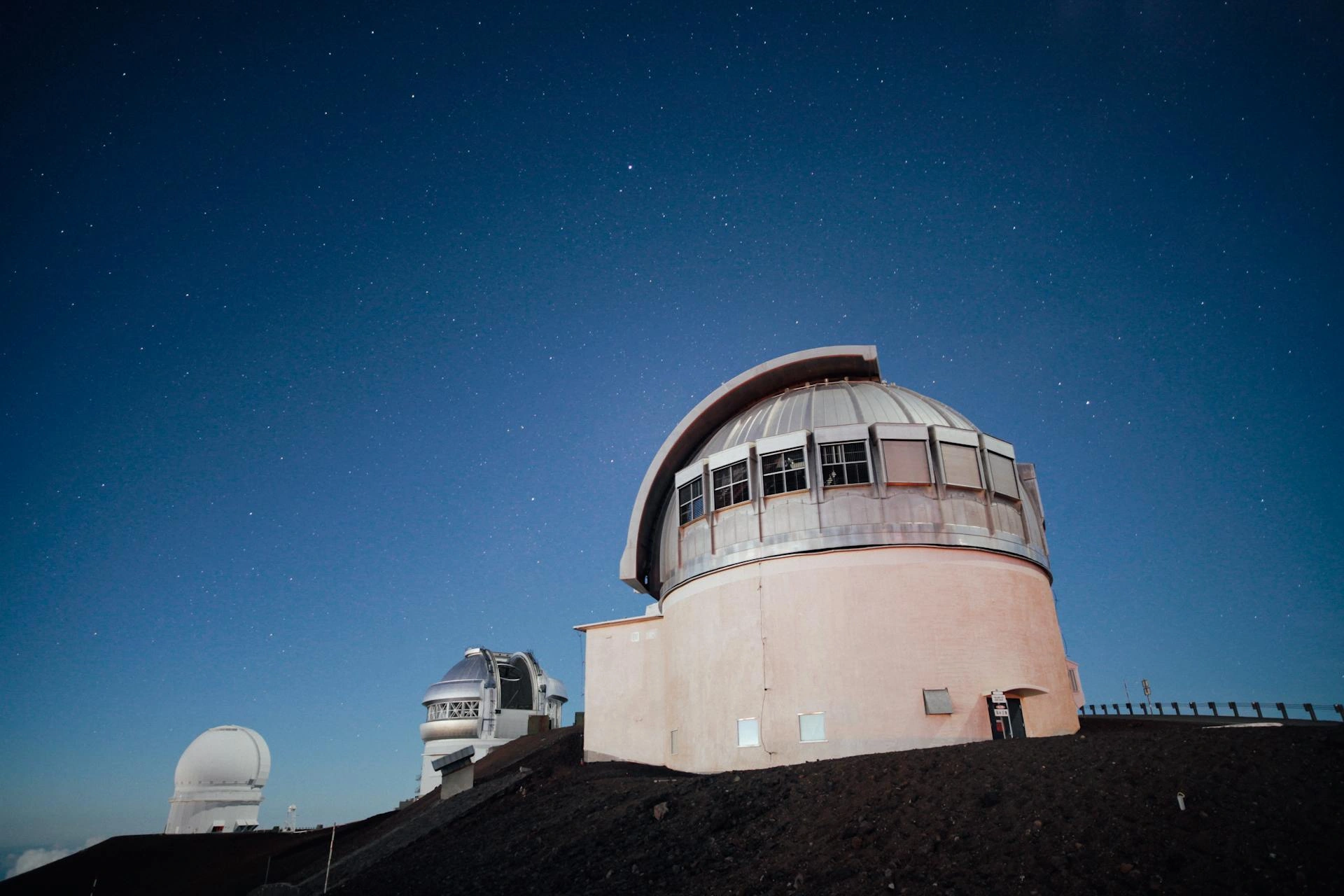
The most detailed map of the modern cosmos yet suggests the universe is slightly less “lumpy” than Big Bang physics says it should be, raising fresh questions about dark energy, gravity and how the cosmos evolved
For decades, cosmologists believed they knew what today’s universe should look like. The Big Bang’s afterglow, mapped in fine detail by space telescopes, allowed them to calculate how matter ought to have clumped together over 13.8 billion years under gravity.
Now, after one of the largest sky surveys ever conducted, astronomers have discovered the universe does not quite match that prediction.
The finding comes from the Dark Energy Survey’s full six-year dataset, released late January, in which scientists mapped the positions and shapes of 140 million galaxies across 5,000 square degrees of sky using a telescope in Chile.
The early universe was almost perfectly smooth, marked only by tiny ripples in density. Over billions of years, gravity should have amplified those ripples into a cosmos that is slightly more strongly clustered — more “lumpy” — than it once was.
But while the new map shows the clumps are there, they are not quite as strong as the equations say they should be.
Cosmologists measure this large-scale “clumpiness” using a parameter that describes how tightly matter is grouped across vast distances. According to the standard Big Bang model, the universe today should appear a little more thickened by gravity than what the survey is seeing.
The difference is small, and well short of the level needed to claim a discovery. But it is persistent enough that scientists can no longer dismiss it as statistical noise.
The results come from combining two powerful techniques: tracking how galaxies cluster together in space, and measuring how the light from distant galaxies is subtly warped as it passes through the gravity of matter in front of them, an effect known as weak gravitational lensing.
For the first time, the collaboration combined the full six years of these measurements and compared the result to predictions derived from early-universe data collected by missions such as Planck, which mapped the Big Bang’s faint radiation.
Those early measurements allow physicists to calculate what today’s universe should look like. The new observations show it looks slightly different.
The results remain broadly consistent with the standard model of cosmology, known as Lambda-CDM, in which dark energy has a constant strength over time and dark matter provides the gravitational framework for galaxies. They are also compatible with an extended model in which dark energy can vary.
But the slight mismatch between the early-universe predictions and the present-day observations is where the scientific interest lies.
The findings suggest that something in the chain — dark energy, gravity, dark matter, or the interpretation of the Big Bang’s afterglow — may be more complicated than first assumed.
The Dark Energy Survey ran from 2013 to 2019 and represents one of the most ambitious attempts yet to understand why the expansion of the universe is accelerating, a phenomenon attributed to dark energy, thought to make up about 68 per cent of the cosmos.
The analysis spans 19 scientific papers, with the main results published on the arXiv preprint server in January 2026 ahead of formal publication in Physical Review D.
READ MORE: ‘Artemis II set to carry astronauts around the Moon for first time in 50 years‘. NASA is preparing to send four astronauts beyond Earth orbit and around the far side of the Moon in a 10-day mission designed to prove its new rocket and spacecraft can safely carry humans into deep space.
Do you have news to share or expertise to contribute? The European welcomes insights from business leaders and sector specialists. Get in touch with our editorial team to find out more.
Main image: Kelly/Pexels
TOP STORIES
-
 North Korean agents are infiltrating Western businesses by posing as employees, security chief warns
 -
Hackers could bring Britain’s essential services to a standstill, security chief warns after global website shutdowns
-
We’re talking to almost twice as many people on the phone as a decade ago, study finds
-
Scientists and engineers quitting jobs as AI changes roles ‘beyond recognition’, study finds
-
Deepfakes and identity fraud drive new wave of post-hire background checks
-
Brits trust AI with their health but not their money
-
Robot sales rocket 24% as 250,000 machines snap up jobs in warehouses, hotels and hospitals
-
Nearshore supply chains: why Costa Rica is emerging as a strategic gateway for global manufacturing and innovation
-
Bank of England governor warns AI poses growing ‘increasingly significant’ threat to financial stability
-
Inside Cartago’s US$1.186bn green investment hub
-
Smart manufacturing: why Costa Rica is quietly positioning itself as Latin America’s next industrial innovation hub
-
Giant wind turbine with 252-metre rotor could mean fewer machines and cheaper offshore power
-
Talent and workforce development: how Costa Rica is building a competitive knowledge economy
-
Your biggest rival could be your best technology partner, research finds
-
China unveils giant crane capable of lifting 9,300 family cars
-
LED lights could be ‘the new asbestos’, UCL scientists warn
-
OpenAI admits AI models hid mistakes, invented data and acted without permission
-
AI arms race could mean fewer cold emails reaching your inbox
-
Costa Rica is writing the next chapter of global MedTech
-
SpaceX to launch one-tonne orbital factory for European space firm in 2028
-
The Costa Rica Report 2026 is out now
-
Europe’s healthcare sector lags on AI uptake – but leads once it starts using it
-
Stranded drivers could soon call for help even with no mobile signal
-
NASA backs space ‘air brake’ that could cut years off missions to Uranus and Neptune
-
MPs and peers call for UK ban on AI that could evade human control
















Universe ‘should be thicker than this’, say scientists after biggest sky survey ever
John E. Kaye
- Published
- Technology
TOP STORIES
-
North Korean agents are infiltrating Western businesses by posing as employees, security chief warns
-
Hackers could bring Britain’s essential services to a standstill, security chief warns after global website shutdowns
-
We’re talking to almost twice as many people on the phone as a decade ago, study finds
-
Scientists and engineers quitting jobs as AI changes roles ‘beyond recognition’, study finds
-
Deepfakes and identity fraud drive new wave of post-hire background checks
-
Brits trust AI with their health but not their money
-
Robot sales rocket 24% as 250,000 machines snap up jobs in warehouses, hotels and hospitals
-
Nearshore supply chains: why Costa Rica is emerging as a strategic gateway for global manufacturing and innovation
-
Bank of England governor warns AI poses growing ‘increasingly significant’ threat to financial stability
-
Inside Cartago’s US$1.186bn green investment hub
-
Smart manufacturing: why Costa Rica is quietly positioning itself as Latin America’s next industrial innovation hub
-
Giant wind turbine with 252-metre rotor could mean fewer machines and cheaper offshore power
-
Talent and workforce development: how Costa Rica is building a competitive knowledge economy
-
Your biggest rival could be your best technology partner, research finds
-
China unveils giant crane capable of lifting 9,300 family cars
-
LED lights could be ‘the new asbestos’, UCL scientists warn
-
OpenAI admits AI models hid mistakes, invented data and acted without permission
-
AI arms race could mean fewer cold emails reaching your inbox
-
Costa Rica is writing the next chapter of global MedTech
-
SpaceX to launch one-tonne orbital factory for European space firm in 2028
-
The Costa Rica Report 2026 is out now
-
Europe’s healthcare sector lags on AI uptake – but leads once it starts using it
-
Stranded drivers could soon call for help even with no mobile signal
-
NASA backs space ‘air brake’ that could cut years off missions to Uranus and Neptune
-
MPs and peers call for UK ban on AI that could evade human control



