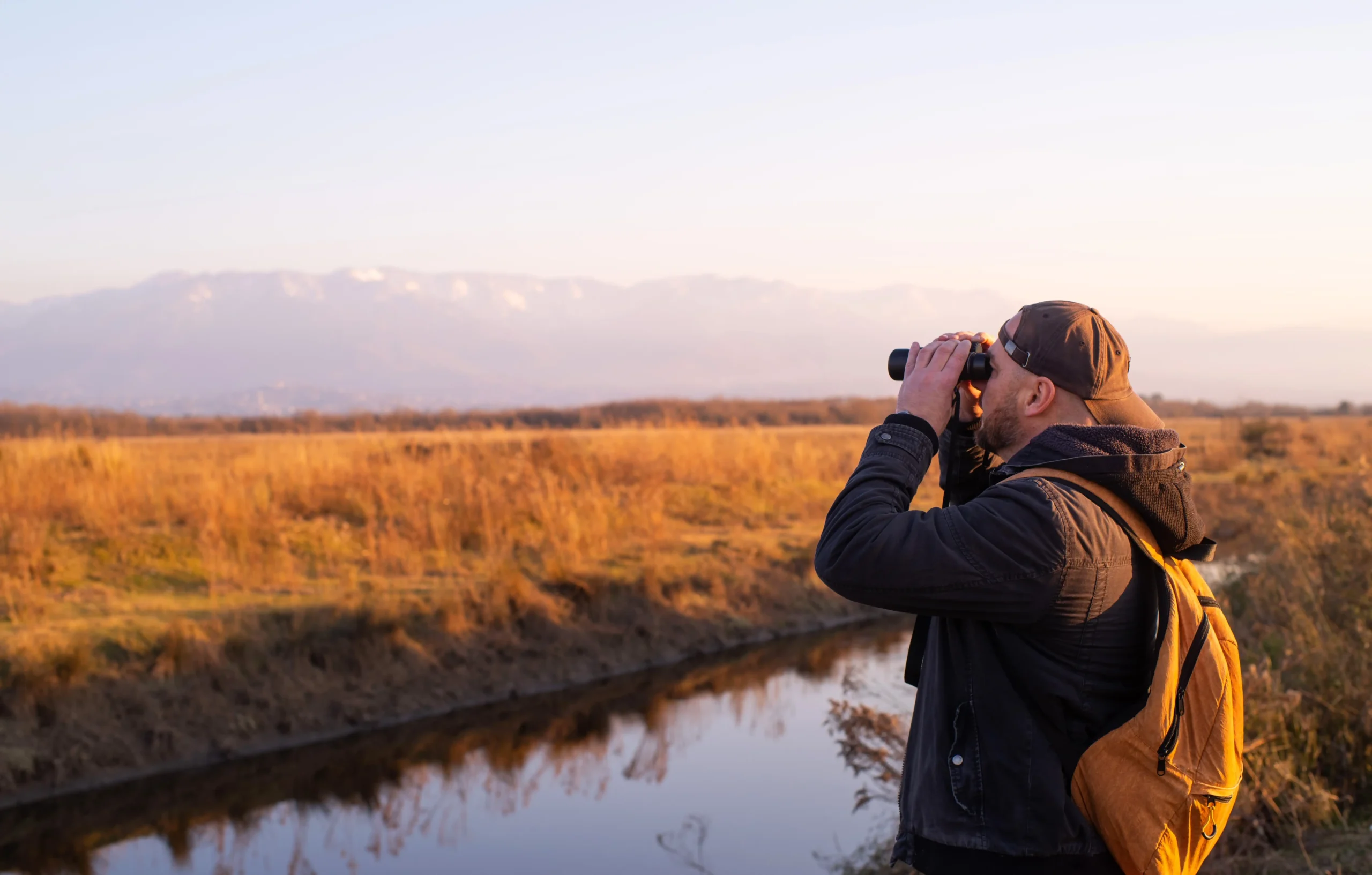
As TikTok and Instagram fill with feeders, feathers and fledglings, birdwatching is enjoying an unlikely revival, with a new generation swapping screens for binoculars, writes Alan Lawson
I used to lie about birdwatching. Not outright lie, exactly, but I certainly didn’t volunteer it. If asked what I was doing at the weekend, I’d say “walking” or “getting some air”. Anything except admitting I was planning to spend six hours staring at a hedge in the rain, hoping something with feathers might briefly pass through my field of vision.
Birdwatching has never had great branding. For most of my life it meant middle-aged men in anoraks, whispering excitedly about a bird you had already missed. It involved standing still for long periods, being cold, and developing strong opinions about waterproof trousers. It was not, by any stretch, cool.
And then Gen Z got involved.
I first noticed something was different when birds began appearing on my phone. Not the occasional documentary clip, but endless videos: feeders being unboxed, iridescent wings flapping in slow motion, young people earnestly explaining why they had taken up birdwatching in their twenties.
Birdwatching hadn’t changed. The audience had, and with it, birdwatching through screens.
Phones, and screens in general, are so good that we’ve become used to seeing things with a saturation of colour, and pixels per inch, that the real world can seem somewhat dull. I blame David Attenborough. What business does he have giving me whales breaching next to manganese icebergs in a resolution that is hypnotically real, too real perhaps? Of course, I’m joking, half joking at least. I love Saint Attenborough as much as the next person, but I have started to suspect that what began as a call to action, reminding us of the natural world outside of our phones and TV screens, has become the thing in itself. In other words, the hyperreal is quietly replacing the real. The French philosopher Baudrillard said it best: ‘More real than real, that is how the real is abolished’.
The birds on my garden feeder are not abolished by my phone, but they do seem a little less colourful. Maybe Baudrillard was onto something, maybe the real world fades just a little bit when held up against the digital representation of it. That said, birdwatching is going through a renaissance, largely because of screens. TikTok and Instagram have become homes for communities of bird enthusiasts. One such handle, Gourmetbiologist, has 650,000 followers, with one post on hummingbirds achieving over 2 million likes. On TikTok, #birdwatching has over 460k posts, with everything from unboxing videos of bird feeders to specialist photographers. A typical tagline, ‘So cooked I started birdwatching in my 20s’, captures much of the zeitgeist: people are ‘cooked’, there is a mental health epidemic (perhaps in part due to our addiction to phones), and what was once considered a pastime for older people has become a perceived solution to social ennui and anxiety, a way out of the matrix, so to speak.
In short, birdwatching has become cool.
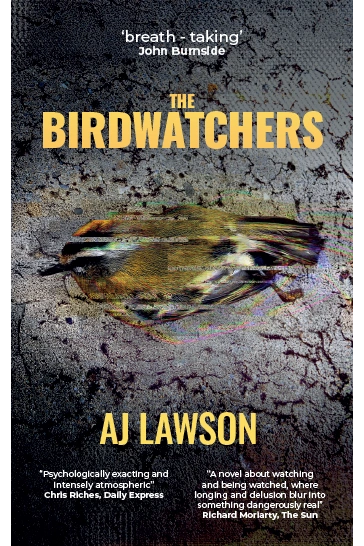
I should probably admit here that I’ve written a book about all this. The Birdwatchers, my debut novel, is published by Foreshore and follows Jean, a young man stuck in the quiet routines of a Swiss city, who feigns an interest in birdwatching to get closer to a woman he sees on his daily commute. What begins as an awkward pretence becomes something else entirely, as birds – and the act of watching them – begin to reshape how he sees the world, and himself. It turns out that standing still long enough to notice something can be a way of being noticed in return.
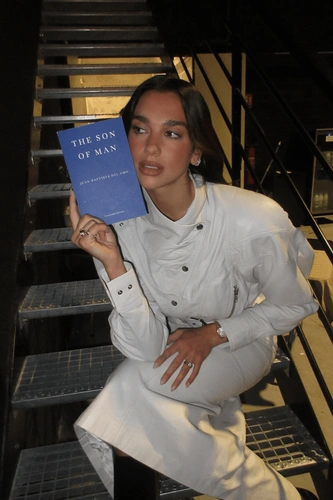
U.S Wildlife and Fisheries estimates there are over 90 million birders in the States alone. The UK has possibly 3 million birders, and the RSPB has over 1 million members. These are not insignificant numbers, and they are perhaps mirrored in other social media phenomena. Books and reading, for example, have made a cool comeback. Dua Lipa’s book club, Service95, has a quarter of a million followers. In the age of online, short-form reading, a renaissance in books seems to be happening through the very channels that apparently usurped them in the first place. And so is cooking on campfires, fishing, and living in the forest. Leo Primal is the Instagram handle for a man who climbs trees; sometimes he walks on all fours. It’s my kind of thing, and I’m part of a respectable 2.2 million followers who, oddly, enjoy watching him jump from one tree to another, 50 feet off the ground. It makes me wonder about our ancestral urges. Urges that are finding their way back into civilisation through the wonderful thing that is social media. The stuffy old gatekeepers have been overthrown, hooray, and for the cost of a smartphone we can be part of a community of primal maniacs, book lovers, or birders, wherever we happen to live in the world.
But then again, maybe Baudrillard was right. In another text, ‘Screened Out’, he writes: ‘What if television no longer related to anything except itself as message?’. Leo Primal’s jumping from tree to tree is, for us, a piece of simulacra. We cannot feel the bark against our shins, the thrill of vertigo, or the painful injuries that likely occur from time to time. We also see him from above, shot by a drone, and the activity is cinematic. The advances in AI confirm Baudrillard’s thesis: there is no need for Leo Primal to shoot videos; AI can make the same videos without any person ever climbing a tree again. The hyperreal now has a fully circular economy, from consumer to creator, and it is no longer a representation, it is reality. The physical world of trees and birds, and Leo himself, is maybe now best described as pre-real.
Birdwatching outside can be a dull and fruitless activity. In my local spot, it generally means wandering around reed beds in the winter, looking out for migrants that have blown in on the foehn. It’s cold, grey, and much of the time you don’t see much. One of my most memorable outings was on a birdless day during Covid, when we found a large Aesculapian snake sunning itself. I’m not that interested in snakes, but this was oddly tremendous. Maybe because it was unplanned, uncurated, a moment where the world decided to surprise me.
Likewise, a birding trip to Costa Rica was largely inspired by images on social media. To then confront real hummingbirds in the wild was altogether different: less colourful, less saturated, more frantic as they darted in and out of view, but at the same time more urgent. Walking around a former coffee plantation at dawn, sleep in our eyes, coffee on our breath, a coppery-headed emerald, then a purple-throated mountaingem – words can’t convey how it felt to finally see them in the flesh, appearing like fireflies in the twilight, in their world, privy to their way of being.
Hobbies like birdwatching are often nudged along by the metrics of the collector mentality, and whether that be ticking off bird species, climbing mountain summits, or running distances, we have an odd need for numbers, even though the numbers are never enough. But if it conspires to place people in unusual places doing unusual things, then that’s just fine with me. Some people will improve their mental health, some will find friendships, some will fall in love with birds, and the lucky few may receive an ancient gift from birds to man, something conveyed in a language we don’t speak any more.
All I know is that the ‘something’ that one gets from going birdwatching, or reading books, or even climbing trees, is a gift given to those who do it. Birds on a screen are beautiful, but only by being out there, in the pre-real, textured by weather, can we note their gestures, the lines they scratch across the sky, the ineffable lessons they teach, and we struggle to understand.
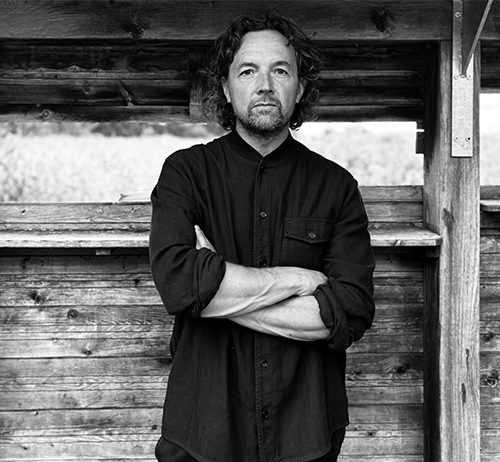
Alan Lawson is an award-winning artist, writer and climber of Scottish–Spanish descent, with paintings held in public collections including the Scottish National Portrait Gallery. A graduate of the Florence Academy of Art and co-founder of The Alpine Fellowship, his writing has appeared in journals such as Studies in Photography, American Arts Quarterly and Bare Hands Poetry Magazine, and he was shortlisted for the 2014 Bridport Poetry Prize. His debut novel The Birdwatchers will be published by Foreshore Books in March
READ MORE: ‘The Reese Witherspoon effect: how celebrity book clubs are rewriting the rules of publishing‘. A single Instagram pick from a celebrity like Reese Witherspoon can turn an unknown novel into a global bestseller overnight. Here, Milosh Zezelj, our European Books & Culture Correspondent, unpacks how celebrity book clubs have become one of publishing’s most potent sales machines.
Do you have news to share or expertise to contribute? The European welcomes insights from business leaders and sector specialists. Get in touch with our editorial team to find out more.
Main image: Shutterstock