At 85, Stanley Johnson finally meets his mountain gorillas in Uganda’s Virunga forests — one silverback encountering another — before tracing a journey that runs from chimpanzee-filled gorges to State House in Entebbe and a one-to-one audience with Uganda’s long-serving President Yoweri Museveni
There are some days you never forget. For me, January 29, 2026, ranks near the top. That was the day I first saw mountain gorillas in the wild.
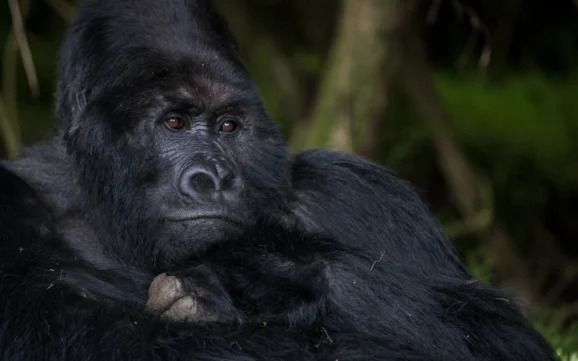
I had seen lowland (or Grauer’s) gorillas before — in eastern Congo, for example — but had never observed at close quarters the famous mountain gorillas (Gorilla beringei beringei) in their own remarkable habitat: the forests of the Virunga Mountains, that cluster of mighty peaks where the borders of Uganda, Rwanda and the Democratic Republic of the Congo (DRC) converge.
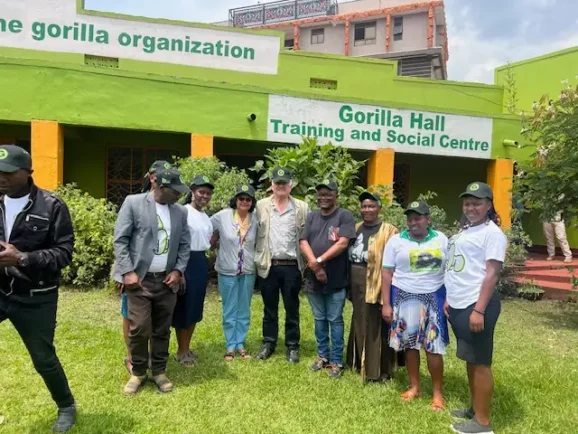
My failure to see ‘mountain’ gorillas was galling, since for years I have supported the Gorilla Organisation (GO), a charity dedicated to saving the mountain gorilla and improving the lives and livelihoods of local people. I had even climbed Mount Kilimanjaro a decade earlier to raise money for GO. Yet I had never made it to the Virungas.
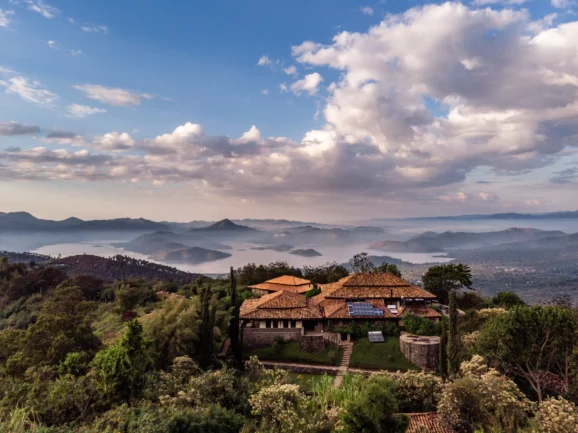
Then, just before Christmas, I bumped into my old friend Praveen Moman, who founded Volcanoes Safaris in 1997. The company is known for being the pioneers of gorilla and chimpanzee ecotourism in Rwanda and Uganda. Originally simple camps established near the gorilla parks, today their five hand-built luxury lodges are the leading lodges of the region.
“Why don’t you plan a trip if you want to see the mountain gorillas?” Praveen asked me.
Less than three months later, I found myself on the terrace of Volcanoes Safaris’ Mt Gahinga Lodge, lacing my boots and preparing for a strenuous day.
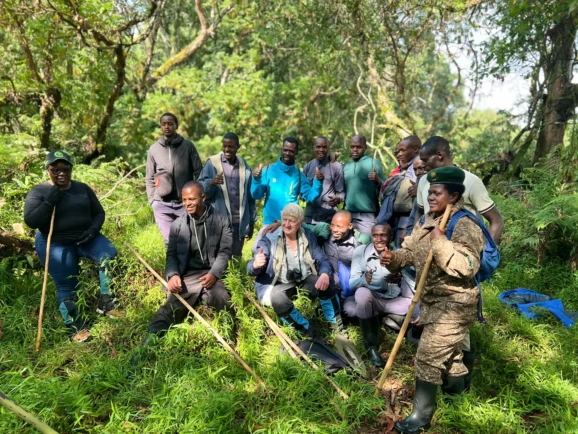
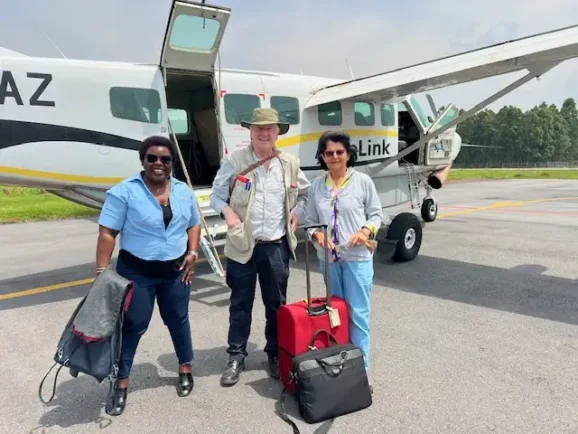
The hardest part of the climb proved to be the narrow, twisting rocky track leading to the boundary of Mgahinga National Park. I carried two stout sticks and needed both. By the time I reached the reception centre at the park’s official entry point, I welcomed the break. My companions that day — Nimisha Madhvani, Uganda’s High Commissioner in the UK, and her colleague Miriam Otengo — were equally pleased to pause.
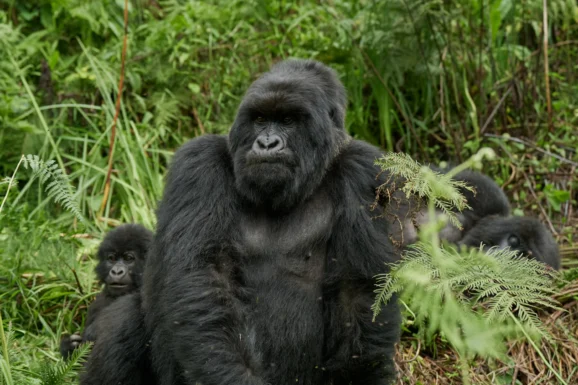
While we caught our breath, Florence, one of the park rangers, briefed us. “Mgahinga National Park is one of Uganda’s smallest national parks — 32 square kilometres in all. Just one family of gorillas lives here,” she explained. “We call it the Nyakagezi gorilla group. There are 11 gorillas in the group altogether. Three silverbacks, two infants, one blackback, three adult females, one subadult and one juvenile.
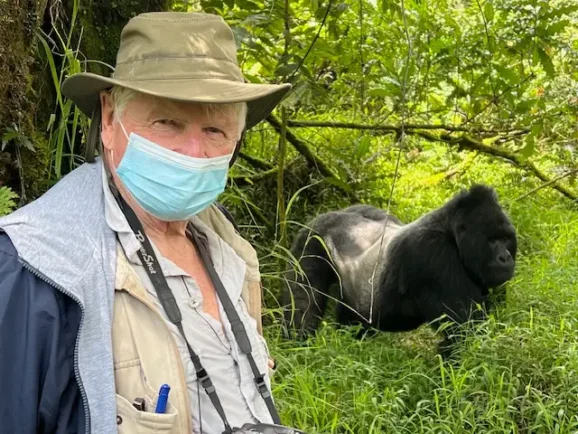
“We reckon they are about two hours’ march away at the moment. We’ll have an hour with them, not more than that, then it’ll be time to come back. So that’ll be about five hours trekking in all. Remember, masks on all the time, and don’t get closer than ten metres. If a gorilla charges, just stand still.”
Her warning recalled my first encounter with a silverback in the DRC’s Kahuzi-Biega Park in 2009. My guide, armed and in camouflage, warned that the gorillas were not fully habituated. “Keep your head down,” he cautioned. “If a large male gorilla catches sight of your fair hair, he may think you’re a rival silverback!”
Soon afterwards we heard roaring in the bush. A gorilla burst into the open, just a few feet away. I lowered my gaze as instructed. The animal charged — 180 kilograms of muscle heading towards us.
“Don’t move,” the guide hissed.
I was lucky. The gorilla swerved at the last moment and crashed into the undergrowth.
Remembering that experience, I wondered whether similar surprises awaited us. In the event, any apprehension proved unnecessary. After about 90 minutes Florence halted and pointed into the forest. “They’re in there,” she whispered.
We followed quietly. “Look up,” she instructed.
High in a tall tree was a large black shape silhouetted against the sky, pushing and pulling at branches as it fed. It was a moment to savour.
“That’s a blackback, not a silverback,” Florence explained. “It won’t reach maturity for a few more years.”
We moved further into the bush, rounded a bend, and found ourselves in the midst of a gorilla family gathering: the post-lunch lie-down.
We spent our allotted hour in awe. Just how lucky can you be? This was the jackpot. Were we welcome visitors? Hard to say. The family seemed content to continue their lives unbothered by our presence.
Mark, the alpha male silverback, took one look at us and rolled onto his back, legs splayed. A female emerged from the trees with an infant in tow. High above, the blackback male remained on his perch, stuffing leaves and fruit into its mouth.
By the time our hour was over, we had seen every single one of this eleven-member family group. Whilst the population of mountain gorillas has been slowly increasing, there are still only around 1,100 alive today. To help safeguard the tiny, protected areas in which the great apes live, the Albertine Apes Alliance was established in 2022 by Volcanoes Safaris to act as an informal network bringing together stakeholders to focus on collaborative action and advocacy.
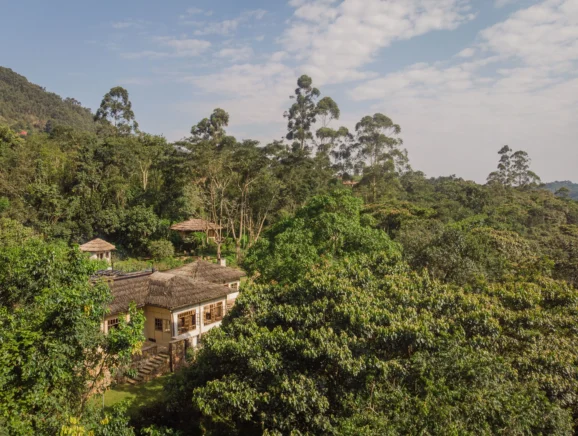
The next day, we flew from Kisoro to Kasese Airport before heading north to Volcanoes Safaris’ Kibale Lodge. Opened in July 2024, it sits on a ridge with stunning views of the Rwenzori Mountains towards the west and the plains of Queen Elizabeth National Park to the south.
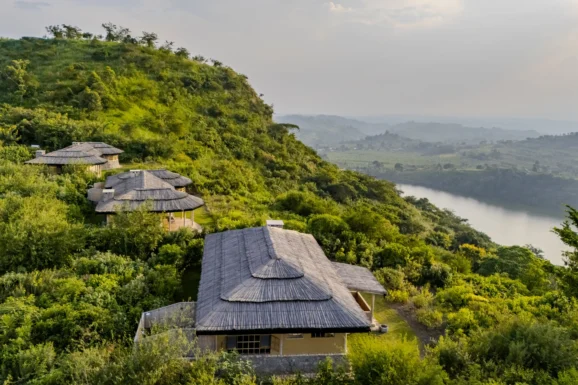
Kibale Lodge is ideally placed for chimpanzee trekking, just outside Kibale National Park which, with over 1,500 individuals, contains the largest chimpanzee population in Uganda.
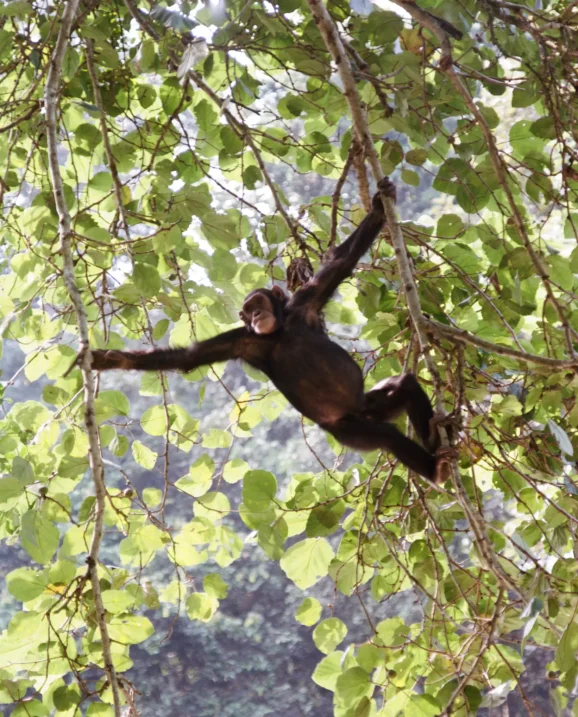
Prepared for another long trek, I was relieved when our guide raised a hand shortly after we set off. “Listen!” What we heard was not a single chimp “vocalising” but a whole troop unleashing a veritable cacophony of sound.
We saw perhaps 20 or 30 chimpanzees that day. The alpha male fascinated me as we watched from a safe distance while he picked nits from his fur.
“The alpha male is not necessarily the strongest chimpanzee in the group,” the guide explained. “But he knows exactly what is going on. He will deal with offenders if he has to.”
Two days later, after moving to Volcanoes Safaris’ Kyambura Gorge Lodge, we saw more chimps in Kyambura Gorge.
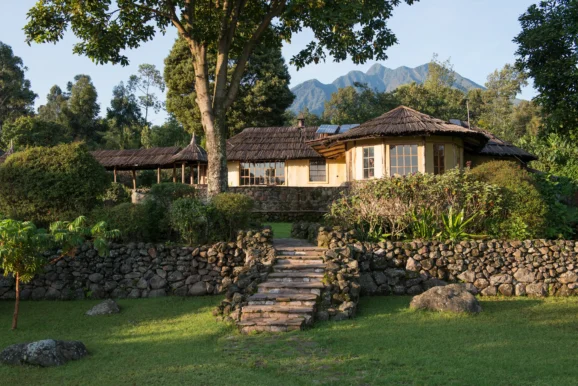
Volcanoes Safaris’ Head Guide Francis Kiwanuka explained: “The Volcanoes Safaris Partnership Trust (VSPT) connects Volcanoes lodges with neighbouring community and conservation initiatives, including the Gahinga Batwa Village at Mount Gahinga Lodge, which was established in 2018 to provide a permanent home for Batwa families displaced when the park was created in 1991.
“VSPT is looking at the feasibility of a corridor of protected land at Kyambura, so that the chimps in the gorge can interact with other nearby chimp populations and thereby broaden the genetic base.
“VSPT has partnered with the Jane Goodall Institute at Kyambura Gorge since 2021 to support its threatened chimpanzees. A new monitoring project, based at the VSPT Kyambura Research Centre, will launch this year and employ local trainee researchers. The VSPT has also established a cultural partnership with the Rwenzori Sculpture Foundation, founded by Rungwe Kingdon, a leading British sculptor, to support local contemporary Ugandan artists in their incredible work.”
Kyambura Gorge was fascinating from a conservation perspective and physically challenging. I was glad of assistance on the descent, and gladder still when hauling myself back up.
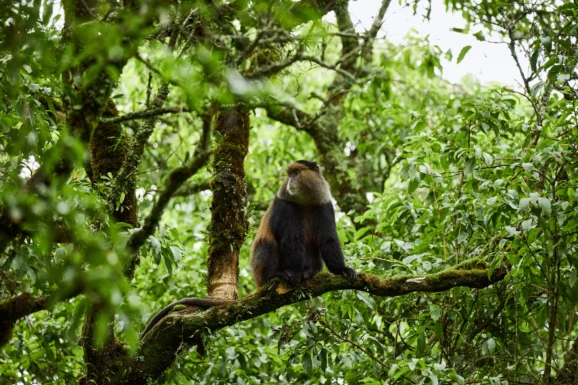
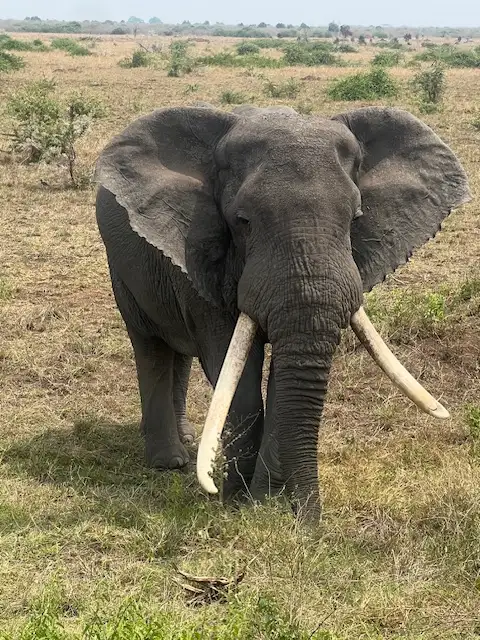
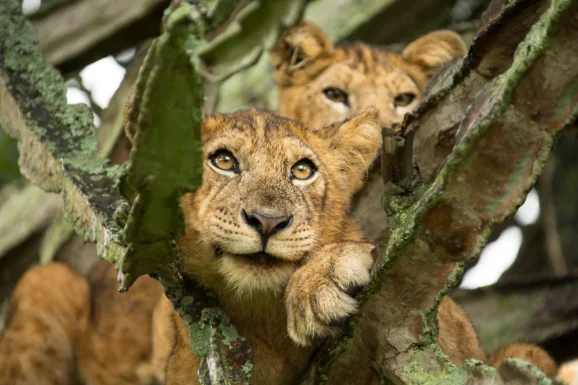
Driving to and from the gorge, we swept through Queen Elizabeth National Park. Cape buffalo, Uganda cob, waterbuck, warthog, lion, leopard, hyena, giant forest hogs — if lucky, you will see them all. More than once we stopped to let elephants cross the road.
You can stand on the Equator with one foot in the Northern Hemisphere and the other in the Southern Hemisphere. You can also retrace the savannah journey made by Queen Elizabeth II and the Duke of Edinburgh in 1954.
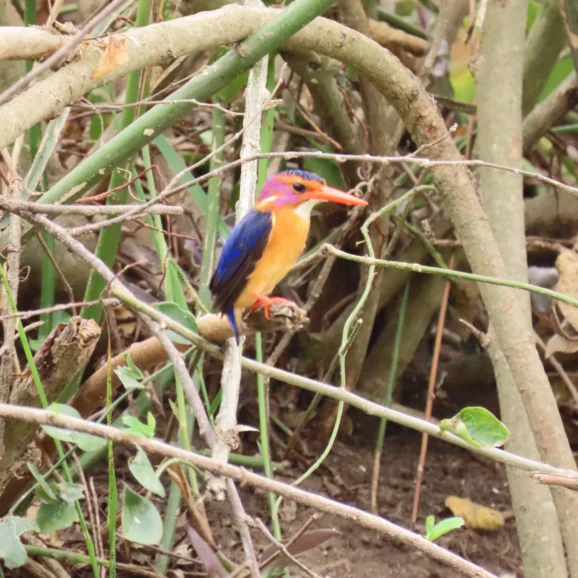
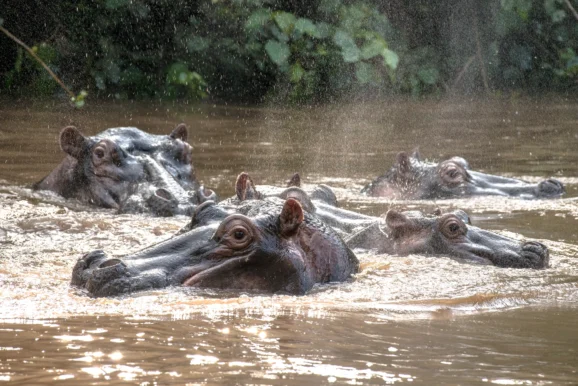
A boat trip along the Kazinga Channel, linking Lake Edward and Lake George, revealed the largest concentration of hippos in Africa. For birders it is paradise: African fish eagles, spoonbills, cormorants, skimmers, pelicans and the shoebill stork. I even managed a decent photograph of the elusive malachite kingfisher.
Back in Kampala, Nimisha Madhvani arranged my stay at the Fairway Hotel. Its owner and Managing Director, Azhar Bandali Jaffer, and his wife Kanu hosted lunch.
“Fairway Hotel is very important to me,” he said. “Four generations of my family have built this legacy and with God’s grace, I hope my own children will continue it on.”
The property began life as a family home in 1927, its tenure spanning colonial rule, independence, coups, revivals and reinvention.
“Then, in 1969,” he continued, “history quite literally knocked at the door! The papal visit to Uganda required discreet, secure accommodation for a Vatican delegation, and the house was rapidly — and resourcefully — transformed into a small hotel.”
Today it offers fine food and is situated conveniently close to the golf course.
Thanks to good planning by High Commissioner Madhvani and Juliana Kagwa of the Uganda Tourist Board, the second part of my visit was equally eventful. A video diary went out almost nightly on UBC national news.
The first episode recorded our visit to the mosque gifted by Gaddafi and opened in 2007. With UBC cameras in tow, we climbed the 166 ft minaret (272 stairs — I counted!). From the top we saw Makerere University, the Anglican and Catholic cathedrals, and the Kabaka of Buganda’s Palace.
UBC also covered our visit to the UNESCO World Heritage site at the Tomb of the Kings and to the Shrine of the Martyrs, where converts were burned in 1885. They followed us to the Mehta (Lugazi Hills) Golf and Country Club, to Madhvani Sugar in Jinja, to the Jinja Sailing Club, to the Source of the Nile, to Kapeeka Industrial Estate, and when we were received by General Salim Saleh.
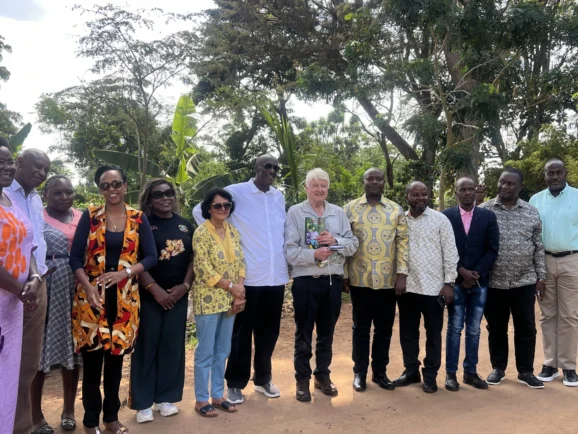
The high point of my stay in the capital was time spent with Uganda’s long-serving President, Yoweri Museveni. In fact, I met him on two separate occasions.
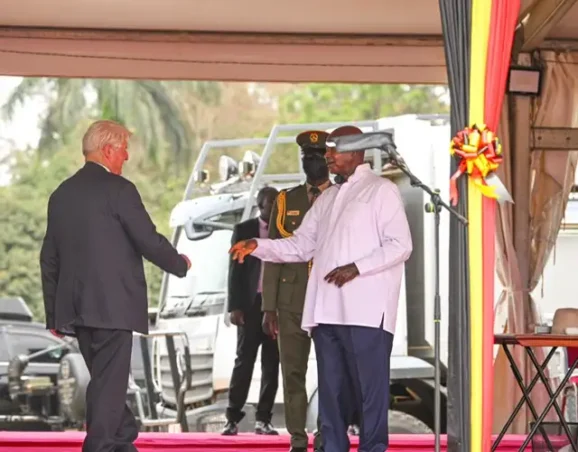
The first was at the National Resistance Movement Liberation Day celebrations in Kampala, which I attended through the good offices of Nimisha Madhvani. I found myself seated beside the President, recently re-elected for a seventh term. His speech lasted over an hour and was met with thunderous applause.
“How old are you?” he asked, as he returned to his seat.
“85,” I replied.
“You’re a young man!” he laughed.
The second meeting took place before I left Uganda, when I was granted an official one-to-one audience with him at State House in Entebbe. We spoke for at least an hour.
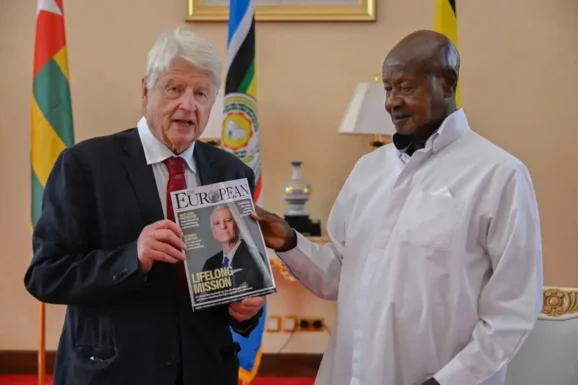
“Two things, actually, sir,” I replied when he asked about the highlight of my trip. “For the first time in my life I took a good photograph of a Malachite Kingfisher.”
“And the second?”
“Well, when we visited the church at the Shrine of the Martyrs in Namugongo, I was so pleased to learn that the Book of Common Prayer — the 1662 version — is still in daily use.”
After I left, the President very generously posted a message on social media reflecting on our meeting and the themes we had discussed.
In closing, I record my gratitude to Praveen Moman and Volcanoes Safaris; to Her Excellency Nimisha Madhvani and her staff; to Uganda Airlines for its invaluable Gatwick–Entebbe link; to Juliana Kagwa and the Uganda Tourist Board; to Yewagnesh Biriggwa, President of the Uganda Tourist Assocation; to Lisa Chesney, UK High Commissioner in Uganda; and to Dr Gladys Kalema-Zikusoka and her husband Lawrence, the founders of Gorilla Conservation Coffee.
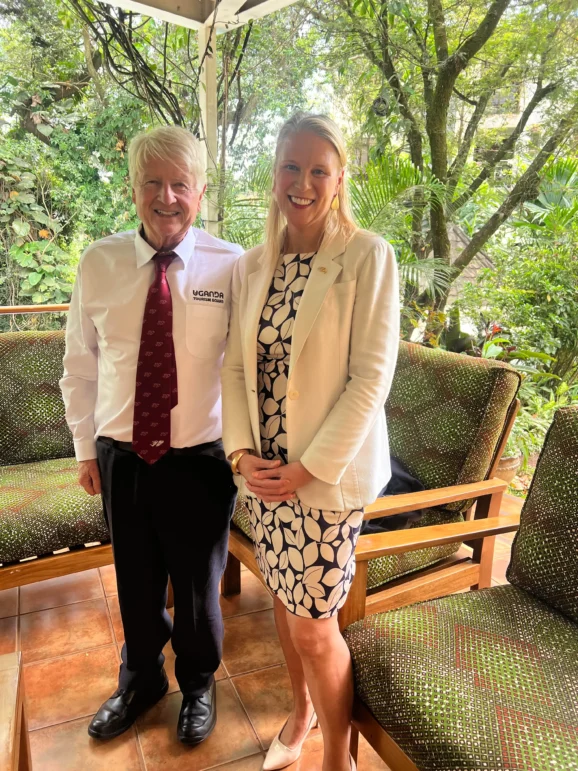
Finally, I thank Winston Churchill who, in My African Journey (1908), first described Uganda as “the pearl of Africa”. How right he was!
Fact File
If you’re tempted to trace a similar path to mine through Uganda’s mountain forests, chimpanzee-filled valleys and Great Rift landscapes, here are the key details to help you plan your own journey.
Trip: 10 Night Primates of the Great Rift Valley Safari
Operator: Volcanoes Safaris
Accommodation:
• Three nights at Volcanoes Safaris’ Kibale Lodge
• Three nights at Volcanoes Safaris’ Kyambura Gorge Lodge
• Three nights at Volcanoes Safaris’ Mount Gahinga Lodge
• One night in Entebbe on arrival
Price:
From US$13,220 per person (approximately £9,700 at time of writing), based on two people sharing.
Includes: Accommodation; all meals; drinks; ground transfers; internal flights within Uganda; gorilla and chimpanzee trekking permits; one overnight stay in Entebbe on arrival.
Excludes:
International flights unless otherwise stated; visas; travel insurance; personal expenses; gratuities.
Seasonality:
Prices are subject to availability and may vary depending on season and room category.
Flights:
Uganda Airlines operates direct services from London Gatwick to Entebbe four times per week.
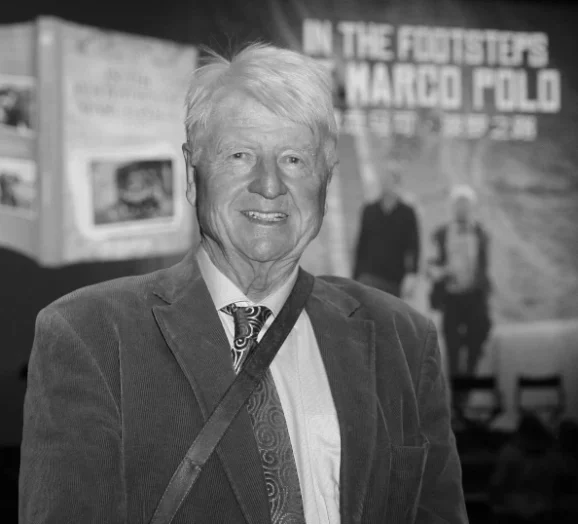
Stanley Johnson is a former Member of the European Parliament (MEP), award-winning author and long-time advocate for environmental protection and international cooperation. He served as Head of the Prevention of Pollution Division at the European Commission and played a key role in shaping early European environmental legislation on clean air, water and nature conservation.
Elected as MEP for Wight and Hampshire East in 1979, he became a leading voice on sustainability, public health and animal welfare in European policymaking. In parallel with his political career, Stanley has written more than 25 books across fiction, non-fiction and memoir, including The Commissioner and Kompromat. His work often draws on his experience in politics, development and global environmental affairs.
READ MORE: ‘Stanley Johnson appears on Ugandan national television during visit highlighting wildlife and conservation ties‘. Stanley Johnson, the Editor-at-Large of The European, has appeared on Ugandan national television while visiting the country at the invitation of President Yoweri Museveni, with his trip centred on wildlife, conservation and long-standing environmental links between the UK and East Africa.
Do you have news to share or expertise to contribute? The European welcomes insights from business leaders and sector specialists. Get in touch with our editorial team to find out more.
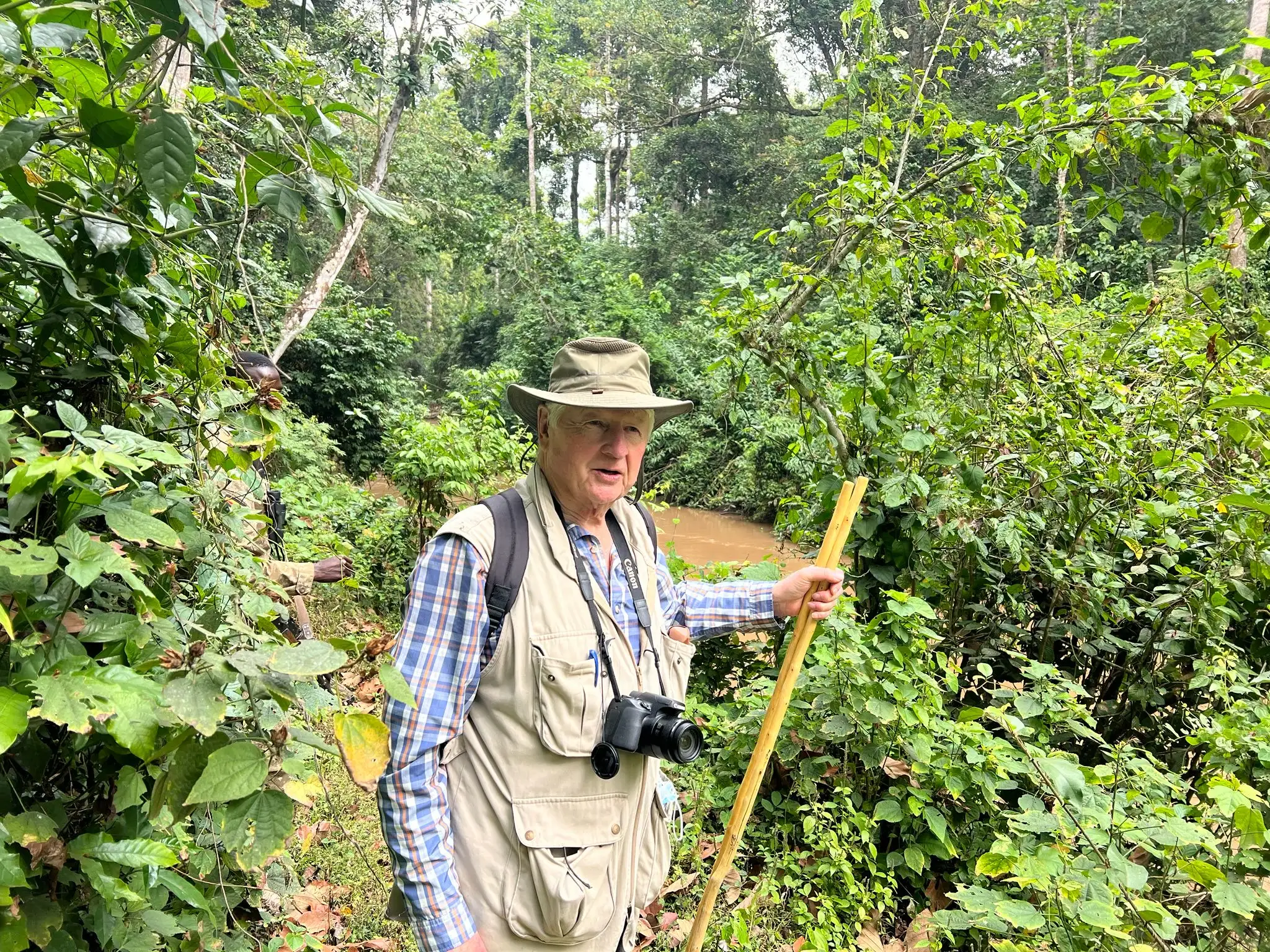
Main image: Stanley pauses beside a forest stream during a trek in Kyambura Gorge, south-west Uganda. All photos, Stanley Johnson.