For business leaders seeking a Spring adventure break away from the Costa del Sol’s maddening crowds, Nerja has become one of Spain’s most popular destinations thanks to a variety of continent-leading scuba diving sites within minutes of a traditional, whitewashed old town. John E. Kaye explores one of Europe’s most dramatic underwater playgrounds, where shore dives, protected bays and family-friendly beaches combine in a compact and refreshingly unfussy base
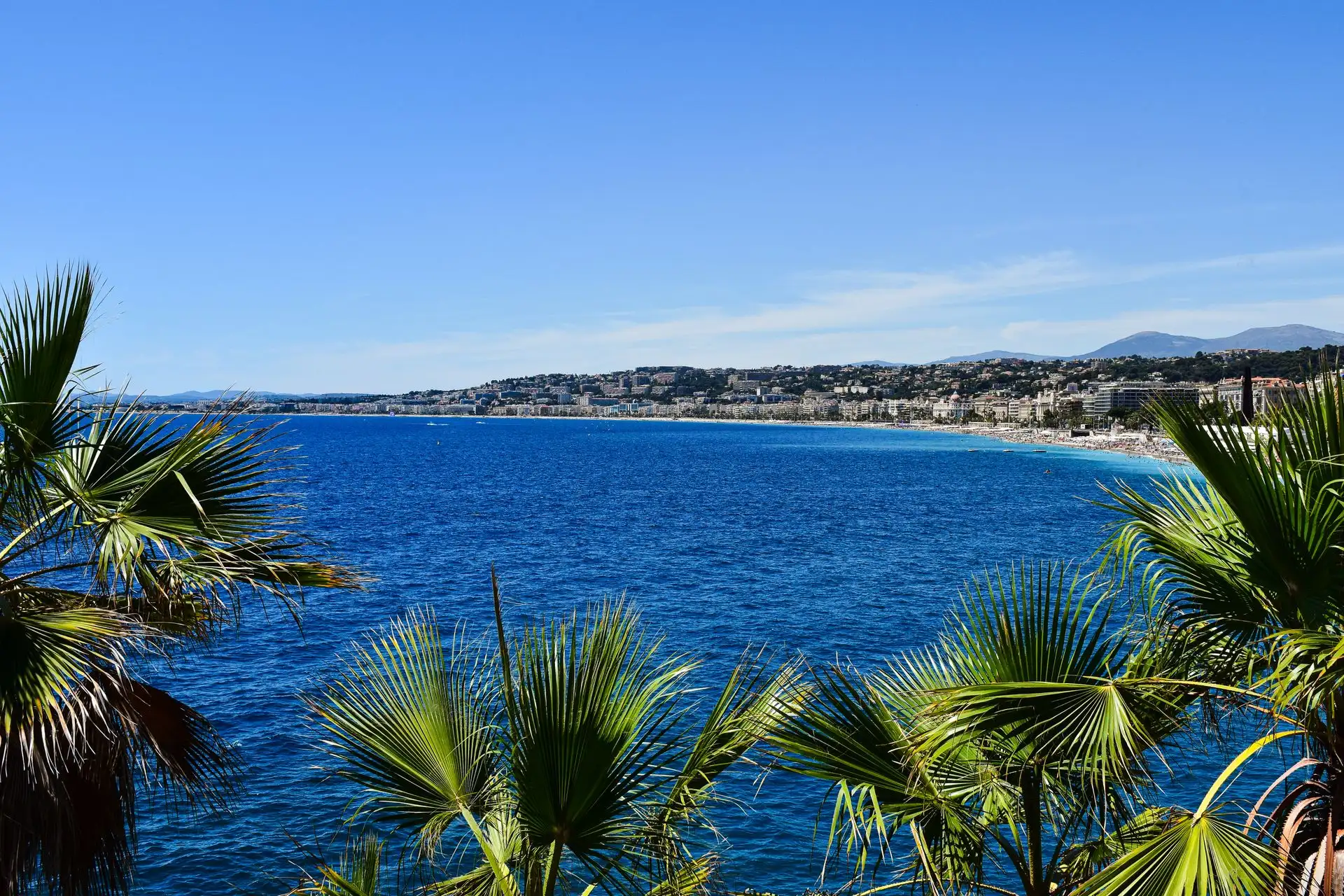
If your idea of a short Spanish escape involves more than a sunlounger and a sangria, head east along the Costa del Sol until the high-rise hotels thin out and the dramatic cliffs take over. Welcome to Nerja, around 50 minutes from Málaga airport, a whitewashed seaside town with serious adventure credentials and fewer crowds than its famous neighbours.
Set on the edge of Málaga province, close to the Granada border, Nerja packs an extraordinary amount into a compact stretch of coast. You can dive into clear Mediterranean water before lunch, paddle beneath towering rock faces in the afternoon and hike into the mountains by evening. All without spending half your holiday in a taxi.
For a growing number of European business leaders, the region has become a regular choice for short dive breaks, combining accessible underwater sites with family-friendly hotels and beaches.
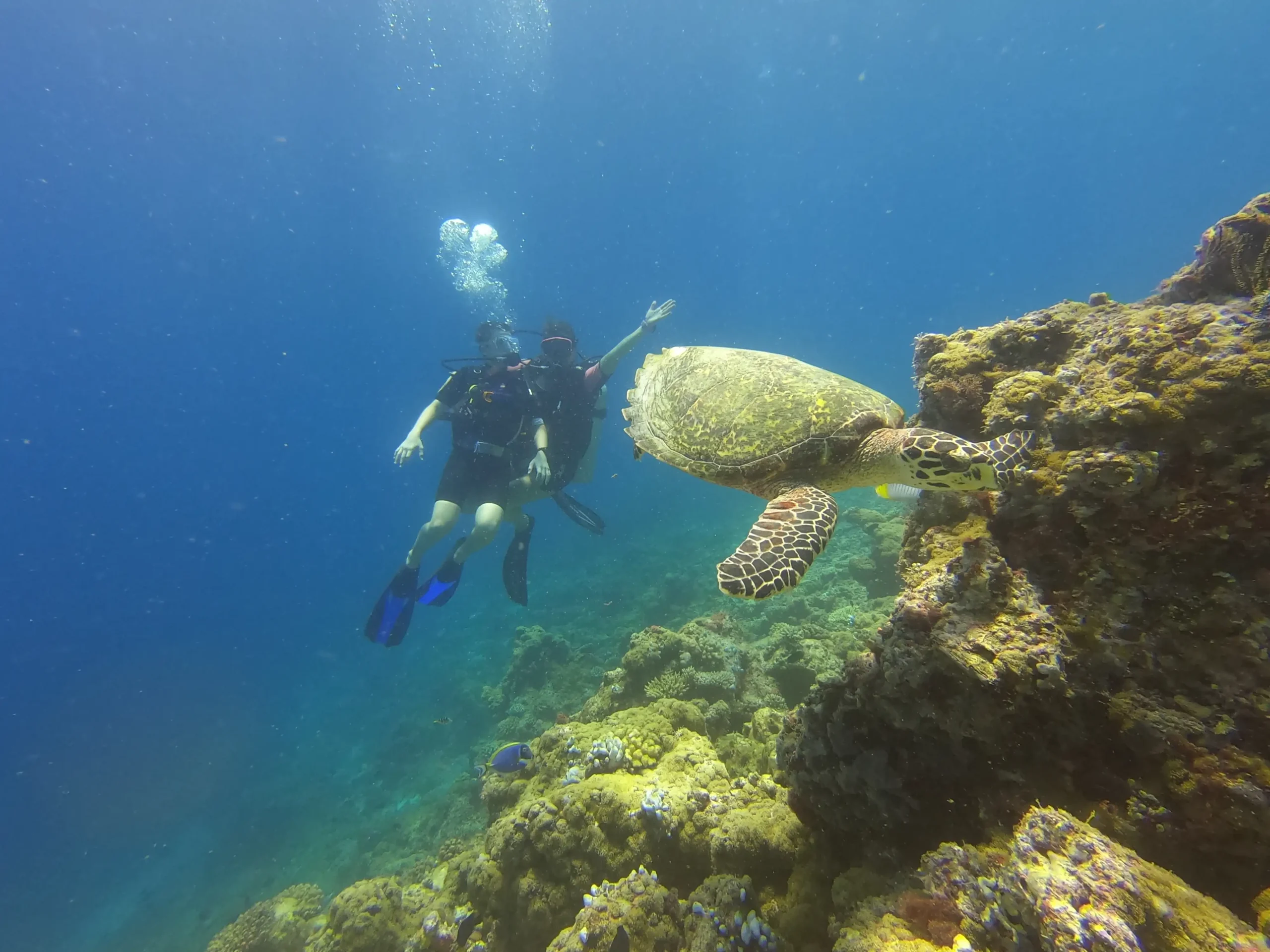
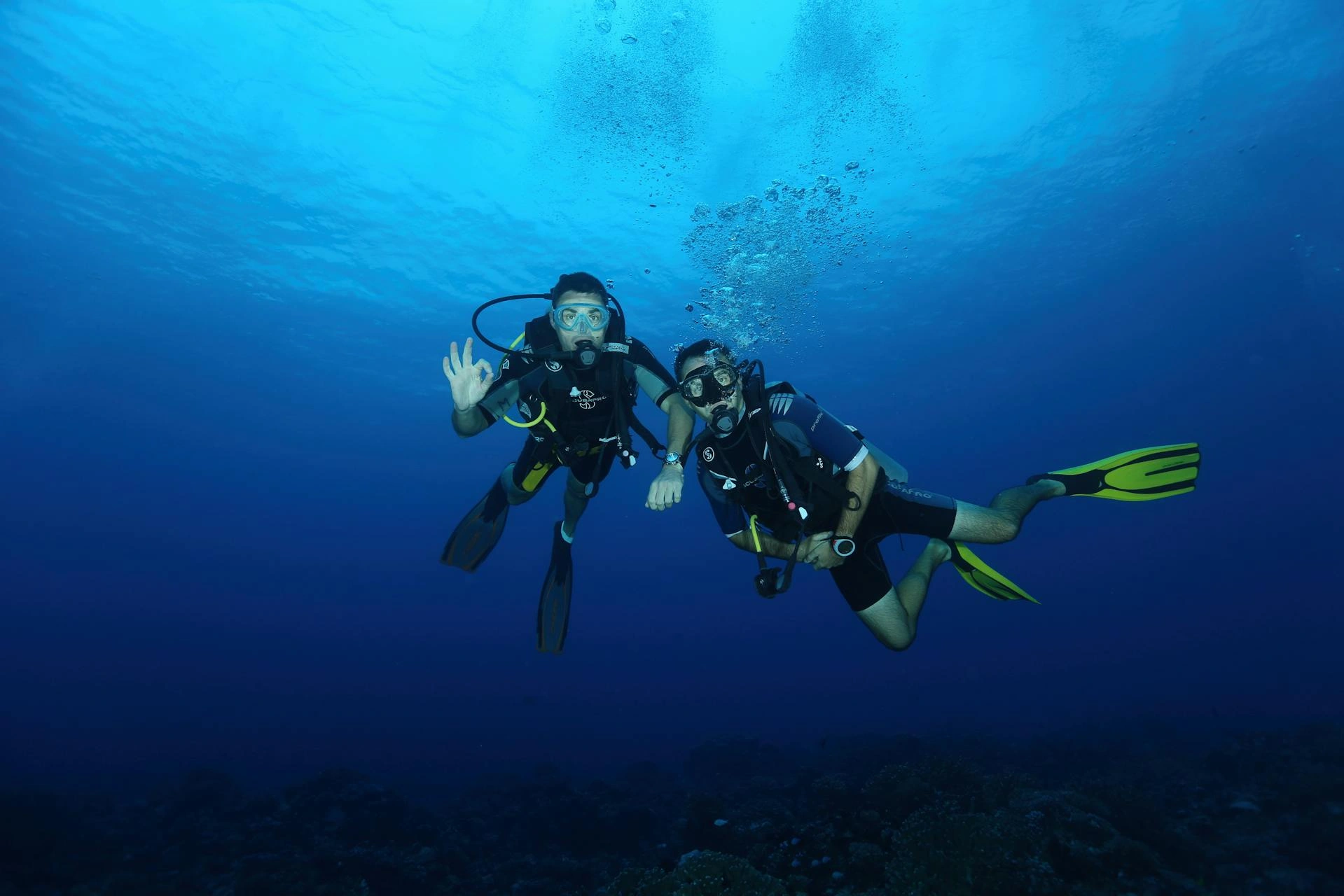
Most dive centres along this stretch of coast offer introductory “try dives” lasting between two and four hours, open to complete beginners and requiring no prior certification. The process is structured and methodical. Participants complete a basic medical declaration and standard paperwork before attending a safety briefing covering equipment, hand signals and emergency procedures. Initial skills are practised in very shallow water — breathing through a regulator, clearing a mask, equalising pressure and responding to common issues — before progressing to a short, closely supervised dive. Instructors remain within immediate reach throughout. Group sizes are typically small, and one-to-one sessions can be arranged for those who prefer a more controlled introduction.
All core equipment is supplied, including wetsuit, mask, fins, buoyancy control device, regulator and tank, with weights calibrated on the day. Visitors need only bring swimwear, a towel, water and sun protection. Contact lenses are generally worn without difficulty beneath a mask, while those requiring prescription lenses should enquire in advance about suitable options. Anyone prone to seasickness is advised to book a shore-based session and avoid a heavy meal beforehand.
A practical advantage for first-timers is that many dives here begin directly from the beach, removing the need to manage a boat entry on an initial experience. Family members can remain nearby, making it easier to incorporate a session into a broader holiday.
Those wishing to pursue formal training will find accredited centres offering programmes through both PADI and SSI. Entry-level certification can be completed over three or four consecutive days, fitting comfortably within a long weekend or short break. Beyond that, divers may continue through advanced courses, speciality training and professional pathways, with several operators providing instruction up to Divemaster and Instructor level for those inclined to return and progress further.
Main dive sites around Nerja
The dive sites are numerous and concentrated along a compact stretch of coastline, which means varied underwater terrain can be reached quickly without lengthy boat journeys or road transfers. Shore sites close to Nerja provide gradual depth and simple entries, while a short drive east brings steeper walls and denser marine life. For anyone planning a few days underwater, the area allows a clear progression from controlled, confidence-building dives to more ambitious terrain.
Playa de Maro
One of the most frequently used sites for training and guided dives, Playa de Maro combines straightforward beach access with defined limestone features. The seabed slopes gently before breaking into rock formations and small channels. In the shallower sections you can expect bream, wrasse and damselfish moving across the reef, with octopus tucked into crevices and moray eels visible in gaps in the rock. As depth increases, larger groupers are occasionally seen holding position near the base of small drop-offs.
Cala Barranco de Maro
Often accessed by boat, this site offers more pronounced relief than the main beach. Gullies and boulder fields create pockets where shoals gather, and the structure attracts cuttlefish and larger bream. Moray eels are common here, and in late summer barracuda may be seen passing through in small groups. The layout makes it suitable for divers who have already completed basic training and want slightly more depth.
El Playazo
Located to the west of Nerja, El Playazo is regularly used for introductory dives and skill refreshers. The mix of sand and scattered rock allows instructors to control depth carefully. Marine life is present from the outset: small shoals patrol the shallows, with the occasional octopus or starfish visible on the seabed. It is less dramatic than the eastern sites, though reliable and manageable in calm conditions.
Maro–Cerro Gordo Natural Area
Boat dives along the protected headland between Nerja and La Herradura reveal steeper underwater contours and larger rock formations. Swim-throughs and short wall sections add variety. Fish density increases along the relief, with sizeable shoals of bream, groupers in deeper sections and occasional sightings of amberjack in open water. These dives are generally reserved for certified divers due to greater depth and more exposed positioning.
La Herradura
La Herradura is regarded locally as the most substantial dive location on this stretch of coast. The bay’s shape provides a degree of shelter, and visibility can be strong in settled weather. Underwater, the terrain is more pronounced than many of the Nerja shore entries, with steeper walls and larger boulder slopes.
Around Cerro Gordo, divers encounter arches and rock formations that create defined routes. Fish life is typically heavier here. Large shoals move along the wall, groupers are regularly seen in deeper areas, and moray eels and octopus are common among the rocks. In certain seasons, barracuda and dentex pass through open water beyond the main relief. The dives demand controlled buoyancy, particularly along vertical sections, and are best suited to those with some prior experience.
La Herradura also carries historical significance: in 1562 a violent storm destroyed a large part of a Spanish fleet within the bay. While the wreckage lies deep and dispersed, the event forms part of the area’s maritime background and is often referenced by local operators.
Torrox
Torrox, a short drive west of Nerja, offers additional dive sites along a quieter stretch of coastline. Conditions here are often favourable, with good visibility on calm days and a mix of rocky reefs and sandy seabed that attracts octopus, cuttlefish and shoals of bream. Entry points are straightforward, and local operators run guided shore and boat dives depending on conditions. For those staying in Nerja, Torrox widens the range without requiring a change of base, and it tends to feel less pressured during peak summer weeks.
A family base with room to roam
If you’re travelling with children, Nerja is an ideal base from which to explore the area.
Burriana Beach is the natural starting point for most families. It is broad, gently shelving and well serviced, which makes it practical for parents with younger children. Mornings tend to be calmer, with space to spread out and the water usually at its clearest. Children can move between swimming, paddleboard hire and simple snorkelling close to shore.
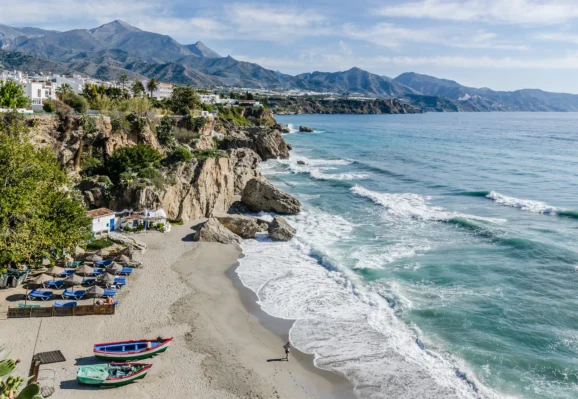
Sea kayaking is another highlight here. Local operators on Burriana run guided outings along the cliffs east of the beach, where families can paddle beneath rock arches and into small coves that are inaccessible on foot. The coastline reveals hidden inlets and occasional waterfall trickles after rain, and guides typically build in short stops for a swim. Tandem kayaks allow adults and children to share a boat, which makes the experience accessible even for younger paddlers. Conditions are generally calm in the morning, and sessions are structured with safety briefings and buoyancy aids provided.
For families with energetic older children, consider The Río Chíllar walk, set within the Sierras de Tejeda, Almijara y Alhama Natural Park, which follows the riverbed upstream through a narrow gorge. Much of the route involves walking directly through shallow water between limestone walls, which feels adventurous without requiring technical skill. The terrain can be slippery, so sturdy footwear with grip is essential, and in summer an early start avoids the fiercest heat. Bringing water, sun protection and a small dry bag for essentials makes the outing considerably more comfortable.
The Cueva de Nerja, a vast limestone cave complex famed for its towering stalactites and cathedral-scale chambers, offers something altogether different. Marked pathways make the visit manageable for most age groups, and the cool interior temperature provides welcome relief during high summer. Allowing at least an hour gives time to explore without rushing.
Where to stay, eat and drink
Accommodation in Nerja is wide-ranging and generally good value for its location, with choices that stretch from hotels built directly above the sea to modern penthouses overlooking the town. Some properties offer lift access straight down to the beach; others place you steps from the Balcón de Europa and the old town’s restaurants; a few sit slightly back from the centre, trading immediate bustle for quieter nights and easier parking. In practical terms, the decision rests on how you plan to spend your days — whether you prioritise direct shoreline access, walking distance to evening dining, or a calmer base just beyond the main flow of visitors.
The Parador de Nerja occupies one of the strongest positions in town, set on a clifftop above Burriana Beach with private lift access down to the sand. Rooms face the sea, there is on-site parking, and the gardens create a sense of separation from the busier shoreline below. For families who expect to spend long days at the beach, or who value direct access without navigating town streets, it is a practical and comfortable choice.
Closer to the Balcón de Europa, the Hotel Balcón de Europa sits directly on the headland itself. Several rooms look straight out over the Mediterranean, and steps lead down to small coves beneath the hotel. It places you in the centre of evening life, with restaurants and ice-cream shops immediately outside the door.
For a more contemporary feel, MB Boutique Hotel offers a smaller, adults-oriented option within walking distance of both Burriana and the old town. Roof terraces and modern interiors appeal to couples who plan to divide their time between beach days and late dinners.
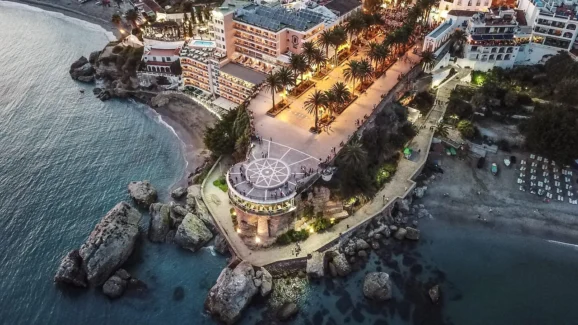
Beyond accommodation, Nerja’s dining scene remains refreshingly local. In the old town, Oliva delivers polished Mediterranean cooking with a focus on seafood and seasonal produce. Tables are limited, so booking is sensible in high season. Near the Parador, Bakus pairs sea views with a menu that leans towards refined Andalusian flavours, making it a good choice for a longer, unhurried lunch or sunset dinner.
On Burriana Beach, Chiringuito Ayo can’t be beat for paella. Here, it is cooked in vast pans over open flames at the front of the restaurant, drawing passing walkers to the terrace. It is informal, busy and reliably atmospheric.
Elsewhere, the old town’s compact grid of streets lends itself to grazing. Tapas bars sit within a few minutes’ walk of one another, allowing an easy progression from grilled prawns to Iberian ham to a final glass of local wine. Dinner typically begins later than in the UK, particularly during summer months, and the pace is unhurried. For families, the pedestrian layout removes traffic concerns; for couples, it allows the evening to unfold without the need for taxis or plans set in stone.
READ MORE: ‘The bon hiver guide to Paris‘. A winter stay between the Fifth and Sixth Arrondissements offers quiet streets, uncrowded museums, excellent food and the kind of intimate, romantic atmosphere that makes Paris’ Left Bank ideal for a weekend or Valentine’s break, discovers our Travel, Hospitality & Culture correspondent, Deborah Lyon.
Do you have news to share or expertise to contribute? The European welcomes insights from business leaders and sector specialists. Get in touch with our editorial team to find out more.
Main image: Sébastien Vincon/Pexels