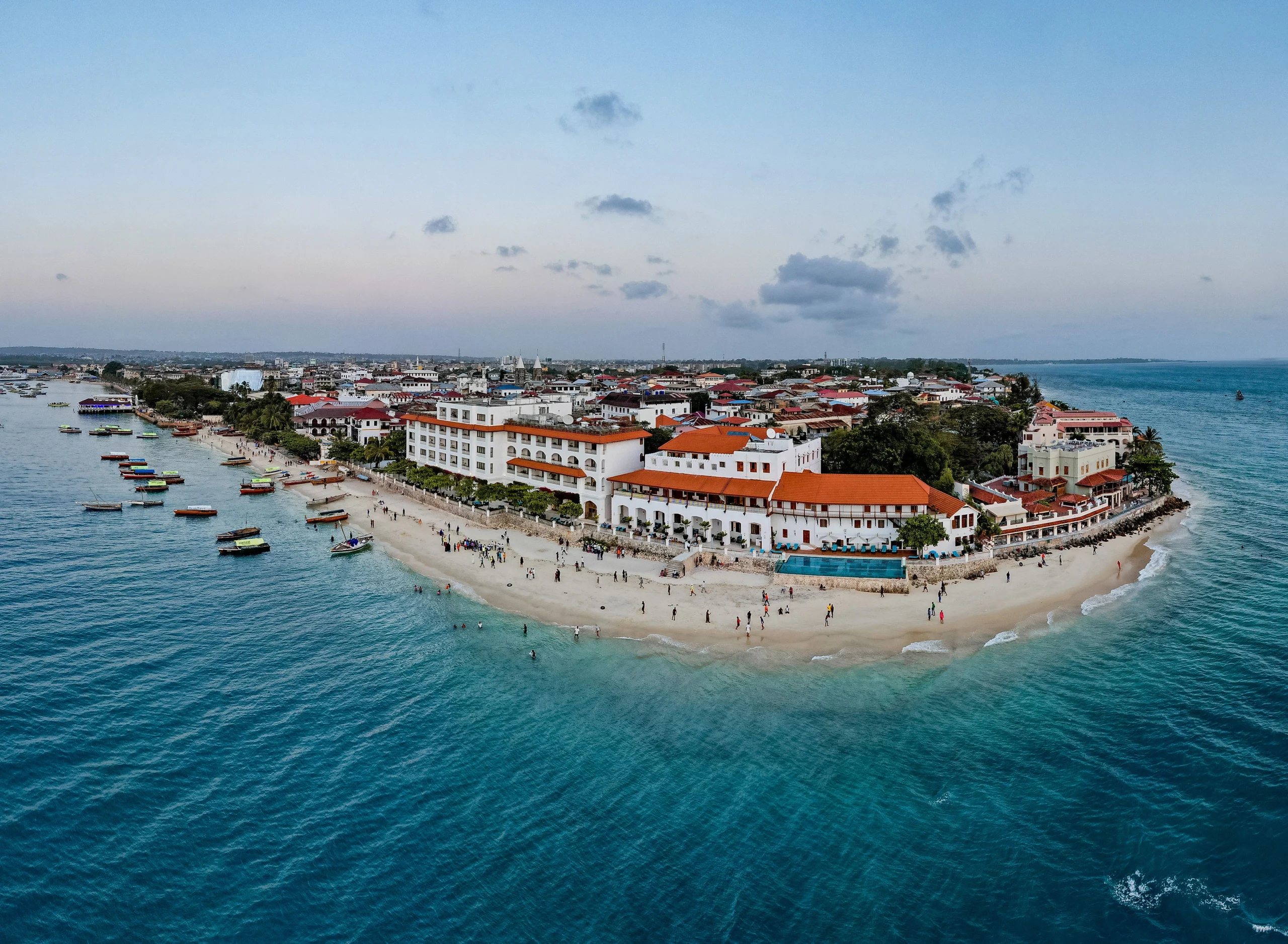
Record visitor arrivals, rising hotel capacity, expanding air connectivity, and new transport investment highlight growing demand for attractions, cultural assets and family experiences
Zanzibar’s tourism growth is accelerating at a pace that is “now reshaping the island’s investment landscape”, with official data showing demand is beginning to outstrip the breadth of experiences available to visitors beyond hotels and beaches.
According to the Tourism Statistical Release for December 2025, the semi-autonomous Tanzanian archipelago in the Indian Ocean welcomed 100,729 international visitors, a 10 per cent year-on-year increase and a 38.3 per cent rise from November.
For the full year, international arrivals are said to have reached 917,167, up from 736,755 in 2024, confirming a sustained upward trajectory rather than a post-pandemic rebound.
Accommodation performance points to growing capacity pressure, with bed occupancy levels reaching close to 89 per cent in December and more than 815,000 bed nights sold in a single month. The average intended length of stay stood at just over eight nights.
International hotel groups and boutique operators have responded quickly to these signals.
TUI Group has strengthened its East Africa hotel cluster by expanding resort capacity in Zanzibar, positioning the island as a key pillar of its long-haul leisure strategy.
Hilton has also announced its entry into the Zanzibar market with a branded beachfront resort, a move widely viewed as a catalyst for further global brand interest.
ENVI Lodges is developing a new eco-luxury beachfront property that combines low-impact design with experiential travel, while Minor Hotels has confirmed a significant expansion of its Anantara portfolio in Zanzibar through a new signing with Infinity Group, adding to the island’s growing pipeline of luxury and lifestyle hospitality developments.
The Anantara Zanzibar project underscores rising confidence among global operators in the destination’s long-term appeal to high-end, experience-led travellers.
Dr Aboud Suleiman Jumbe, Principal Secretary of the Ministry of Tourism and Heritage, told The European: “These figures confirm that Zanzibar is firmly in a growth phase, with longer stays and rising demand placing increasing pressure on tourism infrastructure.
“This growth creates clear opportunities for strategic investment that deepens the visitor experience while supporting national development priorities.”
Beyond accommodation, improved infrastructure is also said to be reshaping Zanzibar’s connectivity profile.
Investments in airport and aviation capacity have accelerated the introduction of more direct international flights to the islands, both chartered and scheduled, significantly improving access from key source markets.
According to Mr Seif Abdallah Juma, Director General of the Zanzibar Airport Authority, approximately 575 aircraft landings have been recorded in January, slightly higher than December, reflecting sustained growth in airline activity and reinforcing aviation expansion as a clear indicator of Zanzibar’s tourism momentum.
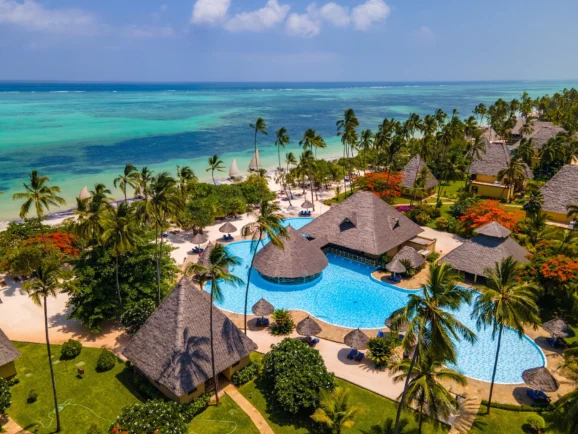
While these developments underline investor confidence in Zanzibar’s fundamentals, industry observers note that the island’s tourism offer remains heavily weighted toward accommodation, with comparatively limited investment in family-friendly attractions, cultural and interpretive assets, marinas, museums and large-scale experiential infrastructure that typically convert beach destinations into longer-stay, higher-spend markets.
“There is strong demand, but the depth of product has not yet caught up with the volume of arrivals,” one investment advisor active in East Africa, said. “That gap creates an opportunity for investors who are looking beyond hotels and towards experiences that lengthen stays and diversify spend.”
Rising demand is also being reflected in transport and logistics investment. Azam Marine, the region’s leading ferry operator, has recently commissioned Kilimanjaro Number 9, a modern high-capacity passenger vessel representing an investment of USD 12.9 million.
The vessel can carry more than 600 passengers per trip, operates up to 13 sailings a day, and services key routes between Dar es Salaam, Unguja and Pemba. The investment has also expanded operational staffing, reflecting expectations of sustained growth in passenger volumes.
“In island economies, transport capacity is a leading indicator,” a senior executive at Azam Marine, added. “You do not invest at this scale unless you have confidence in long-term demand.”
Investors are also increasingly exploring opportunities beyond traditional tourism assets, particularly in eco-tourism and forestry-linked developments.
Zanzibar is home to 11 officially designated forest conservation areas, of which six have already attracted investment interest, signalling a growing appetite for projects that combine conservation, sustainability and nature-based tourism. This trend highlights a broader shift toward long-term, environmentally responsible investment aligned with Zanzibar’s development priorities.
Government officials say the current moment represents a strategic window for early-stage investment into the next phase of Zanzibar’s tourism development, particularly in attractions, cultural infrastructure, family experiences, eco-tourism and integrated leisure developments that complement the rapid expansion of hotel capacity.
“We are actively encouraging investment that adds depth, diversity and resilience to Zanzibar’s tourism offering,” Dr Jumbe said. “Investors who come in now have an opportunity not only to benefit from growth, but to help shape the destination’s tourism landscape for the next decade.”
READ MORE: ‘Stanley Johnson in Botswana: a return to the wild heart of Southern Africa‘. Four decades after first visiting Botswana for a CITES conference, our editor-at-large follows the Chobe River, the plains of Savute and the Okavango Panhandle to see how a conservation-led approach has protected elephants, predators and some of Africa’s last great wild spaces.
Do you have news to share or expertise to contribute? The European welcomes insights from business leaders and sector specialists. Get in touch with our editorial team to find out more.
Main image: Zanzibar Commission for Tourism (ZCT)