Europeans are warming to EVs – and to Chinese brands

John E. Kaye
- Published
- News
A survey of over 8,000 consumers across eight countries finds rising intent to own electric vehicles by 2030, with attitudes towards Chinese-made models softening
Nearly 60% of European consumers say they expect to own an electric vehicle (EV) by 2030 – and more than a third are now more open to buying a Chinese-made model than they were a year ago.
The Europe-wide survey of more than 8,000 people suggests that attitudes to electric mobility are changing across the continent, with younger drivers and consumers in the Nordic countries – notably Sweden and Denmark – showing the strongest intent to switch.
Among current EV drivers, 53% said they are now more receptive to Chinese manufacturers. Almost half of all respondents believe Chinese brands offer good value for money, and 40% agree that premium Chinese EVs are as good as their Western rivals.
UK consumers are among the least concerned about brand nationality. In Europe’s second-largest car market, 59% said the country of origin would not influence their buying decision.
In Switzerland, meanwhile, traditionally loyal to established European marques, more than half of respondents said premium Chinese EVs now match their Western competitors on quality and technology, according to the poll commissioned by Zeekr.
Lothar Schupet, acting CEO of Zeekr Europe, said: “The benefits of electric vehicles are widely understood but we appreciate that not every market or every age group is as receptive to them as others.
“We wanted to look even deeper into the positive and negative views that consumers across Europe have towards EVs in general and Chinese EVs in particular to better understand the barriers to entry – both real and perceived.”
He added: “The survey we commissioned does exactly that, and will help us to create even better EVs that will help further accelerate the transition to e-mobility throughout Europe.
“And as more Chinese brands launch in Europe, we believe that having Design and R&D Centres in Sweden and integrating customer co-creation at the heart of our product development process gives Zeekr a European soul that truly sets it apart.”
The data shows that Nordic markets remain ahead of the curve. In Sweden, 62% of respondents said they plan to own an EV by 2027, compared with 52% across Europe.
Generational divides are also evident: 62% of 35–44-year-olds expect to drive an EV by 2028, but only 45% of those aged 55 and over foresee doing so by 2035.
Cost, range and charging infrastructure were cited as the biggest barriers to adoption. Some 45% of respondents said lower purchase prices would encourage them to go electric, 42% called for ranges above 480km, and 40% prioritised faster charging.
These obstacles are being addressed by advances in battery technology, with models offering over 500km (WLTP) now common and 800V systems enabling 10–80% charging in around 10 minutes.
Zeekr’s European line-up – the 001, X and 7X – already meets these benchmarks, offering ranges of up to 620km (WLTP), ultra-fast charging and prices starting below €35,000 in some markets.
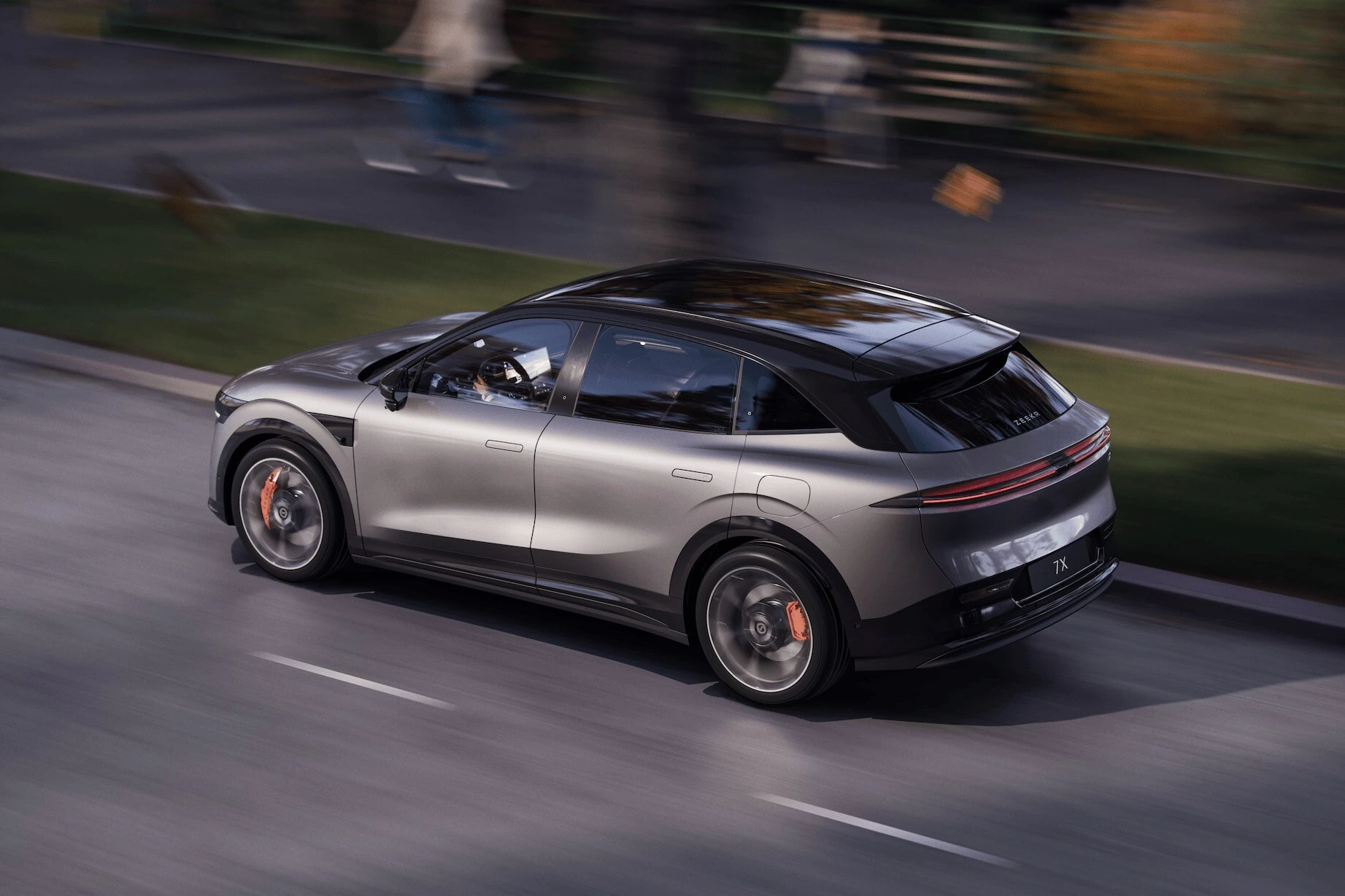
The Zeekr 7X comes with features such as a panoramic roof, Matrix LED headlights, a heat pump and a 22kW on-board charger as standard – equipment that many rivals only offer as paid extras.
Main image: A Zeekr 7X EV. Photo: Zeekr
TOP STORIES
-
 British Chambers unite against 'Made in Europe' rules amid fears for UK industry
 -
Bouncy castle firms urged to sign new safety pledge following child deaths
-
Remembering Matthew Jukes, The European’s Wine & Fine Drinks Correspondent
-
Michael Dell becomes world's fourth-richest person as Forbes reveals the ten wealthiest billionaires
-
Scientists develop new chemicals to tackle devastating oil spills at sea
-
Closing women's health gap could boost global economy by $1tn a year, leaders say
-
World's first luxury theme park to open in Mexico with £1.1bn of rides, fine entertainment and deliberately limited crowds
-
Dutch court orders Lidl to stop selling Birkenstock sandal lookalikes
-
Giant wind turbine with 252-metre rotor could mean fewer machines and cheaper offshore power
-
Poorly designed workplaces ‘cost UK economy £71bn a year’
-
Rescuers scramble to protect pod of 25 whales in Thames Estuary
-
‘Talent hushing’ blamed as four-in-10 workers say they contribute less than they could
-
Spain leads Europe for expats as Panama tops global poll
-
Menopause may make women leaders more empathetic – even as it leaves them drained
-
Your biggest rival could be your best technology partner, research finds
-
British Museum bans photos of Bayeux Tapestry after visitors hold up queues
-
China unveils giant crane capable of lifting 9,300 family cars
-
Edinburgh Airport launches £500m expansion as terminal footprint grows 60%
-
Chris Packham urges PM to ban ‘frankenchicken’ from schools and hospitals
-
Loch Lomond’s 'Bonnie Banks at risk’ from major road upgrade
-
LED lights could be ‘the new asbestos’, UCL scientists warn
-
MPs tune in to Britain’s Eurovision ‘nul points’ problem
-
MPs tell Government to reject Thames Water creditors as utility nears insolvency
-
Only 14% of companies can show supply chain safeguards are working, study finds
-
OpenAI admits AI models hid mistakes, invented data and acted without permission