Europe leads world in quantum research despite deep industry scepticism

Aleksey Savchenko
- Published
- News, Technology
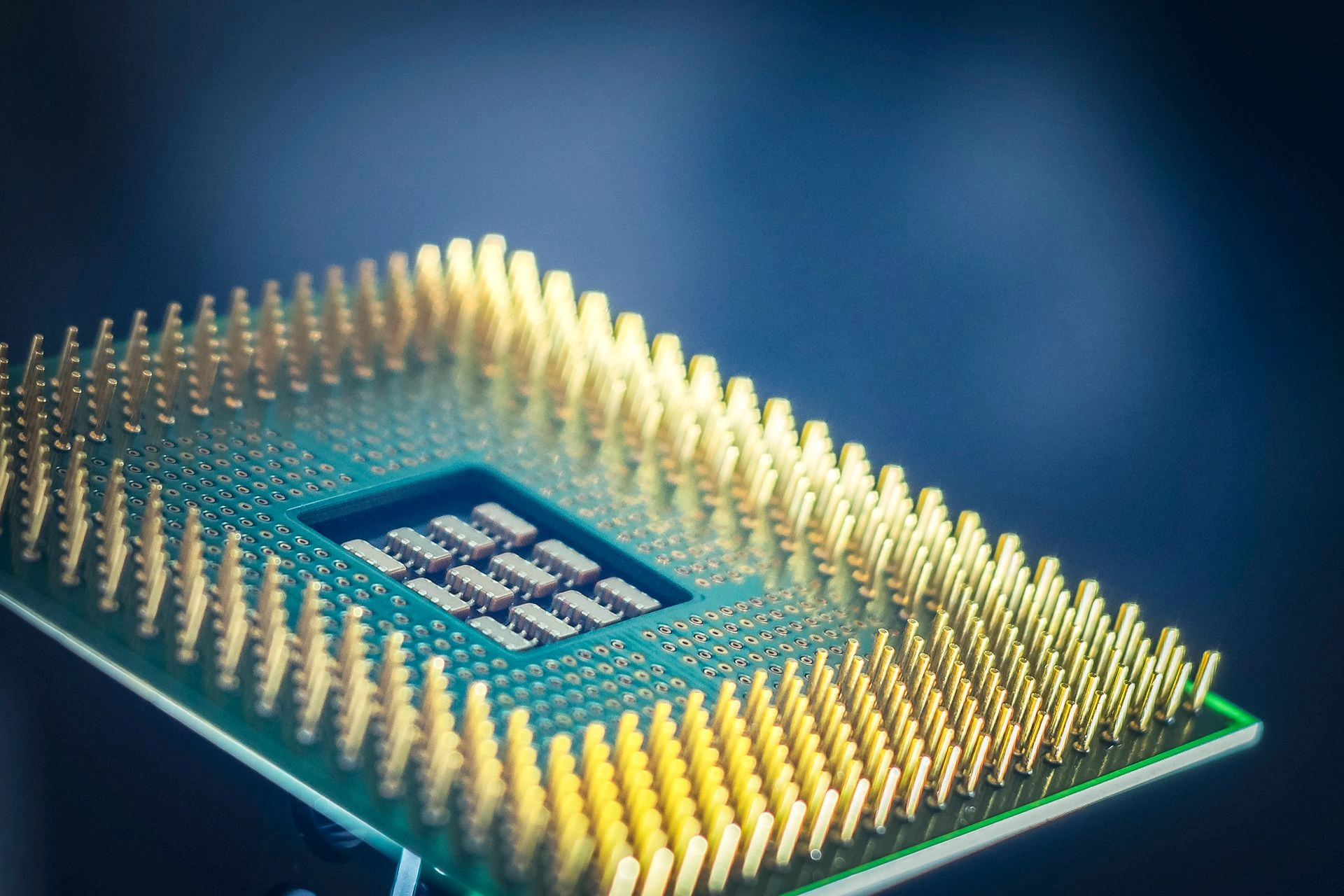
Europe accounts for around 30 per cent of quantum publications among the world’s 15 leading research countries, yet nine-in-10 professionals believe the technology’s impact is still years away or may never arrive, according to a new international study
Europe has emerged as the global leader in quantum computing research despite widespread scepticism among businesses over when the technology will make a meaningful impact.
The EU, UK and Switzerland together account for around 30 per cent of quantum publications among the world’s 15 leading research countries, ahead of the U.S on 28 per cent and China on 18 per cent, according to the 2026 Digital Disruption Matrix from ESSEC Business School.
Europe also accounts for 28.6 per cent of quantum unicorns and their funding, giving the region a strong position in a technology that many business leaders remain unconvinced will affect them any time soon.
Nine-in-10 professionals surveyed expect quantum computing to have an impact only after another two years or more, or believe it will never affect their sector, while half expect either no impact or only a minor one.
The findings form part of ESSEC’s annual study of five emerging technologies across 10 industries. It combines a survey of 1,000 professionals in 41 countries with data on unicorns, emerging companies, funding and business creation, alongside scientific publications and patents published between 2020 and 2025.
The research, published today, also found near-universal expectations that generative and agentic artificial intelligence will affect business, with between 98 and 100 per cent of respondents across all ten industries expecting an impact.
Views differ more sharply over when that impact is being felt, with some 83 per cent of professionals in the media industry believing AI is already affecting their sector, compared with 45 per cent in materials.
AI unicorn activity is also heavily concentrated in the U.S, which accounts for 77.8 per cent of generative and agentic AI unicorns and 94 per cent of their funding.
The States also ranks first in academic research in the field, while 73 per cent of the 15 leading patent applicants are American.
Jérémy Beaufils, Executive Director of the ESSEC Digital Disruption Chair, said: “AI is no longer a matter of conviction. The advantage now lies in the ability to place it where it can truly create value.
“The Matrix allows us to compare this issue, sector by sector, without conflating opinion, science, and capital.”
China is also emerging as a major force in robotics, accounting for 38.3 per cent of the world’s robotics unicorns and publishing nearly twice as much research in the field as the U.S. ESSEC says the close alignment between China’s research output and its share of robotics unicorns points to a deliberate strategy to turn scientific strength into commercial businesses.
Blockchain, meanwhile, is becoming increasingly tied to traditional finance. New company creation has fallen by 38.5 per cent in two years, while 72 per cent of blockchain businesses founded in 2025 were linked to financial services and major U.S banks are now among the leading patent holders.
French professionals were among the most sceptical respondents, with 22.1 per cent saying quantum computing would never affect their sector, compared with 14.1 per cent elsewhere. A similar gap emerged in robotics, although attitudes towards generative AI were broadly in line with those recorded internationally.
Professor Jan Ondrus, Chairholder of ESSEC’s Digital Disruption Chair, added: “The most useful signals often appear within contradictions: research that accelerates without conviction from the market, or a universal expectation in the face of a geographically concentrated supply. The Matrix makes these discrepancies visible.”
READ MORE: Four forces reshaping cyber risk in 2026. The cyber threat landscape is becoming faster, more complex and harder to contain. Here, Steve Durbin of the Information Security Forum sets out the four forces reshaping cyber risk in 2026 and explains why resilience has become a core leadership discipline.
Do you have news to share or expertise to contribute? The European welcomes insights from business leaders and sector specialists. Get in touch with our editorial team to find out more.
Main image: Jimmy Chan via Pexels
TOP STORIES
-
 France calls in army after riots sweep cities
 -
An Italian affair – Stanley Johnson takes London's society set on the Silk Road
-
Himalayan mountainside moved 40cm before avalanche killed 1,451 in Nepal, scientists reveal
-
Scientists and engineers quitting jobs as AI changes roles ‘beyond recognition’, study finds
-
UK profit warnings hit near two-year high as businesses struggle with rising costs
-
Microsoft pulls out of major UK AI data centre project amid power grid delays
-
Russia takes control of more European corporate assets amid Ukraine tensions
-
EU leaders resist calls to delay carbon rules as energy costs soar
-
‘A big step forward’ – PM Andy Burnham hails plans for Great British Railways HQ in Derby
-
UK economy grows just 0.1 per cent as construction falls and services stall
-
Germany risks losing €155bn a year under tighter AI data rules, new study warns
-
Pope Leo XIV diagnosed with lung cancer after surgery in Rome
-
France faces freezer meltdown as hackers strike supermarket chains
-
Bumble shares soar 50% amid $1bn takeover talks
-
China slump drives Volkswagen to sharpest quarterly fall in more than four years
-
Hollywood mega-powerhouse created as Paramount completes Warner Bros Discovery takeover
-
Gamers face gridlock as latest Grand Theft Auto download 'nears two days'
-
Samsung profits soar ninefold to record £61bn amid AI chip boom
-
New Springer books put the UN’s struggling sustainability goals to the real-world test
-
Europe’s solar boom set for two-year slowdown after record growth
-
Let it pea. Musicians turn vegetables into instruments at Beatles' Abbey Road studios
-
Golden naked Trump statue unveiled at European Parliament
-
Jaguar puts controversial rebrand on the road with £130K 1,030PS Type 01
-
Deepfakes and identity fraud drive new wave of post-hire background checks
-
Spain crowned Europe’s top retirement destination