Japan switches on its first full-stack neutral-atom quantum computer

Aleksey Savchenko
- Published
- News
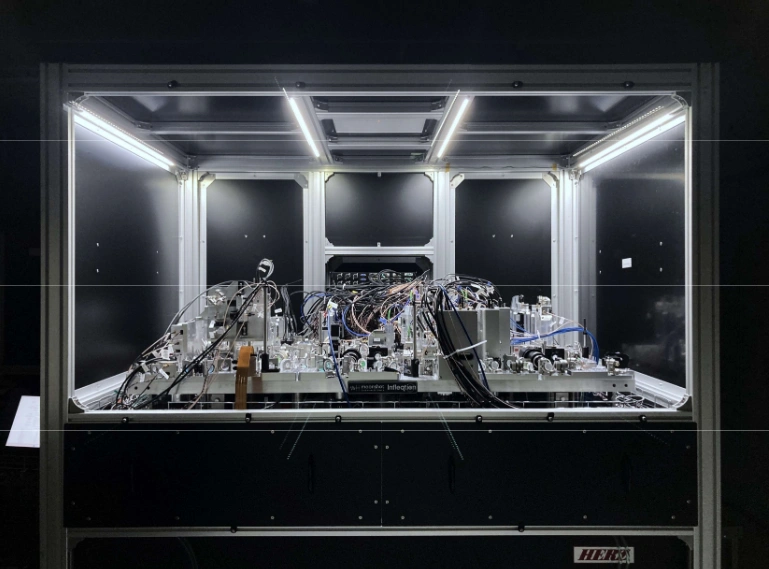
New machine uses individual atoms held in place by lasers and will grow from around 50 qubits to 500 as researchers work towards more practical quantum computing
Japan has today switched on its first full-stack neutral-atom quantum computer, using individual atoms and lasers in an attempt to overcome some of the problems that have so far limited the technology’s practical use.
The system, named Shunkai, has been developed by the Institute for Molecular Science in Okazaki (IMS) and will initially use around 50 qubits – the basic units of information used by a quantum computer – before expanding to approximately 500.
Unlike an ordinary computer, which processes information using conventional electronic bits, Shunkai uses individual atoms as its qubits.
The atoms are held in position by tightly focused laser beams known as optical tweezers and calculations are carried out by exposing them to microwaves or laser light.
The neutral-atom approach can operate at room temperature without a refrigerator and allows atoms to be moved during calculations. Researchers say it should also be relatively easy to increase the number of qubits and arrange them differently depending on the calculation being performed.
Shunkai is described as “full-stack” because it brings together all the layers needed to turn a user’s instructions into operations carried out by the quantum hardware and then produce a result.
IMS led development of the system, working with Hitachi on its software and U.S quantum technology company Infleqtion on its quantum processing unit.
Parts of Shunkai will be opened to outside researchers and companies to develop applications and test ways of detecting and correcting errors – one of the major obstacles to making quantum computers reliable enough for widespread practical use.
The wider research project aims to develop a fault-tolerant neutral-atom quantum computer with 10,000 physical qubits, quantum error detection and correction and access for external users by March 2031.
Professor Kenji Ohmori, who leads the project, said: “I think it is extremely significant that now we have developed Japan’s first full-stack quantum computer in this cutting-edge modality and started its operation.”
He added: “We expect that the external use of our full-stack machine Shunkai, for example, by the theory and software researchers for the development of error-correction technologies, and by the corporate researchers toward practical applications would lead to ripple effects on various fields in industry, academia and government around the world.”
Shunkai takes its name from Edo-period astronomer Harumi Shibukawa, whose given name can also be pronounced Shunkai and who developed Japan’s first indigenous calendar system.
READ MORE: Four forces reshaping cyber risk in 2026. The cyber threat landscape is becoming faster, more complex and harder to contain. Here, Steve Durbin of the Information Security Forum sets out the four forces reshaping cyber risk in 2026 and explains why resilience has become a core leadership discipline.
Do you have news to share or expertise to contribute? The European welcomes insights from business leaders and sector specialists. Get in touch with our editorial team to find out more.
Main image: Shunkai, Japan’s first full-stack neutral-atom quantum computer, developed by the Institute for Molecular Science in Okazaki. The machine uses individual atoms held and controlled with laser light to perform quantum calculations. Credit: Takafumi Tomita / Institute for Molecular Science
TOP STORIES
-
 Britain faces higher winter energy prices as reliance on European electricity imports grows
 -
Andy Burnham to make special Gogglebox appearance for Stand Up To Cancer
-
WPSL Golf targets £120 million valuation as billionaire-backed corporate deals and other commercial deals drive explosive global growth
-
Hackers could bring Britain’s essential services to a standstill, security chief warns after global website shutdowns
-
We're talking to almost twice as many people on the phone as a decade ago, study finds
-
TalkTalk sells majority stake in Telecom Acquisitions as founder Nigel Barnett regains control
-
Company closures soar ahead of tax rises as new Budget looms
-
Russia takes control of more European corporate assets amid Ukraine tensions
-
EU leaders resist calls to delay carbon rules as energy costs soar
-
‘A big step forward’ – PM Andy Burnham hails plans for Great British Railways HQ in Derby
-
UK economy grows just 0.1 per cent as construction falls and services stall
-
Germany risks losing €155bn a year under tighter AI data rules, new study warns
-
Pope Leo XIV diagnosed with lung cancer after surgery in Rome
-
France faces freezer meltdown as hackers strike supermarket chains
-
Bumble shares soar 50% amid $1bn takeover talks
-
China slump drives Volkswagen to sharpest quarterly fall in more than four years
-
Hollywood mega-powerhouse created as Paramount completes Warner Bros Discovery takeover
-
Gamers face gridlock as latest Grand Theft Auto download 'nears two days'
-
Samsung profits soar ninefold to record £61bn amid AI chip boom
-
New Springer books put the UN’s struggling sustainability goals to the real-world test
-
Europe’s solar boom set for two-year slowdown after record growth
-
Let it pea. Musicians turn vegetables into instruments at Beatles' Abbey Road studios
-
Golden naked Trump statue unveiled at European Parliament
-
Jaguar puts controversial rebrand on the road with £130K 1,030PS Type 01
-
Deepfakes and identity fraud drive new wave of post-hire background checks