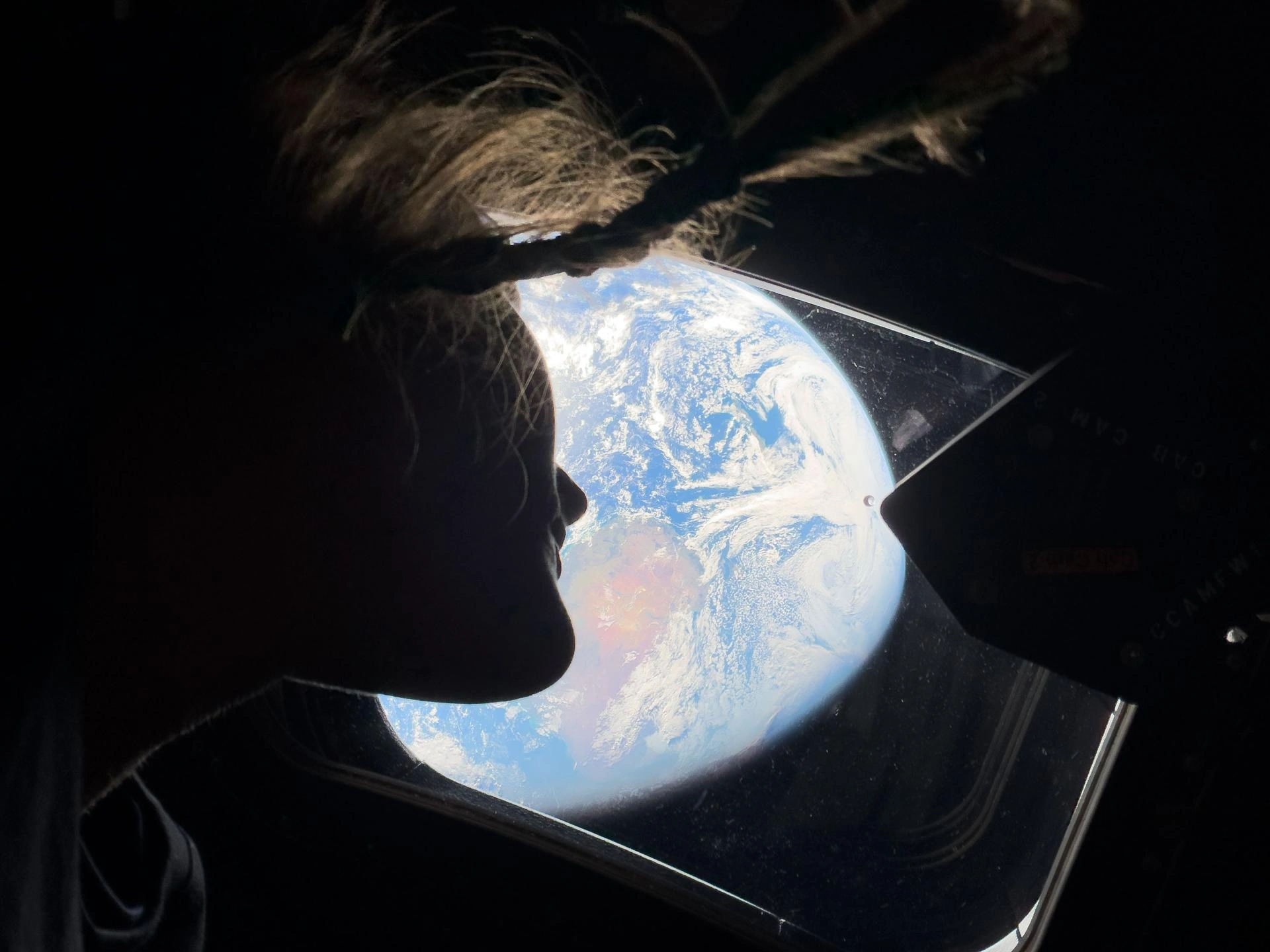
Four astronauts aboard NASA’s Moon mission have travelled farther from Earth than any humans in history, overtaking the record set by Apollo 13 in 1970 as Orion continues its loop around the Moon
The crew of NASA’s Artemis II mission has broken the record for the farthest distance humans have ever travelled from Earth, passing the mark set by Apollo 13 more than half a century ago.
NASA said the astronauts crossed the record line at 12.56pm CDT on Monday, when Orion reached 248,655 miles from Earth – one mile beyond the distance reached by Apollo 13 in 1970.
At its most distant point, the spacecraft reached about 252,756 miles from Earth before beginning the journey back.
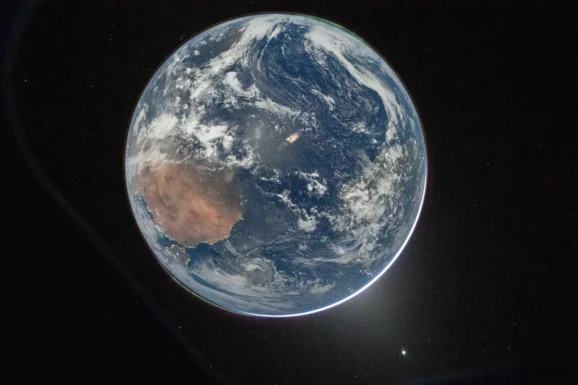
The milestone came six days into the Artemis II mission, which launched from Kennedy Space Center in Florida on April 1 and is carrying NASA astronauts Reid Wiseman, Victor Glover and Christina Koch, along with Canadian Space Agency astronaut Jeremy Hansen, on the first crewed flight around the Moon in more than 50 years.
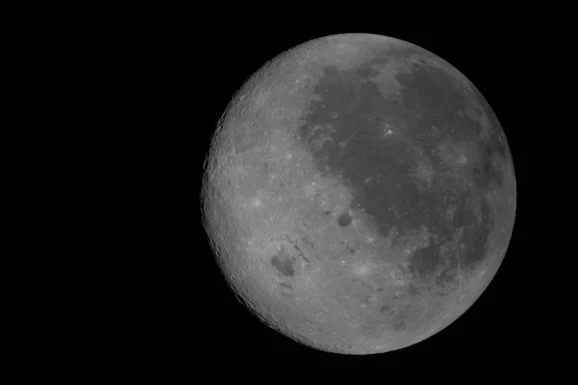
NASA said the crew continued photographing the Moon as they moved farther from Earth, with Orion set to pass within about 4,067 miles of the lunar surface at its closest approach.
The astronauts became the first people to see some parts of the Moon’s far side directly with human eyes.
They had more than six-hours to observe and document the lunar surface, bringing a human perspective to features of the moon that we have until now only known through photographs taken by robots.
One picture shows a striking, fully illuminated view of the Orientale basin – a crater nearly 600 miles wide that straddles the Moon’s near and far sides.
In the image, the familiar near side appears to the right, marked by dark ancient lava plains, while the terrain to the left shows the far side, normally hidden from view from Earth.
The full scene offered a rare look at the basin in its entirety, including the section not visible from Earth.
NASA said a fleet of cameras would capture images of the Moon during the flyby, while the astronauts themselves would use handheld digital cameras to photograph the surface in high resolution.
As the astronauts passed behind the Moon, the radio and laser signals that allow the back-and-forth communication between the spacecraft and Earth were blocked by the Moon itself.
For about 40 minutes, the four astronauts were alone with no contact to mission control.
Artemis pilot Victor Glover told the BBC: “When we’re behind the Moon, out of contact with everybody, let’s take that as an opportunity.
“Let’s pray, hope, send your good thoughts and feelings that we get back in contact with the crew.”
NASA said the crew had also proposed names for two lunar craters during the mission – one in honour of their spacecraft, Integrity, and another in memory of Wiseman’s late wife, Carroll.
The suggestions are due to be submitted to the International Astronomical Union after the mission.
Artemis II is scheduled to splash down off the coast of San Diego at about 8.07pm EDT on Friday, April 10.
Recovery teams will retrieve the crew by helicopter and take them to the USS John P. Murtha, where they will undergo post-flight medical checks before returning to shore.
READ MORE: ‘Houston, we have a problem’: astronauts fix loo aboard Artemis II‘. NASA said the Artemis II crew restored Orion’s toilet to normal operation after reporting a blinking fault light during the first day of the Moon mission.
Do you have news to share or expertise to contribute? The European welcomes insights from business leaders and sector specialists. Get in touch with our editorial team to find out more.
Main image: NASA astronaut and Artemis II mission specialist Christina Koch peers out of one of the Orion spacecraft’s main cabin windows, looking back at Earth, as the crew travels towards the Moon. Image Credit: NASA