Davos’ focus on dialogue highlights a growing need for leaders who can think clearly, act responsibly and navigate competing demands. emba X responds to that need through a curriculum built on cognitive development, real-world impact projects and collaboration across sectors, equipping executives for an era of complex innovation
This year’s World Economic Forum Annual Meeting in Davos gathers leaders under the theme A Spirit of Dialogue, a call for openness, cooperation, and shared problem-solving at a time of accelerating complexity, rapid technological change, and geopolitical uncertainty. Breakthroughs in artificial intelligence, biotechnology, and clean energy offer immense potential, yet they also demand leadership that can balance innovation with responsibility. In this context, the question facing organisations worldwide is no longer how to understand these challenges, but how to act on them with clarity and purpose.
It is precisely at this intersection that the emba X, jointly delivered by ETH Zurich and the University of St.Gallen, situates its mission. Designed from the ground up, this Executive MBA programme does not treat responsible leadership or societal impact as add-ons. Instead, it integrates them into its academic and experiential architecture, preparing students to operate effectively where technological, business, and societal demands collide.
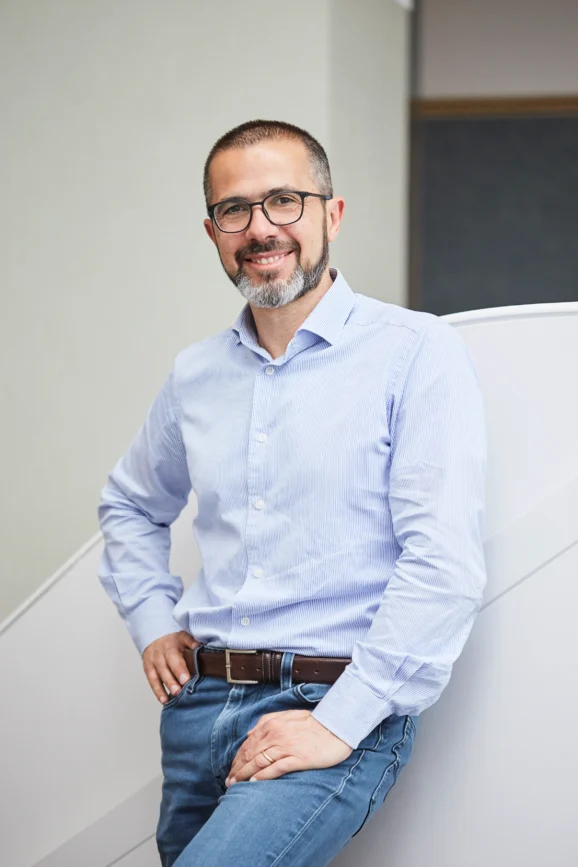
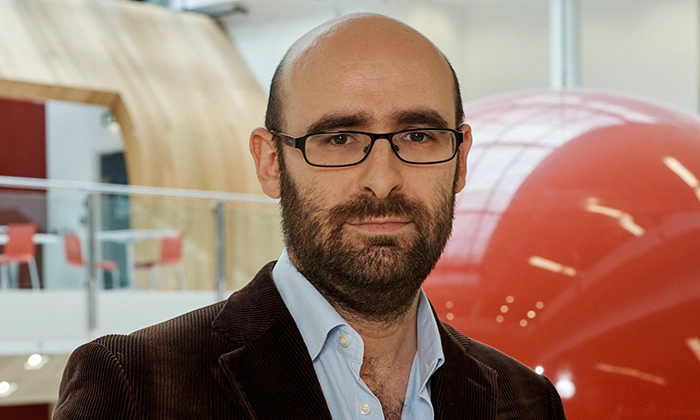
According to Professor Dr. Stefano Brusoni, Vice Rector for Continuing Education at ETH and Programme co-founder, emba X develops “the cognitive infrastructure needed to navigate these intersections, not just awareness of them.” Drawing on cognitive neuroscience, the programme strengthens capacities such as systems thinking, cognitive flexibility, and empathy, which underpin responsible decision-making in complex environments. These abilities are not theoretical ideals; they are practised and stretched throughout the learning journey.
Learning through complexity, not around it
The theme this year of Davos emphasises the need for innovation that advances both prosperity and societal wellbeing. In emba X, this ambition is realised through applied-learning experiences, especially through the Sustainability and Impact Project (SIP) and the Company Impact Project (CIP).
These projects place students in environments with real stakeholders and constraints. Rather than analysing cases, they must design implementable solutions for social enterprises, nonprofits, or companies navigating sustainability challenges. This kind of experiential learning creates the cognitive load needed to develop the architecture for managing complexity.
As Stefano explains, “Complexity cannot be mastered through conceptual understanding alone. These cognitive abilities develop through practice under constraint.” When tasked with designing a viable model for an organisation operating with limited resources or urgent social needs, students quickly see how innovation must integrate feasibility, impact, and strategic logic. It is here that they learn to navigate multiple rationalities simultaneously, a skill essential for leaders working across sectors.
Collaboration in practice
For Alexandre Bastos, Head of Front End Innovation, Ventures & Competitive Intelligence, Givaudan, who completed the SIP and later saw his team’s work evolve into a collaboration with Givaudan, the experience reshaped his understanding of partnership entirely.

“My mindset now centres on a win-win approach, shaping partnerships for mutual benefit,” he explains. Rather than viewing purpose-driven initiatives as corporate social responsibility (CSR) or philanthropy, he began to see them as opportunities where business and social value reinforce each other.
The project also strengthened his appreciation for collaborative decision-making. “Each voice matters,” he reflects. “Even when tackling the same issue, people often have unique goals and approaches. It is essential to acknowledge this complexity and get it to work for all.” Through the SIP, Alexandre experienced how progress emerges not from uniformity but from integrating diverse logics and constraints.
Cognitive capacity as a leadership foundation
emba X does not view leadership as a set of behaviours to adopt, but as a capability rooted in how individuals process information, interpret ambiguity, and design solutions under uncertainty. The programme assesses students’ cognitive abilities at entry and measures improvement across the journey, allowing them to see how their thinking evolves through practice.
Students who strengthen their systems thinking begin to approach decisions with longer time horizons and consider stakeholder impacts more holistically. Those who develop stronger cognitive flexibility become more adept at navigating divergent interests and adjusting their approach as new information emerges. These shifts reflect the type of leadership Davos seeks to champion: informed, empathetic, and responsive to complexity.
Preparing leaders for a multi-stakeholder world
Davos brings together business leaders, policymakers, scientists, social innovators, and cultural figures. It is a platform that seeks to broaden perspectives and surface solutions through dialogue. But navigating multi-stakeholder environments requires more than goodwill.
This is where emba X’s applied projects differ from traditional academic assignments. Students must grapple with the asymmetry between corporate resources and social enterprise constraints. They must design solutions that satisfy operational realities, donor expectations, regulatory limits, and stakeholder needs simultaneously. The work cannot be superficial, and it cannot rely on standard corporate playbooks.
As Stefano shares, “students develop the ability to understand a problem from multiple legitimate frameworks simultaneously. That capability is directly applicable in any context where stakeholders evaluate success differently.” Whether addressing environmental challenges, designing public-private partnerships, or navigating geopolitical uncertainty, this cognitive flexibility becomes a source of leadership resilience.
From dialogue to action
What distinguishes the emba X approach is its belief that responsible leadership is not simply a matter of inspiration. It is a practice that can be strengthened through deliberate development. Students leave the programme not only with new knowledge, but with a deeper capacity to act on it.
For Alexandre, the impact is both personal and practical. “While you look for the learnings and grades, have at heart the real personal impact you can create for those social organisations,” he advises future students. “There is no grade that surpasses that achievement.”
As leaders gather in Davos under A Spirit of Dialogue, the work of programmes like emba X shows what it takes to turn dialogue into meaningful action: cognitive clarity, cross-sector capability, and a commitment to designing solutions that create value for both organisations and society.
In a world where complexity is accelerating, these are the capabilities that will determine whether the next era of innovation is responsible, inclusive, and sustainable.
Further information
Produced with support from emba X. To find out more about the programme and its approach to responsible innovation, visit www.embax.ch
READ MORE: ‘ETH Zurich and the University of St.Gallen redefine executive education with emba X, a new model of responsible leadership‘. A joint initiative between ETH Zurich and the University of St.Gallen aims to redefine executive education through a new 18-month programme centred on technology, leadership and social impact.
Do you have news to share or expertise to contribute? The European welcomes insights from business leaders and sector specialists. Get in touch with our editorial team to find out more.