
Why the real barrier to AI success sits in the boardroom

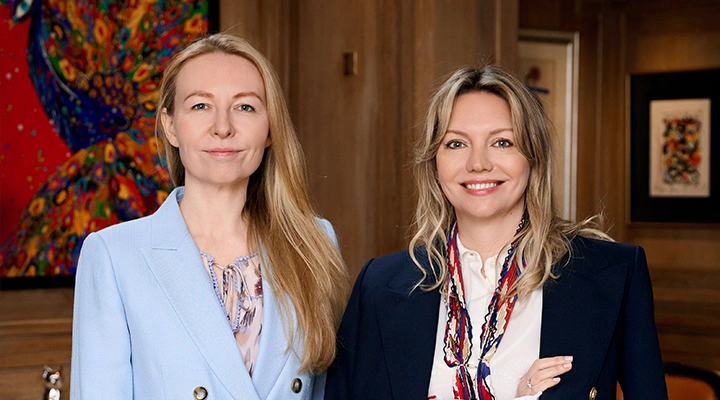
Dr Dorottya Sallai
- Published
- Executive Education

Billions are being invested in artificial intelligence, yet many organisations still struggle to turn those ambitions into meaningful results. Here, Dr Dorottya Sallai, the Associate Professor (Education) of Management at the London School of Economics, reflects on why outcomes hinge less on technical systems and far more on leaders who understand context, culture and the people they are guiding through change
Companies are investing extraordinary sums in artificial intelligence—more than $300 billion a year by some estimates. Yet most of that money produces little return. Recent analysis suggests fewer than one in five AI projects succeeds. The issue is rarely the technology itself. The real problem is leadership.
It is tempting to think of AI as a technical challenge: hire data scientists, deploy algorithms, and watch efficiency soar. In practice, the story is very different. AI touches every part of an organisation, from governance and ethics to culture and capability. Without strong leadership, these transformations stall. Technology does not change organisations. People do.
Many executives admit they lack confidence in making decisions about AI. They struggle to align teams, explain the purpose behind investments, and anticipate the human impact of automation. The result? Expensive projects that fail quietly or create resistance rather than progress.
I have seen this pattern repeatedly. Drawing on my experience advising global organisations, I developed the AI LEAD framework—a practical guide that helps leaders navigate digital transformation. It begins with learning the context rather than diving into code. Leaders must understand what AI means for their business and how it will reshape operations.
Next comes equipping teams with the right skills, which often means change management as much as technical literacy. Alignment follows. AI cannot succeed if leadership teams pull in different directions or if employees do not understand why change is happening. Finally, delivery must keep people at the centre, embedding ethics and transparency into every decision.
These behaviours sound obvious, yet they are often overlooked. Organisations still treat AI as plug-and-play, expecting quick wins without the groundwork. They underestimate cultural and structural challenges, and they ignore the trust-building that makes transformation stick. Companies that thrive tend to be those where leadership sets a clear vision, builds confidence and prepares the workforce for meaningful change.
My new executive education programme, AI in Management: Transforming Leadership for the Digital Age, tackles these issues head-on. Over five days in London, senior executives explore the organisational, strategic and human dimensions of AI. Through real-world case studies, interactive workshops and faculty-led simulations, participants learn how to integrate AI into decision-making and lead transformation responsibly. The emphasis is practical: understanding opportunities and risks, building governance frameworks, and developing leadership approaches that turn technology into lasting value.
AI will not fail because of flawed algorithms. It fails when leadership lags behind the technology. Executives who lead with clarity, adaptability and a deep understanding of both human and technical factors will be the ones who unlock AI’s true potential.
Further information
Produced with support from LSE Executive Education. To find out more about its AI in Management programme and wider leadership portfolio, visit lse.ac.uk/exec.
READ MORE: ‘Porto Business School launches executive programme on AI strategy.‘ Porto Business School will launch its new Advanced Program AI for Business on 20 October, equipping senior executives to turn artificial intelligence into strategy as global adoption accelerates and demand grows for responsible, value-driven leadership
Do you have news to share or expertise to contribute? The European welcomes insights from business leaders and sector specialists. Get in touch with our editorial team to find out more.
Main image: Dr Dorottya Sallai
TOP STORIES
-
 The Costa Rican university teaching entrepreneurship as a survival skill
 -
New AI master’s aims to turn non-tech graduates into business leaders
-
Chinese education group to buy Dublin Business School for US$127.5m
-
UK universities take top four places in European global rankings
-
Education in crisis: the new architecture of learning
-
Europe’s biggest policy fights need more than politicians
-
More than half of employers say they cannot find graduates with the right AI skills, study finds
-
Beyond the MBA: why senior professionals are choosing the DBA
-
NEOMA signs McGill exchange deal as it deepens push into Canada
-
University of New Haven receives approval for first US branch campus in Saudi Arabia
-
Executive education market forecast to nearly triple to $31.5bn by 2036
-
London Business School and Emeritus launch Chief Investment Officer Programme
-
Hannu Tihinen on strategy, leadership, and the value of an EMBA
-
European MBAs adapt to AI as Aalto overhauls executive education
-
From dialogue to action: how emba X prepares leaders for a new era of responsible innovation
-
How Europe can learn faster: turning AI into safer, smarter adult training
-
Aalto EE launches Aalto Tech EMBA to equip executives for digital transformation
-
Supply chains are being remade. Leadership must be too
-
Why the real barrier to AI success sits in the boardroom
-
ETH Zurich and the University of St.Gallen redefine executive education with emba X, a new model of responsible leadership
-
Why leadership is the strongest defence in South Africa’s schools
-
Porto Business School launches executive programme on AI strategy
-
POLIMI Graduate School of Management strengthens global reputation in MBA and master’s rankings
-
Trinity Business School strengthens standing in global MBA rankings
-
Meet the class of 2025… and their children. Why mid-life university learning is on the rise















Why the real barrier to AI success sits in the boardroom
Dr Dorottya Sallai
- Published
- Executive Education
TOP STORIES
-
The Costa Rican university teaching entrepreneurship as a survival skill
-
New AI master’s aims to turn non-tech graduates into business leaders
-
Chinese education group to buy Dublin Business School for US$127.5m
-
UK universities take top four places in European global rankings
-
Education in crisis: the new architecture of learning
-
Europe’s biggest policy fights need more than politicians
-
More than half of employers say they cannot find graduates with the right AI skills, study finds
-
Beyond the MBA: why senior professionals are choosing the DBA
-
NEOMA signs McGill exchange deal as it deepens push into Canada
-
University of New Haven receives approval for first US branch campus in Saudi Arabia
-
Executive education market forecast to nearly triple to $31.5bn by 2036
-
London Business School and Emeritus launch Chief Investment Officer Programme
-
Hannu Tihinen on strategy, leadership, and the value of an EMBA
-
European MBAs adapt to AI as Aalto overhauls executive education
-
From dialogue to action: how emba X prepares leaders for a new era of responsible innovation
-
How Europe can learn faster: turning AI into safer, smarter adult training
-
Aalto EE launches Aalto Tech EMBA to equip executives for digital transformation
-
Supply chains are being remade. Leadership must be too
-
Why the real barrier to AI success sits in the boardroom
-
ETH Zurich and the University of St.Gallen redefine executive education with emba X, a new model of responsible leadership
-
Why leadership is the strongest defence in South Africa’s schools
-
Porto Business School launches executive programme on AI strategy
-
POLIMI Graduate School of Management strengthens global reputation in MBA and master’s rankings
-
Trinity Business School strengthens standing in global MBA rankings
-
Meet the class of 2025… and their children. Why mid-life university learning is on the rise



