
World Coastal Forum leaders warn of accelerating global ecosystem collapse

John E. Kaye
- Published
- Sustainability
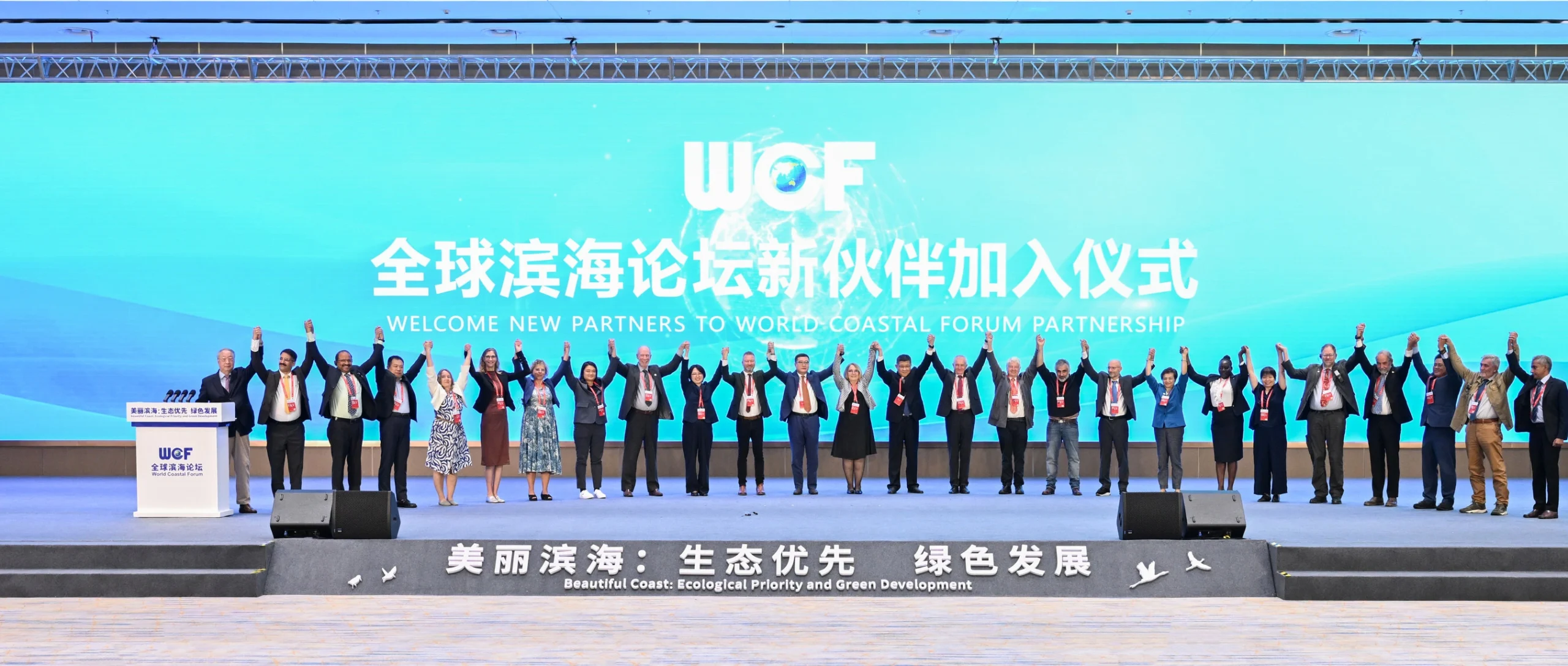
The World Coastal Forum opened in Yancheng with global leaders calling for urgent action on coastal protection and green growth. The European’s Editor-at-Large, Stanley Johnson, was among the delegates
The 2025 World Coastal Forum opened in Yancheng, Jiangsu province, yesterday with governments, multilateral organisations and research bodies warning that unchecked development is pushing the planet’s coastal ecosystems towards collapse.
A landmark State of the World’s Coastal Ecosystems report, the first global review of its kind, found seagrass beds, coral reefs, mollusc reefs and kelp forests have suffered average annual net losses of more than one per cent for half a century. A companion release, the second batch of the International Case Collection on Synergistic Enhancement of Coastal Ecological Disaster Reduction, underlined what it described as the scale of the challenge.
The study, produced by China’s Ministry of Natural Resources and the International Union for Conservation of Nature, identified climate change, urbanisation and overfishing as the chief drivers, alongside agriculture, mineral extraction and energy development. Although 12.4 per cent of coastal areas are now protected, the report found that conservation and restoration remain “far from sufficient”, constrained by underfunding, technological gaps and weak policy. It added that stronger measures are required to restore fisheries resources and advance green shipping technologies.
Yang Zhen, vice chairman of the National Committee of the Chinese People’s Political Consultative Conference and executive vice chairman of the Chinese Peasants and Workers Democratic Party, told delegates that economic growth could no longer come at the expense of the sea and urged more countries to join the World Coastal Forum Partnership Initiative, established in 2023, to “share development opportunities and achieve green development”.
The ultimate goal was a future of “blue skies, green lands and clear waters for generations to come”, he added.
Xin Changxing, party secretary of Jiangsu province, said local efforts were being stepped up to strengthen ecological barriers, promote sustainable marine use and accelerate green transformation, pledging that the move would “benefit humanity”.
Scott Morris, vice president of the Asian Development Bank, said the “blue economy” offered a pathway to growth that did not sacrifice natural systems.
“Since 2019, ADB has committed more than $3.8 billion to ocean health projects. We are equally committed to advancing coastal resilience — through mangrove restoration, hybrid green-grey infrastructure, and ecosystem-based adaptation,” he said.
“One of the most powerful demonstrations of what is possible is right here in Yancheng. The Jiangsu Yancheng Wetlands Protection Project, co-financed by ADB and the Global Environment Facility, restored and rehabilitated thousands of hectares of degraded wetlands, controlled invasive species, and converted fishponds back into natural habitats.”
The two-day event, co-hosted by the Jiangsu Provincial Government, the Ministry of Natural Resources and the National Forestry and Grassland Administration, has drawn 25 partners from 14 countries and regions under the theme Beautiful Coasts: Ecological Priority and Green Development.
READ MORE: ‘Stanley Johnson on China, the IUCN, and the future of the World Coastal Forum‘. Stanley Johnson traces the Forum’s development, from its inaugural conference in Yangcheng to proposals for embedding it within the IUCN, and examines what’s now at stake for the future of the world’s coastal regions
Do you have news to share or expertise to contribute? The European welcomes insights from business leaders and sector specialists. Get in touch with our editorial team to find out more.
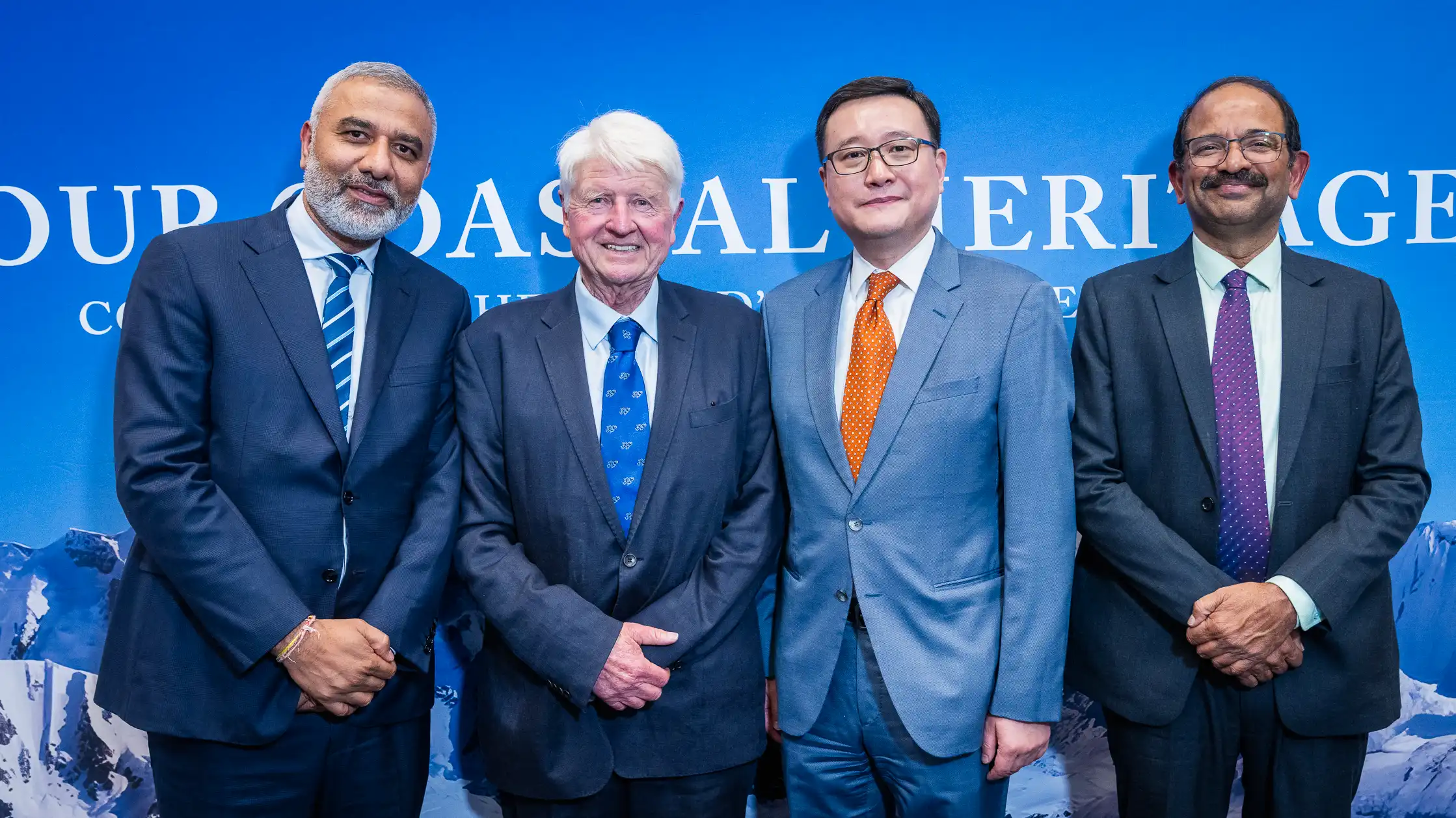
Main image: Delegates at the opening ceremony of the 2025 World Coastal Forum in Yancheng, where new partners were welcomed into the Forum’s Partnership initiative. The European’s Editor-at-Large, Stanley Johnson, is pictured. Credit: World Coastal Forum.
TOP STORIES
-
 New Springer books put the UN’s struggling sustainability goals to the real-world test
 -
Europe’s solar boom set for two-year slowdown after record growth
-
Scientists develop new chemicals to tackle devastating oil spills at sea
-
Giant wind turbine with 252-metre rotor could mean fewer machines and cheaper offshore power
-
Rescuers scramble to protect pod of 25 whales in Thames Estuary
-
Costa Rica’s research moment
-
Loch Lomond’s 'Bonnie Banks at risk’ from major road upgrade
-
Only 14% of companies can show supply chain safeguards are working, study finds
-
Hackers could plunge Britain into darkness in less than two minutes, report warns
-
Europe adds enough new wind power for 7m homes as record year beckons
-
New global map reveals 800 businesses trying to cut plastic waste
-
Six young sea eagles released on Exmoor after 200-year absence
-
Firms with political pals ‘get away with greenwashing’
-
Germany could run on full renewables by 2045, study reveals
-
Rewilding improves wellbeing and community connection, charity report says
-
A new energy era: full renewable energy supply is possible
-
Students unveil world’s first solar-powered ambulance
-
Nobel laureate Omar Yaghi launches global science network
-
Volunteers collect 11m rare seeds to restore Scotland’s native forests
-
Facebook owner Meta signs Texas solar deal with Turkish renewables firm
-
Street-by-street maps to reveal where England’s poorest communities face worst environmental risks
-
Stanley Johnson: the Government must ‘follow Ukraine back into Europe’s green network’
-
Ukraine joins European environment network in major conservation step after war damage to land and wildlife
-
China offers UK coastal rescue lessons as Yancheng wetlands hailed by conservation figures
-
Building Africa’s integrated energy future: how Tetracore Energy Group is expanding access to reliable and sustainable energy







World Coastal Forum leaders warn of accelerating global ecosystem collapse
John E. Kaye
- Published
- Sustainability
TOP STORIES
-
New Springer books put the UN’s struggling sustainability goals to the real-world test
-
Europe’s solar boom set for two-year slowdown after record growth
-
Scientists develop new chemicals to tackle devastating oil spills at sea
-
Giant wind turbine with 252-metre rotor could mean fewer machines and cheaper offshore power
-
Rescuers scramble to protect pod of 25 whales in Thames Estuary
-
Costa Rica’s research moment
-
Loch Lomond’s 'Bonnie Banks at risk’ from major road upgrade
-
Only 14% of companies can show supply chain safeguards are working, study finds
-
Hackers could plunge Britain into darkness in less than two minutes, report warns
-
Europe adds enough new wind power for 7m homes as record year beckons
-
New global map reveals 800 businesses trying to cut plastic waste
-
Six young sea eagles released on Exmoor after 200-year absence
-
Firms with political pals ‘get away with greenwashing’
-
Germany could run on full renewables by 2045, study reveals
-
Rewilding improves wellbeing and community connection, charity report says
-
A new energy era: full renewable energy supply is possible
-
Students unveil world’s first solar-powered ambulance
-
Nobel laureate Omar Yaghi launches global science network
-
Volunteers collect 11m rare seeds to restore Scotland’s native forests
-
Facebook owner Meta signs Texas solar deal with Turkish renewables firm
-
Street-by-street maps to reveal where England’s poorest communities face worst environmental risks
-
Stanley Johnson: the Government must ‘follow Ukraine back into Europe’s green network’
-
Ukraine joins European environment network in major conservation step after war damage to land and wildlife
-
China offers UK coastal rescue lessons as Yancheng wetlands hailed by conservation figures
-
Building Africa’s integrated energy future: how Tetracore Energy Group is expanding access to reliable and sustainable energy



