
Helping the UK and EU get back to business

John E. Kaye
News & Features
- Published
- Banking & Finance, Home, Technology
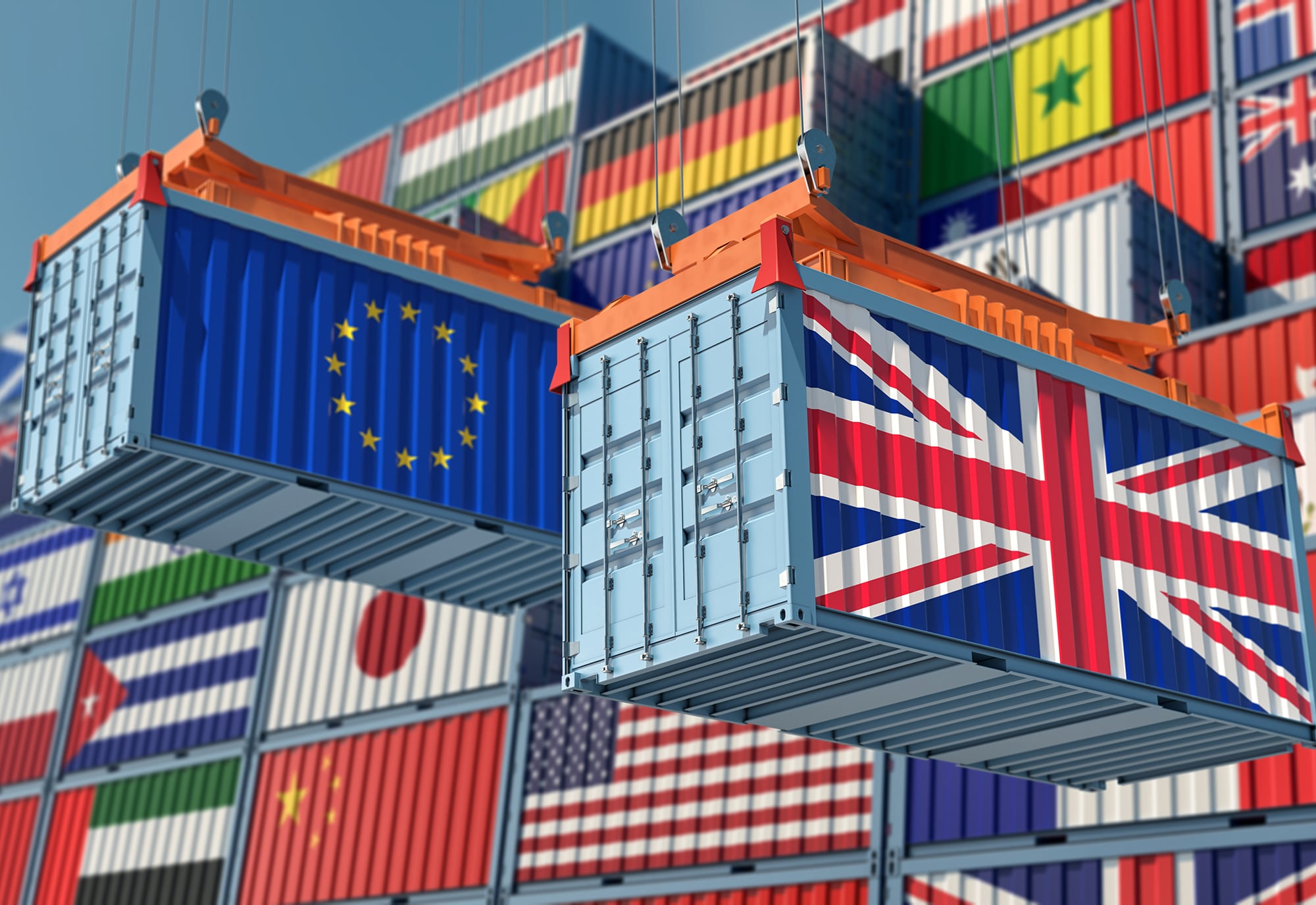
Fujitsu has launched a new digital service, offering relief to UK businesses faced with mounting Brexit customs complexity
Answering post-Brexit customs challenges, a Fujitsu-led consortium recently launched Digital Trader Services, a digital first solution which will offer UK businesses an easy, cost-effective way to submit customs declarations for importing goods from the EU to Great Britain, providing a user-friendly solution, educational guidance and access to expert advice.
Developed by a consortium of some of the world’s leading trade experts, including Fujitsu, the Institute of Export & International Trade and Competere, Digital Trader Services is set to be an essential resource in helping traders navigate the post-Brexit customs processes required to move goods between Great Britain and the EU, ensuring consumers and businesses retain access to goods from across the EU.
UK organisations need help
As post-Brexit trade legislation comes into effect, the introduction of new customs processes for EU to UK imports has become a significant challenge, adding both complexity and expense to the process. Now, the import of all goods requires expertise to navigate customs requirements and access to software to connect with HMRC systems.
The UK government has phased the introduction of import procedures, announcing an easement period on 1 January 2021 – with importers in Great Britain allowed to defer full import declarations for up to 175 days. This easement will come to a close at the end of the year, 31 December 2021. For businesses who have moved goods from the beginning of the year, the first supplementary declaration will are now required, with some organisations facing a huge backlog of declarations to be submitted. In fact, HMRC estimates that somewhere in the region of 205 to 338 million declarations will need to be made by organisations in Great Britain trading with the EU each year.
However, Fujitsu’s own study suggests that while 59% of traders know about the changes, only 31% say they’re prepared for them. Over the next few months, many organisations are expected to struggle to find the resources and skills they need to cope with rising workloads.
And while customs intermediaries are a popular choice – 53% of traders already use intermediary services – the import industry is expecting to see a boom in demand for customs intermediaries that will quickly outstrip the available supply and lead to rapidly escalating costs.
Modern-day problem – digital solution
Providing a digital solution to the issue, Digital Trader Services is an online self-service portal through which declarations can be submitted quickly and easily. The solution will simplify the trader declaration process by reducing the number of fields they need to enter – whether for a business doing a one-off declaration or providing declarations on an ongoing basis. With API and spreadsheet upload capabilities, smart technology will run error checks before automating the submission process by passing declarations straight to HMRC.
Alongside the digital process, users of Digital Trader Services will have access to expert advice and support, providing a personalised guidance through the declarations process. Access to front-line support advisors and customs professionals will be available during business hours, with front-line support agents, customs professionals, and highly qualified experts to answer traders’ questions, when they need it. As part of the consortium, users can draw on the expertise of the Institute of Export & International Trade to provide essential education and handle more complex custom queries.
Digital Trader Services will also offer educational support to help organisations’ in-house customs experts navigate the new system. Customs specialists from both Fujitsu and the Institute of Export & International Trade are developing easy-to-use guides.
Speaking on the launch, Frank Dunsmuir, Head of International Trade & Customs at Fujitsu, said: “Until now, trading arrangements within the EU were, barring a few technicalities or special circumstances, simple. No longer. Post-Brexit it can seem to many traders as though we are entering a world of ever-multiplying bureaucracy and labyrinthine complexity.
“But it doesn’t need to be so. Technology can provide the answer, playing an essential role in both the future of trade administration and border operations. Used correctly, technology can help businesses to keep trading, enabling the UK and the EU to do more business, not less. Our ambition is to create frictionless trade, turning the border back from being a headache to a simple line on a map between two separate customs regimes.”
Up and running
The Digital Trader Services portal has now launched and users can already access online information as well as obtaining advice from a team of customs experts at the Institute of Export and International trade. Functionality available in the initial launch provides supplementary declarations for EU-GB imports for standard goods going into free circulation, expanding later to include SPS (Sanitary and Phytosanitary Measures) and other goods subject to trading controls and licences.
As the UK governments seeks to create a “digital border, supporting businesses to import and export with ease and at low cost” by 2025, Digital Trader Services plans to grow and facilitate the easy movements of goods, with the goal of supporting areas where there is a high intensity of trade: UK-EU; special economic zones; freeports and more. ν
Further information
TOP STORIES
-
 Scientists and engineers quitting jobs as AI changes roles ‘beyond recognition’, study finds
 -
Deepfakes and identity fraud drive new wave of post-hire background checks
-
Brits trust AI with their health but not their money
-
Robot sales rocket 24% as 250,000 machines snap up jobs in warehouses, hotels and hospitals
-
Nearshore supply chains: why Costa Rica is emerging as a strategic gateway for global manufacturing and innovation
-
Bank of England governor warns AI poses growing ‘increasingly significant’ threat to financial stability
-
Inside Cartago’s US$1.186bn green investment hub
-
Smart manufacturing: why Costa Rica is quietly positioning itself as Latin America’s next industrial innovation hub
-
Giant wind turbine with 252-metre rotor could mean fewer machines and cheaper offshore power
-
Talent and workforce development: how Costa Rica is building a competitive knowledge economy
-
Your biggest rival could be your best technology partner, research finds
-
China unveils giant crane capable of lifting 9,300 family cars
-
LED lights could be ‘the new asbestos’, UCL scientists warn
-
OpenAI admits AI models hid mistakes, invented data and acted without permission
-
AI arms race could mean fewer cold emails reaching your inbox
-
Costa Rica is writing the next chapter of global MedTech
-
SpaceX to launch one-tonne orbital factory for European space firm in 2028
-
The Costa Rica Report 2026 is out now
-
Europe’s healthcare sector lags on AI uptake – but leads once it starts using it
-
Stranded drivers could soon call for help even with no mobile signal
-
NASA backs space ‘air brake’ that could cut years off missions to Uranus and Neptune
-
MPs and peers call for UK ban on AI that could evade human control
-
Bioweapons research, Russian-linked spies, guided rockets and cyber-attacks on Europe used Claude AI, Anthropic reveals
-
European network alliance doubles in size as digital sovereignty drive accelerates
-
European insurance giants join New York summit on future of AI




















Helping the UK and EU get back to business
John E. Kaye
News & Features
- Published
- Banking & Finance, Home, Technology
TOP STORIES
-
Scientists and engineers quitting jobs as AI changes roles ‘beyond recognition’, study finds
-
Deepfakes and identity fraud drive new wave of post-hire background checks
-
Brits trust AI with their health but not their money
-
Robot sales rocket 24% as 250,000 machines snap up jobs in warehouses, hotels and hospitals
-
Nearshore supply chains: why Costa Rica is emerging as a strategic gateway for global manufacturing and innovation
-
Bank of England governor warns AI poses growing ‘increasingly significant’ threat to financial stability
-
Inside Cartago’s US$1.186bn green investment hub
-
Smart manufacturing: why Costa Rica is quietly positioning itself as Latin America’s next industrial innovation hub
-
Giant wind turbine with 252-metre rotor could mean fewer machines and cheaper offshore power
-
Talent and workforce development: how Costa Rica is building a competitive knowledge economy
-
Your biggest rival could be your best technology partner, research finds
-
China unveils giant crane capable of lifting 9,300 family cars
-
LED lights could be ‘the new asbestos’, UCL scientists warn
-
OpenAI admits AI models hid mistakes, invented data and acted without permission
-
AI arms race could mean fewer cold emails reaching your inbox
-
Costa Rica is writing the next chapter of global MedTech
-
SpaceX to launch one-tonne orbital factory for European space firm in 2028
-
The Costa Rica Report 2026 is out now
-
Europe’s healthcare sector lags on AI uptake – but leads once it starts using it
-
Stranded drivers could soon call for help even with no mobile signal
-
NASA backs space ‘air brake’ that could cut years off missions to Uranus and Neptune
-
MPs and peers call for UK ban on AI that could evade human control
-
Bioweapons research, Russian-linked spies, guided rockets and cyber-attacks on Europe used Claude AI, Anthropic reveals
-
European network alliance doubles in size as digital sovereignty drive accelerates
-
European insurance giants join New York summit on future of AI



