Blockchain boom could create over 1 million jobs by 2030, new report claims
John E. Kaye
- Published
- Technology

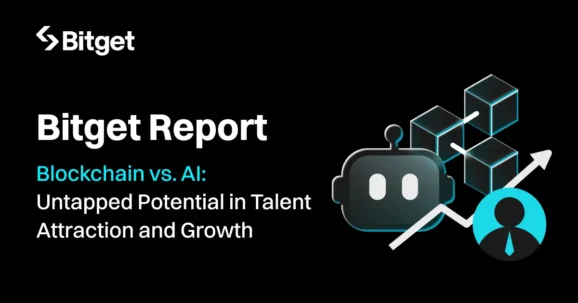
Blockchain technology could spark a hiring boom to rival artificial intelligence, creating more than a million new jobs by 2030 if adoption accelerates, according to a new report by cryptocurrency exchange and Web3 company Bitget
The analysis, titled Blockchain vs. AI: Untapped Potential in Talent Attraction and Growth, suggests blockchain remains a “sleeping giant” with the power to reshape global employment on a similar — or even greater — scale than AI.
Bitget’s findings show that while blockchain’s current job market lags far behind AI’s, the potential is enormous.
Today, there are an estimated 15,000–20,000 active blockchain job listings worldwide, mainly in North America (40%), Asia-Pacific (35%) and Europe (20%).
By contrast, AI boasts over a million openings, backed by decades of corporate investment and regulatory support.
If blockchain adoption matches AI’s trajectory, it could support up to 1.5 million jobs by 2030, the report claims — provided key hurdles like regulatory clarity and enterprise adoption are met.
Gracy Chen, CEO of Bitget, said: “Blockchain is where AI was a decade ago — a technology brimming with potential but awaiting its ‘big bang’ moment.
“With the right mix of regulation, education, and enterprise adoption, it could redefine global employment landscapes.”
The report identifies the EU’s Markets in Crypto-Assets (MiCA) regulation and corporate pilots by firms like JPMorgan (Onyx) and Visa (USDC integration) as signs that institutional acceptance is growing.
However, funding remains a sticking point: blockchain startups attracted just $25 billion in venture capital in 2023, compared to AI’s $100 billion-plus.
Education and scalability are also said to be crucial. Universities including MIT and Stanford are integrating blockchain into their courses, much like they did for AI in its early days. Meanwhile, technology upgrades — such as Ethereum’s improvements and layer-2 solutions like Arbitrum — are needed to cut costs and boost blockchain’s efficiency.
The sector’s salaries are already impressive. Roles such as smart contract auditors command average pay of $115,000 to $191,000, and could climb past $250,000 in the coming years — rivalling the top AI engineering salaries at companies like OpenAI.
Countries like Singapore, with proactive blockchain policies, are poised to become global hiring hubs — just as Silicon Valley became the heart of AI development.
Bitget’s own growth reflects the sector’s trajectory. Its workforce has increased from 200 employees in 2022 to over 1,900 today — an 850% rise in just three years.
Currently, the exchange has 129 open positions worldwide, with a focus on compliance, business development, blockchain engineering, and AI-driven product management.
High-demand regions include APAC (especially Vietnam and Singapore) and the MENA region, where Bitget is expanding to align with local blockchain strategies such as Vietnam’s national blockchain initiative.
Notably, 33% of recent applicants at Bitget come from traditional banking backgrounds, drawn by the crypto sector’s higher salaries and innovation-driven culture.
Bitget believes the next few years could see blockchain move from a niche technology to a major driver of global economic growth.
“The question isn’t if blockchain will mirror AI’s rise, but when — and whether the world is ready to harness its full potential”, the report adds.
Main photoLeeloo The First/Pexels

TOP STORIES
-
OpenAI admits AI models hid mistakes, invented data and acted without permission -
AI arms race could mean fewer cold emails reaching your inbox -
Costa Rica is writing the next chapter of global MedTech -
SpaceX to launch one-tonne orbital factory for European space firm in 2028 -
The Costa Rica Report 2026 is out now -
Europe’s healthcare sector lags on AI uptake – but leads once it starts using it -
Stranded drivers could soon call for help even with no mobile signal -
NASA backs space ‘air brake’ that could cut years off missions to Uranus and Neptune -
MPs and peers call for UK ban on AI that could evade human control -
Bioweapons research, Russian-linked spies, guided rockets and cyber-attacks on Europe used Claude AI, Anthropic reveals -
European network alliance doubles in size as digital sovereignty drive accelerates -
European insurance giants join New York summit on future of AI -
Oxford leads £10m international study as resistance threatens new TB treatments -
Apple’s new boss bets £1,999 on first folding iPhone -
Card fraud accounts for more than one-in-three UK identity fraud cases -
The new metrics reshaping how companies measure growth -
Europe leads world in quantum research despite deep industry scepticism -
Australia plans social media algorithm ‘off switch’ in move Europe could follow -
Uber launches UK’s first autonomous ride-hailing service in London -
Products made in space move closer to commercial reality -
Snickers creates ‘world’s first digital chocolate bar’ for misbehaving AI -
Lidl owner plans €5.6bn data centre as Germany pushes digital independence -
AI could make it easier for citizens to have their say, study finds -
Hidden workplace chemical risks come under spotlight as experts turn to skin exposure -
Robot beats Usain Bolt’s 100m record at Beijing games
Blockchain boom could create over 1 million jobs by 2030, new report claims
John E. Kaye
- Published
- Technology

TOP STORIES
-
OpenAI admits AI models hid mistakes, invented data and acted without permission -
AI arms race could mean fewer cold emails reaching your inbox -
Costa Rica is writing the next chapter of global MedTech -
SpaceX to launch one-tonne orbital factory for European space firm in 2028 -
The Costa Rica Report 2026 is out now -
Europe’s healthcare sector lags on AI uptake – but leads once it starts using it -
Stranded drivers could soon call for help even with no mobile signal -
NASA backs space ‘air brake’ that could cut years off missions to Uranus and Neptune -
MPs and peers call for UK ban on AI that could evade human control -
Bioweapons research, Russian-linked spies, guided rockets and cyber-attacks on Europe used Claude AI, Anthropic reveals -
European network alliance doubles in size as digital sovereignty drive accelerates -
European insurance giants join New York summit on future of AI -
Oxford leads £10m international study as resistance threatens new TB treatments -
Apple’s new boss bets £1,999 on first folding iPhone -
Card fraud accounts for more than one-in-three UK identity fraud cases -
The new metrics reshaping how companies measure growth -
Europe leads world in quantum research despite deep industry scepticism -
Australia plans social media algorithm ‘off switch’ in move Europe could follow -
Uber launches UK’s first autonomous ride-hailing service in London -
Products made in space move closer to commercial reality -
Snickers creates ‘world’s first digital chocolate bar’ for misbehaving AI -
Lidl owner plans €5.6bn data centre as Germany pushes digital independence -
AI could make it easier for citizens to have their say, study finds -
Hidden workplace chemical risks come under spotlight as experts turn to skin exposure -
Robot beats Usain Bolt’s 100m record at Beijing games