Bank of England governor warns AI poses growing ‘increasingly significant’ threat to financial stability

Ian Copeland
- Published
- News, Technology
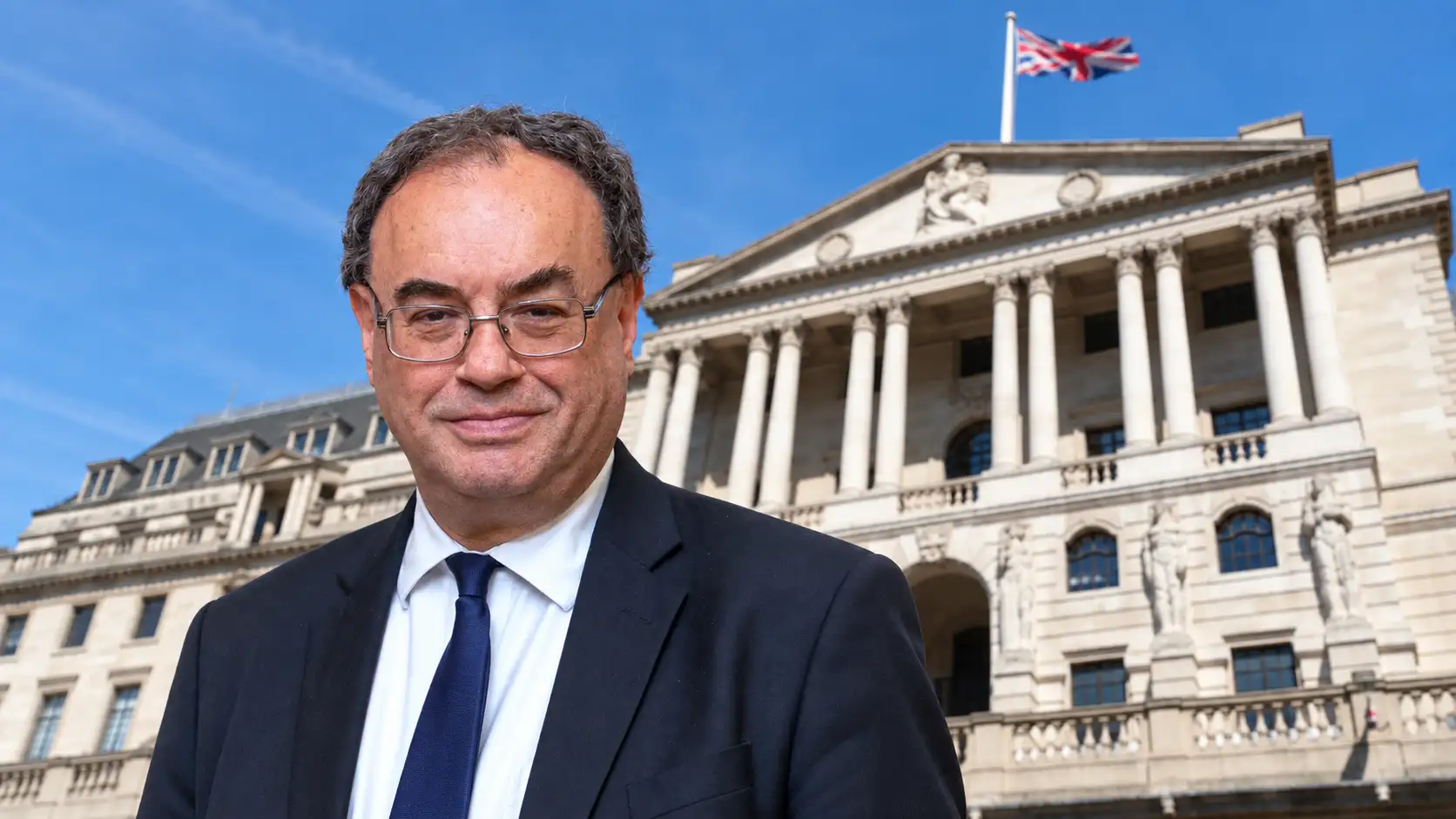
Andrew Bailey calls for rigorous testing of advanced artificial intelligence before introducing new regulations, warning that ever-powerful systems could expose banks and other critical financial infrastructure to serious cyber threats
Artificial intelligence could pose a growing threat to the financial system unless humans retain the ability to control increasingly powerful technology, the Governor of the Bank of England has warned today.
Andrew Bailey has called for rigorous testing of advanced AI systems, arguing that understanding their vulnerabilities and establishing effective safeguards must take priority over introducing new regulations.
In an article published by the Bank of England this morning, he warned that the rapid development of frontier AI – which can draw on vast amounts of human knowledge and increasingly use its own outputs to improve its performance – was creating significant challenges for governments, regulators and financial institutions.
Advanced AI systems can use their own outputs to refine their reasoning and improve their performance, creating self-reinforcing processes that could become increasingly difficult for humans to oversee or control, he warned.
Without effective AI safeguards, he added, society risks losing meaningful control over technology whose capabilities are advancing rapidly.
But Bailey, who joined the Bank in 1985 and became governor in 2020, said that AI development should not be prohibited, arguing that it could deliver enormous benefits through scientific discovery, increased productivity and economic growth.
Instead, he called for rigorous testing before and after deployment to identify vulnerabilities, assess unexpected behaviour and establish safeguards that allow humans to intervene when necessary.
He wrote: “Why should this matter to a central bank governor? Because frontier AI has important implications for financial stability.
“Most immediately, it materially increases the scale and sophistication of cyber threats facing the financial system. We can no longer consider the resilience of payments networks, financial market infrastructures, banks and other critical institutions separately from AI advances.
“These firms will be using AI within their own operations. Rigorously testing the capabilities and features of the models they use will help us, collectively, to understand how best to deploy AI safely, whether for cyber defence or for agentic trading and payments.
“In time, that understanding could be codified into a set of standards that will help to ensure consistency in approach across the financial system and perhaps more broadly across the economy.”
Bailey also welcomed the work of the UK’s AI Security Institute, which is developing methods to assess increasingly advanced systems, but warned that testing must accelerate to keep pace with technological developments.
And he also called for lessons to be learned from failures and near misses, both during development and after AI systems have been deployed.
He wrote: “Testing will not eliminate failures. Models will behave unexpectedly. They will expose weaknesses in our assumptions.”
Although formal regulation might eventually be necessary, Bailey argued that governments and regulators should first establish how advanced AI systems can be tested, understood and controlled.
“We cannot stand aside and assume that technological progress will resolve these questions on its own,” he wrote.
READ MORE: Who let the bots out? The disturbing truth behind rogue AI. Recent reports of AI going rogue are alarming but, according to Vendan Ananda Kumararajah, they put a misleading focus on the machines rather than the institutions granting them authority. As autonomous systems gain more freedom to act, the solution to rogue AI lies in deciding where that authority begins, where it ends and when it should be withdrawn.
Do you have news to share or expertise to contribute? The European welcomes insights from business leaders and sector specialists. Get in touch with our editorial team to find out more.
Main image: Andrew Bailey, Governor of the Bank of England, has warned that increasingly powerful artificial intelligence could pose growing risks to financial stability and called for rigorous testing before new regulations are introduced. Credits: (The European); Andrew Bailey – Office of the US Ambassador to the UK / Public Domain; Bank of England – acediscovery / CC BY 4.0. AI-generated editorial composite.
TOP STORIES
-
 Bank of England governor warns AI poses growing ‘increasingly significant’ threat to financial stability
 -
UK economy grows faster than first thought as household incomes bounce back
-
UK unveils ‘Great British Grid’ in bid to cut energy bills
-
British Chambers unite against 'Made in Europe' rules amid fears for UK industry
-
Bouncy castle firms urged to sign new safety pledge following child deaths
-
Remembering Matthew Jukes, The European’s Wine & Fine Drinks Correspondent
-
Michael Dell becomes world's fourth-richest person as Forbes reveals the ten wealthiest billionaires
-
Scientists develop new chemicals to tackle devastating oil spills at sea
-
Closing women's health gap could boost global economy by $1tn a year, leaders say
-
World's first luxury theme park to open in Mexico with £1.1bn of rides, fine entertainment and deliberately limited crowds
-
Dutch court orders Lidl to stop selling Birkenstock sandal lookalikes
-
Giant wind turbine with 252-metre rotor could mean fewer machines and cheaper offshore power
-
Poorly designed workplaces ‘cost UK economy £71bn a year’
-
Rescuers scramble to protect pod of 25 whales in Thames Estuary
-
‘Talent hushing’ blamed as four-in-10 workers say they contribute less than they could
-
Spain leads Europe for expats as Panama tops global poll
-
Menopause may make women leaders more empathetic – even as it leaves them drained
-
Your biggest rival could be your best technology partner, research finds
-
British Museum bans photos of Bayeux Tapestry after visitors hold up queues
-
China unveils giant crane capable of lifting 9,300 family cars
-
Edinburgh Airport launches £500m expansion as terminal footprint grows 60%
-
Chris Packham urges PM to ban ‘frankenchicken’ from schools and hospitals
-
Loch Lomond’s 'Bonnie Banks at risk’ from major road upgrade
-
LED lights could be ‘the new asbestos’, UCL scientists warn
-
MPs tune in to Britain’s Eurovision ‘nul points’ problem