Fuel is one of the most immediate expenses facing smaller fleet operators. The right software can provide a clearer view of spending, helping businesses protect cash flow, control costs and plan with greater confidence, explains Allstar Online
If you run a smaller fleet, fuel is rarely a distant line on a management report, as it is paid for daily and often before customer invoices have cleared. UK diesel averaged about 172.5p per litre in June, so even small shifts in consumption can tighten available cash. Every refuelling stop draws money from the business, meaning expenditure can rise before the work linked to that journey has produced income.
Working capital simply reflects the cash needed to cover drivers, suppliers, insurance, maintenance and overheads as revenue moves through the business. Larger fleets often rely on credit arrangements and deeper reserves, whereas smaller operators work with less flexibility, so short periods of higher fuel spend can create pressure even when demand stays steady.
Fuel also resists delay as a vehicle cannot complete a route without it, while local price differences and changing fuel prices can make monthly expenditure harder to predict.
Fuel data can become a useful management tool
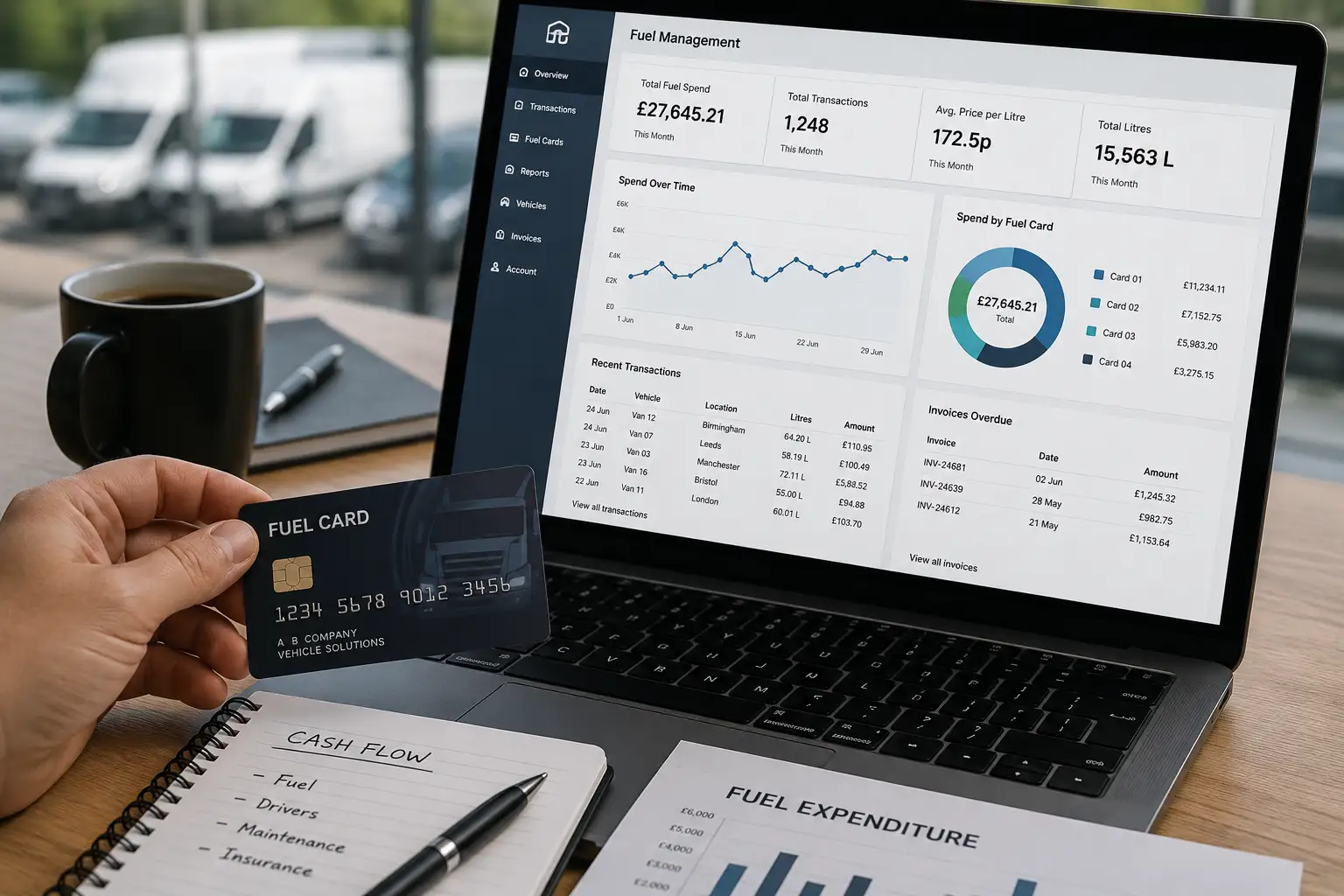
Today, fuel management software brings together fuel-card transactions, invoices and account information, giving you a clearer picture of fleet expenditure. You can review where fuel has been purchased, how much has been spent and how costs are building across your fleet throughout the month. This gives you a regular view of spending before supplier payments fall due and helps you understand where cash is leaving the business.
The value comes from having practical information in one place. You can review transaction histories, compare spending across fuel cards or vehicles where appropriate and check that purchases match your expectations. If something appears unusual, you have the information needed to investigate before small issues become recurring costs. That makes it easier to spot trends while maintaining better control over day-to-day spending.
Bringing together fuel transactions, invoices and account information also reduces the time spent moving between different systems or paper records. Intuit QuickBooks found in its 2024 Business Solutions Survey that businesses spent an average of 25 hours per week manually entering or reconciling data across apps. You can review expenses, manage fuel cards and monitor account activity from one location, making routine administration quicker while keeping a clearer view of business expenditure throughout the month.
Fewer surprises can support stronger cash planning

Fuel costs will remain variable, but better information can make their effect easier to plan for. Global energy markets, local pricing and customer demand sit outside your direct control, while monitoring fuel expenditure and reviewing transaction data are practical tasks you can complete regularly. When you understand normal spending patterns across your fleet, you can forecast the cash needed over the coming weeks with greater confidence.
Unexpected increases in fuel spending are often worth investigating quickly, as higher costs can result from changing fuel prices, additional work or purchases that deserve closer attention. The RAC estimates that fleets could cut fuel costs by up to 15 per cent through smarter use of driver and telematics data, highlighting how operational factors can contribute to unnecessary fuel expenditure. Reliable transaction records help you review those changes without relying on assumptions, allowing you to identify the reason behind higher expenditure before it becomes a recurring issue.
Better visibility can also improve your understanding of operating costs across the business. Revenue may appear healthy on paper, but rising fuel expenditure can gradually reduce margins if it goes unnoticed. Reviewing transaction data alongside invoices gives you a clearer picture of how fuel costs are developing, making budgeting, pricing discussions and financial planning more informed.
Small fleets need practical information, not complexity
A smaller business does not need every possible metric to manage fuel well, as the most useful information is often straightforward. Total fuel spend, transaction history, spending by fuel card, invoice records and account activity all support decisions you can make today. Intuit QuickBooks found in its January 2026 Small Business Insights survey that 17 per cent of UK SME owners identified juggling too many apps as a barrier to forecasting and visibility, while 16 per cent cited a lack of insight into key performance indicators. If a report cannot help you review expenditure, investigate unusual spending or simplify administration, it is unlikely to deserve much attention.
Your first step is to focus on questions that matter to your operation. Are fuel purchases consistent with normal business activity? Are spending patterns changing from previous months? Are there transactions that deserve closer review? Each question can lead to a practical action, so you do not need an enterprise-scale fleet department to benefit. You need information that is clear enough to support sensible financial decisions.
Technology costs deserve scrutiny too, which is why smaller operators should look for tools that suit the scale of their fleet. Some providers offer plans based on vehicle or driver numbers, making digital fuel management more accessible than it once was. The objective is to gain useful visibility without creating another administrative burden. Overall, a straightforward system that you review regularly can offer more value than a complex platform with features your business may never use.
Fuel records can inform future business decisions
Fuel management can also support longer-term planning as operating costs, customer expectations and reporting requirements continue to develop. Larger organisations increasingly value reliable information about business expenditure, while many fleet operators are paying closer attention to budgeting and financial efficiency. Smaller businesses may face different priorities, but clear financial records remain valuable.
Accurate fuel records provide a useful starting point when reviewing future fleet decisions. Understanding how much your business spends on fuel over time makes it easier to assess budgets, evaluate future vehicle investments and prepare for changing operating costs. Fuel management software helps make that information more visible in day-to-day administration, giving you a stronger foundation for planning while protecting cash flow and margins.
Further Information
Produced with support from Allstar Online. To find out more about its fuel management services and business solutions, visit Allstar Online.
READ MORE: We took a classic Mini on a father–daughter road trip through France and Guernsey: here’s what happened. Armed with a 1963 Speedwell Mini Cooper and a sense of adventure, our motoring editor Mark G. Whitchurch and his daughter set out through Brittany and Guernsey in search of coastal roads, wartime history and unexpected motoring discoveries.
Do you have news to share or expertise to contribute? The European welcomes insights from business leaders and sector specialists. Get in touch with our editorial team to find out more.
Main image: Modern fuel management platforms give smaller fleet operators greater visibility of fuel expenditure, helping support cash-flow planning, budgeting and financial decision-making. (The European)