Children now nearly 11 before being allowed to play outside alone

Alan Lawson
- Published
- News
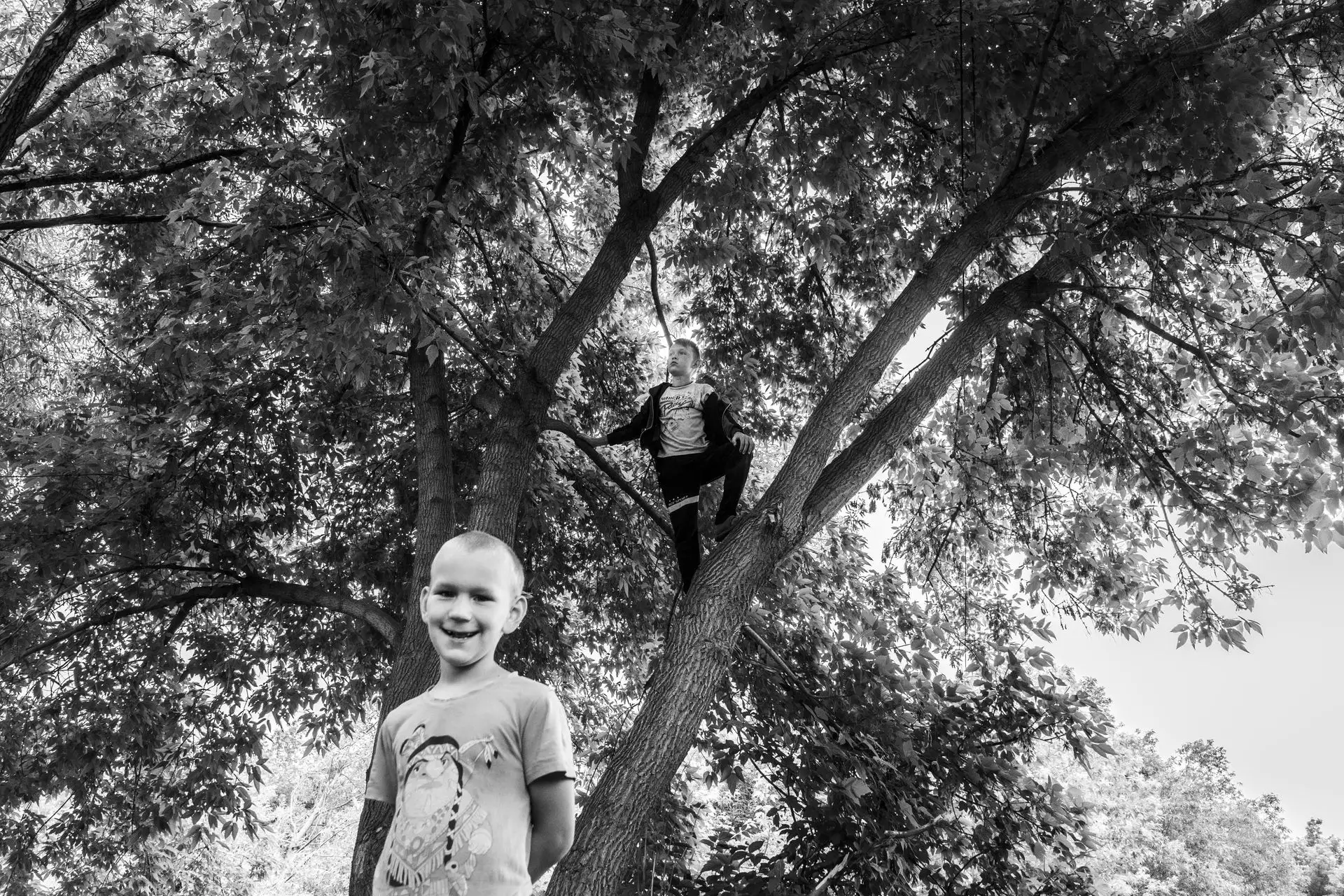
Exeter study finds a growing “generational play gap”, with street play down to less than 25 minutes a week and more than half of parents giving children freedom later than they had themselves
Children in Britain are now nearly 11 before they are allowed to play outside without adult supervision, more than a year later than their parents’ generation.
A University of Exeter study of almost 2,000 parents and carers found children first play outdoors independently at an average age of 10.8, compared with 9.7 for their parents.
More than half of parents – 56 per cent – said they give their children independence later than they themselves were allowed, while less than half of children’s play now takes place outdoors.
Street play has fallen to less than 25 minutes a week on average.
Researchers pointed to busier roads, increased screen use, poorer access to good-quality play spaces and changing social attitudes as possible reasons for the decline.
The findings were released as Exeter launched a new Outdoor Play Research Centre, led by child psychologist Professor Helen Dodd, to investigate why children are playing outside independently less and find ways to reverse the trend.
She said the figures provided further evidence of a “generational play gap”, with children enjoying less independence than previous generations and spending less of their play time outdoors.
Professor Dodd said: “The generational play gap revealed in our new research provides more evidence that children across the country are missing out on opportunities for independent outdoor play. Many of us have fond childhood memories of playing out until the street lights came on, enjoying our first taste of freedom. Yet today’s children are missing out on those same experiences.
“Importantly, we know that independent outdoor play is linked to better health and wellbeing, including lower anxiety, more positive emotions and more physical activity; some of the key childhood health challenges that we currently face. The Outdoor Play Research Centre is being founded on the principle that we must do better for our children. We want to see a step change for children’s independent outdoor play. We will conduct the scientific research needed to drive this change and work in partnership with a wide range of organisations to deliver it.”
The findings come from the latest British Children’s Play Survey, which questioned nearly 2,000 UK parents and caregivers of children aged five to 11. The results are due to be published in a paper entitled Children’s Play and Independent Mobility in 2025.
Street play emerged as one of the clearest signs of how childhood has changed. Children now spend less than 25 minutes a week on average playing in the street, the lowest figure among the types of play examined in the study.
Streets have traditionally provided an easily accessible place for children to meet friends and play close to home without needing to be driven to a park, playground or organised activity.
But researchers believe heavier traffic and concerns about road safety may be among the factors making parents increasingly reluctant to let children play outside without supervision.
Other possible explanations include increased screen time, limited access to attractive and high-quality outdoor spaces and changing social expectations about the age at which children should be allowed out alone.
The researchers argue that the consequences could extend beyond simply changing how children spend their free time. Previous work by members of the Exeter centre has found links between greater levels of outdoor and adventurous play and better mental health and wellbeing among children aged five to 11.
Children who play outside more have been found to experience fewer symptoms of anxiety and depression and greater happiness. Outdoor play is also associated with higher levels of physical activity.
Professor Dodd said those benefits were particularly important at a time when anxiety, emotional wellbeing and physical inactivity are major challenges facing children.
The survey also found that outdoor and adventurous play generally falls as children become older. Across most of Britain, the amount of time children spend playing outside declines steadily with age.
London, however, appears to break the pattern. In the capital, outdoor and adventurous play begins to rise again from around the age of nine during the later years of primary school.
The reasons for that difference are among the wider questions surrounding how neighbourhoods, transport, access to public space and parental attitudes affect children’s freedom.
Professor Dodd said the centre, which was funded by a philanthropic gift, was established because more needed to be done to improve children’s access to independent outdoor play and would use scientific research and partnerships with other organisations to try to achieve a significant change. The Exeter team will now investigate in greater detail what is preventing children from gaining independence outdoors at the same age as previous generations – and which changes could give them more freedom to play.
Sir Sajid Javid, the former Health Secretary and chairman of the University of Exeter fundraising campaign, said understanding how to give children the best possible start in life was central to the initiative.
He added: “This philanthropic endeavour will help us understand how we can give children the best possible start in life. Time spent playing outdoors has a profound influence on mental health and wellbeing and the Centre’s work has the potential to improve the lives of children and adults for generations to come.”
READ MORE: Why modern Britain is breeding loneliness. As economic pressure, fragmented communities and increasingly screen-led lives reshape modern society, millions of people are finding meaningful human connection harder to sustain. Britain’s loneliness crisis now demands urgent action, writes Dawn-Maria France.
Do you have news to share or expertise to contribute? The European welcomes insights from business leaders and sector specialists. Get in touch with our editorial team to find out more.
Main image: Dmitry Egorov via Pexels
TOP STORIES
-
 More than 1.2m English drivers may have eyesight too poor for the road, study finds
 -
David Reuben, Britain’s second richest person, leaves London for Monaco
-
UK prisoner release plan faces a major lag as tougher rules risk sending inmates back to jail
-
Brits trust AI with their health but not their money
-
Britain still hungry for Italian food as exports hit €4.56bn despite Brexit
-
Women who earn more than their partners still pay the price at work, landmark study finds
-
Vape expectations go up in smoke as new UK tax sparks fury
-
Robot sales rocket 24% as 250,000 machines snap up jobs in warehouses, hotels and hospitals
-
New-build homeowners should not be left with ‘mud and a fence’, campaigners warn
-
Bank of England governor warns AI poses growing ‘increasingly significant’ threat to financial stability
-
UK economy grows faster than first thought as household incomes bounce back
-
UK unveils ‘Great British Grid’ in bid to cut energy bills
-
British Chambers unite against 'Made in Europe' rules amid fears for UK industry
-
Bouncy castle firms urged to sign new safety pledge following child deaths
-
Remembering Matthew Jukes, The European’s Wine & Fine Drinks Correspondent
-
Michael Dell becomes world's fourth-richest person as Forbes reveals the ten wealthiest billionaires
-
Scientists develop new chemicals to tackle devastating oil spills at sea
-
Closing women's health gap could boost global economy by $1tn a year, leaders say
-
World's first luxury theme park to open in Mexico with £1.1bn of rides, fine entertainment and deliberately limited crowds
-
Dutch court orders Lidl to stop selling Birkenstock sandal lookalikes
-
Giant wind turbine with 252-metre rotor could mean fewer machines and cheaper offshore power
-
Poorly designed workplaces ‘cost UK economy £71bn a year’
-
Rescuers scramble to protect pod of 25 whales in Thames Estuary
-
‘Talent hushing’ blamed as four-in-10 workers say they contribute less than they could
-
Spain leads Europe for expats as Panama tops global poll