Global expansion is often presented as a projection of financial strategy. In reality, it is a test of institutional judgment and organisational maturity. International investor and fintech entrepreneur Oleg Boiko explores why understanding the rules behind a market – not just its economics – is the real foundation of long-term international success
Most entrepreneurs exploring opportunities to expand internationally start with the wrong questions.
They compare tax rates, look at labour costs, analyse market size, customer acquisition costs, and access to capital. Some even create sophisticated country rankings based on these metrics.
But they rarely ask the question that matters most: How predictable is the country where we’re planning to build our business?
That is why so many international ventures fail long before the financial model says they should.
After working across multiple countries, I’ve become increasingly convinced that international expansion is not about finding the cheapest market or the fastest-growing economy. It’s about finding an environment where the rules of the game don’t change faster than your company can adapt and grow.
For investors, this way of thinking is second nature. They call it country risk.
A professional investment assessment rarely begins with taxes or GDP growth. The first question is whether the country’s institutions can be trusted. Are property rights protected? Do the courts function independently? Is the regulatory environment predictable? Will the rules change after you’ve already committed your capital?
There’s a simple indicator of the quality of a business environment: can a country produce large, highly valued public companies? If investors are willing to pay a premium for local businesses, it means they trust the country’s institutions. If even good companies trade at a discount for years, the reason is usually not the quality of their management, but the quality of the state.
At the same time, country risk is not static. Over the past decade, countries such as Vietnam, the United Arab Emirates and Uzbekistan have all improved investor perceptions through different combinations of regulatory reform, economic liberalisation and stronger engagement with international markets. None of them is perfect, and each has followed a different path. But investors often care as much about the direction of institutional change as they do about the starting point.
Some countries are still far from perfect, but the trajectory of their development often matters more than the starting point. Even so, a favourable investment climate is no guarantee of success.
The most expensive mistakes rarely show up in consulting reports.
On one of my first trips to China, I spent quite some time explaining best global practices in corporate governance to our local partners. They listened carefully before asking an unexpected question:
“When you eat tomatoes, do you put salt on them?”
“Of course,” I replied.
“We use sugar. And you’ll discover differences like that every single day here.”
It’s one of the best metaphors for international business I’ve ever heard.
You can understand the legal framework, build a sound financial model, and develop a strong strategy. What is much harder to anticipate is how differently decisions are made, how business relationships are built, how negotiations unfold, how governments interact with companies, how managers view accountability, and even what trust itself means in another culture.
That’s why a successful business model can almost never be transplanted from one country to another without significant adaptation.
Another common mistake is assuming that an international company can be built using only your existing team. The real test begins when you need to recruit local managers – not simply capable executives, but people willing to tie their careers to a company that is still unknown in their market. Your employer brand starts from zero. And more often than not, the trust of your local team becomes the single biggest constraint on growth.
There’s another rule that only becomes obvious after operating in several countries. Complying with the law isn’t enough. Paying taxes isn’t enough. Meeting regulatory requirements isn’t enough. For a business to succeed over the long term, it has to become part of the local ecosystem.
Many countries embrace the idea of being a good corporate citizen. Such companies earn trust not merely because they follow local regulations, but because they become genuine members of the community. They respect local culture, know how to engage constructively with the government, understand societal expectations, and are seen as long-term contributors to the country’s economic development.
There is no universal formula for achieving this. What builds trust in Europe may have little impact in Asia. Practices that feel natural in Latin America may seem out of place in the Middle East. Every market has to be understood on its own terms.
Ultimately, international expansion is less a test of a new country than a test of your own organisation’s maturity. If a company can only operate within the institutional and cultural environment it already knows, it remains a local business, no matter how large its revenues become.
The ability to understand unfamiliar rules of the game, adapt to them, and become part of a new environment – that is what ultimately transforms a national company into a truly international one.

Oleg Boiko is an entrepreneur and investor with more than four decades of experience across financial services, technology and international investment. He is the founder and chairman of Finstar Financial Group, a private investment group with approximately US$2 billion in assets under management and investments across more than 20 countries. His work has focused particularly on fintech and technology-enabled financial services in developed and emerging markets.
Boiko’s investment philosophy emphasises long-term growth, operational discipline and the ability to identify and adapt to emerging economic and technological trends. Beyond business, he supports socially significant initiatives, including the development of the Paralympic movement.
Further information
Produced with support from Finstar Financial Group, a private investment group with approximately US$2 billion in assets under management and investments across more than 20 countries in Europe, Asia, Latin America and the CIS.
READ MORE: NVIDIA teams up with Wall Street giants in $500bn push to fund AI boom. Chipmaker joins forces with Apollo, BlackRock, Blackstone, Brookfield, Goldman Sachs and KKR to finance huge new AI computing centres.Do you have news etc
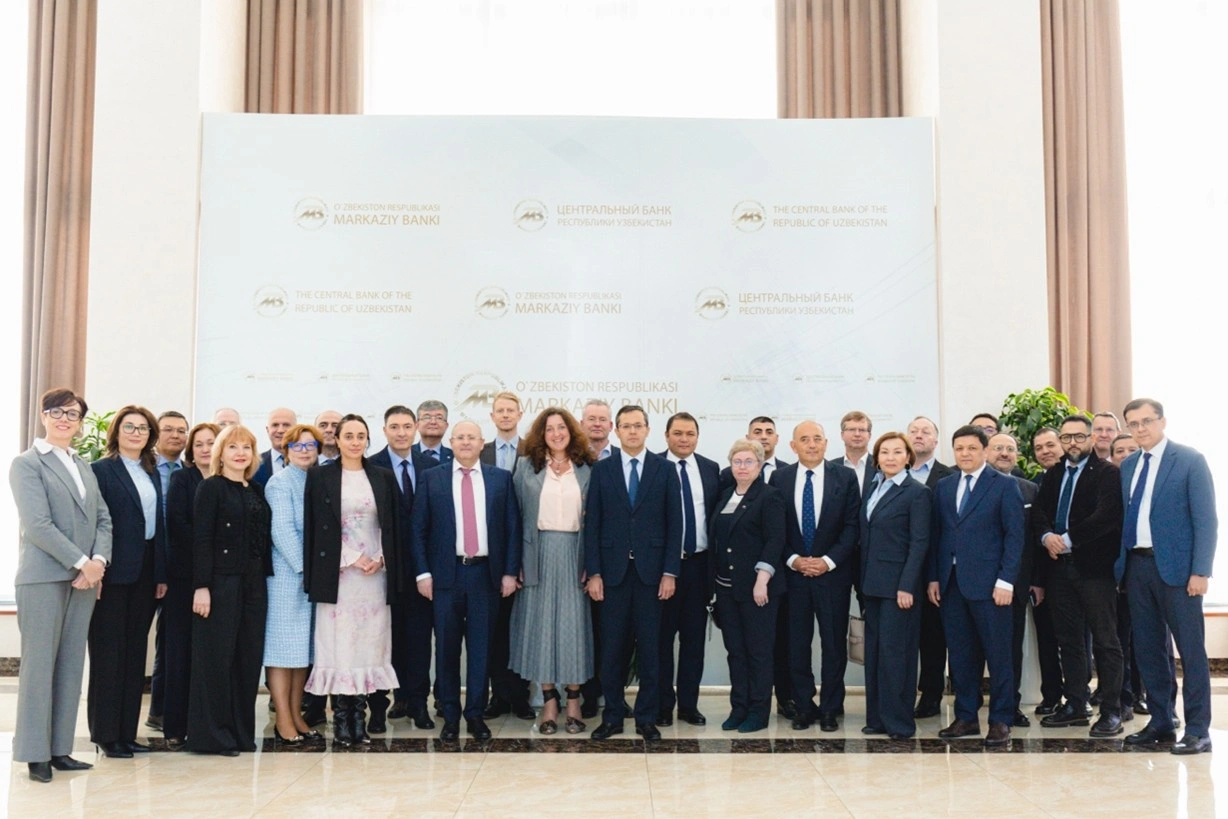
Main image: Global expansion depends on understanding the institutional, cultural and regulatory landscape of each market, argues Oleg Boiko. Credit: The European