No eclipse glasses? How to watch tonight’s spectacle without risking your sight

John E. Kaye
- Published
- News
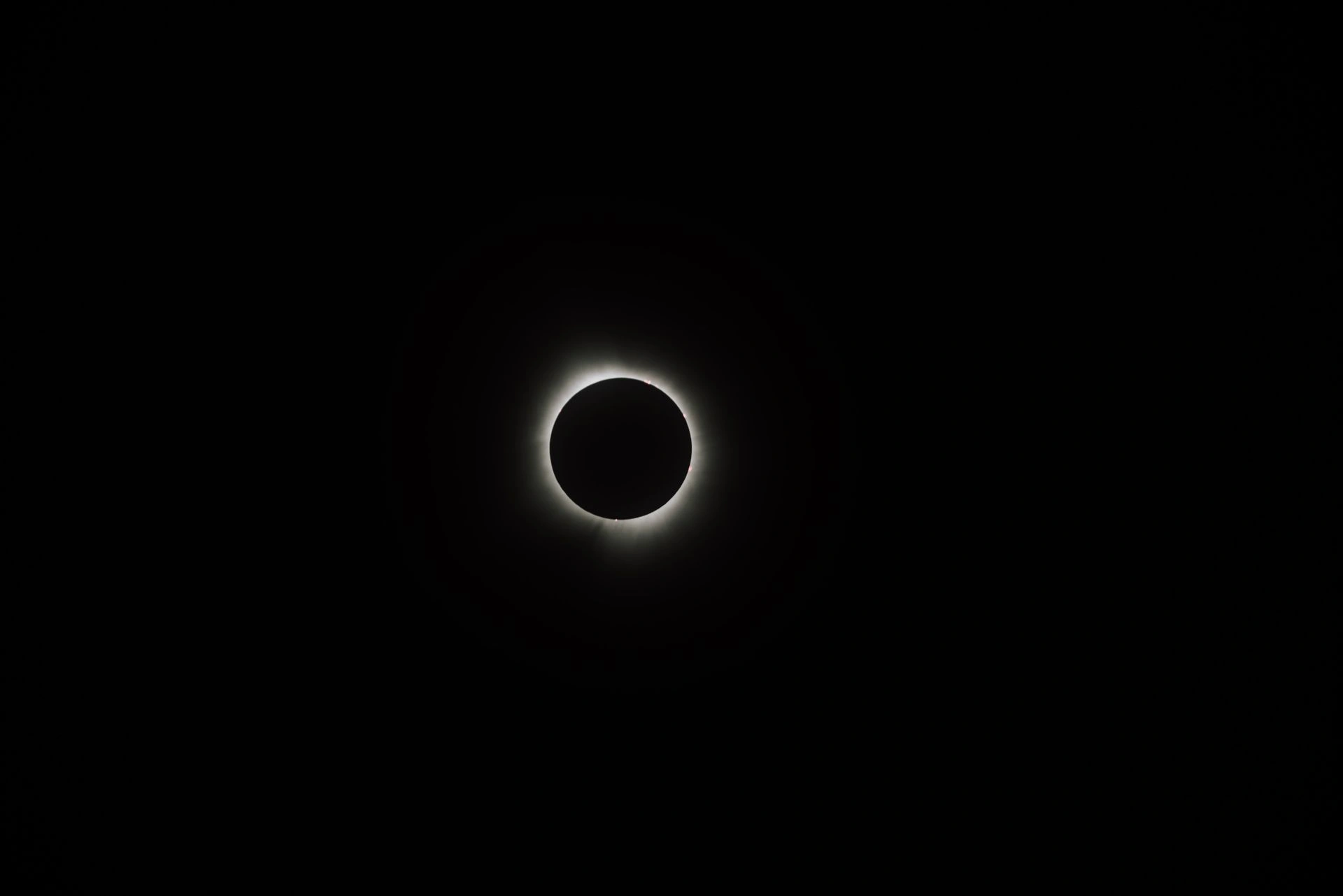
Certified solar glasses are increasingly difficult to find – but experts say there are still safe ways to see the eclipse without looking directly at the Sun
Britons who have failed to get hold of solar glasses can still watch today’s spectacular eclipse safely – as long as they do not look directly at the Sun.
Eye Health UK today issued advice on how to view the eclipse indirectly amid poor availability of certified solar glasses and a last-minute scramble to find them.
The charity said glasses meeting the ISO 12312-2:2015(E) safety standard are difficult to find, with far fewer high-street retailers stocking them than during the 1999 eclipse.
Online orders placed this week are not guaranteed to arrive before this evening, while people have taken to social media in an effort to track down suitable glasses on a click and collect basis.
But missing out on a pair does not mean missing this evening’s eclipse, when the Moon is expected to cover between 90 per cent and 96 per cent of the Sun across the UK.
Eye Health UK said people without proper glasses can watch safely on TV or through an online livestream, or use a simple pinhole projection method to see the eclipse without looking towards the Sun.
A homemade viewer requires only two pieces of thin but stiff white cardboard.
A small, clean pinhole should be made in one piece before the viewer stands with their back to the Sun.
The second piece of cardboard is then held up as a screen and moved until an inverted image of the Sun appears on it.
David Cartwright, chair of Eye Health UK, said: “Take two thin, but stiff, pieces of white cardboard. Punch a small, clean pinhole in one piece of cardboard.
“Don’t make the pinhole too big or you will only have a shaft of sunlight rather than an image of the crescent sun.
“Stand with your back to the sun, holding up the piece of cardboard with the hole in it. Hold the other piece of cardboard as a ‘screen’ in your other hand and move it until an inverted image of the sun appears on it. To make the image sharper, move the screen closer to the pinhole.”
“Remember, do not look directly at the sun through the pinhole.”
A colander can also be used to project an image of the Sun and allow people to follow the eclipse without looking directly at it.
Looking at the Sun without specialist protection can cause solar retinopathy, a form of retinal damage that can lead to central blind spots, blurred or distorted vision and light discomfort.
Seventy people suffered serious eye damage after the last major eclipse visible in the UK, with many affected after looking at the Sun for only a few seconds.
People should not try to improvise eye protection using ordinary sunglasses, even those with very dark lenses.
Nor should they look directly at the eclipse through cameras, binoculars or telescopes.
Those who have managed to obtain certified solar glasses should check that they are intact and free from marks or tears before using them.
Children should not wear adult-sized solar glasses because they may not fit securely enough to provide proper protection.
Anyone who notices changes to their vision after watching the eclipse should seek medical attention from an optometrist or healthcare professional immediately.
Cartwright added: “We’re urging people not to be tempted to look at the eclipse without proper protection.
“If you’re unable to purchase a pair of certified solar glasses, it’s vital you view it indirectly. Failing to protect your eyes whilst looking towards the sun can lead to solar retinopathy – central blind spots, blurred or distorted vision, and light discomfort.”
READ MORE: ESA creates artificial eclipses to predict tomorrow’s real one. European Space Agency uses satellites flying 150 metres apart to forecast the Sun’s corona ahead of total eclipse over parts of Europe.
Do you have news to share or expertise to contribute? The European welcomes insights from business leaders and sector specialists. Get in touch with our editorial team to find out more.
Main image: K via Pexels
TOP STORIES
-
 More than 1.2m English drivers may have eyesight too poor for the road, study finds
 -
David Reuben, Britain’s second richest person, leaves London for Monaco
-
UK prisoner release plan faces a major lag as tougher rules risk sending inmates back to jail
-
Brits trust AI with their health but not their money
-
Britain still hungry for Italian food as exports hit €4.56bn despite Brexit
-
Women who earn more than their partners still pay the price at work, landmark study finds
-
Vape expectations go up in smoke as new UK tax sparks fury
-
Robot sales rocket 24% as 250,000 machines snap up jobs in warehouses, hotels and hospitals
-
New-build homeowners should not be left with ‘mud and a fence’, campaigners warn
-
Bank of England governor warns AI poses growing ‘increasingly significant’ threat to financial stability
-
UK economy grows faster than first thought as household incomes bounce back
-
UK unveils ‘Great British Grid’ in bid to cut energy bills
-
British Chambers unite against 'Made in Europe' rules amid fears for UK industry
-
Bouncy castle firms urged to sign new safety pledge following child deaths
-
Remembering Matthew Jukes, The European’s Wine & Fine Drinks Correspondent
-
Michael Dell becomes world's fourth-richest person as Forbes reveals the ten wealthiest billionaires
-
Scientists develop new chemicals to tackle devastating oil spills at sea
-
Closing women's health gap could boost global economy by $1tn a year, leaders say
-
World's first luxury theme park to open in Mexico with £1.1bn of rides, fine entertainment and deliberately limited crowds
-
Dutch court orders Lidl to stop selling Birkenstock sandal lookalikes
-
Giant wind turbine with 252-metre rotor could mean fewer machines and cheaper offshore power
-
Poorly designed workplaces ‘cost UK economy £71bn a year’
-
Rescuers scramble to protect pod of 25 whales in Thames Estuary
-
‘Talent hushing’ blamed as four-in-10 workers say they contribute less than they could
-
Spain leads Europe for expats as Panama tops global poll