Firms with political pals ‘get away with greenwashing’

John E. Kaye
- Published
- News, Sustainability
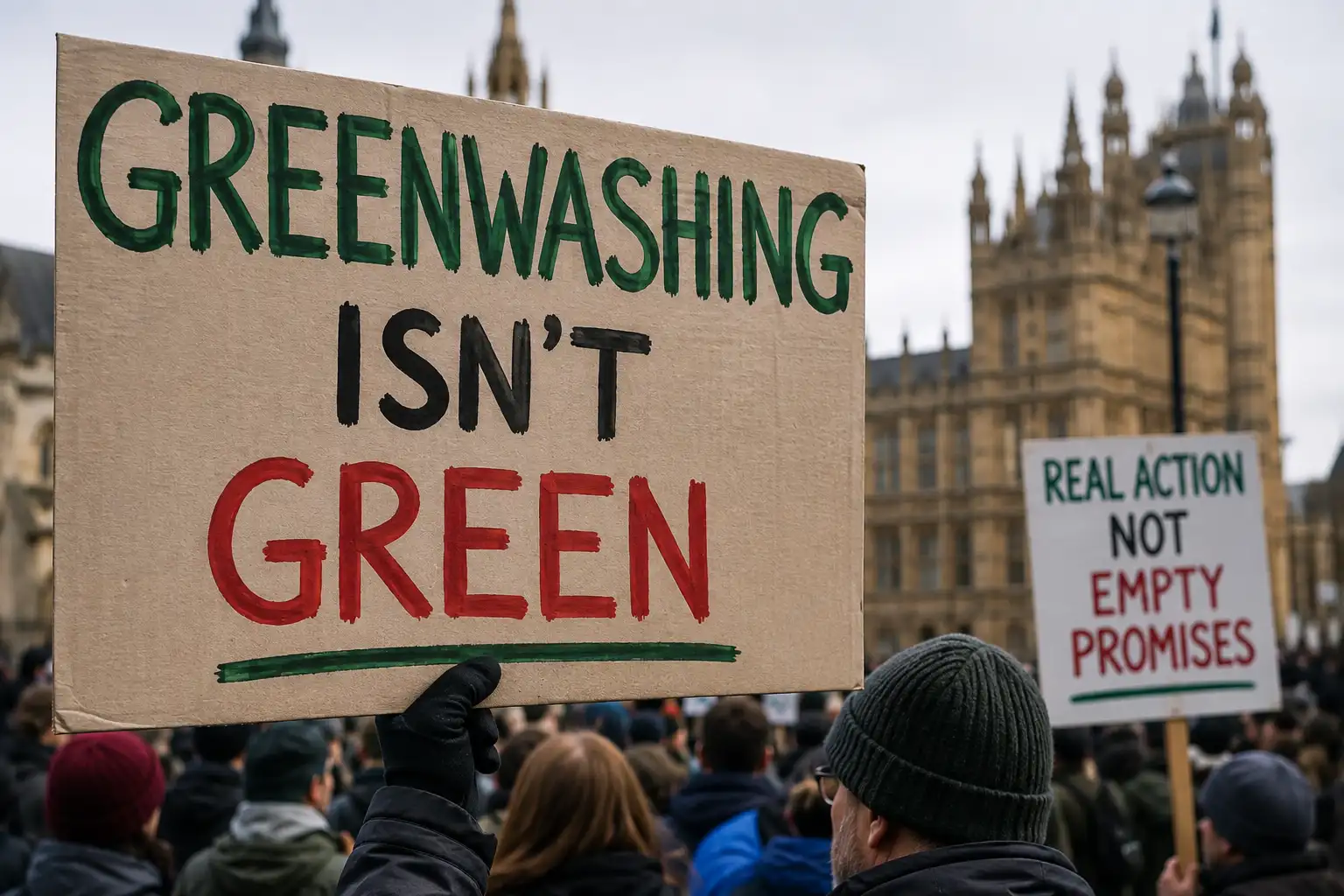
Companies that spend heavily on lobbying may face less scrutiny when they exaggerate their green credentials, researchers say
Firms with powerful political connections may find it easier to get away with greenwashing, according to new research.
Companies that spend heavily on lobbying and building relationships with politicians could face less scrutiny over their environmental record and the claims they make about it, researchers at Durham University Business School found.
Greenwashing is when businesses exaggerate or misrepresent how environmentally friendly they are, allowing them to cash in on growing demand from customers and investors for greener products and companies.
But the researchers say firms that invest heavily in political connections can gain an extra layer of protection, with politicians having less incentive to expose alleged corporate malpractice.
The findings, published today in the journal International Marketing Review, have prompted calls for tougher independent oversight to ensure companies cannot use political influence to escape scrutiny over claims about their impact on the planet.
Professor Joseph Amankwah-Amoah, of Durham University Business School, said: “For firms, appearing as a socially and environmentally conscious company is a vital marketing tool in today’s day and age – which can often lead to over-exaggeration from organisations.
“For most firms, customers and regulators can have a negative pushback on this, but those firms who’ve invested in political lobbying receive less scrutiny.”
Professor Amankwah-Amoah carried out the research alongside Ahmed Adel Tantawy, of Sheffield Business School, and Samuel Yaw Kusi, of the University of Bradford.
The researchers argue that heavy lobbying and political relationship-building can leave politicians with less incentive to expose alleged malpractice by the companies involved.
They are calling for more consistent rules around the world governing how businesses communicate their environmental activities, alongside stronger and more independent oversight.
Certification schemes, tougher regulatory enforcement and sanctions for breaches could also help deter companies from exaggerating their green credentials, they said.
Professor Amankwah-Amoah said: “Ultimately, what’s needed is independence.
“Regulators and standards bodies overseeing environmental claims must be insulated from the political influence of the very firms they’re meant to hold accountable – otherwise the framework is only as strong as its weakest connection.”
The researchers warned that even apparently tough sustainability regulations risk becoming symbolic rather than effective unless the regulators responsible for enforcing them are protected from corporate political influence.
READ MORE: Nobel laureate Omar Yaghi launches global science network. Research initiative will link institutions across seven countries to work on water scarcity, carbon capture, clean energy and climate resilience.
Do you have news to share or expertise to contribute? The European welcomes insights from business leaders and sector specialists. Get in touch with our editorial team to find out more.
TOP STORIES
-
 Gamers face gridlock as latest Grand Theft Auto download 'nears two days'
 -
Samsung profits soar ninefold to record £61bn amid AI chip boom
-
New Springer books put the UN’s struggling sustainability goals to the real-world test
-
Europe’s solar boom set for two-year slowdown after record growth
-
Let it pea. Musicians turn vegetables into instruments at Beatles' Abbey Road studios
-
Golden naked Trump statue unveiled at European Parliament
-
Jaguar puts controversial rebrand on the road with £130K 1,030PS Type 01
-
Deepfakes and identity fraud drive new wave of post-hire background checks
-
Spain crowned Europe’s top retirement destination
-
More than half of UK professionals report workplace burnout
-
More than 1.2m English drivers may have eyesight too poor for the road, study finds
-
David Reuben, Britain’s second richest person, leaves London for Monaco
-
UK prisoner release plan faces a major lag as tougher rules risk sending inmates back to jail
-
Brits trust AI with their health but not their money
-
Britain still hungry for Italian food as exports hit €4.56bn despite Brexit
-
Women who earn more than their partners still pay the price at work, landmark study finds
-
Vape expectations go up in smoke as new UK tax sparks fury
-
Robot sales rocket 24% as 250,000 machines snap up jobs in warehouses, hotels and hospitals
-
New-build homeowners should not be left with ‘mud and a fence’, campaigners warn
-
Bank of England governor warns AI poses growing ‘increasingly significant’ threat to financial stability
-
UK economy grows faster than first thought as household incomes bounce back
-
UK unveils ‘Great British Grid’ in bid to cut energy bills
-
British Chambers unite against 'Made in Europe' rules amid fears for UK industry
-
Bouncy castle firms urged to sign new safety pledge following child deaths
-
Remembering Matthew Jukes, The European’s Wine & Fine Drinks Correspondent