Germany could run on full renewables by 2045, study reveals

John E. Kaye
- Published
- News, Sustainability
Fraunhofer analysis says solar, batteries, hydrogen storage and flexible demand can provide reliable low-carbon electricity
Germany could achieve a fully renewable, climate-neutral energy system by 2045 if solar power, battery storage, hydrogen and flexible electricity demand are expanded together, according to researchers.
A study by the Fraunhofer Institute for Solar Energy Systems ISE found the country could maintain a reliable electricity supply throughout the year by combining renewable generation with large-scale energy storage, hydrogen reserves and more flexible electricity demand, even during prolonged periods of low wind and sunshine.
Researchers said those so-called “dark doldrums” account for only about one per cent of the year and could be covered by 100GW of dispatchable power generation supplied using seasonal hydrogen storage.
Dr Charlotte Senkspiel, one of the study’s lead authors, added: “Yes, we still need 100 gigawatts of dispatchable power generation for these periods, and seasonal hydrogen storage is the key to operating it.”
The findings were presented at the Renewables 24/7 special exhibit during The smarter E Europe 2026.
It comes as solar power and battery storage continue to expand faster than many earlier forecasts predicted.
The event’s organisers said the industry is already providing many of the technologies needed for a resilient, climate-neutral and cost-effective energy system, but wider deployment will depend on investment in electricity grids, storage and market reforms.
Jaran Rystad, founder and chief executive of Rystad Energy, said photovoltaic forecasts, including those produced by his own company, had repeatedly underestimated the pace of deployment.
SolarPower Europe said a record 664GW of new photovoltaic capacity was installed worldwide in 2025, taking global installed capacity above 3TW for the first time. Solar generated more electricity than wind globally during the year and became the largest driver of growth in power generation.
Europe also installed 36GWh of new battery storage in 2025, a 48 per cent increase on the previous year, taking total installed capacity above 100GWh for the first time. Annual installations are forecast to reach 138GWh by 2030.
Markus Elsässer, chief executive of Solar Promotion GmbH, said: “We are entering the battery age.”
READ MORE: A new energy era: full renewable energy supply is possible. Solar power, battery storage and digital energy technologies are converging into an integrated energy system that could deliver reliable renewable electricity around the clock, writes The smarter E Europe.
Do you have news to share or expertise to contribute? The European welcomes insights from business leaders and sector specialists. Get in touch with our editorial team to find out more.
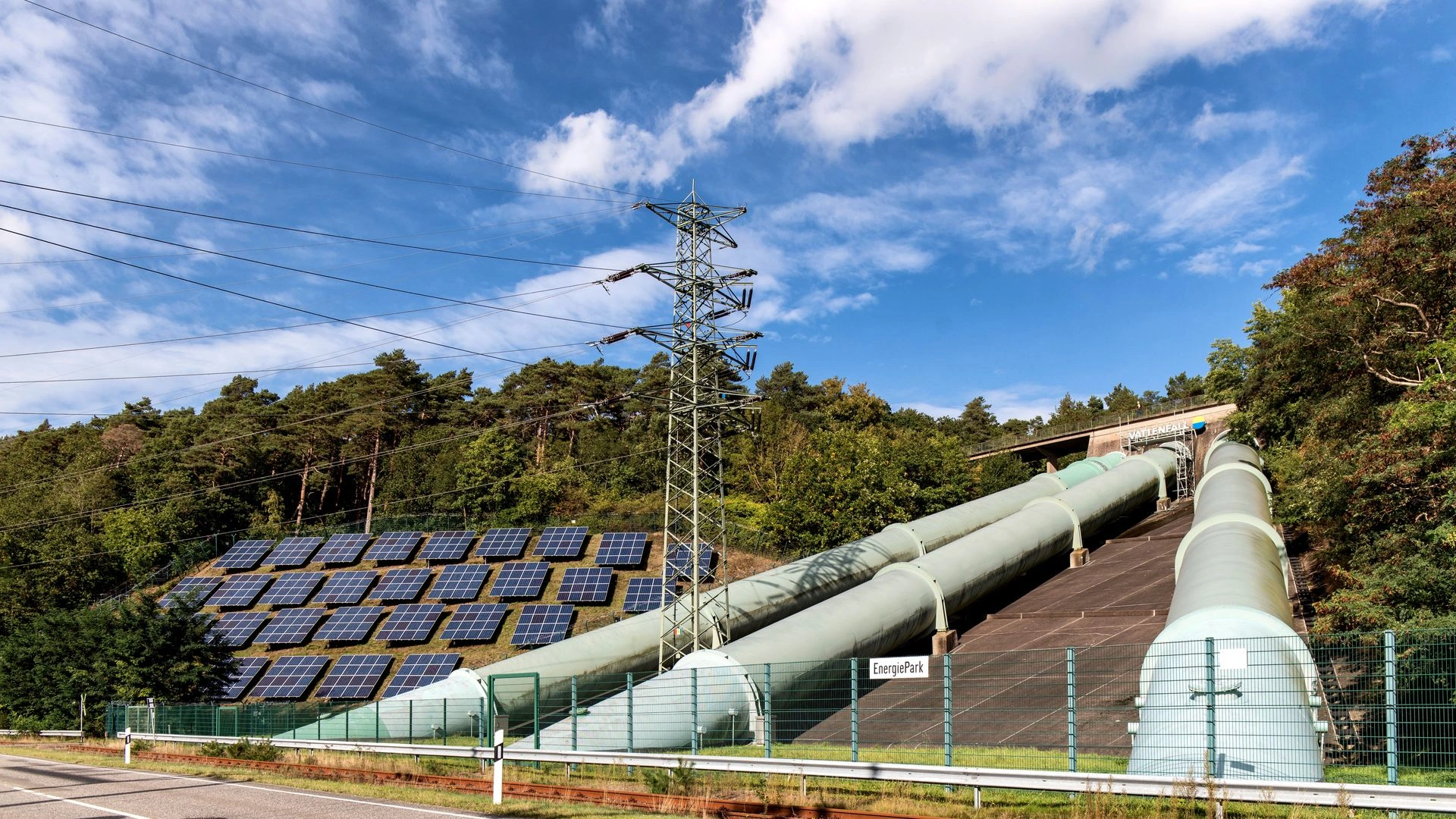
Main image: Wolfgang Weiser via Pexels
TOP STORIES
-
 More than 1.2m English drivers may have eyesight too poor for the road, study finds
 -
David Reuben, Britain’s second richest person, leaves London for Monaco
-
UK prisoner release plan faces a major lag as tougher rules risk sending inmates back to jail
-
Brits trust AI with their health but not their money
-
Britain still hungry for Italian food as exports hit €4.56bn despite Brexit
-
Women who earn more than their partners still pay the price at work, landmark study finds
-
Vape expectations go up in smoke as new UK tax sparks fury
-
Robot sales rocket 24% as 250,000 machines snap up jobs in warehouses, hotels and hospitals
-
New-build homeowners should not be left with ‘mud and a fence’, campaigners warn
-
Bank of England governor warns AI poses growing ‘increasingly significant’ threat to financial stability
-
UK economy grows faster than first thought as household incomes bounce back
-
UK unveils ‘Great British Grid’ in bid to cut energy bills
-
British Chambers unite against 'Made in Europe' rules amid fears for UK industry
-
Bouncy castle firms urged to sign new safety pledge following child deaths
-
Remembering Matthew Jukes, The European’s Wine & Fine Drinks Correspondent
-
Michael Dell becomes world's fourth-richest person as Forbes reveals the ten wealthiest billionaires
-
Scientists develop new chemicals to tackle devastating oil spills at sea
-
Closing women's health gap could boost global economy by $1tn a year, leaders say
-
World's first luxury theme park to open in Mexico with £1.1bn of rides, fine entertainment and deliberately limited crowds
-
Dutch court orders Lidl to stop selling Birkenstock sandal lookalikes
-
Giant wind turbine with 252-metre rotor could mean fewer machines and cheaper offshore power
-
Poorly designed workplaces ‘cost UK economy £71bn a year’
-
Rescuers scramble to protect pod of 25 whales in Thames Estuary
-
‘Talent hushing’ blamed as four-in-10 workers say they contribute less than they could
-
Spain leads Europe for expats as Panama tops global poll