Portuguese capital tops new ranking of 35 global cities for people considering a move abroad
Lisbon has been named the world’s most liveable city for expats in a new ranking of 35 global destinations for people considering a move abroad.
The Portuguese capital came top of the Global Citizen Solutions index ahead of Amsterdam, Melbourne, Vienna and Barcelona in the top five.
The ranking assessed cities on practical relocation factors including cost of living, safety, air quality, healthcare, ease of settling in, English proficiency and international mobility.
Researchers said Lisbon performed consistently well across all seven categories.
Its score was helped by relatively low living costs compared with cities such as Vienna, Amsterdam and Copenhagen, along with strong air quality, safety and mobility results.
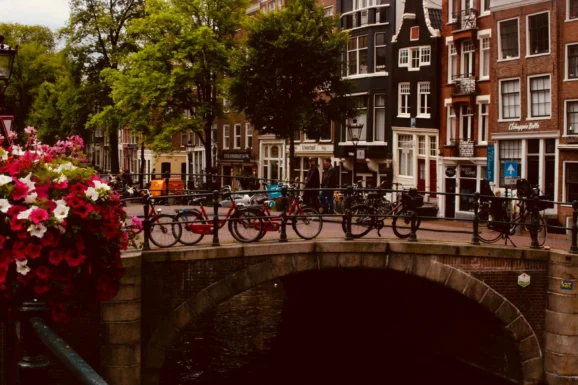
Amsterdam ranked second, with strong healthcare, safety, clean air and high English proficiency.
Melbourne came third and was the highest-ranked city outside Europe.
Vienna was fourth, with the strongest healthcare score among European cities in the ranking.
Barcelona came fifth, helped by its social accessibility and moderate living costs compared with some other European hubs.
Singapore, Auckland, Tokyo, Copenhagen and Seoul completed the top 10.
The index was designed for individuals making voluntary relocation decisions.
Global Citizen Solutions said: “When individuals consider relocating, the questions they ask are rarely abstract. They are immediate and practical in nature: Can I afford to live well there? Will I feel safe? Is the air clean? Can I access high-quality healthcare, communicate with ease, and travel when I need to? And, equally important, will I feel comfortable settling in?”
It added: “These are the questions this ranking is designed to answer.”
The report said more than 300 million people now live outside their country of birth.
It cited UN DESA figures showing that the number of international migrants reached 304 million in 2024, almost double the 154 million recorded in 1990.
Permanent migration to OECD countries exceeded 6.5 million in 2023, up 28 per cent on 2019.
Early estimates, it said, suggested flows remained high at around 6.2 million in 2024.
Post-pandemic decade had also created a more varied group of internationally mobile people, including remote workers, retirees, digital entrepreneurs and location-independent families.
“The post-pandemic decade has accelerated this shift further, producing a more diverse group of internationally mobile individuals, including remote workers, retirees, digital entrepreneurs, and location-independent families, each with distinct priorities,” the report added.
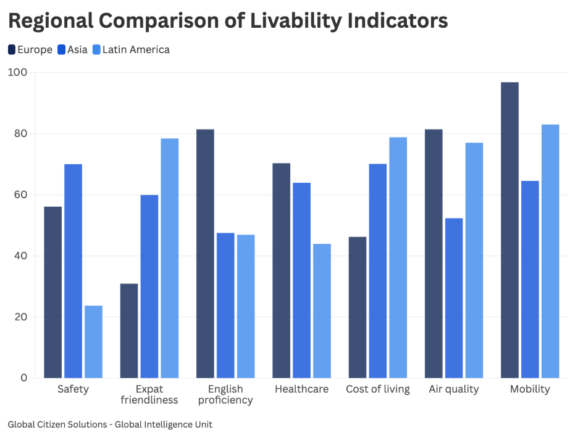
The ranking found that cheap living costs alone do not guarantee a high liveability score. Ho Chi Minh City, for instance was the most affordable city in the index, followed by Nairobi, Bali and Tbilisi, yet none reached the top half of the overall ranking.
The report said lower-cost cities often came with weaker scores for healthcare, safety, mobility or other structural factors.
It also found a clear gap between cities that feel easy for newcomers and cities with the strongest overall scores.
San José in Costa Rica had the highest ease-of-settling-in score, followed by Mexico City, Bali, Rio de Janeiro and Bangkok.
Only San José placed in the top half of the composite ranking.
Vienna ranked fourth overall and recorded one of the lowest ease-of-settling-in scores in the study.
Copenhagen and Amsterdam also performed strongly overall despite weaker scores for immediate social integration.
The report said: “The qualities that make a city feel welcoming to newcomers are structurally distinct from indicators such as healthcare quality and air quality.”
It added: “Structural excellence and ease of social integration are best understood as complementary rather than substitutable considerations.”
Strong performance in one category alone rarely pushed a city to the top of the overall table.
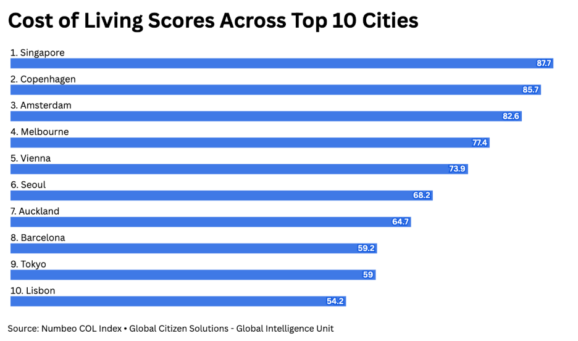
Dubai, as an example, had the highest safety score and ranked 19th overall, Panama City had the cleanest air in the sample and ranked 13th, while Seoul had the highest healthcare score and finished tenth.
Lisbon’s lead came from steady performance across the full set of relocation measures.
Global Citizen Solutions said: “What distinguishes Lisbon is that it performs above average on every dimension, with no significant weakness anywhere in its profile.”
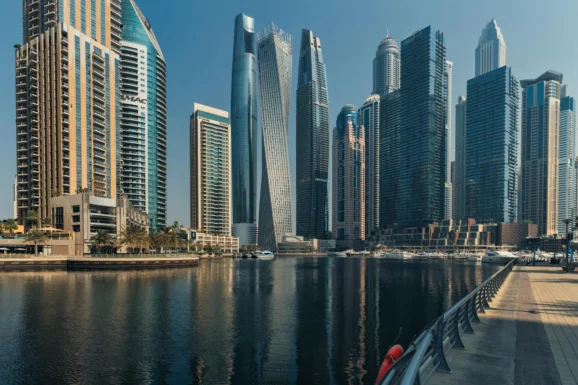
Regional patterns also emerged with Europe ranking strongly for healthcare, mobility, infrastructure, English proficiency and environmental quality.
Its weaker areas were said to be affordability and expat friendliness.
Latin America scored strongly for affordability and social integration, while Asia scored strongly on safety and offered balanced results across several measures.
The report said relocation decisions increasingly depend on the priorities of the person moving. Digital nomads may favour lower-cost cities with strong expat communities, retirees may place greater weight on healthcare and safety, and families may focus on English-language access and institutional stability.
Wealthy movers, meanwhile, may place more emphasis on mobility, personal security and residence-by-investment pathways.
The report said: “The findings of this index point to a livability landscape that resists simple ranking.”
Global Citizen Solutions said the index was intended as a practical tool for individuals, private clients and advisers weighing international relocation options.
“The central contribution of this index is that it shifts livability from a city-performance question to a relocation-fit question,” it added.
“By integrating mobility rights and expat experience alongside conventional urban indicators, it captures not only where life is objectively comfortable, but where international residents are most likely to settle and sustain a long-term lifestyle.”
The world’s most liveable cities for expats, in order:
- Lisbon – 88.49
- Amsterdam – 81.97
- Melbourne – 81.79
- Vienna – 81.07
- Barcelona – 80.70
- Singapore – 80.58
- Auckland – 80.15
- Tokyo – 79.78
- Copenhagen – 79.57
- Seoul – 78.89
- Vancouver – 78.72
- Buenos Aires – 75.67
- Panama City – 75.51
- San José – 74.73
- Kuala Lumpur – 74.22
- Montevideo – 73.18
- Tel Aviv – 72.51
- Bangkok – 72.12
- Dubai – 71.80
- Athens – 70.95
- Tbilisi – 70.43
- Paris – 69.76
- Stockholm – 69.46
- Berlin – 69.30
- Limassol – 69.05
- Nairobi – 68.53
- Zurich – 67.85
- Rome – 67.76
- Cape Town – 67.76
- Oslo – 65.23
- Mexico City – 65.06
- Ho Chi Minh City – 62.36
- Rio de Janeiro – 61.42
- Santiago – 61.04
- Bali, Denpasar – 60.09
READ MORE: Prague named Europe’s top student city in new comparative study. A ranking by relocation firm BOXIE24 places Prague first in a ten-city assessment based on affordability, safety, accommodation availability, public transport and academic density, ahead of Leuven and Lisbon.
Do you have news to share or expertise to contribute? The European welcomes insights from business leaders and sector specialists. Get in touch with our editorial team to find out more.
Main image: Lisbon has been named the world’s most liveable city for expats, topping a 35-city ranking thanks to its mix of affordability, safety, air quality and international mobility. Credit: thorl5 via Pexels.