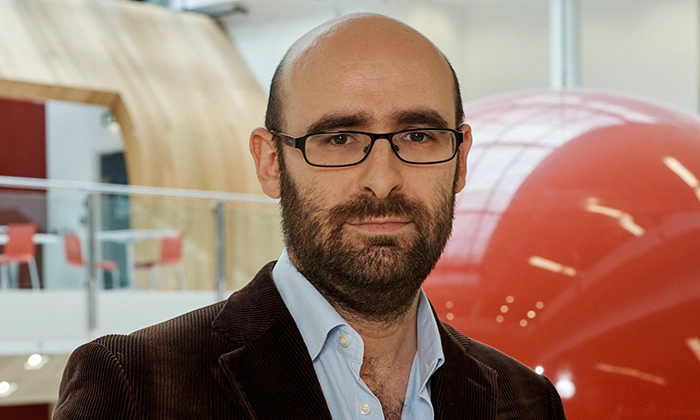
By Dr Shahnaz Hamid, Dean, London School of Business and Finance (LSBF)
Over the past decade, I have observed a noticeable shift in how experienced business leaders approach their professional development, reflecting sustained global demand for postgraduate research degrees, including doctoral studies.
According to EFMD Global research, 86 per cent of institutions offering the DBA expect enrolments to increase, while the market has seen an 80 per cent rise in demand for DBA programmes worldwide.
Earlier in their careers, the MBA was often considered the pinnacle of business education. Today, however, many senior professionals who completed an MBA years ago are asking a different question: how do I deepen my impact as a leader rather than simply expand my credentials?
Increasingly, the answer lies in the Doctor of Business Administration (DBA).
Unlike traditional postgraduate study, the DBA represents a different stage of intellectual and professional development. It attracts individuals who already possess substantial leadership experience and are now seeking to interrogate complex organisational challenges through research, reflection, and evidence-based insight.
For senior leaders operating in a G7 and European context, this shift is particularly significant. In an internationally competitive environment where innovation and resilience in leaders and decision makers is key, doctoral-level credentials can shape both individual capability and organisational performance. As someone who works closely with senior professionals and doctoral candidates, I often recommend the DBA to those seeking to move beyond operational leadership and engage more deeply with strategic thinking, research and long-term organisational impact.
A doctorate designed for leaders ready to go further
The DBA is sometimes misunderstood as simply another academic qualification. In reality, it occupies a distinctive position within business education.
While the MBA focuses on developing managerial competence across core business disciplines, the DBA operates at a deeper level of inquiry. It is designed for experienced professionals who are ready not only to apply established management frameworks but also to critically examine them and generate new insights drawn from real organisational contexts.
Although the PhD traditionally focuses on theoretical research within academic settings, the DBA places greater emphasis on practice-based research. Candidates investigate complex challenges emerging within organisations and industries, producing work that is both academically rigorous and practically relevant.
In this sense, the DBA represents a practitioner doctorate — one that integrates scholarly research with leadership practice and contributes knowledge that informs both organisational decision-making and wider academic discussion.
Where research meets real-world leadership
One of the most valuable aspects of the DBA is its ability to bridge the long-standing gap between academic research and business practice.
In many organisations, strategic decisions are still driven largely by experience, instinct, or short-term pressures. While these approaches can be valuable, they do not always provide the structured insight required to address complex and evolving challenges.
The DBA enables professionals to engage with these challenges at a far deeper level than traditional postgraduate study. Rather than simply analysing problems, candidates are expected to generate insights that can influence organisational practice and industry thinking.
Doctoral research requires leaders to critically interrogate established management assumptions, design robust research approaches within real organisational contexts, and produce evidence that contributes both to their organisations and to the wider field of business and management. This shift towards evidence-informed leadership can significantly strengthen strategic decision-making and organisational innovation.
What I often see among DBA candidates
From an academic leadership perspective, it is particularly interesting to observe the types of professionals who pursue DBA programmes.
Many are already senior executives, entrepreneurs, consultants, or leaders responsible for complex organisational decisions.
They are not returning to study to change careers. Instead, they are seeking a structured way to examine the strategic challenges they encounter in their professional lives. In many cases, their research questions emerge directly from dilemmas they face in their organisations, whether related to digital transformation, leadership culture, governance, sustainability, or organisational change.
This connection between research and real organisational experience is what makes the DBA journey especially powerful. Candidates are not studying hypothetical problems; they are investigating issues that genuinely matter to their organisations and industries.
What makes the LSBF DBA distinctive
London School of Business and Finance was founded in 2003 by entrepreneur Aaron Etingen in the United Kingdom and has since grown into an internationally recognised institution delivering professional qualifications, undergraduate degrees, postgraduate degrees, doctorate of business administration and executive education courses online.
LSBF’s programmes are accredited by the MFHEA, the British Accreditation Council, and the Continuous Professional Development Certification Service. We also hold the status of Gold Approved Learning Partner with the Association of Chartered Accountants.
At London School of Business and Finance, we have designed our DBA for experienced professionals. Our programme is delivered 100 per cent online, enabling senior leaders across the globe to pursue doctoral study without interrupting their careers.
This flexibility is combined with structured academic support, ensuring that candidates remain engaged and progress effectively through each stage of their research journey.
A key strength of the LSBF DBA is its strong emphasis on applied, real-world research. Candidates are encouraged to focus on challenges directly relevant to their organisations or industries, ensuring that their work delivers tangible impact rather than purely theoretical outcomes.
The programme also incorporates guided research development through core modules such as Management Theory and Practice, Foundations of Research, The Reflective Practitioner, and Research Design and Ethics, supporting candidates in building robust doctoral-level capabilities before progressing to their thesis.
Importantly, the LSBF DBA reflects the evolving landscape of business leadership by encouraging research in areas such as digital transformation, artificial intelligence, sustainability, and organisational change, aligning academic inquiry with contemporary global challenges.
At LSBF, applications for the DBA programme are now open, offering senior leaders the opportunity to begin this next stage of their professional journey. For more information on the programme, visit: https://www.lsbf.org.uk/programmes/doctor-of-business-administration
Developing reflective and strategic leaders
Another reason I often recommend the DBA is the way it reshapes how experienced leaders think about their organisations.
Senior executives frequently make decisions under conditions of uncertainty, complexity, and competing stakeholder expectations. The doctoral process provides a rare opportunity to step back from immediate operational demands and engage in deeper inquiry about the forces shaping organisations and industries.
Through this process, many candidates begin to question assumptions that previously went unchallenged — whether related to leadership models, organisational culture, governance practices, or strategy execution. The result is often a shift from purely experience-driven leadership towards more reflective, evidence-informed decision-making.
For many leaders, this intellectual shift becomes one of the most valuable outcomes of the DBA journey.
Turning insight into impact
Another distinctive feature of the DBA is its emphasis on impact. In my experience working with doctoral candidates, many of the most compelling research projects emerge from strategic challenges organisations are currently facing.
These often include areas such as digital transformation, responsible leadership, artificial intelligence in decision-making, sustainability strategy, organisational resilience, and the evolving nature of work.
Rather than approaching these topics purely from a theoretical perspective, DBA candidates investigate how these challenges unfold within real organisational contexts.
As a result, practitioner research generates insights that are immediately relevant to industry practice while also contributing to broader academic and policy discussions.
Is the DBA the right next step for you?
If you already hold an MBA, the question is not whether to continue your development, but how far you are prepared to go.
A Doctor of Business Administration (DBA) is not a default next step. It is a deliberate move for professionals who recognise that the complexity of today’s business environment demands more than foundational knowledge.
At a certain stage in your career, the capabilities developed through an MBA may no longer be sufficient to navigate high-stakes, ambiguous challenges with complete confidence. You may find yourself confronting strategic problems that require deeper analytical rigour and evidence-based decision-making, or operating in environments where differentiation among senior leaders is increasingly defined by advanced expertise and original insight.
For those aiming not only to lead organisations but to shape them, to influence decision-making at board level, advise at the highest levels, or contribute meaningfully to industry-wide conversations, the DBA offers a clear progression. It equips you with the intellectual depth, research capability, and applied methodologies needed to solve complex, real-world organisational challenges.
If this aligns with your ambitions, then exploring the DBA is not simply worthwhile. It is a logical and strategic next step.
More than a qualification: a transformational journey
Ultimately, the DBA represents far more than an additional qualification. It is a journey that challenges experienced professionals to question assumptions, explore complex organisational issues, and develop research capable of creating meaningful impact.
For many leaders, the experience fundamentally reshapes how they approach strategy, governance, and organisational transformation. It allows them not only to lead organisations but also to contribute to the knowledge and ideas that influence the future of business practice.
In that sense, the DBA is not simply about going beyond the MBA. It is about developing leaders who are prepared not only to apply knowledge, but to shape it.

Dr. Shahnaz Hamid is the Dean of the London School of Business and Finance (LSBF), where she leads academic strategy, programme innovation, and quality assurance across the institution’s global portfolio. She holds a Doctorate in Business Administration, specialising in Strategic Human Resource Management. In recognition of her impact on the education sector, Dr. Hamid has been included in the Top 50 Education Powerlist and is a recipient of the prestigious Jury Award from the COAE Global Awards for her exceptional contributions to education. With extensive experience in Human Resource Management and International Business, Dr. Hamid has worked across higher education and executive learning environments, engaging adult learners at undergraduate, postgraduate, and professional levels. Her leadership emphasises inclusive, industry-aligned, and digitally enhanced learning experiences.
Dr. Hamid’s research interests focus on strategic management, HRM, digital transformation in higher education, remote and lifelong learning, and the future of work. She actively contributes to scholarly publications and international academic initiatives in these areas. A recognised expert in accreditation and regulatory compliance, Dr. Hamid collaborates closely with international quality assurance bodies to strengthen academic standards, particularly within online and transnational education. Her thought leadership has been featured in respected professional and academic publications, reflecting her commitment to advancing innovation, access, and excellence in global education.
Further information
Produced with support from London School of Business and Finance. For further information, visit www.lsbf.org.uk
READ MORE: ‘University of New Haven receives approval for first US branch campus in Saudi Arabia‘. The private Connecticut university has received accreditation approval to launch a campus in Riyadh this autumn, with plans to offer business and digital innovation degrees before expanding into engineering and applied sciences.
Do you have news to share or expertise to contribute? The European welcomes insights from business leaders and sector specialists. Get in touch with our editorial team to find out more.