Volcanic shores, Atlantic winds and secret turquoise lagoons. In Europe’s sunniest archipelago, surfers may rule the waves, but those willing to rise early will find some of the Atlantic’s most spectacular open-water swimming. Ben Hooper returns to Fuerteventura, an island he once called home, in the latest instalment of his popular Diving Into… series for The European
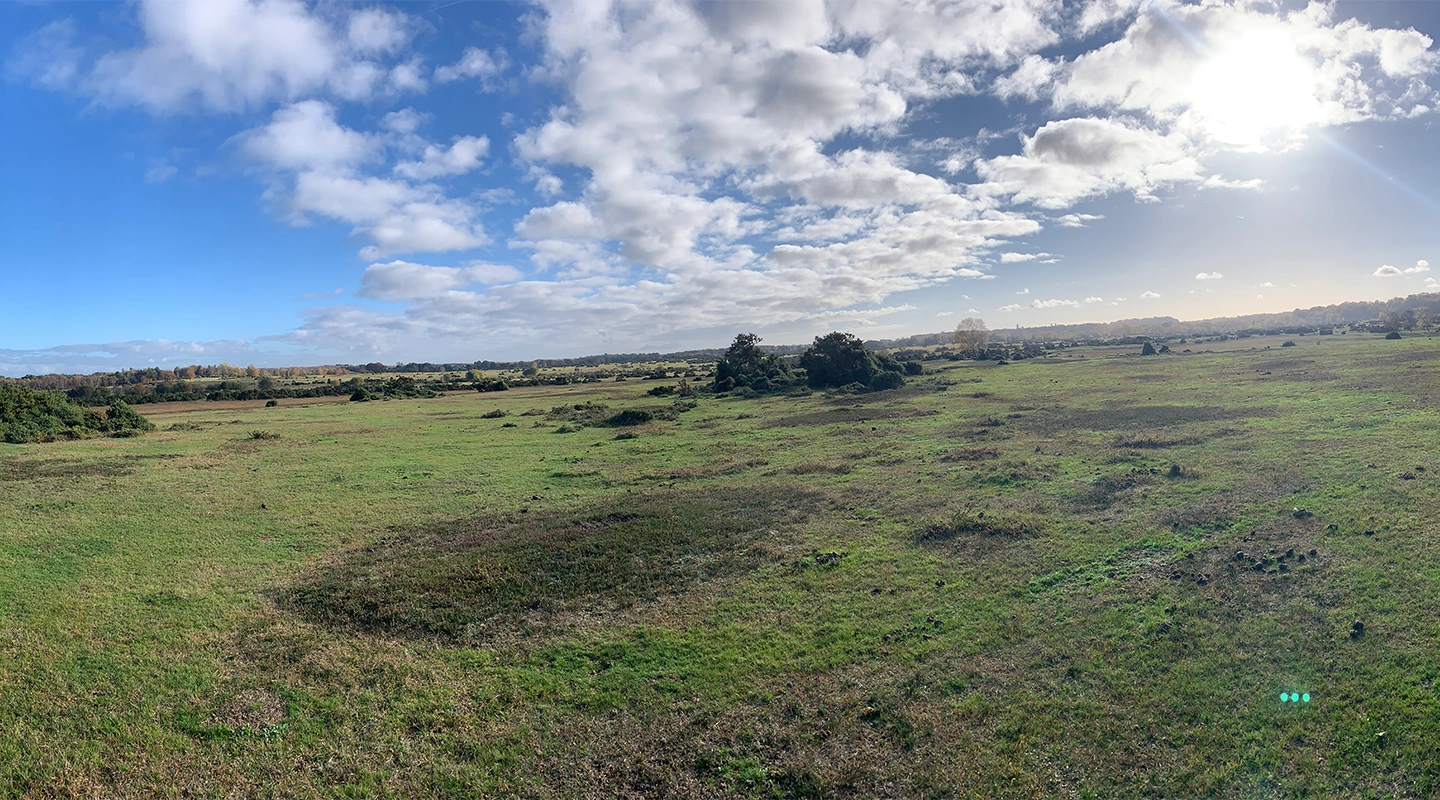
Fuerteventura rises from the Atlantic like a sunburnt mirage, an island sculpted by volcanoes, wind and centuries of ocean travel. Closer to Africa than mainland Europe, this scorched, sea-battered Canary Island is all volcanoes, dunes, black lava and ridiculously blue water. It is raw, rugged and gloriously dramatic, with beaches that swing from wild Atlantic beauty to near-Caribbean calm. The climate is wonderfully straightforward – warm all year, and usually very, very breezy – which is why Northern Europeans flock here in droves.
This Spanish-owned island – still noticeably shaped by decades of German visitors and expats – welcomes surfers and kitesurfers all year round. They come precisely for the Atlantic trade winds that sweep across the ocean, bringing steady swell, bright sun and the promise of a very good suntan. For swimmers, however, those same winds are less helpful. Which is why we learn a simple trick: wake up early. Before the sails appear on the horizon and boards begin carving across the bays, the breeze often drops and the sea lies almost still. In those quiet morning hours the water turns glassy and luminous and is perfect for a long, open-water swim.
On the island’s remote western coast stands the enigmatic Villa Winter, long rumoured to have sheltered German U-boat crews during the Second World War. Bullet holes are said to still mark its walls. Having once lived on this wild Atlantic outpost myself, I packed a small bag and returned. The hope, as always on Fuerteventura, was simple: that the Saharan winds would stay away, no sandstorm would sweep in from Africa, and the sky would remain blue rather than turning red with dust and forty-degree heat – even if only for a few days.
Five of Fuerteventura’s most spectacular swim spots
Fuerteventura offers some of the Atlantic’s most striking open-water swimming – from calm turquoise lagoons to wild volcanic coastlines. Conditions can change quickly and the ocean here demands respect, but for swimmers willing to pick the right moment, these spots offer clear water, dramatic scenery and a proper taste of the Canary Islands’ raw Atlantic edge. Here are some of my favourite places to swim.
Corralejo & the Grandes Playas – Wide Atlantic beaches beside the dunes of Dunas de Corralejo Natural Park offer long, clear‑water swims in the early morning before the wind builds. Stunning is an understatement. Hot, is putting it mildly.
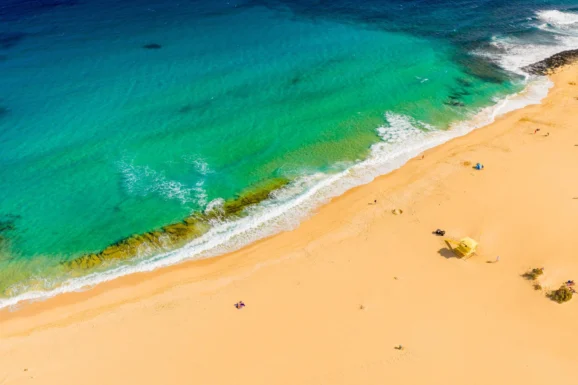
El Cotillo Lagoons – Natural volcanic lagoons where the Atlantic breaks outside but leaves glassy turquoise pools inside. This is my favourite spot for relatively safe swimming. The lagoons are sheltered and warm, although the water deepens as you move further out. Swim slowly and you may spot rays gliding below or flashes of brightly coloured tropical fish – I even encountered an angel shark here once.
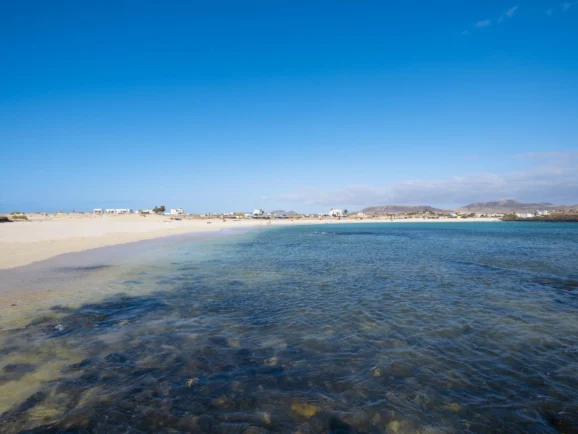
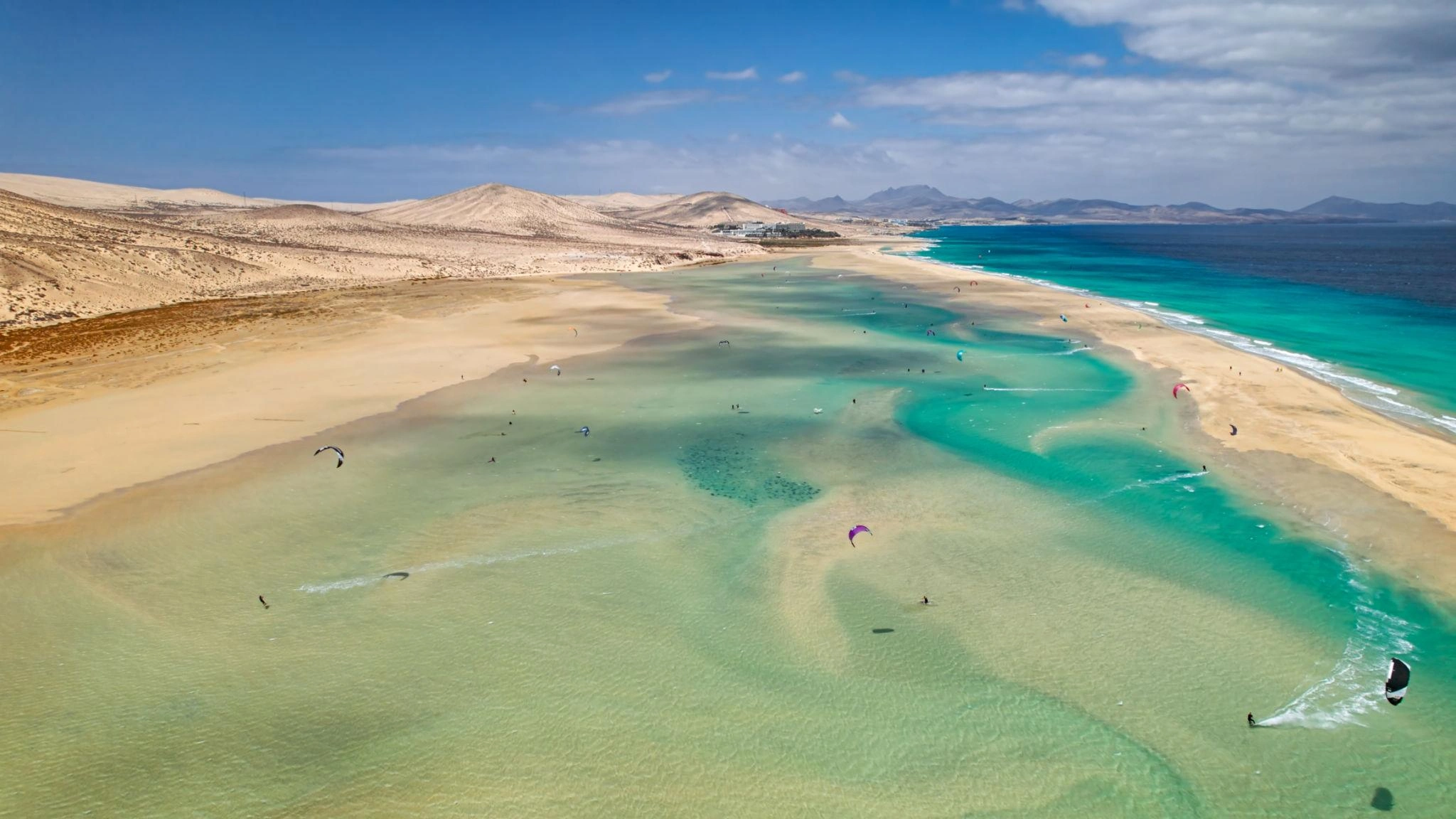
Playa de Sotavento – A vast southern lagoon forming at certain tides, ideal for long relaxed swims, though windsurfers often share the water, kite surfers too, so keep your wits about you.
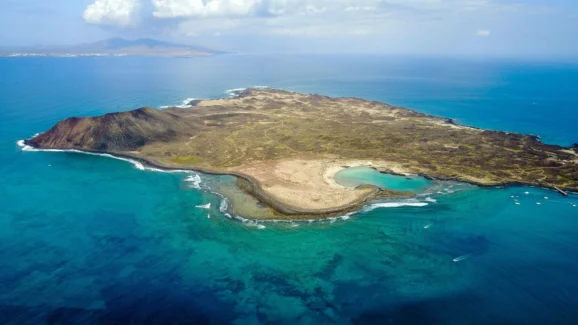
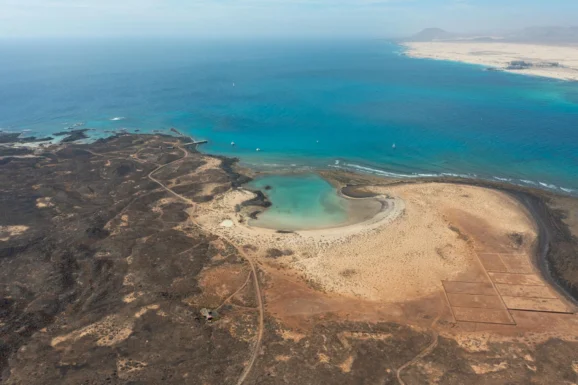
Isla de Lobos – A short ferry ride away, the lagoon at La Concha offers some of the clearest swimming in the Canary Islands. Teaming with wildlife, this is a Spanish Galapagos Isle. Wolf Island, breathtaking and as wild as the Atlantic Ocean herself.
Ajuy Sea Caves – A dramatic black‑sand beach beneath volcanic cliffs where local swimmers enter deep Atlantic water – when conditions allow. Proceed with caution here, for the ocean moves darkly about the coves. She takes no prisoners and once swells clear 15 feet, you may struggle to stay oriented and indeed, exit the water. This is a secret little location and well worth the temptation.
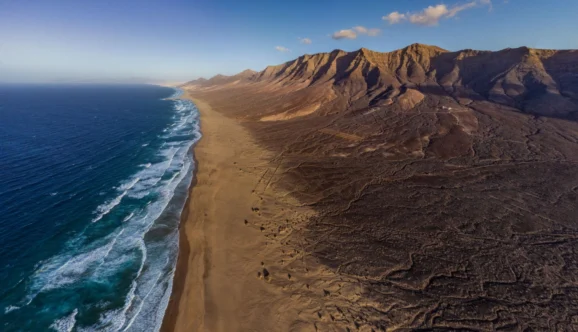
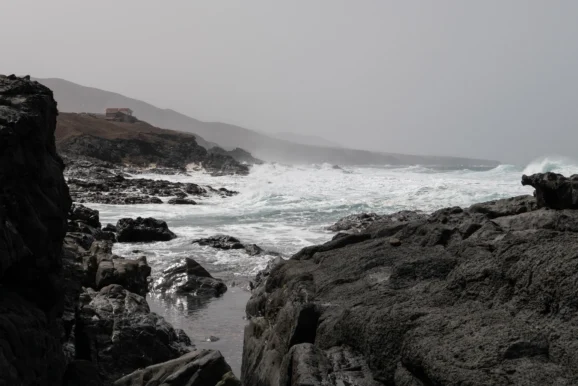
Cofete & Villa Winter – Remote and powerful Atlantic coastline where swimming is possible only on the calmest days – but unforgettable when conditions align. This is a truly isolated stretch of shore, so go with caution, good phone reception and someone on land who knows where you are. Between the wild landscape and the wartime mystery of nearby Villa Winter, it is one of Fuerteventura’s most dramatic swim locations – and one that demands real respect for the ocean.
Local attractions
When you are out of the water – or simply giving your shoulders a break between swims – Fuerteventura has plenty to explore on dry land. From volcanic craters and dramatic sea caves to quiet inland ravines and small museums that tell the island’s maritime story, these stops offer a glimpse of the landscape and culture that shape life here beyond the shoreline. Here are a few worth adding to your itinerary.
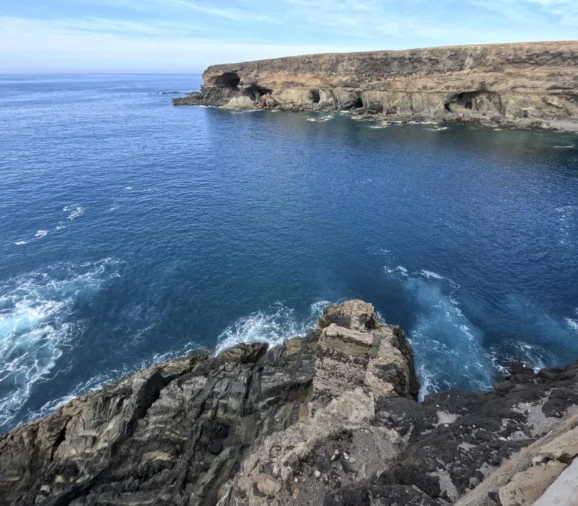
One of Fuerteventura’s most dramatic walks, the Ajuy sea caves combine black sand, pounding Atlantic swells and some of the oldest exposed rock in the Canaries. The cliff path is short but memorable, and the views feel properly elemental. Best done late afternoon when the light softens and the ocean looks theatrical. The caves themselves are part of a protected natural monument. Budget: Free entry; allow €0–€10 for parking, coffee or a post-walk cerveza.
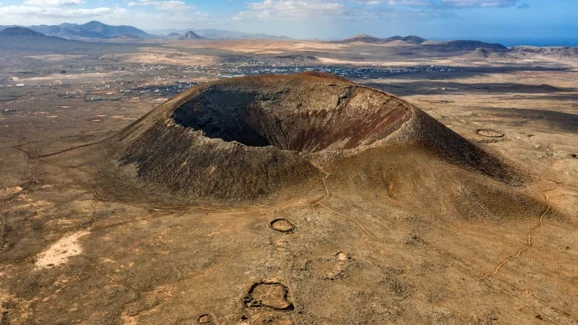
If you want one volcano on your itinerary, make it this one. Calderón Hondo is among the island’s best-preserved craters, with an easy, rewarding walk and wide views over Fuerteventura’s bare, beautiful north. Go early or near sunset unless you fancy being gently roasted by the island you came to admire. Budget: Free if visiting independently; roughly €0–€8 with parking/snacks.
Museo de las Salinas del Carmen
For something slower and more cultural, this salt museum offers a glimpse into the island’s maritime working life, with restored salt pans and sea-facing views that feel quietly cinematic. It is a good stop between swims, especially if you want history without needing hiking boots. Official adult entry is listed at €6, with combination tickets available. Budget: €6 adults, or €11.50 for the combi ticket.
Less rugged, more family-friendly, this large wildlife and botanical park is a solid all-day option if you need a break from salt, sun and neoprene. It is especially good for mixed groups where not everyone wants another “quick look” at a volcanic ravine. Ticket prices vary by age and package but expect it to sit in the island’s mid-range attraction bracket. Budget: about €41–€45 per adult.
And my hidden gem…Barranco de las Peñitas
Las Peñitas feels like the Fuerteventura many visitors miss: a winding ravine of palms, rock, silence and old island myth, tucked inside the Betancuria landscape. There is a raw, film-set beauty to it, especially around the chapel and the dam, and it remains far quieter than the headline coastal spots. Go with decent shoes, water and a little humility; the island likes that in people. The area sits within the protected rural park around Betancuria and is one of the island’s most striking inland escapes. Budget: Free; allow €0–€10 for transport and supplies.
Where to eat
All that swimming tends to build an appetite. Fortunately, Fuerteventura’s food scene is simple, fresh and deeply tied to the sea. From harbour-side fish restaurants to quiet inland kitchens serving traditional Canarian cooking, these are a few places worth seeking out when it is time to refuel.
Rompeolas Restaurante, Corralejo
For lunch with a harbour view, Rompeolas is hard to beat: fresh fish, salty air and the pleasing sense that you are exactly where you should be. Order whatever came off the boat that morning and watch ferries nose in and out while you eat. Budget: €30–€45 per person.
La Laja, Morro Jable
Elegant without being stiff, La Laja is a fine place to try beautifully grilled fish and polished Canarian cooking after a day in the sun. It feels a little more refined than many seaside spots, with the sort of menu that rewards a longer, slower dinner. Budget: €30–€40 per person
Ajuy village restaurants
Ajuy’s little waterfront eateries are simple, unfussy and full of the quiet confidence that comes from serving the sea’s catch rather than overthinking it. After the caves and black-sand beach, a plate of grilled fish here feels less like lunch and more like a necessary act of respect. Budget: €20–€30 per person.
And my hidden gem…Casa Marcos, Villaverde
Away from the obvious coastal crowd-pleasers, Casa Marcos in Villaverde has the feel of a place people tell you about in a lower voice. Rustic, warm and deeply rooted in the island, it is a good pick for traditional Canarian cooking, strong local flavour and a quieter, more inland side of Fuerteventura. Budget: €25–€40 per person.
Where to stay
After long days in the Atlantic, somewhere comfortable to dry off and recharge becomes part of the adventure. Fuerteventura offers everything from luxury seaside resorts to relaxed surf lodges and characterful inland stays. Here are a few good bases for exploring the island – whether your priority is early swims, sunset dinners or simply a quiet night’s sleep after a day in the water.
Secrets Bahía Real Resort & Spa, Corralejo
If you want your Fuerteventura with a touch of silk-sheet glamour, this is the place. Right on the water in Corralejo, Secrets Bahía Real offers polished luxury, sea views and the sort of spa that makes even hardened swimmers briefly consider staying dry for an afternoon. Budget: €230–€350 per night.
Hotel Riu Palace Jandía
Set on the island’s sunnier southern edge, Hotel Riu Palace Jandía is a classic Atlantic-facing resort with long beach views and easy access to Morro Jable. It suits travellers who like their swims followed by comfort, cocktails and a room that feels reliably indulgent. Budget: €200–€320 per night.
Hotel Rural Mahoh
For a more characterful inland stay, Hotel Rural Mahoh offers thick walls, Canarian charm and a slower rhythm than the coast. This boutique farmhouse hotel feels rooted in the island’s older soul, making it ideal for those who prefer atmosphere over infinity pools. Budget: €120–€160 per night.
Surf Riders Fuerteventura
Relaxed, friendly and well placed for those who travel with a towel permanently slung over one shoulder, Surf Riders has a laid-back swim-and-surf feel that suits active days and easy evenings. It is less about polish, more about good vibes, sea air and meeting people who also think getting in cold water sounds fun. Budget: €60–€90 per night.
Fuerteventura’s PGA Golf Club…
Golfers, or those travelling with one, may prefer to base themselves near Fuerteventura Golf Club, a PGA-standard course with sea views and a more manicured take on island life. It is a useful option if your ideal holiday involves alternating between open water and an argument with a bunker. Oh, and yes, as a player with a handicap of four – there is wind! A lot of wind! Which plays havoc with your balls…
Ben’s Open Ocean Swim Safety Tips:
1. Never swim alone – the ocean, her weather and currents, are always unpredictable. Warm water as Professor Tipton will tell you – does not stay warm for long!
2. Always use a tow float for visibility – boats beware! Have a kayaker with you if you can.
3. Check water temperatures before you plunge; ocean water can still shock even in the peak of Fuerte’s summer at 40c. Remember Professor Tipton’s advice!
4. Avoid swimming after heavy rain and storm due to debris and poor visibility.
5. Always consult locals, especially if swimming off the beaten track – there are rips and under currents that will take you to the depths. Believe me, I have survived one or two and learnt the hard way.
6. Respect boat traffic; stick to marked swim zones, if there are any – BE VISIBLE. Bright swim caps are non-negotiable.
7. Don’t overestimate your distance – the shoreline can look closer than it is.
8. Acclimatise slowly to the island’s waters; no heroics required. The heat in mid-summer and cold waters, can prove as fatal as any ice-lake swim in the UK or Europe.
9. Watch out for sudden weather changes; after all, this is an island and she is surrounded by the most dangerous Ocean on our planet.
10. Always refuel and rehydrate properly post-swim. Hyperthermia is always a risk.
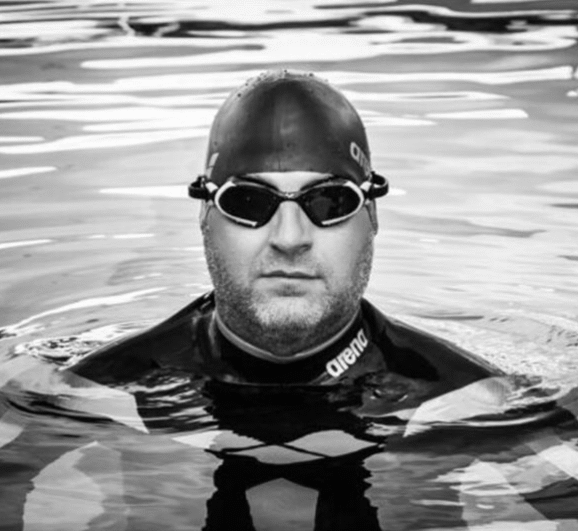
Ben Hooper first made international headlines with what has been described as one of the most ambitious endurance expeditions ever attempted: a plan to swim “every single mile” of the Atlantic Ocean. The journey – roughly 2,000 miles of open water between Senegal and Brazil – was expected to take four months and would have entered the record books. Sir Ranulph Fiennes OBE described the Atlantic as the last great ocean bastion yet to be conquered by a swimmer. The expedition, titled Swim the Big Blue, faced extraordinary challenges. Hooper was once left clinically dead after swimming into thousands of Portuguese Man O’ War tentacles, before recovering and restarting mid-Atlantic. Ultimately the attempt was forced to end when severe weather damaged his support vessel after years of preparation and training. Today, Hooper still holds the only WOWSA-verified attempt to swim the full extent of the Atlantic Ocean.
READ MORE: ‘Diving into… Key West, Florida‘. In the latest instalment of his popular Diving into… series for The European, ultra-endurance swimmer and columnist Ben Hooper swaps cold currents and wetsuits for the sun-drenched waters, coral reefs, and easy-going charm of Key West, Florida — where open-water swimming meets island life in technicolour.
Do you have news to share or expertise to contribute? The European welcomes insights from business leaders and sector specialists. Get in touch with our editorial team to find out more.
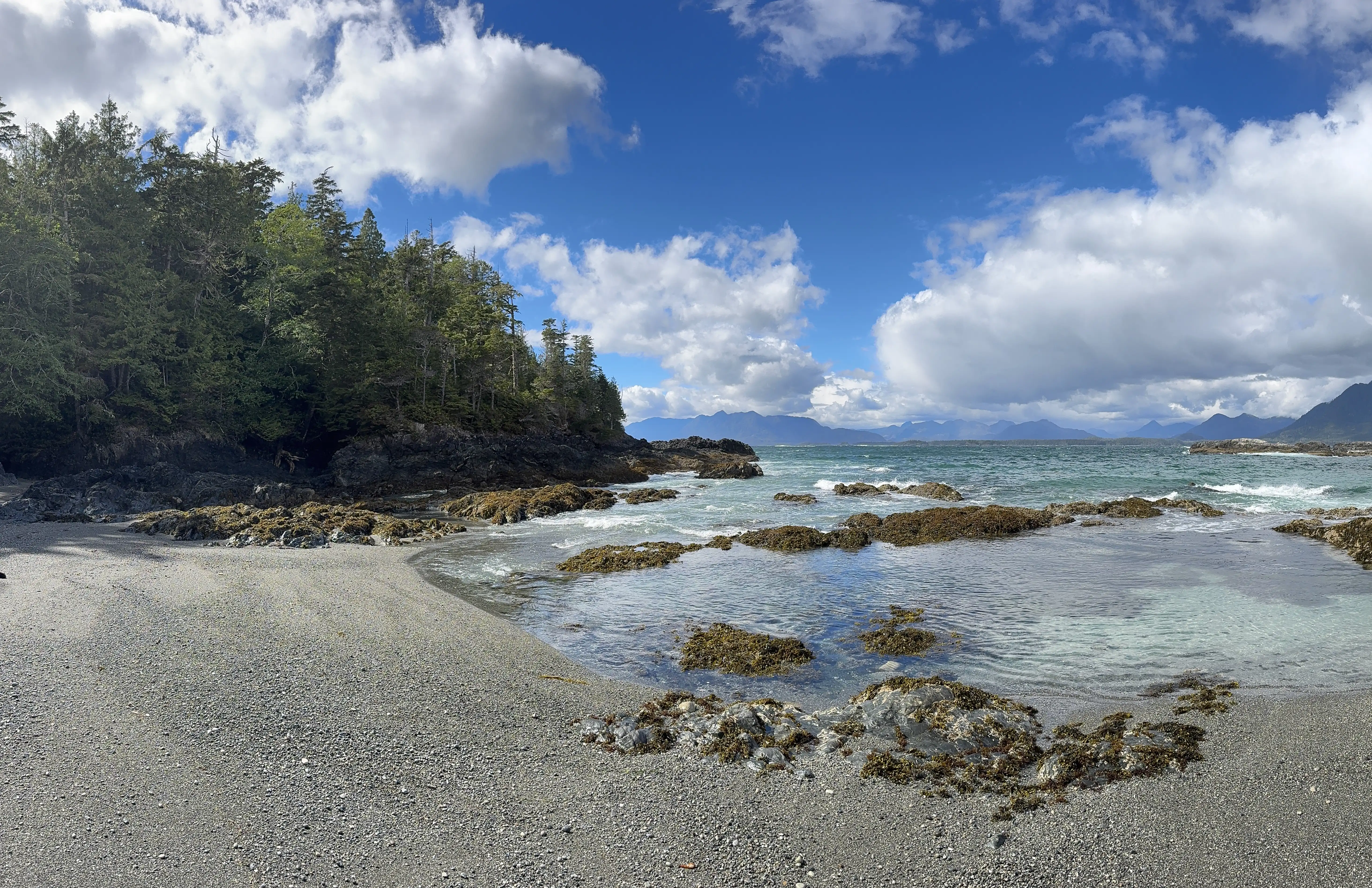
Main image: Playa de Sotavento’s vast tidal lagoon – a shifting patchwork of turquoise shallows and sandbars that draws swimmers, windsurfers and kitesurfers to Fuerteventura’s southern coast. (Supplied)