From endangered cranes to reintroduced deer, Yancheng’s wetlands on China’s Yellow Sea coast have become both a World Heritage sanctuary and a stage for global climate debate. Reporting from the World Coastal Forum, our editor-at-large, Stanley Johnson, reflects on the region’s extraordinary biodiversity — and the political will driving its protection
On 5 July 2019, UNESCO’s World Heritage Committee awarded China’s migratory bird sanctuaries along the Yellow Sea–Bohai Gulf coast the supreme accolade of inscription on the list of the world’s top Natural Heritage sites.
China boasts 15 World Natural Heritage sites. The other 14 are inland, making the Yancheng Yellow Sea Wetland the country’s first marine-related World Heritage Site along its extensive coastline.
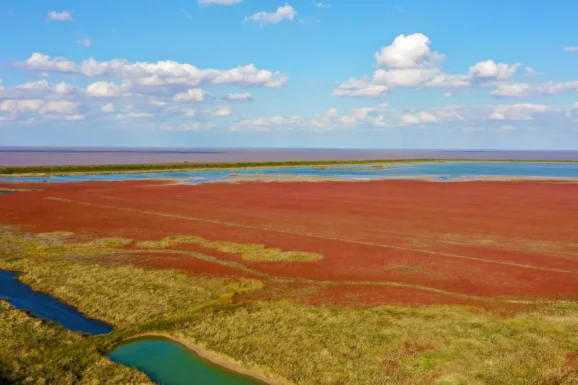
The Yangtze–Yellow Sea Wetland has a unique ecological formation. Historically, the Yangtze and Yellow Rivers once converged here. Over centuries, the influence of the rivers, great lakes and the sea created the world’s largest intertidal mudflat and a remarkable radial sandbank system.
This is one of China’s key biodiversity areas.
The World Heritage coastal ecosystem sustains more than 700 vertebrate species, including 442 birds, 26 mammals, nine amphibians, 14 reptiles, 216 fish species and 165 benthic organisms.
I have had the chance to visit this remarkable place twice in the last two years.
The first time, in late summer 2023, I drove out of town to see the largest wintering ground of red-crowned cranes (Grus japonensis). Revered as the ‘celestial crane’ in East Asian culture, this endangered species reaches its global population peak in the Yancheng Yellow Sea Wetland. Each year, 600–800 individuals winter here — 40–50 per cent of the world’s wild population — making Yancheng home to the planet’s largest wintering congregation of this iconic bird.
On that visit I also travelled to the Tiaozini Wetland, one of the core areas of this World Heritage Site, and I was able to return there again this week. I saw an astonishing transformation underway. The municipality of Dongtai has converted 48 hectares of land near the birds’ foraging areas into a high-tide bird habitat through micro-topography modification, wetland restoration and environmental improvements.
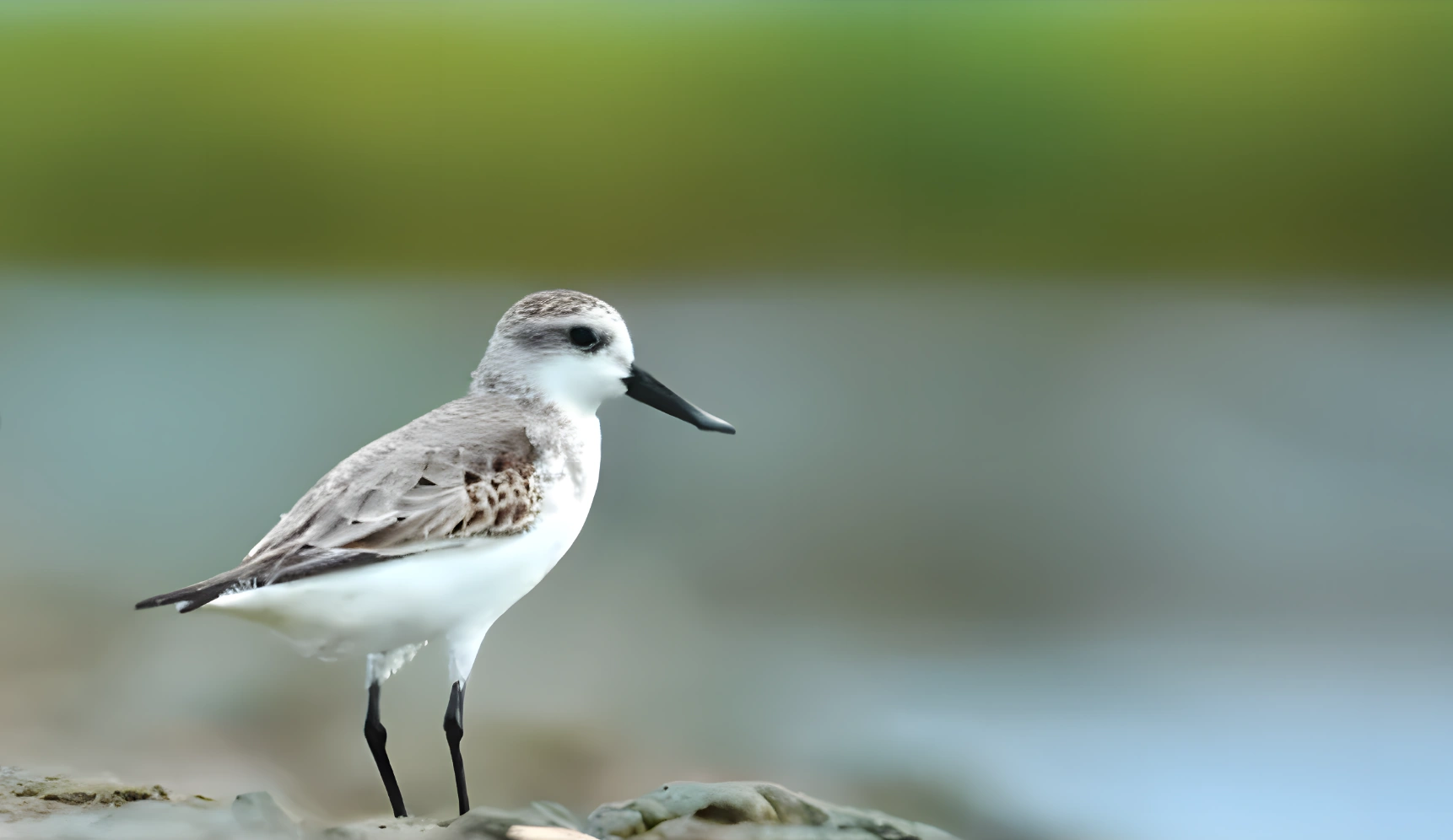
The results are striking. In recent years, Tiaozini Wetland has recorded as many as 224 spoon-billed sandpipers, one of the world’s most endangered species. Scientists agree that if spoon-billed sandpipers, highly sensitive to ecological conditions, are thriving in an area, then more than 140 bird species can be supported there. Today, Oriental storks, Saunders’s gulls and dunlins are frequent visitors.
As the ecological environment improves, biodiversity in Yancheng is flourishing, fuelling a birdwatching economy and boosting wetland eco-tourism.
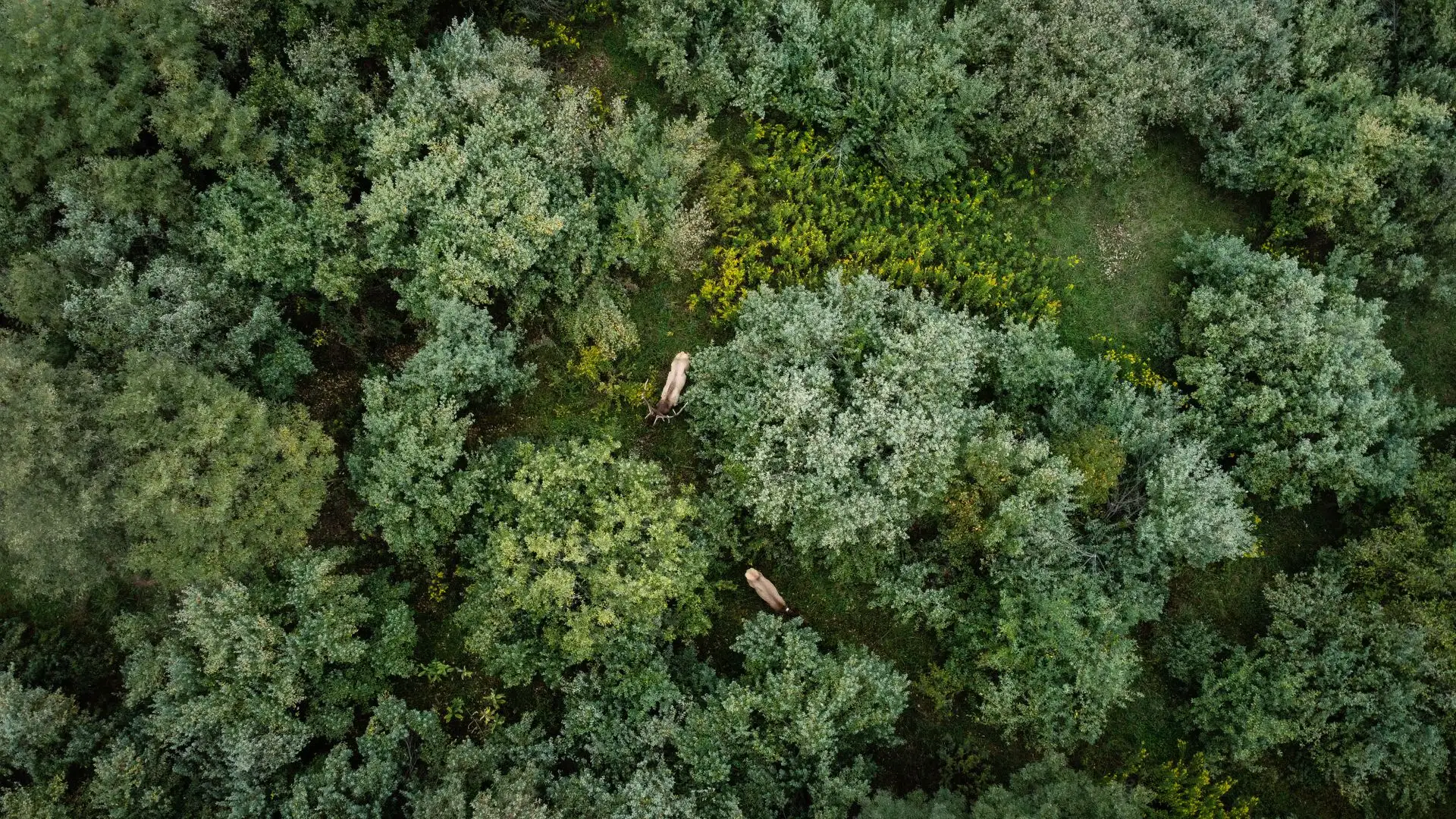
On both of my recent visits I also went to China’s Milu (or Père David’s) Deer Park — the result of one of the world’s most extraordinary conservation success stories. This deer, not unlike the red deer of Exmoor but with even larger antlers, had become extinct in China. A herd survived in the UK, and some individuals were later reintroduced here. Nature took its course, and today local authorities are asking whether the Milu population has perhaps grown too numerous.
Yancheng’s reputation as an international heritage destination owes much to its place at the top of any nature lover’s bucket list. In recent years, authorities at national, provincial and city level have sought to build on that reputation.
Yancheng is also a major manufacturer of wind turbines and solar panels, and is developing offshore wind and other renewable energy sources. The political commitment here is strong. At a national level, I do not sense that the environment is becoming a political football, as it has in some countries. Nor do I believe that international agreements such as the Paris Climate Accord are under threat.
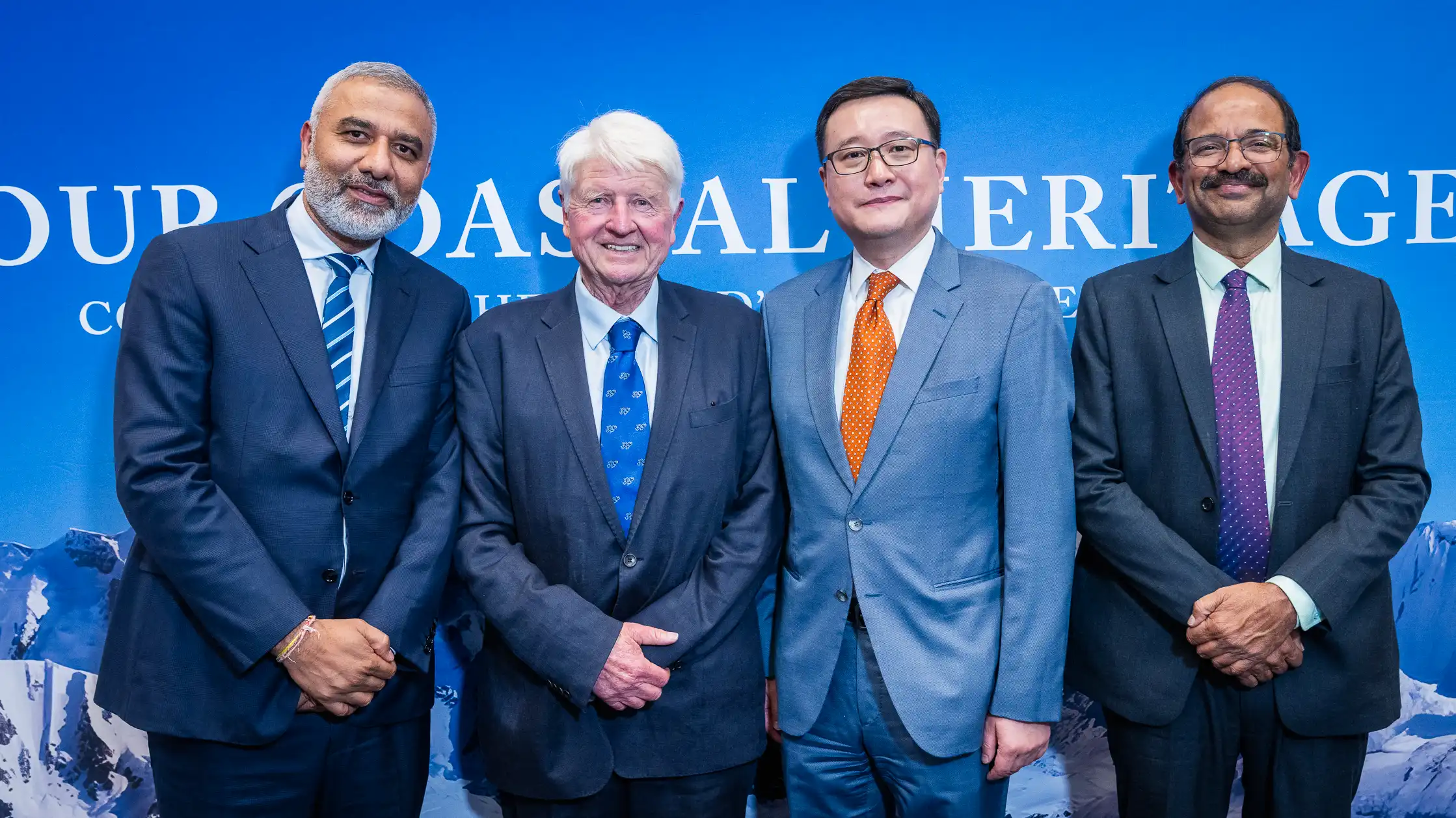
By the time this issue goes to press, the World Coastal Forum (WCF) will have drawn to a close. At the time of writing, however, the conference is in its second day here in Yancheng, under the aegis of China’s Ministry for Natural Resources, Jiangsu Province and the city itself. I am attending as an honorary adviser to the WCF, as well as in my capacity as chairman of the advisory council of GEDU-Global Education, which was warmly welcomed this week as a full WCF partner.
Yesterday, the first day of our meeting, saw the publication of the WCF’s report on the State of the World’s Coastal Ecosystems. It sets out three key conclusions:
- Deepen assessment of ecosystem distribution and long-term changes.
- Intensify in-situ conservation and implement large-scale restoration of degraded habitats.
- Develop and promote green and low-carbon development in coastal regions.
The challenge, as always, is to ensure action follows words.

That same day Stewart Maginnis, Deputy Director of the IUCN, also announced to the WCF plenary session that 112 governments had voted for a resolution calling for IUCN to establish a close working relationship with the WCF. Only one government voted against. Non-governmental members of IUCN also voted overwhelmingly in favour. Next month, in Abu Dhabi, the IUCN World Conservation Congress will consider how best to implement this resolution.
As ever, resources will be key. Encouragingly, the Asian Development Bank (represented here by a full team led by Vice-President Scott Morris) and the Asian Infrastructure Investment Bank (whose chief environmentalist, Alex Hadzhiivanov, spoke compellingly about the challenges of balancing renewables with biodiversity) are both actively engaged.
For now, we must live in hope. If Yancheng’s message is heard loud and clear — that climate and biodiversity action brings strong economic benefits, while inaction leads inevitably to decline — then perhaps a new day really has dawned.

Stanley Johnson is a leading environmentalist, award-winning author and former Member of the European Parliament (MEP). Father of former UK Prime Minister Boris Johnson, Stanley has helped shape major environmental policies in Europe and championed global conservation efforts. He remains a powerful voice on sustainability, climate change and international affairs. He is also a distinguished and prolific author, with more than 20 books to his name spanning environmental protection and global conservation, fiction, and memoir. His latest novel, satirical political thriller Kompromat, has been critically acclaimed by the national press.
READ MORE: ‘Stanley Johnson on China, the IUCN, and the future of the World Coastal Forum‘. As global attention shifts to the urgent need for coastal ecosystem protection, China has taken the lead in launching the World Coastal Forum — an initiative first announced by President Xi Jinping at the Ramsar Convention in 2022. Stanley Johnson traces the Forum’s development, from its inaugural conference in Yangcheng to proposals for embedding it within the IUCN, and examines what’s now at stake for the future of the world’s coastal regions
Do you have news to share or expertise to contribute? The European welcomes insights from business leaders and sector specialists. Get in touch with our editorial team to find out more.
Main Image: A spoon-billed sandpiper, one of the world’s rarest shorebirds, thriving thanks to extensive restoration efforts.