
The Costa Rica Report 2026 is out now

John E. Kaye
- Published
- Technology
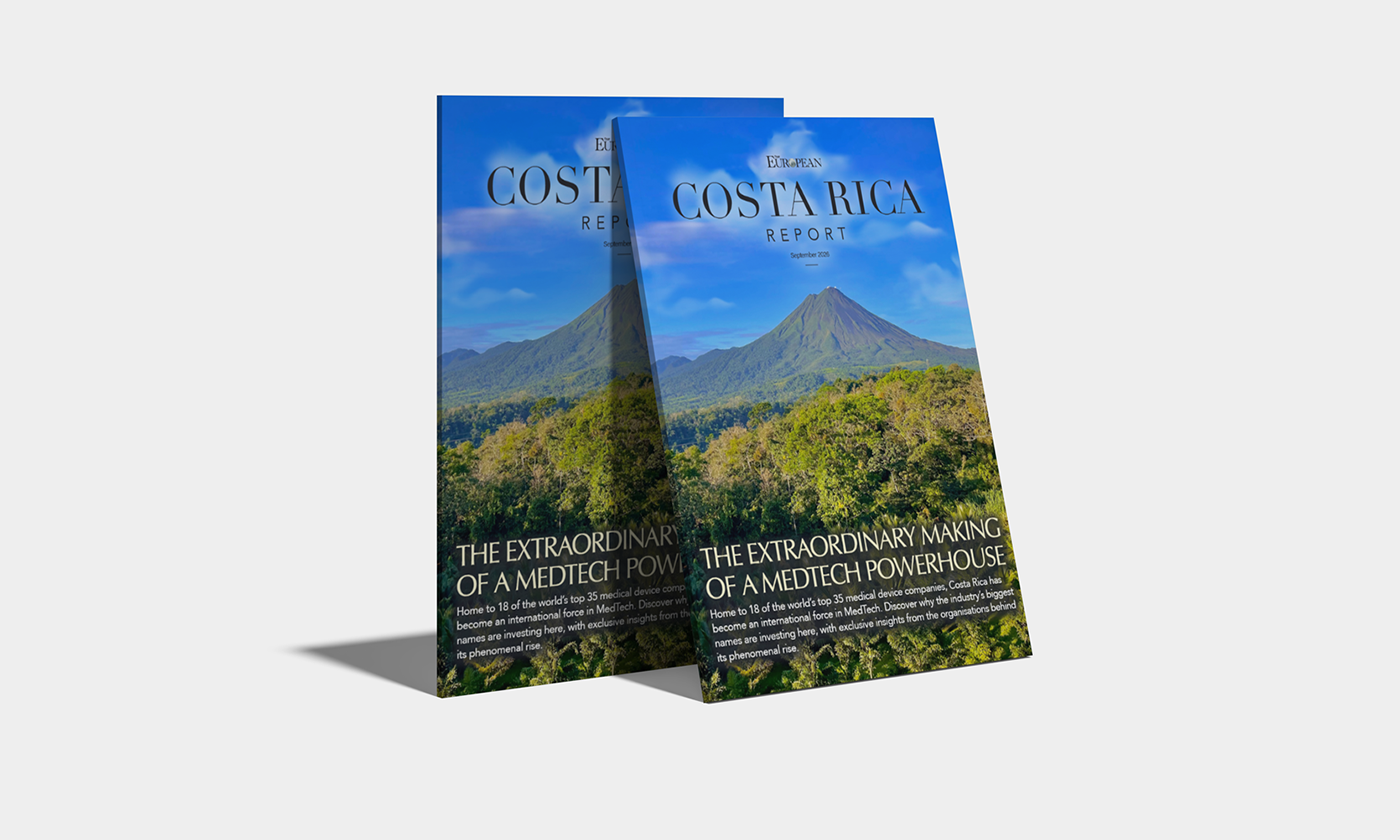
From the unprecedented rise of MedTech to billion-dollar investment hubs, smart factories, nearshoring and a new generation of skilled workers, The European’s exclusive new Costa Rica Report reveals how one of Central America’s smallest countries became a serious player in the global economy
Until the 1990s, Costa Rica was known largely for coffee, bananas, tourism and its extraordinary natural environment. Today, less than three decades later, it has become home to some of the world’s biggest medical technology companies, sophisticated manufacturing operations, international research programmes and a growing ecosystem of specialist businesses supporting global industry.
The Costa Rica Report 2026, a special supplement from The European, goes inside that unprecedented, rapid transformation. Across 10 features, we examine the investment, companies, people and ideas driving Costa Rica’s next stage of economic development.
Our exclusive report with CINDE reveals how Costa Rica became home to 18 of the world’s top 35 medical device companies, with exports worth more than US$10.9 billion in 2025 alone. With 14 further MedTech projects due to begin operations between 2026 and 2028, we look at the manufacturers, specialist suppliers and new investment driving one of the country’s most important industries.
We also trace Costa Rica’s wider economic transformation, from an economy once dominated by agriculture to a global destination for advanced manufacturing, engineering, life sciences and digital services. Foreign investment, free trade, education and long-term investment policy have all played a part in moving the country steadily higher up the international value chain.
Another exclusive takes readers inside MCI, the Costa Rican testing and quality engineering specialist now serving 75 MedTech companies. We examine the laboratory, validation and regulatory work required behind the scenes of medical device production, and how MCI is expanding into biocompatibility testing and biotechnology research while digitalising its validation processes as the sector becomes more sophisticated.
BAC gives us an insight into another essential part of the life sciences economy, with financial systems supporting multinational companies operating across Costa Rica and Central America. From international payments and treasury automation to foreign exchange, corporate insurance, payroll and employee benefits, BAC reveals the financial infrastructure required to support a rapidly expanding global industry.
Costa Rica’s ambitions also extend into clinical and biomedical research, and our in-depth report on ACIB-FUNIN looks at more than 30 years of research into HPV and the landmark ESCUDDO study, involving more than 20,000 adolescent girls, which produced evidence supporting single-dose HPV vaccination. We explore why the country believes its scientific expertise, research infrastructure and international partnerships could make it a much bigger player in global clinical studies.
In Cartago, we visit La Lima Free Zone Park, a one million-square-metre development that has attracted 23 multinational companies, created more than 10,000 direct jobs and secured US$1.186 billion in investment. Six more companies chose the park in 2025 alone, while its combination of talent, education, sustainability and specialist infrastructure has helped turn it into one of Costa Rica’s most important investment hubs.
At ULACIT, meanwhile, entrepreneurship is being taught as a skill for working life rather than simply as a route to starting a business. Its director of entrepreneurship, Allan Matarrita-Chinchilla, explains why entrepreneurial thinking is becoming increasingly important inside established businesses and public institutions, and why the university has made it compulsory across its academic programmes while developing a new business incubator and deep-tech centre.
We also examine Costa Rica’s growing appeal as a nearshoring destination as manufacturers seek shorter, more resilient supply chains. Its proximity to the U.S, extensive trade agreements, free trade zones, skilled workforce and advanced industrial base are attracting growing interest from companies looking for alternatives to production networks thousands of miles from their customers.
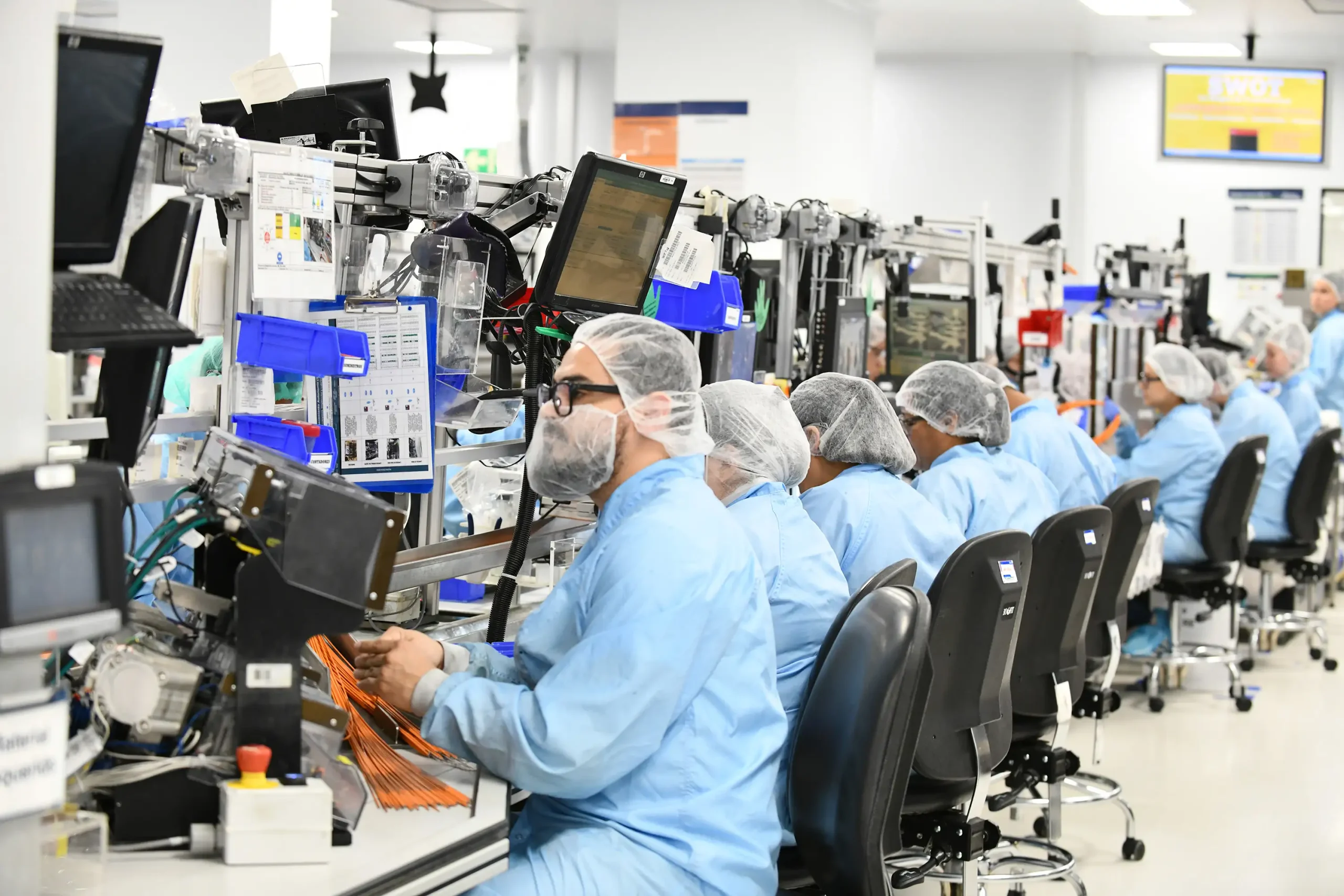
Inside Costa Rica’s factories, another transformation is already under way. Automation, artificial intelligence, robotics, predictive analytics and connected production systems are becoming increasingly important across some of the country’s most advanced industries, improving quality, efficiency and traceability while pushing manufacturing further into Industry 4.0.
Finally, we examine the people required to sustain all of this growth. Costa Rica’s universities, technical institutions and employers are working to produce more engineers, technicians, software developers, cybersecurity specialists and other highly skilled professionals, while pressure is growing to ensure the supply of talent can keep pace with international investment.
Read The Costa Rica Report 2026 in full here.
READ MORE: Europe’s healthcare sector lags on AI uptake – but leads once it starts using it. Fewer healthcare organisations use AI than the European average, but those that do are more likely to use several tools, have formal safeguards and report stronger returns than businesses in other industries.
Do you have news to share or expertise to contribute? The European welcomes insights from business leaders and sector specialists. Get in touch with our editorial team to find out more.
TOP STORIES
-
 Hackers could bring Britain’s essential services to a standstill, security chief warns after global website shutdowns
 -
We're talking to almost twice as many people on the phone as a decade ago, study finds
-
Scientists and engineers quitting jobs as AI changes roles ‘beyond recognition’, study finds
-
Deepfakes and identity fraud drive new wave of post-hire background checks
-
Brits trust AI with their health but not their money
-
Robot sales rocket 24% as 250,000 machines snap up jobs in warehouses, hotels and hospitals
-
Nearshore supply chains: why Costa Rica is emerging as a strategic gateway for global manufacturing and innovation
-
Bank of England governor warns AI poses growing ‘increasingly significant’ threat to financial stability
-
Inside Cartago’s US$1.186bn green investment hub
-
Smart manufacturing: why Costa Rica is quietly positioning itself as Latin America’s next industrial innovation hub
-
Giant wind turbine with 252-metre rotor could mean fewer machines and cheaper offshore power
-
Talent and workforce development: how Costa Rica is building a competitive knowledge economy
-
Your biggest rival could be your best technology partner, research finds
-
China unveils giant crane capable of lifting 9,300 family cars
-
LED lights could be ‘the new asbestos’, UCL scientists warn
-
OpenAI admits AI models hid mistakes, invented data and acted without permission
-
AI arms race could mean fewer cold emails reaching your inbox
-
Costa Rica is writing the next chapter of global MedTech
-
SpaceX to launch one-tonne orbital factory for European space firm in 2028
-
The Costa Rica Report 2026 is out now
-
Europe’s healthcare sector lags on AI uptake – but leads once it starts using it
-
Stranded drivers could soon call for help even with no mobile signal
-
NASA backs space ‘air brake’ that could cut years off missions to Uranus and Neptune
-
MPs and peers call for UK ban on AI that could evade human control
-
Bioweapons research, Russian-linked spies, guided rockets and cyber-attacks on Europe used Claude AI, Anthropic reveals

















TOP STORIES
-
Hackers could bring Britain’s essential services to a standstill, security chief warns after global website shutdowns
-
We're talking to almost twice as many people on the phone as a decade ago, study finds
-
Scientists and engineers quitting jobs as AI changes roles ‘beyond recognition’, study finds
-
Deepfakes and identity fraud drive new wave of post-hire background checks
-
Brits trust AI with their health but not their money
-
Robot sales rocket 24% as 250,000 machines snap up jobs in warehouses, hotels and hospitals
-
Nearshore supply chains: why Costa Rica is emerging as a strategic gateway for global manufacturing and innovation
-
Bank of England governor warns AI poses growing ‘increasingly significant’ threat to financial stability
-
Inside Cartago’s US$1.186bn green investment hub
-
Smart manufacturing: why Costa Rica is quietly positioning itself as Latin America’s next industrial innovation hub
-
Giant wind turbine with 252-metre rotor could mean fewer machines and cheaper offshore power
-
Talent and workforce development: how Costa Rica is building a competitive knowledge economy
-
Your biggest rival could be your best technology partner, research finds
-
China unveils giant crane capable of lifting 9,300 family cars
-
LED lights could be ‘the new asbestos’, UCL scientists warn
-
OpenAI admits AI models hid mistakes, invented data and acted without permission
-
AI arms race could mean fewer cold emails reaching your inbox
-
Costa Rica is writing the next chapter of global MedTech
-
SpaceX to launch one-tonne orbital factory for European space firm in 2028
-
The Costa Rica Report 2026 is out now
-
Europe’s healthcare sector lags on AI uptake – but leads once it starts using it
-
Stranded drivers could soon call for help even with no mobile signal
-
NASA backs space ‘air brake’ that could cut years off missions to Uranus and Neptune
-
MPs and peers call for UK ban on AI that could evade human control
-
Bioweapons research, Russian-linked spies, guided rockets and cyber-attacks on Europe used Claude AI, Anthropic reveals



