A spacecraft built to deliver cargo anywhere on Earth in under an hour could help prove a technique that replaces huge amounts of braking fuel with a plunge through a planet’s atmosphere, potentially allowing probes to travel faster and carry far more scientific equipment
NASA is backing technology that could allow spacecraft to use the atmosphere of another planet as a giant brake, potentially cutting years from missions to the outer solar system.
The U.S space agency has awarded aerospace company Inversion a contract to study ‘aerocapture’, a process that sends a spacecraft through a planet’s atmosphere at high speed and uses the resulting drag to slow it enough to enter orbit.
NASA studies suggest it could cut a journey to Uranus by between two and five years while increasing the scientific payload delivered into orbit by more than 40 per cent.
Inversion co-founder and chief executive Justin Fiaschetti said: “Our Arc spacecraft was designed to precisely control the transition from space through an atmosphere at hypersonic velocities.
“Aerocapture applies many of those same fundamental capabilities to an entirely new class of missions. We’re excited to work with NASA to demonstrate what advanced reentry technologies can enable, both at Earth and across the solar system.”
Conventional spacecraft carry vast quantities of fuel on long-distance missions, including propellant reserved almost entirely for slowing down when they reach their destination.
Without shedding enough speed, an orbiter would simply race past the planet or plunge too deeply into its atmosphere.
NASA studies of a flagship Uranus mission have found conventional orbit insertion can require around 60 to 70 per cent of the total launch mass to be propellant, with traditional journeys taking about 13 to 15 years.
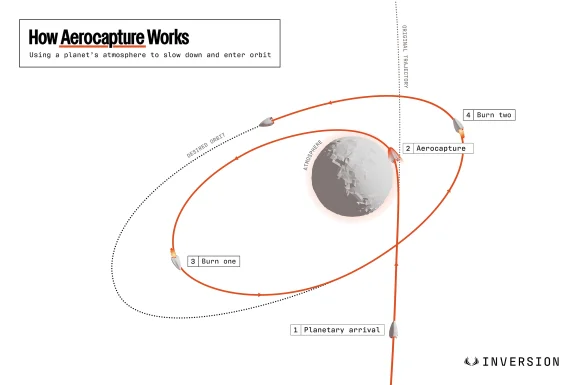
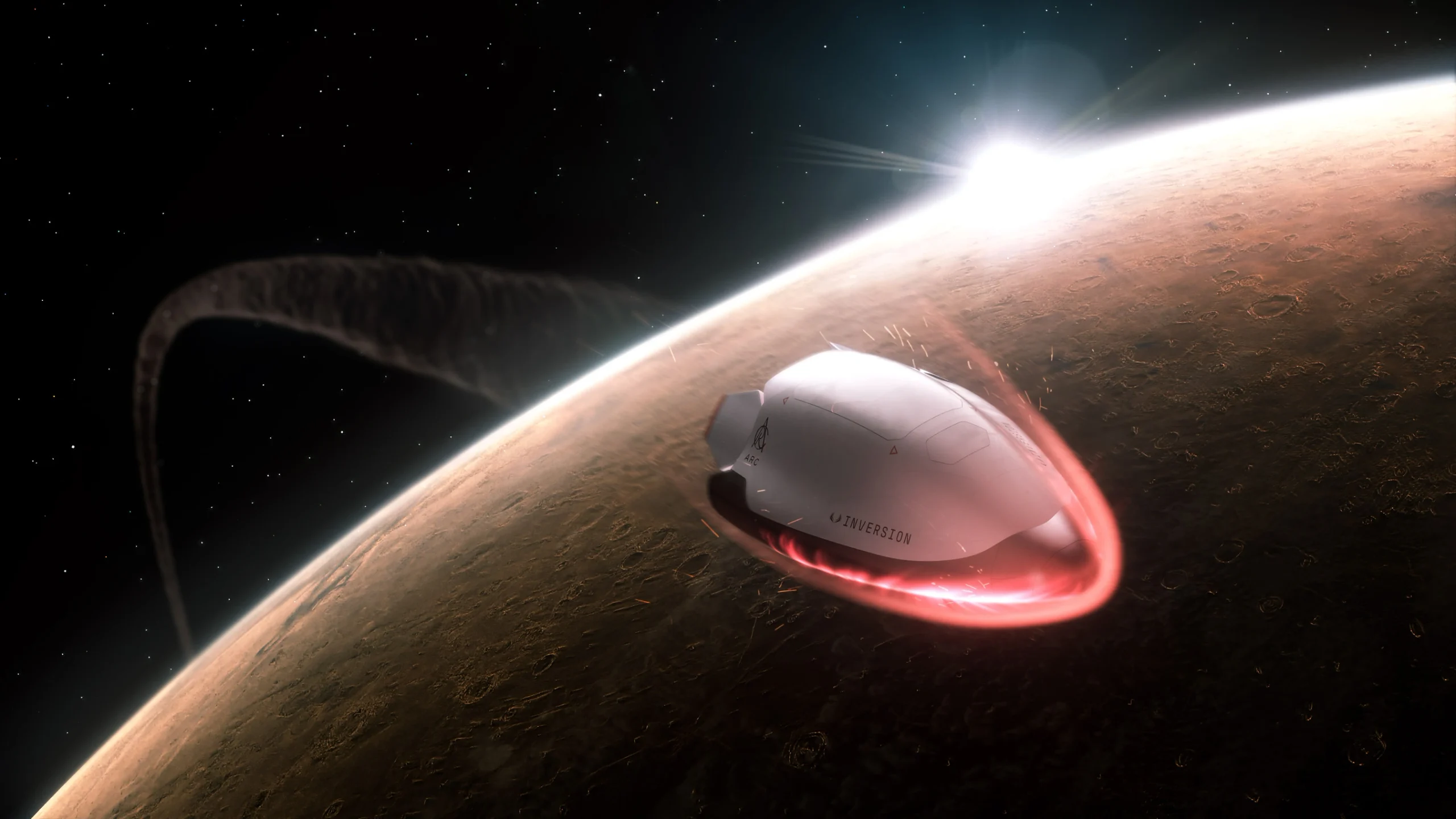
But aerocapture would instead send a spacecraft through the upper atmosphere in a single carefully controlled pass, using resistance from the surrounding gas to strip away enormous amounts of speed before it climbs back out slowly enough to remain in orbit.
Using less propellant would also allow spacecraft to travel faster between planets. NASA modelling shows that aerocapture could accommodate higher arrival speeds, cut Uranus journey times by around 15 to 30 per cent and increase the amount of scientific equipment delivered into orbit by more than 40 per cent.
The agency has also studied the technology for missions to Uranus and Neptune, as well as other planets.
NASA is now studying whether Arc could provide a practical way of proving the technology in flight. Inversion originally designed Arc for rapid cargo delivery from orbit, with the company saying its vehicles are intended to reach anywhere on Earth in under an hour.
The vehicle is designed to withstand extreme re-entry conditions, steer accurately through the atmosphere and operate autonomously, while Inversion says its hypersonic testing capabilities include manoeuvring at speeds above Mach 20.
NASA’s contract will examine Arc’s aerodynamics, trajectory, mission design and any changes required for an Earth-based aerocapture demonstration.
READ MORE: Products made in space move closer to commercial reality. European businesses developing everything from new medicines to advanced materials could get an easier route into zero-gravity research under a deal linking aircraft-based weightlessness tests with factories designed to operate in orbit/
Do you have news to share or expertise to contribute? The European welcomes insights from business leaders and sector specialists. Get in touch with our editorial team to find out more.
Main image: Artist’s impression of a hypothetical Arc aerocapture mission at Mars, showing the spacecraft using the planet’s atmosphere to shed speed. Credit: Inversion