European businesses developing everything from new medicines to advanced materials could get an easier route into zero-gravity research under a deal linking aircraft-based weightlessness tests with factories designed to operate in orbit
Making products in space could become more accessible to European businesses under plans to create a route from relatively inexpensive zero-gravity aircraft tests to full manufacturing in orbit.
Researchers are already investigating whether microgravity can be used to develop improved medicines, materials and other products that are difficult to produce in the same way on Earth.
But testing those ideas in space is expensive and complicated, requiring specialist equipment capable of being launched into orbit and, in many cases, returning samples safely to Earth.
A new European partnership is intended to reduce some of those barriers by allowing companies to begin with short bursts of weightlessness aboard an aircraft before deciding whether an experiment is worth taking into space.
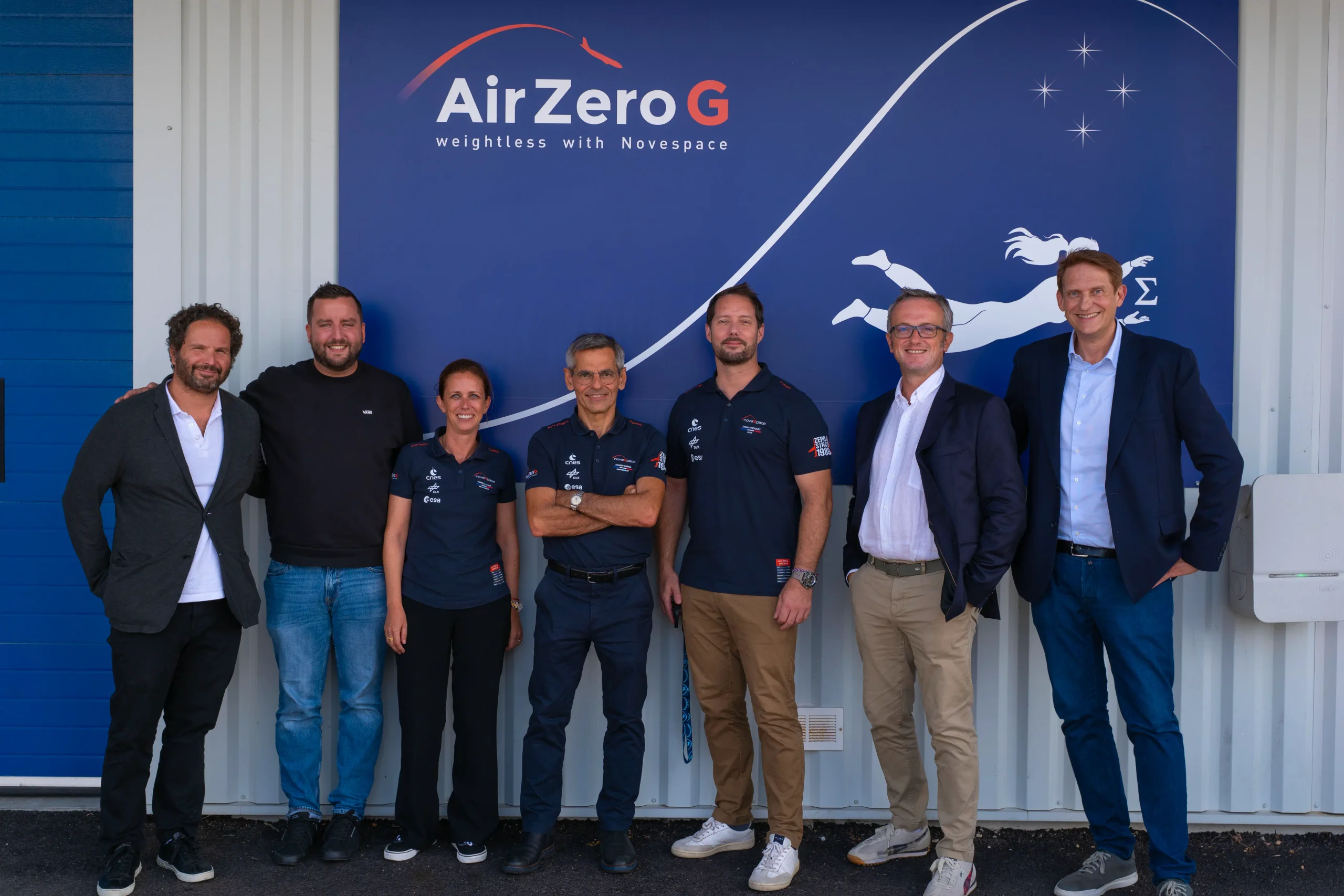
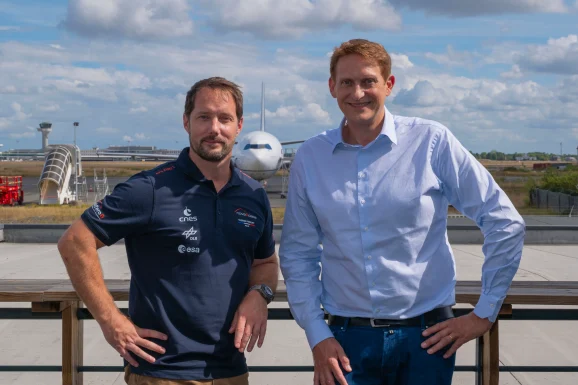
Space Cargo Unlimited (SCU), which is developing autonomous factories for use in orbit, has taken a stake in French parabolic-flight operator Novespace, which is led by former International Space Station commander Thomas Pesquet.
The EU is contributing €2.478 million towards development of Space Cargo’s BentoBox platform through its Horizon Europe EIC Accelerator programme, which is intended to make microgravity research and manufacturing more accessible and affordable.
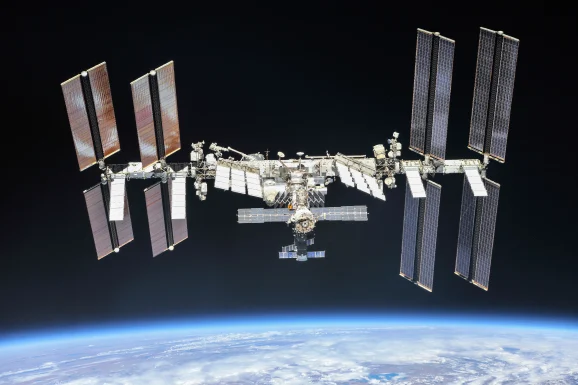
The investment comes as Europe prepares for life after the International Space Station, which has provided a laboratory for thousands of experiments but is approaching the end of its operational life.
Commercial operators are increasingly trying to provide some of the research, manufacturing and other services that have traditionally depended on major government-backed space programmes.
Novespace, a subsidiary of French space agency CNES, has operated parabolic research flights for more than 35 years.
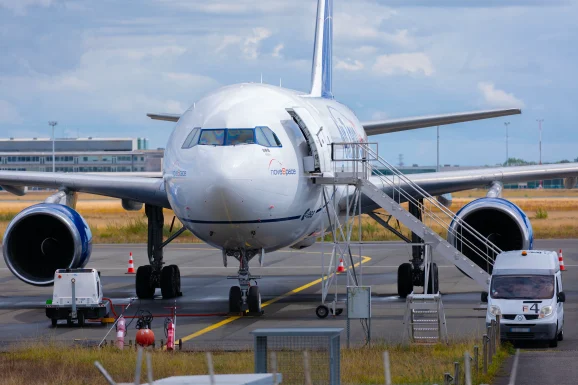
Its Airbus contains 100 square metres of experimental space and carries out around 30 parabolic manoeuvres during a flight.
Pesquet said: “Parabolic flight sits at the crossroads of extreme aviation and cutting-edge space research. What Novespace has achieved so far is nothing short of remarkable, establishing itself as the world leader in its field.”
He added: “We are delighted to welcome SCU as a shareholder, helping us open the door to new markets and new customers. With the extraordinary momentum we are seeing today in space exploration and research, the possibilities ahead are limitless.”
Microgravity changes physical and biological processes by greatly reducing gravity-driven effects such as sedimentation and convection. Space-based research is examining applications including pharmaceuticals, semiconductor crystals, optical fibres and other advanced materials.
But the challenge has been turning promising experiments into commercially viable production.
Novespace uses a specially modified Airbus A310 that repeatedly climbs and dives to produce periods of weightlessness lasting about 22 seconds.
Scientists and businesses can use the flights to see how experiments, materials and equipment behave without gravity at far lower cost than sending them directly into space.
CNES describes parabolic flights as an inexpensive means of carrying out microgravity science and testing equipment before spaceflight.
Promising projects could then progress to Space Cargo Unlimited’s BentoBox platform, which is being developed to conduct experiments and manufacturing aboard spacecraft and return samples to Earth.
It could potentially make experimentation in space more accessible to pharmaceutical, biotechnology, semiconductor and advanced-materials businesses rather than remaining largely the preserve of space agencies and major research programmes.
Nicolas Gaume, co-founder and chief executive of Space Cargo Unlimited, said: “Europe has world-class science, engineering and innovation. The next challenge is giving researchers and businesses access to the right infrastructure to turn ideas into products.
“By investing in Novespace, we’re strengthening that journey from early microgravity research through to future commercial manufacturing in orbit.”
READ MORE: Japan and Luxembourg deepen space ties as lunar race gathers pace. A Japanese ministerial delegation toured ispace-EUROPE’s Luxembourg rover facility as the two countries strengthen cooperation in lunar exploration, robotics and advanced space technology.
Do you have news to share or expertise to contribute? The European welcomes insights from business leaders and sector specialists. Get in touch with our editorial team to find out more.
Main image: The Space Cargo Unlimited and Novespace teams following the investment agreement. Credit: Novespace / Space Cargo Unlimited