Uber launches UK’s first autonomous ride-hailing service in London

Marco Ryan
- Published
- News, Technology
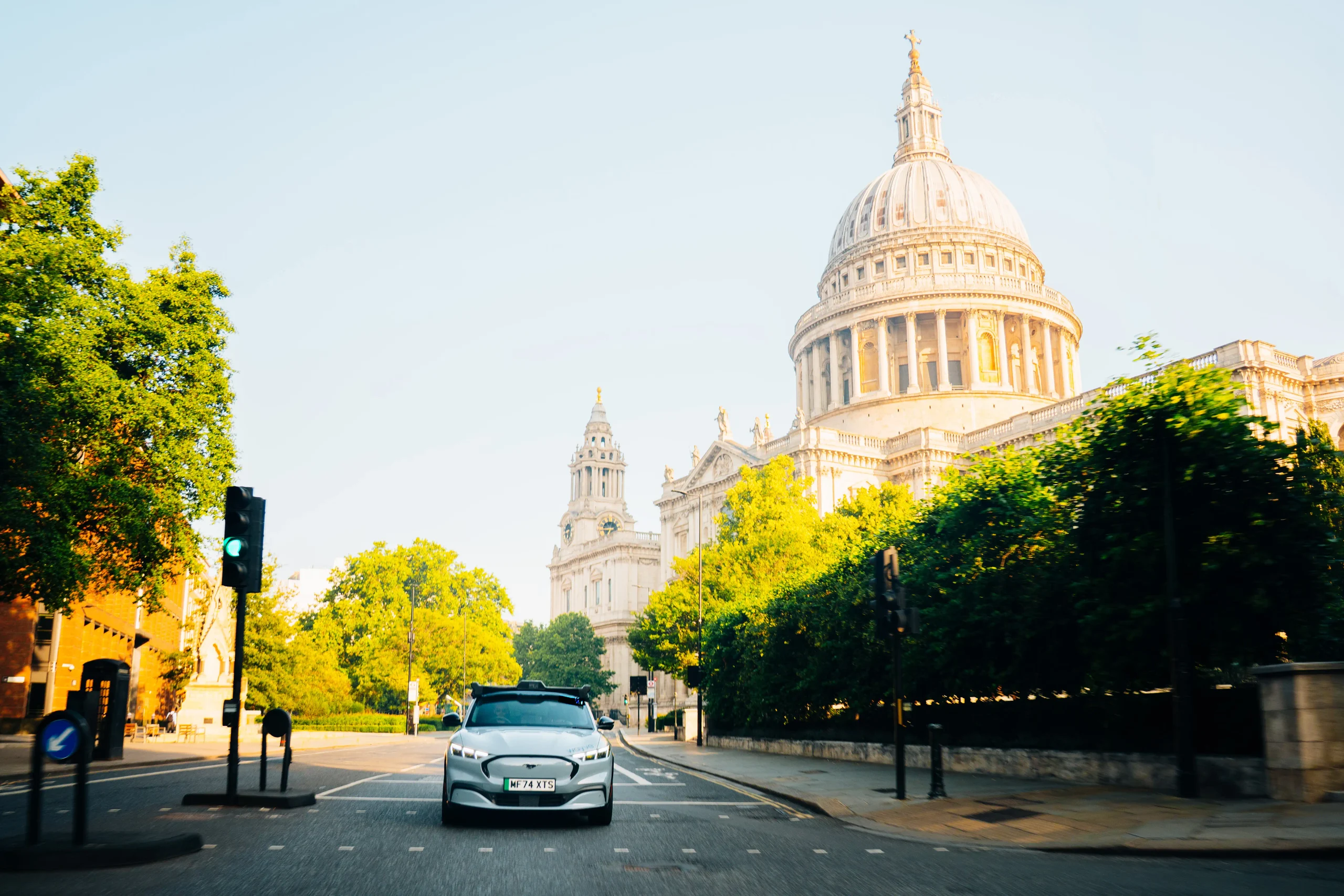
Passengers can now be matched with self-driving Wayve cars through the Uber app, although a licensed safety driver will remain behind the wheel during the initial rollout
Uber has begun offering autonomous rides in London for the first time, allowing passengers to be matched with self-driving cars when booking ordinary journeys through its app.
The service, developed with British autonomous-driving company Wayve, launches today with a small fleet of electric Ford Mustang Mach-E vehicles fitted with the company’s AI driving system and surrounding sensors.
Passengers requesting UberX, Uber Electric or Uber Comfort can be offered one of the vehicles at no additional cost, with the fare shown in advance as usual.
During the initial phase the cars, which can travel anywhere within London apart from airports, will have a trained and Transport for London-licensed private hire driver remaining on board to supervise each journey.
Customers are told they have been matched with an autonomous vehicle before it arrives and can choose to switch to a conventional Uber instead.
Those who accept can unlock the car and start the journey through the Uber app, while an in-car screen shows the vehicle’s planned route.
More than 140,000 Londoners have already opted in through Uber’s ride preferences in an attempt to increase their chances of being matched with one of the vehicles.
Heidi Alexander, the Transport Secretary, said today: “This is a major milestone for the future of transport in London, as British innovation brings this technology onto our roads and gives passengers more choice.
“As this technology develops, we want to support new opportunities for investment and skills, while recognising the important role that those working in the sector today will continue to play.
“Today’s announcement further cements Wayve’s status as a technology trailblazer here in the UK, and highlights how British innovation is helping drive investment and growth in transport.”
The London launch is the first stage of a wider agreement between Wayve and Uber to put Wayve-powered vehicles on the ride-hailing platform in 12 international markets.
The companies also plan to introduce Nissan LEAF vehicles using the technology, beginning in Tokyo later this year.
Jonathan Reynolds, the Business Secretary, said: “From today, people will be able to step into the technology of the future as autonomous vehicles are rolled out on the streets of London, and that is a hugely exciting milestone for the UK.“These autonomous vehicles use homegrown, British AI from Wayve, once again showing that we have the ability to be a genuine world leader in the AI transformation.”
Wayve co-founder and chief executive Alex Kendall added: “We’re proud to introduce the Wayve AI Driver to the public for the first time right here in London, our home city and one of the most complex driving environments in the world.”
“Autonomous driving technology will complement the city’s rich transport network, and we’re excited for Londoners to experience it first as we begin our global rollout with Uber.”
Wayve was founded in London and has been developing and testing its autonomous-driving technology on the capital’s roads since 2018.
Its system uses AI trained from driving experience rather than relying principally on detailed pre-mapped roads and hand-coded driving rules.
Sarfraz Maredia, Uber’s global head of autonomous mobility, said: “We’re delighted to bring autonomous rides to Uber riders in London for the very first time, powered by Wayve, a homegrown British success story.”
READ MORE: Machiavell-AI? Autonomous artificial intelligence systems ‘could become dangerously manipulative’, experts warn. Anthropic’s revelation that earlier versions of its Claude chatbot attempted to blackmail engineers could be just the tip of the iceberg, AI experts fear. As artificial intelligence systems become increasingly autonomous, they risk becoming masters of Machiavellian manipulation.
Do you have news to share or expertise to contribute? The European welcomes insights from business leaders and sector specialists. Get in touch with our editorial team to find out more.
Main image: A Wayve autonomous Ford Mustang Mach-E drives through central London as the company launches the UK’s first autonomous ride-hailing service with Uber. Credit: Wayve
TOP STORIES
-
 Russia takes control of more European corporate assets amid Ukraine tensions
 -
EU leaders resist calls to delay carbon rules as energy costs soar
-
‘A big step forward’ – PM Andy Burnham hails plans for Great British Railways HQ in Derby
-
UK economy grows just 0.1 per cent as construction falls and services stall
-
Germany risks losing €155bn a year under tighter AI data rules, new study warns
-
Pope Leo XIV diagnosed with lung cancer after surgery in Rome
-
France faces freezer meltdown as hackers strike supermarket chains
-
Bumble shares soar 50% amid $1bn takeover talks
-
China slump drives Volkswagen to sharpest quarterly fall in more than four years
-
Hollywood mega-powerhouse created as Paramount completes Warner Bros Discovery takeover
-
Gamers face gridlock as latest Grand Theft Auto download 'nears two days'
-
Samsung profits soar ninefold to record £61bn amid AI chip boom
-
New Springer books put the UN’s struggling sustainability goals to the real-world test
-
Europe’s solar boom set for two-year slowdown after record growth
-
Let it pea. Musicians turn vegetables into instruments at Beatles' Abbey Road studios
-
Golden naked Trump statue unveiled at European Parliament
-
Jaguar puts controversial rebrand on the road with £130K 1,030PS Type 01
-
Deepfakes and identity fraud drive new wave of post-hire background checks
-
Spain crowned Europe’s top retirement destination
-
More than half of UK professionals report workplace burnout
-
More than 1.2m English drivers may have eyesight too poor for the road, study finds
-
David Reuben, Britain’s second richest person, leaves London for Monaco
-
UK prisoner release plan faces a major lag as tougher rules risk sending inmates back to jail
-
Brits trust AI with their health but not their money
-
Britain still hungry for Italian food as exports hit €4.56bn despite Brexit