UK to host African Development Fund summit as Africa pushes for food self-sufficiency

John E. Kaye
- Published
- News
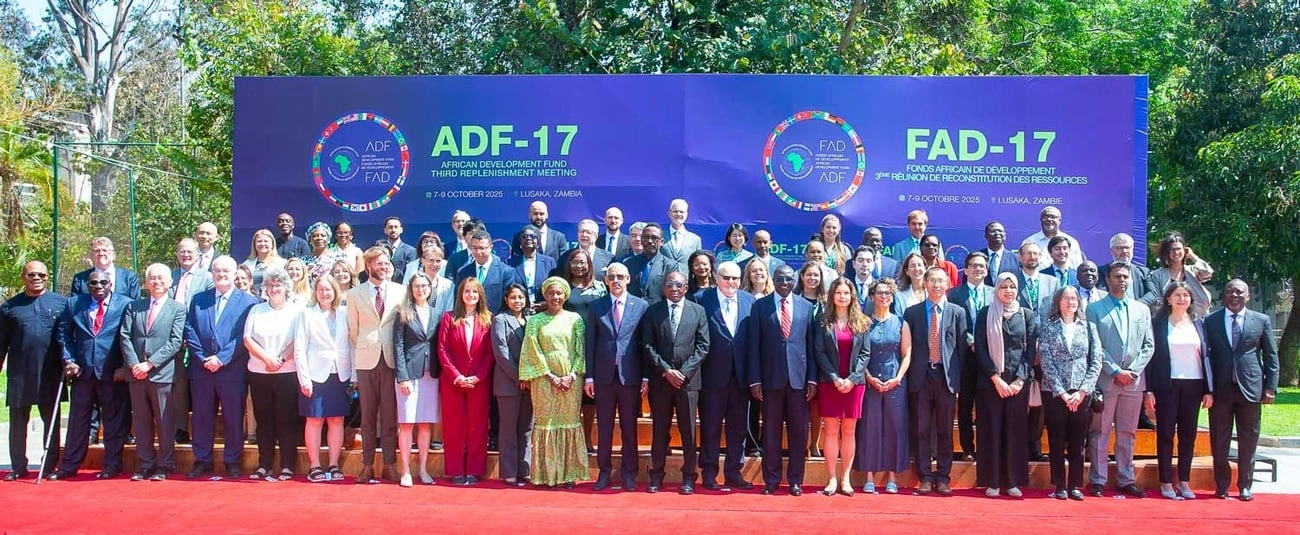
As the UK prepares to host a major African Development Fund summit, new projects in Zambia and calls for farmer-led resilience are highlighting how development finance is reshaping Africa’s future
The UK will host the African Development Fund’s 17th Replenishment pledging session in December, reaffirming its backing for Africa’s drive toward food security, education, and economic resilience.
The announcement comes as the African Development Bank Group (AfDB) highlights rapid progress in Zambia and renewed calls across the continent to transform farmers from recipients of food aid into providers.
The UK’s Minister of State for Development and Africa, Baroness Jenny Chapman, said London’s leadership role underscored “our collective commitment to Africa’s growth and development”.
Baroness Chapman confirmed that Britain intends to make a strong pledge and urged all partners to “consider ambitious contributions” to the Fund’s 2026–2028 cycle.
“The replenishment is an opportunity to signal our collective commitment to Africa’s growth and development, its institutions, and to innovative, modern approaches to development finance in a challenging global environment,” she added.
The ADF — the Bank’s concessional financing window for 37 low-income countries — has provided more than $45 billion since its creation in 1972, supporting infrastructure, agriculture, and social development projects across Africa.
AfDB President Dr Sidi Ould Tah welcomed the decision, adding: “The African Development Bank Group welcomes United Kingdom’s announcement to host the African Development Fund’s 17th replenishment pledging session. It is a rallying call for a strong ADF-17 replenishment, which is both an investment in Africa’s development as well as in shared global prosperity.”
The London session will follow technical meetings held this month in Lusaka, Zambia, where ADF deputies reviewed progress on flagship projects and toured two major sites — the Nitrogen Chemicals of Zambia fertilizer blending plant in Kafue and upgraded facilities at the University of Zambia in Lusaka.
Zambia’s Agriculture Minister Reuben Mtolo Phiri described the Bank as “a critical ally”, saying ADF support had helped the country shift “from drought to surplus”.
“This achievement represents a significant leap forward in our capacity to meet the fertilizer requirements of the Zambian farming community,” he said. “Beyond serving our domestic needs, Nitrogen Chemicals of Zambia is positioning itself to penetrate export markets between 2025 and 2030, thereby contributing to Zambia’s role as a competitive player in the regional fertilizer industry.”
Through the Zambia Emergency Food Production Initiative, almost 5,900 farmers — more than half of them women — have received subsidised seed and fertiliser via the ZIAMIS digital platform, with 9,000 farmers expected to benefit this season from $35 million in financing. A further $1.3 million in ADF funding is cutting fertiliser costs by an estimated 40 per cent.
At the University of Zambia, Vice-Chancellor Professor Mundia Muya said ADF investment had modernised lecture theatres and laboratories.
Technology and Science Minister Felix Chipota Mutati linked the improvements directly to social stability. He said: “When you are being lectured in a conducive environment, even your brain power becomes transformative.
“When you do that, you create peace in society. You create harmony. So, it’s not just about the investment — it’s anchoring peace and democracy through the transformation of Africa.”
Akin-Olugbade said the programme formed part of a continent-wide initiative to reach 20 million farmers and produce 37 million tons of food, describing it as “a foundation for a more resilient, private-sector-driven agricultural system”.
The AfDB’s wider message was reinforced days earlier at the Africa Resilience Forum 2025 in Abidjan, where agricultural leaders urged governments to give farmers a central role in policy.
Roland Fomundam, CEO of Greenhouse Ventures in Cameroon, told delegates: “Without peace, there can be no development. But without food, there is no peace. It’s time to involve farmers in discussions on agriculture.”
Beth Bechdol, Deputy Director-General of the UN Food and Agriculture Organization, added: “Farmers are the private sector. They invest; they find solutions. We need to do better together. If we want to have a better impact on our populations, we need new matrices — for example, knowing how much we’ve improved producers’ incomes over a period of time.”
The Abidjan forum and the Lusaka meetings form part of the same AfDB agenda to finance peace, strengthen food systems, and deliver the infrastructure that underpins stability.
READ MORE: ‘Mergers and partnerships drive Africa’s mining boom – but experts warn on long-term resilience’. Industry leaders at African Mining Week 2025 warned that while mergers and acquisitions are reshaping Africa’s mining sector, long-term resilience, stronger legal safeguards, and social responsibility will be vital to sustain growth across the continent’s resource economies.
Do you have news to share or expertise to contribute? The European welcomes insights from business leaders and sector specialists. Get in touch with our editorial team to find out more.
Main image: ADBG
TOP STORIES
-
 Russia takes control of more European corporate assets amid Ukraine tensions
 -
EU leaders resist calls to delay carbon rules as energy costs soar
-
‘A big step forward’ – PM Andy Burnham hails plans for Great British Railways HQ in Derby
-
UK economy grows just 0.1 per cent as construction falls and services stall
-
Germany risks losing €155bn a year under tighter AI data rules, new study warns
-
Pope Leo XIV diagnosed with lung cancer after surgery in Rome
-
France faces freezer meltdown as hackers strike supermarket chains
-
Bumble shares soar 50% amid $1bn takeover talks
-
China slump drives Volkswagen to sharpest quarterly fall in more than four years
-
Hollywood mega-powerhouse created as Paramount completes Warner Bros Discovery takeover
-
Gamers face gridlock as latest Grand Theft Auto download 'nears two days'
-
Samsung profits soar ninefold to record £61bn amid AI chip boom
-
New Springer books put the UN’s struggling sustainability goals to the real-world test
-
Europe’s solar boom set for two-year slowdown after record growth
-
Let it pea. Musicians turn vegetables into instruments at Beatles' Abbey Road studios
-
Golden naked Trump statue unveiled at European Parliament
-
Jaguar puts controversial rebrand on the road with £130K 1,030PS Type 01
-
Deepfakes and identity fraud drive new wave of post-hire background checks
-
Spain crowned Europe’s top retirement destination
-
More than half of UK professionals report workplace burnout
-
More than 1.2m English drivers may have eyesight too poor for the road, study finds
-
David Reuben, Britain’s second richest person, leaves London for Monaco
-
UK prisoner release plan faces a major lag as tougher rules risk sending inmates back to jail
-
Brits trust AI with their health but not their money
-
Britain still hungry for Italian food as exports hit €4.56bn despite Brexit