China unveils giant crane capable of lifting 9,300 family cars

John E. Kaye
- Published
- News, Technology
Chinese machinery group says record-breaking lifting system will target nuclear, conventional power and offshore wind projects as developers build larger and more modular infrastructure
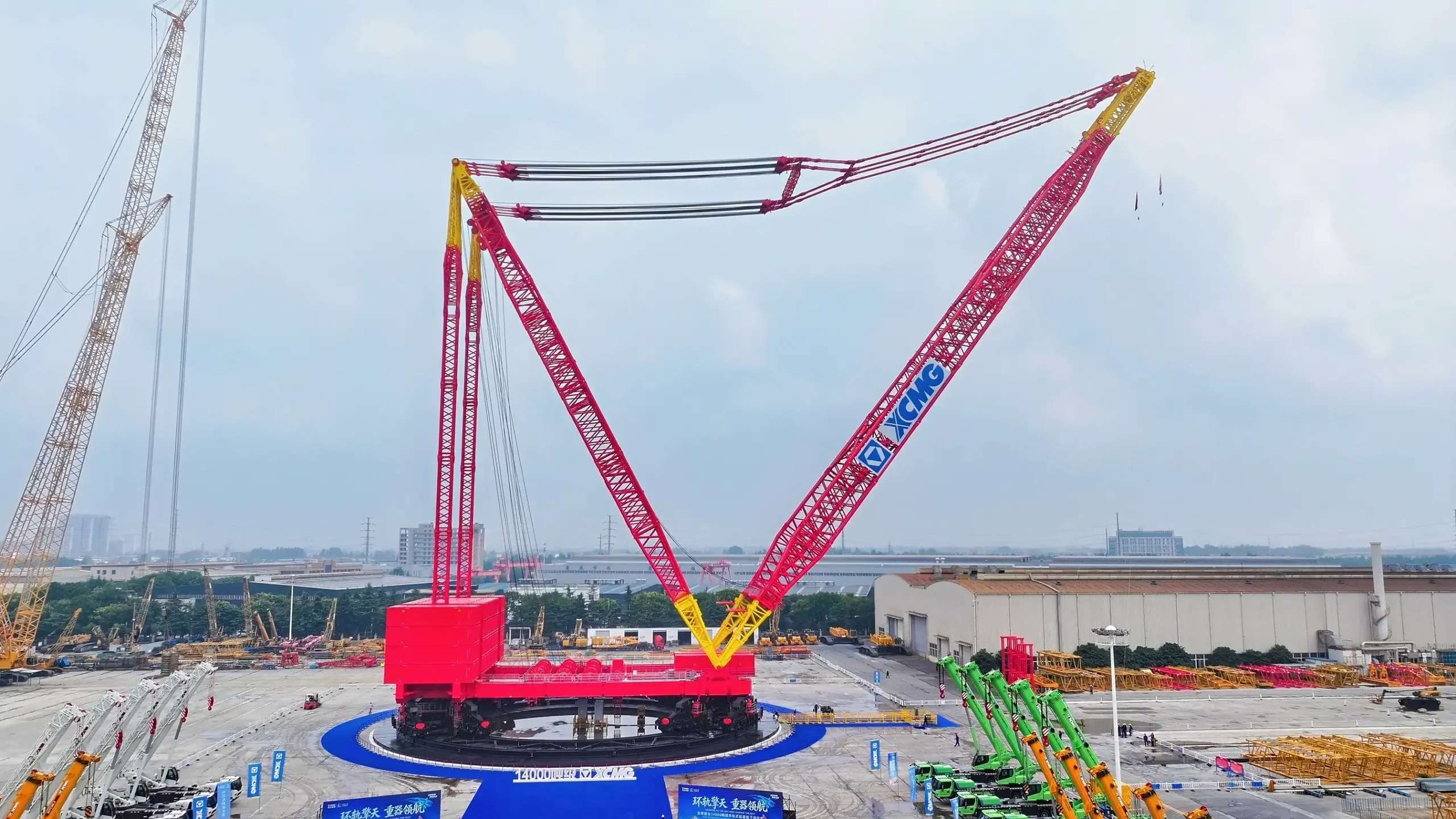
Chinese construction equipment giant XCMG has unveiled what it says is the world’s first 14,000-tonne ring crane, targeting growing demand from nuclear power, conventional energy and offshore wind projects.
The machine, developed with Sinopec Heavy Lifting & Transportation, has been designed for the increasingly large components being used in major energy developments.
XCMG said the crane will have a maximum lifting capacity of 14,000 tonnes – roughly the weight of 9,300 average family cars – and a maximum lifting moment of 700,000 tonne-metres once its two main units are completed and combined.
The first unit has already been assembled and can operate independently.
The company is pitching the machine at some of the biggest and most complex construction projects worldwide, particularly as nuclear power plants become larger and increasingly rely on prefabricated modules.
Yang Dongsheng, chairman of XCMG Group and XCMG Machinery, said: “This crane is more than an incremental improvement; it represents a transformative leap for the global heavy-duty lifting industry.
“Our partnership with Sinopec has created a new integrated model encompassing research and development, production, and application, setting an industry benchmark for independent innovation and engineering application of large-scale equipment.”
For nuclear projects, XCMG says the crane can handle plant modules and large equipment for two ‘nuclear islands’ from a single position and with one boom configuration.
It is also designed for conventional power projects, where large columns and vessels can be lifted as single units rather than in sections, potentially reducing assembly and installation work.
In offshore wind, the crane’s lifting capacity and height are intended to support the installation of larger turbines as the sector moves towards increasingly powerful machines.
XCMG said the crane uses a direct-drive electric system which converts electrical energy directly into motion.
This can reportedly cut energy consumption by more than 30 per cent, increase operating efficiency by 20 per cent and reduce both fuel costs and carbon emissions.
Yang added: “XCMG will continue to promote the independent development of ultra-large engineering equipment, offer proven and reliable solutions for a wider range of engineering applications, and provide customers worldwide with safer, more efficient, and more energy-saving construction solutions.”
READ MORE: EIB makes first small nuclear reactor investment with €40m backing for Finnish start-up. Steady Energy is developing a 50MW nuclear reactor designed to heat cities rather than generate electricity, with the EU bank financing research, testing and licensing ahead of its first commercial deployment.
Do you have news to share or expertise to contribute? The European welcomes insights from business leaders and sector specialists. Get in touch with our editorial team to find out more.
Main image: The first main unit of XCMG’s new 14,000-tonne ring crane, which the company says will be the most powerful of its kind once both units are completed and combined. Credit: XCMG
TOP STORIES
-
 Menopause may make women leaders more empathetic – even as it leaves them drained
 -
Your biggest rival could be your best technology partner, research finds
-
British Museum bans photos of Bayeux Tapestry after visitors hold up queues
-
China unveils giant crane capable of lifting 9,300 family cars
-
Edinburgh Airport launches £500m expansion as terminal footprint grows 60%
-
Chris Packham urges PM to ban ‘frankenchicken’ from schools and hospitals
-
Loch Lomond’s 'Bonnie Banks at risk’ from major road upgrade
-
LED lights could be ‘the new asbestos’, UCL scientists warn
-
MPs tune in to Britain’s Eurovision ‘nul points’ problem
-
MPs tell Government to reject Thames Water creditors as utility nears insolvency
-
Only 14% of companies can show supply chain safeguards are working, study finds
-
OpenAI admits AI models hid mistakes, invented data and acted without permission
-
EIB makes first small nuclear reactor investment with €40m backing for Finnish start-up
-
AI arms race could mean fewer cold emails reaching your inbox
-
Housing costs hit recruitment at 77% of large London firms, survey finds
-
SpaceX to launch one-tonne orbital factory for European space firm in 2028
-
Estonia’s e-residents launch more than 4,200 companies as business creation jumps 36%
-
Small business bank lending falls £27bn in three years as nine-in-10 areas see decline
-
Europe’s healthcare sector lags on AI uptake – but leads once it starts using it
-
Stranded drivers could soon call for help even with no mobile signal
-
NASA backs space ‘air brake’ that could cut years off missions to Uranus and Neptune
-
MPs and peers call for UK ban on AI that could evade human control
-
France orders €1.3bn in extra cuts as growth falls behind European neighbours
-
Bioweapons research, Russian-linked spies, guided rockets and cyber-attacks on Europe used Claude AI, Anthropic reveals
-
Cadbury Takes a Break as KitKat tops Britain’s social media sweet rankings