MPs and peers call for UK ban on AI that could evade human control

Marco Ryan
- Published
- News, Technology
Parliament’s human rights committee wants the most dangerous systems blocked before launch and a new watchdog with powers to pull AI products from the market, warning that existing laws leave Britons exposed to discrimination, surveillance and decisions they may not even know were made by machines
Britain should ban the development and release of the most powerful artificial intelligence systems if they risk causing widespread harm or evading effective human control, MPs and peers have warned today.
A major parliamentary report published today calls for a dedicated AI Bill and a new regulator with powers to stop dangerous systems reaching the public.
The Joint Committee on Human Rights said existing protections were “patchy and confused” and had failed to keep pace with technology already being used to make decisions about workers, prisoners, consumers and members of the public.
It wants high-risk AI systems to require approval before they can be launched and says regulators should be able to order products off the market if unacceptable risks emerge.
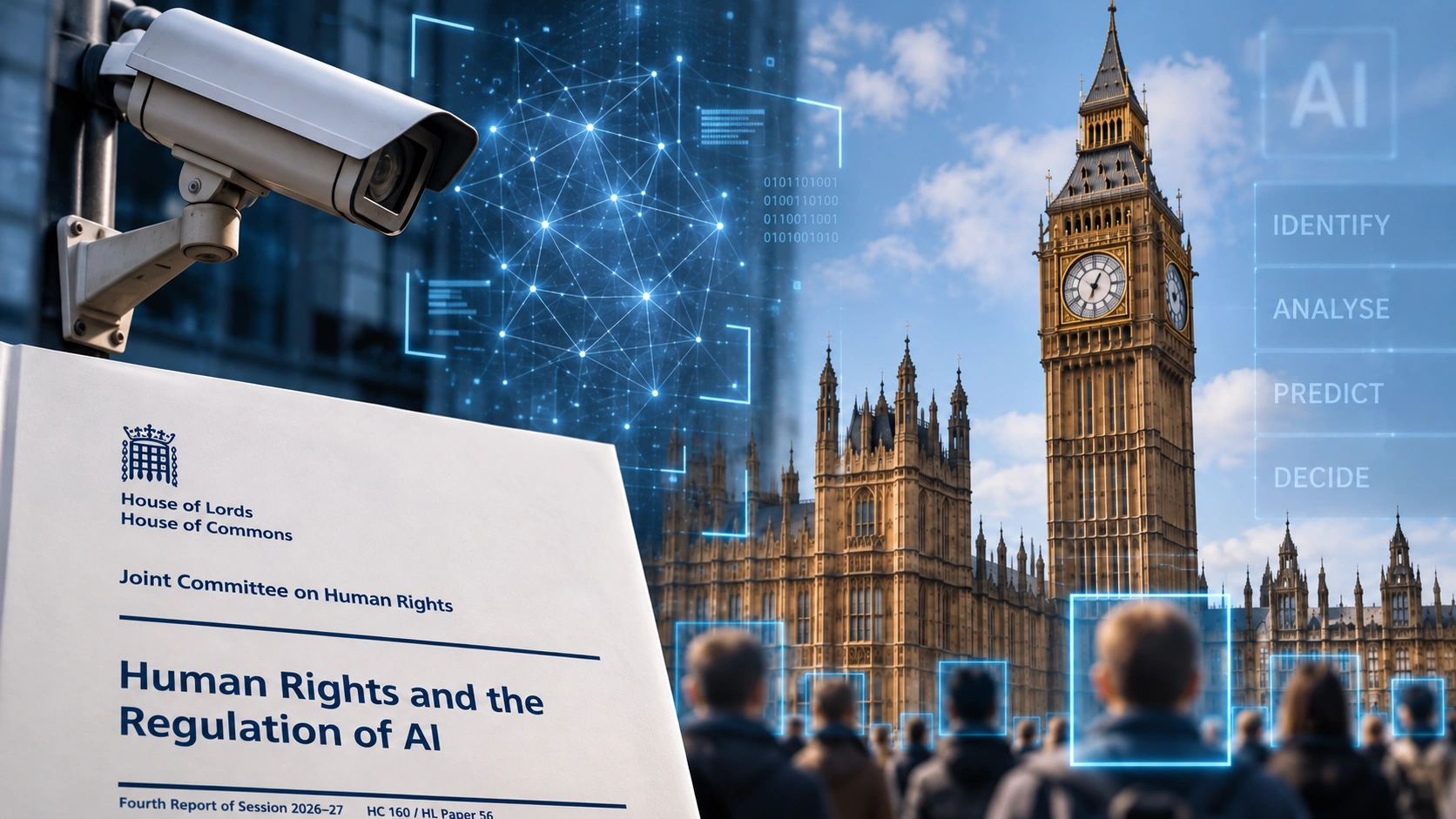
Its report, Human Rights and the Regulation of AI, cites evidence that around three million people had their faces scanned by police facial-recognition systems in the UK without their consent between January and October last year.
It also highlights deepfake sexual images of women and girls, AI used to profile prisoners in ways said to disproportionately affect Black and Minority Ethnic people, and workers being flagged for disciplinary investigation by automated systems.
The committee said people were often unaware that AI had played any part in a decision affecting them, making it difficult to challenge mistakes or discrimination.
Under its sweeping proposals, companies and public bodies using AI for decisions with a significant effect on people would have to say when the technology was being used, explain clearly what it was doing and disclose information about the source of the data behind it.
The committee also said simply placing a person somewhere in an automated process should not automatically count as meaningful human oversight.
“We call on the government to take immediate action. It must bring in a dedicated AI Bill, and set up a new regulator, to create tailored, effective protection for human rights in the UK,” the report says.
“The most dangerous uses of AI should be banned, and others should be regulated in a principled and risk-based way, with strong sanctions for companies and organisations who damage human rights through their use of AI systems.
The proposed regulator would maintain a public register of AI incidents, investigate alleged harms and impose mandatory codes of practice. And it would be able to test high-risk systems before use, block their launch, order existing systems to be withdrawn and require remedies for individuals without forcing them into prohibitively expensive court action.
The committee also wants responsibility placed further up the AI supply chain, arguing that large technology companies currently have too much freedom to pass legal risk to businesses and organisations using their models. Developers often have far greater ability to identify and prevent problems than customers who buy or deploy their systems, it said.
Specific uses that could be prohibited include subliminal manipulation, emotional inference and inappropriate profiling or use of biometric information.
Powerful future systems, including artificial general intelligence and artificial superintelligence, should also be prohibited where they pose a risk of widespread and very serious harm, including an ability to evade effective human control, the report adds.
Developers of powerful new AI models would also have to submit them to the UK’s AI Security Institute before release for testing and evaluation. The institute would be given statutory powers to publish pre-release warnings and advise the regulator when a model should be prevented from launching or removed from the market.
The committee said regulation should remain proportionate, with fewer requirements for low-risk systems and safeguards against unnecessary burdens on smaller businesses.
“None of this need compromise the use of AI to help generate economic growth, where it can be done safely,” the report adds. “As one witness told us, ‘The only growth worth having is one that protects human rights’.”
READ MORE: Bioweapons research, Russian-linked spies, guided rockets and cyber-attacks on Europe used Claude AI, Anthropic reveals. The $965bn AI firm says its own technology was used by a Yemeni cell to develop missile guidance, helped suspected Russian state-linked spies automate cyber operations, enabled lone hackers to attack European political parties, media and think tanks and was used in research that Anthropic says could support biological weapons development. Its worrying new report reveals how criminals and other threat actors are using Claude and other autonomous AI to run operations that once required teams of skilled specialists.
Do you have news to share or expertise to contribute? The European welcomes insights from business leaders and sector specialists. Get in touch with our editorial team to find out more.
TOP STORIES
-
 Britain faces higher winter energy prices as reliance on European electricity imports grows
 -
Andy Burnham to make special Gogglebox appearance for Stand Up To Cancer
-
WPSL Golf targets £120 million valuation as billionaire-backed corporate deals and other commercial deals drive explosive global growth
-
Hackers could bring Britain’s essential services to a standstill, security chief warns after global website shutdowns
-
We're talking to almost twice as many people on the phone as a decade ago, study finds
-
TalkTalk sells majority stake in Telecom Acquisitions as founder Nigel Barnett regains control
-
Company closures soar ahead of tax rises as new Budget looms
-
Russia takes control of more European corporate assets amid Ukraine tensions
-
EU leaders resist calls to delay carbon rules as energy costs soar
-
‘A big step forward’ – PM Andy Burnham hails plans for Great British Railways HQ in Derby
-
UK economy grows just 0.1 per cent as construction falls and services stall
-
Germany risks losing €155bn a year under tighter AI data rules, new study warns
-
Pope Leo XIV diagnosed with lung cancer after surgery in Rome
-
France faces freezer meltdown as hackers strike supermarket chains
-
Bumble shares soar 50% amid $1bn takeover talks
-
China slump drives Volkswagen to sharpest quarterly fall in more than four years
-
Hollywood mega-powerhouse created as Paramount completes Warner Bros Discovery takeover
-
Gamers face gridlock as latest Grand Theft Auto download 'nears two days'
-
Samsung profits soar ninefold to record £61bn amid AI chip boom
-
New Springer books put the UN’s struggling sustainability goals to the real-world test
-
Europe’s solar boom set for two-year slowdown after record growth
-
Let it pea. Musicians turn vegetables into instruments at Beatles' Abbey Road studios
-
Golden naked Trump statue unveiled at European Parliament
-
Jaguar puts controversial rebrand on the road with £130K 1,030PS Type 01
-
Deepfakes and identity fraud drive new wave of post-hire background checks