
Watch: Curium’s bold vision to treat up to 80% of cancers within 15 years

John E. Kaye
- Published
- Videos
In an exclusive interview with The European’s Juliette Foster, Curium Group CEO Renaud Dehareng outlines his plan to treat up to 80% of cancers within the next few decades, explains how theranostics is reshaping oncology, and shares why the Boston-based company is now ready to step into the global spotlight
Curium Group has set one of the most ambitious goals in modern oncology: to treat up to 80% of cancers within the next 10 to 15 years.
In an exclusive interview with The European, its CEO Renaud Dehareng said the target reflects both confidence in the company’s science and a determination to change the way cancer is treated worldwide.
Until now, Curium’s name has been largely unknown outside specialist medical circles. Founded in 2017 but built on decades of expertise, the company operates across 70 countries, treating around 35,000 patients a day.
Its end-to-end “proton to patient” model spans isotope production, tracer development, manufacturing, logistics and patient-ready therapies — a level of integration rare in the field.
Dehareng explains how Curium is using theranostics, which combines diagnosis and treatment in one targeted process, to change the way cancer is fought. Specialised tracers bind only to cancer cells, carrying radioactive isotopes that destroy tumours from within while sparing healthy tissue.
The approach has already improved outcomes for patients with neuroendocrine tumours and advanced prostate cancer.
Kidney and pancreatic cancer therapies are now in development, chosen because the company’s tracers work effectively against them. “It’s about scientific viability, not market size,” Dehareng told us.
Boston, home to Curium’s global headquarters, offers proximity to the world’s largest radioligand therapy market and leading research institutions including Harvard and MIT.
Industry forecasts suggest nuclear medicine could grow from $5 billion to over $35 billion by 2033, and Dehareng believes that is just the beginning.
“Cancer doesn’t care who it attacks,” he says. “Our technology can find and kill it, even when it has spread to the smallest corners of the body. That’s why we believe it will become one of the dominant treatments for decades to come.”
Curium was the cover story of The European’s summer edition. You can read the full feature, The Nuclear Medicine Breakthrough Transforming Cancer Care, here.
Watch the full conversation with Curium Group CEO Renaud Dehareng in our exclusive video interview on The European’s YouTube channel.
TOP STORIES
-
 France calls in army after riots sweep cities
 -
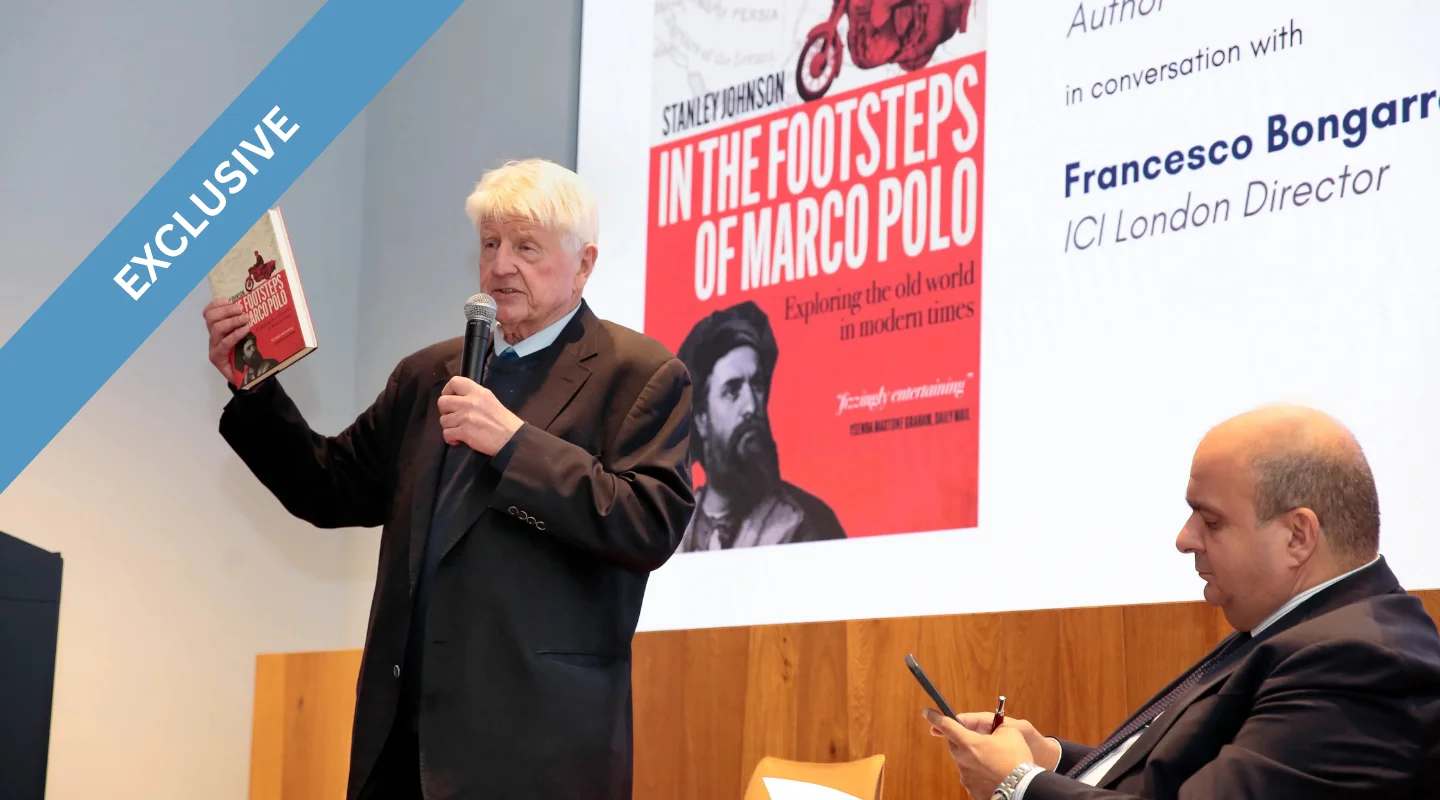
 An Italian affair – Stanley Johnson takes London's society set on the Silk Road
 -
Himalayan mountainside moved 40cm before avalanche killed 1,451 in Nepal, scientists reveal
-
Scientists and engineers quitting jobs as AI changes roles ‘beyond recognition’, study finds
-
UK profit warnings hit near two-year high as businesses struggle with rising costs
-
Microsoft pulls out of major UK AI data centre project amid power grid delays
-
Russia takes control of more European corporate assets amid Ukraine tensions
-
EU leaders resist calls to delay carbon rules as energy costs soar
-
‘A big step forward’ – PM Andy Burnham hails plans for Great British Railways HQ in Derby
-
UK economy grows just 0.1 per cent as construction falls and services stall
-
Hackers exploiting wars ‘to develop cyberattacks in minutes’
-
Germany risks losing €155bn a year under tighter AI data rules, new study warns
-
Pope Leo XIV diagnosed with lung cancer after surgery in Rome
-
France faces freezer meltdown as hackers strike supermarket chains
-
Bumble shares soar 50% amid $1bn takeover talks
-
China slump drives Volkswagen to sharpest quarterly fall in more than four years
-
Hollywood mega-powerhouse created as Paramount completes Warner Bros Discovery takeover
-
Gamers face gridlock as latest Grand Theft Auto download 'nears two days'
-
Samsung profits soar ninefold to record £61bn amid AI chip boom
-
New Springer books put the UN’s struggling sustainability goals to the real-world test
-
Europe’s solar boom set for two-year slowdown after record growth
-
Let it pea. Musicians turn vegetables into instruments at Beatles' Abbey Road studios
-
Golden naked Trump statue unveiled at European Parliament
-
Jaguar puts controversial rebrand on the road with £130K 1,030PS Type 01
-
Deepfakes and identity fraud drive new wave of post-hire background checks
























Watch: Curium’s bold vision to treat up to 80% of cancers within 15 years
John E. Kaye
- Published
- Videos
TOP STORIES
-
France calls in army after riots sweep cities
-
An Italian affair – Stanley Johnson takes London's society set on the Silk Road
-
Himalayan mountainside moved 40cm before avalanche killed 1,451 in Nepal, scientists reveal
-
Scientists and engineers quitting jobs as AI changes roles ‘beyond recognition’, study finds
-
UK profit warnings hit near two-year high as businesses struggle with rising costs
-
Microsoft pulls out of major UK AI data centre project amid power grid delays
-
Russia takes control of more European corporate assets amid Ukraine tensions
-
EU leaders resist calls to delay carbon rules as energy costs soar
-
‘A big step forward’ – PM Andy Burnham hails plans for Great British Railways HQ in Derby
-
UK economy grows just 0.1 per cent as construction falls and services stall
-
Hackers exploiting wars ‘to develop cyberattacks in minutes’
-
Germany risks losing €155bn a year under tighter AI data rules, new study warns
-
Pope Leo XIV diagnosed with lung cancer after surgery in Rome
-
France faces freezer meltdown as hackers strike supermarket chains
-
Bumble shares soar 50% amid $1bn takeover talks
-
China slump drives Volkswagen to sharpest quarterly fall in more than four years
-
Hollywood mega-powerhouse created as Paramount completes Warner Bros Discovery takeover
-
Gamers face gridlock as latest Grand Theft Auto download 'nears two days'
-
Samsung profits soar ninefold to record £61bn amid AI chip boom
-
New Springer books put the UN’s struggling sustainability goals to the real-world test
-
Europe’s solar boom set for two-year slowdown after record growth
-
Let it pea. Musicians turn vegetables into instruments at Beatles' Abbey Road studios
-
Golden naked Trump statue unveiled at European Parliament
-
Jaguar puts controversial rebrand on the road with £130K 1,030PS Type 01
-
Deepfakes and identity fraud drive new wave of post-hire background checks



