Singapore student start-up wins $1m Hult Prize for education platform

John E. Kaye
- Published
- News, Technology
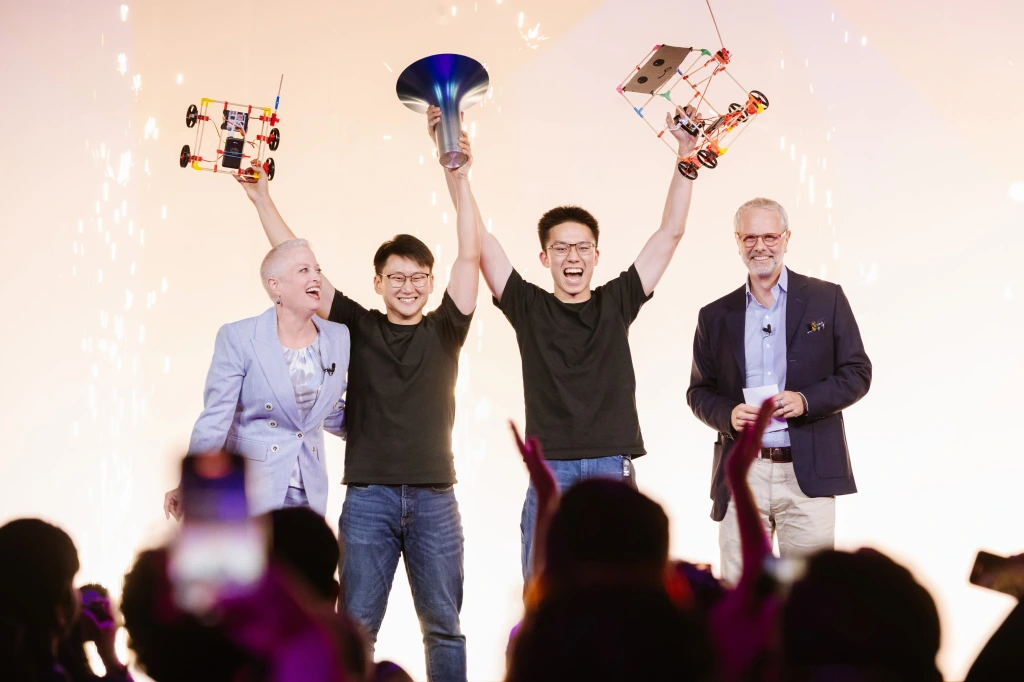
Stick ’Em recognised at London finals for expanding global access to STEAM learning
A team of students from Singapore has won the 2025 Hult Prize, securing USD 1 million in seed funding for their education venture.
Stick ’Em, founded by students from the National University of Singapore and the Singapore University of Technology and Design, was named winner at the global finals held at Tate Modern in London on 5 September.
Stick ’Em supplies schools with affordable kits for science, technology, engineering, arts and maths (STEAM) education, combined with an online platform for lesson delivery.
The company says its approach allows schools to adopt experiential learning at a fraction of the cost of traditional resources and is particularly suited to underserved communities.
The Hult Prize challenges student entrepreneurs worldwide to create for-profit businesses addressing major global challenges.
Each venture must align with at least one United Nations Sustainable Development Goal and demonstrate what the foundation calls a “triple-bottom-line” approach focused on people, planet and profit.
This year’s competition attracted more than 200,000 participants from 130 countries and nearly 2,000 universities, generating 15,000 start-up ideas.
“The world is facing increasingly complex challenges. Nonprofits alone cannot fill the gaps left by the public sector, particularly while managing scarce resources and shifting donor priorities. The private sector – so often viewed as part of the problem – has a critical opportunity to be part of the solution,” Lori van Dam, chief executive of the Hult Prize, said this week.
“The Hult Prize showcases how for-profit businesses can improve the world and why investors should back more purpose-led start-ups. Stick ‘Em is an ambitious business that stood out among 15,000 startup ideas with a clear vision for global growth. I’m thrilled to congratulate them on their win and can’t wait to see what comes next.”
Stick ’Em was selected from eight finalist teams that presented at the Tate Modern:
- CeluNova – converting pineapple waste into high-performance raw materials including cellulose.
- EcoPack – recycling sugarcane waste into biodegradable packaging.
- Lir Labs – deploying on-site AI water monitors to cut pollution response times from days to minutes.
- LOCOL – upcycling cocoa waste into cattle feed that reduces methane emissions and boosts farmer income.
- Sara Technology – using AI to provide personalised speech practice for children with speech difficulties.
- S3CURA – connecting to CCTV systems to deliver incident alerts within 30 seconds.
- Urobo Biotech – transforming bioplastic-rich waste into new products using enzymes and microbes.
The judging panel included venture capital and sustainability leaders Aileen Lee of Cowboy Ventures, Amal Dokhan of 500 Global, TerraCycle founder Thomas Szaky and Piers Linney, co-founder of Implement AI and a former investor on the BBC’s Dragons’ Den.
Now in its 16th year, the Hult Prize was established in 2009 by students at Hult International Business School and is funded by the Hult family, founders of EF Education First. The year-long programme engages universities worldwide, with teams competing through campus events, regional rounds and a summer accelerator at Ashridge House before the final.
Matt Lilley, president of Hult International Business School, said: “At Hult, we believe that education has the power not just to change the lives of individuals and their families, but also to change the world.
“Getting a business education helps to provide the building blocks for budding entrepreneurs who go on to create the responsible and sustainable businesses that fuel industry and progress around the globe. It’s that entrepreneurial passion and spirit that speaks to us, and is the symbiosis between Hult and the Hult Prize.”
Main photo, courtesy Stick ‘Em
TOP STORIES
-
 Russia takes control of more European corporate assets amid Ukraine tensions
 -
EU leaders resist calls to delay carbon rules as energy costs soar
-
‘A big step forward’ – PM Andy Burnham hails plans for Great British Railways HQ in Derby
-
UK economy grows just 0.1 per cent as construction falls and services stall
-
Germany risks losing €155bn a year under tighter AI data rules, new study warns
-
Pope Leo XIV diagnosed with lung cancer after surgery in Rome
-
France faces freezer meltdown as hackers strike supermarket chains
-
Bumble shares soar 50% amid $1bn takeover talks
-
China slump drives Volkswagen to sharpest quarterly fall in more than four years
-
Hollywood mega-powerhouse created as Paramount completes Warner Bros Discovery takeover
-
Gamers face gridlock as latest Grand Theft Auto download 'nears two days'
-
Samsung profits soar ninefold to record £61bn amid AI chip boom
-
New Springer books put the UN’s struggling sustainability goals to the real-world test
-
Europe’s solar boom set for two-year slowdown after record growth
-
Let it pea. Musicians turn vegetables into instruments at Beatles' Abbey Road studios
-
Golden naked Trump statue unveiled at European Parliament
-
Jaguar puts controversial rebrand on the road with £130K 1,030PS Type 01
-
Deepfakes and identity fraud drive new wave of post-hire background checks
-
Spain crowned Europe’s top retirement destination
-
More than half of UK professionals report workplace burnout
-
More than 1.2m English drivers may have eyesight too poor for the road, study finds
-
David Reuben, Britain’s second richest person, leaves London for Monaco
-
UK prisoner release plan faces a major lag as tougher rules risk sending inmates back to jail
-
Brits trust AI with their health but not their money
-
Britain still hungry for Italian food as exports hit €4.56bn despite Brexit