
Costa Rica looks to Europe for next wave of foreign investment

Marianela Urgellés
- Published
- Foreign Direct Investment
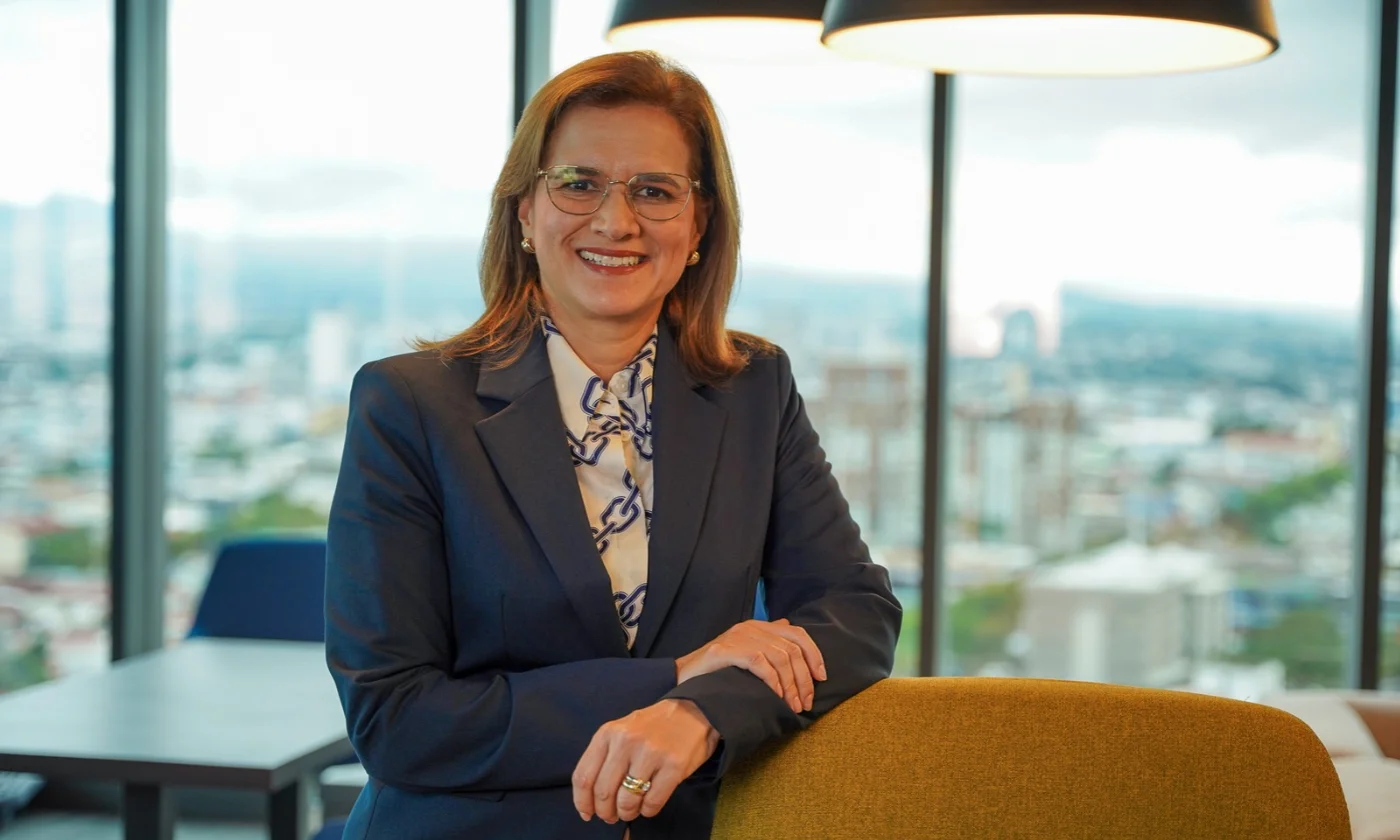
European investors are being targeted for new projects in medical technology, advanced manufacturing and digital services as Costa Rica builds on a second consecutive year of foreign direct investment exceeding US$5 billion. Here, Marianela Urgellés, managing director of CINDE, the private, independent, non-profit agency that promotes foreign direct investment and business development in Costa Rica, outlines its plans to attract new businesses, expand existing multinational operations and strengthen commercial ties with Europe
Costa Rica is targeting European investors in medical technology, semiconductors and advanced digital services as it seeks to attract more multinational businesses and encourage existing companies to expand their operations.
The Central American country recorded more than US$5 billion in foreign direct investment (FDI) in 2025, with medical devices accounting for 48 per cent of national exports, worth US$10.9 billion. It is now the fifth-largest supplier of medical devices to the U.S, with 18 of the world’s 35 leading medtech companies operating in the country.
CINDE, the private, independent, non-profit agency that promotes foreign direct investment and business development in Costa Rica, has played a central role in attracting and expanding international business, supporting 19 new foreign investment projects and 48 reinvestment projects in 2025. A further 14 confirmed medical technology projects are scheduled to begin operations between 2026 and 2028.
Marianela Urgellés, CINDE’s managing director, believes that encouraging established multinational companies to expand their operations is central to Costa Rica’s continued economic growth, alongside attracting new investment in increasingly specialised and higher-value industries.
European businesses are a particular focus, with CINDE preparing to attend two major international trade fairs, Electronica and MEDICA, in Germany this November to develop new partnerships in electronics, semiconductors and medical technology, and strengthen relationships with companies already operating in Costa Rica.
Speaking with The European, Urgellés outlines the country’s investment priorities for the next years, the importance of developing a skilled workforce and the opportunities opening up as international companies reconsider their global operations.
As international companies reassess where they invest and establish operations, what do you see as the biggest opportunities for Costa Rica over the next three to five years, and how is CINDE adapting its investment attraction strategy to capture them?
Supply chain resilience and market access now weigh as heavily as cost, and that plays to Costa Rica’s strengths. The clearest opportunities lie in specialised medtech segments such as neuroendovascular and minimally invasive devices, in key capability suppliers like sterilisation, advanced laboratory services and microelectronics, and in AI, data analytics and cybersecurity operations that cut across every sector.
CINDE has sharpened its approach accordingly. We work with greater precision on value chain gaps, we target suppliers that make the whole ecosystem more competitive, and we dedicate significant effort to the companies already here.
In 2025 we supported 19 new FDI projects and 48 reinvestment projects, and 14 confirmed medtech projects will begin operations between 2026 and 2028.
What are the most important factors international companies consider when choosing where to invest today, and how does Costa Rica position itself against competing destinations in Latin America and beyond?
Investors are looking for talent they can scale, operational predictability, reliable access to their key markets and an ecosystem that reduces execution risk. Costa Rica brings a four-decade track record with multinationals, a Free Trade Zone regime that received 66.4 per cent of FDI inflows in 2025, a largely renewable power grid and close proximity to the United States.
FDI surpassed US$5 billion for the second consecutive year in 2025, and medical devices now account for 48 per cent of national exports, worth US$10.9 billion. Costa Rica is also the fifth-largest supplier of medical devices to the US market.
Our positioning rests on the quality and sophistication of operations, and on a supplier base that allows companies to grow here with confidence.
Beyond the initial decision to invest, what does Costa Rica need to do to encourage international companies to expand their existing operations and make long-term commitments to the country?
Reinvestment is the strongest vote of confidence a country can receive, and in Costa Rica it consistently outpaces new arrivals.
Sustaining that requires three things. First, a talent pipeline that evolves at the speed of the industry, particularly in engineering, technician-level skills and digital capabilities.
Second, a deeper local supply chain, so companies can integrate more processes in the country.
Third, institutional consistency and efficient procedures that give boards the predictability they need to approve new mandates.
Many operations that began in assembly now host engineering, R&D support and shared services, and CINDE’s aftercare work focuses on helping each site make that next move.
How are changing workforce requirements, digitalisation and the growing importance of specialised skills influencing the types of investment Costa Rica seeks to attract? What more needs to be done to ensure the country has the talent to support future growth?
Automation and AI are redefining the profile of the operations we pursue. New generations of devices demand microelectronics, data and software capabilities, and segments such as orthopaedics rely more heavily on technician-level expertise.
Costa Rica’s medtech workforce has grown from about 1,500 people in 2000 to nearly 63,000 today, and that base gives us a solid platform to build on.
The priorities ahead are scaling technical and dual education, expanding English proficiency, aligning university curricula with industry needs and accelerating reskilling for workers whose roles are being transformed.
How important is it for Costa Rica to continue diversifying its investment base, and what opportunities do you see in emerging or underdeveloped areas of the economy that could complement the country’s established industries?
Diversification strengthens resilience at the country level and within each sector. In 2025, services represented 69 per cent of the new FDI projects CINDE supported, life sciences 26 per cent and manufacturing 5 per cent, and each pillar reinforces the others.
The most promising complementary areas include electronics and semiconductors, electromechanical and wearable devices, digital health, and specialised suppliers whose presence raises the competitiveness of the existing base.
Diversifying the origin of investment matters just as much. Companies from Germany, England, Switzerland and Ireland, among other European countries, already operate in Costa Rica, and this November CINDE will take that conversation to electronica and MEDICA in Germany to attract new projects and deepen our relationships with European industry.
For companies that may be considering Costa Rica for the first time, what would you say are the most compelling reasons to explore the country now, and what kinds of businesses or activities are particularly well suited to its strengths?
The timing is favourable because companies are redesigning their footprints and Costa Rica offers a proven ecosystem ready to absorb that growth.
Eighteen of the world’s top 35 medtech companies already operate here, and the country is the second-largest medical device exporter in Latin America. The best fits are operations that value quality, regulatory expertise and skilled talent: medical devices and their suppliers, advanced manufacturing, electronics, and knowledge-based services ranging from engineering and finance to AI and cybersecurity.
A first-time investor arrives into a network of experienced suppliers, service providers and peers, and that shortens the learning curve considerably.
CINDE will be present at Electronica and MEDICA in Germany this November. What are the objectives of this participation, and what message is Costa Rica taking to European investors?
Both fairs bring together precisely the companies we want to engage. At Electronica, from 10 to 13 November, we will meet electronics and semiconductor firms looking to diversify production and add capacity close to the Americas.
At MEDICA, from 16 to 19 November, we will connect with medtech OEMs and suppliers for whom Costa Rica offers an established base to serve the US market.
Our objective is clear: generate new investment opportunities for Costa Rica and strengthen long-term ties with European companies. The message centres on a proven ecosystem in medical devices, growing capabilities in microelectronics, and talent ready for higher-value operations.
Further information
Produced with support from CINDE. To find out more about Costa Rica’s investment opportunities and CINDE’s work with international businesses, visit www.cinde.org/en.
READ MORE: Costa Rica’s medtech bet: from making devices to engineering them. Costa Rica already manufactures a significant share of the world’s catheters and implants, with medical device exports topping US$10.8bn in 2025. Here, CINDE, the private, independent, non-profit agency that promotes foreign direct investment and business development in Costa Rica, examines how Costa Rica is building on that success to attract further international investment, drawing on its engineering talent, expanding network of specialist suppliers and growing digital expertise to strengthen its position in the global medtech industry.
Do you have news to share or expertise to contribute? The European welcomes insights from business leaders and sector specialists. Get in touch with our editorial team to find out more.
Main image: Marianela Urgellés, CINDE’s managing director. Credit: Supplied.
TOP STORIES
-
 Costa Rica looks to Europe for next wave of foreign investment
-
Costa Rica’s economic transformation: FDI, innovation and value chain evolution
-
EIB makes first small nuclear reactor investment with €40m backing for Finnish start-up
-
Estonia’s e-residents launch more than 4,200 companies as business creation jumps 36%
-
Poland’s Baltic region: the booming investment destination you probably haven’t heard of
-
Inside Costa Rica’s medtech boom
-
ADX wraps Hong Kong roadshow after pitch to global asset managers
-
Zanzibar’s tourism boom ‘exposes new investment opportunities beyond hotels’
-
Residence and citizenship planning is reshaping global wealth strategies
-
Building sovereign bridges by attracting global investors
-
Bahrain cuts property investment threshold for golden residency
-
Where mobility meets opportunity: Malta’s strategic advantage for global investors and innovators
-
UK government sets up Women in Tech taskforce amid gender imbalance concerns
-
Malta introduces Nomad Heritage Card for remote professionals
-
How free global cities could reshape the future of migration
-
Dominican Republic positions itself as Caribbean hub for sustainable trade and investment
-
Biviana Riveiro Disla speaks to The European about the Dominican Republic’s role as a hub for trade and investment
-
Liechtenstein tops global index for foundations
-
Keeping the door open: wealthy UK citizens investing their way back into the EU
-
Ethiopia emerges as a sustainable investment leader on the African stage
-
France’s FDI renaissance marks a Nouvelle Ère for Europe
-
The Turks and Caicos Islands: A new era for financial services and innovation
-
Jersey in focus – an interview with Chief Minister Deputy Lyndon Farnham
-
Malta – a popular base for digital nomads
-
Move to Guernsey: The Channel’s island gem

















Costa Rica looks to Europe for next wave of foreign investment
Marianela Urgellés
- Published
- Foreign Direct Investment
TOP STORIES
-
Costa Rica looks to Europe for next wave of foreign investment
-
Costa Rica’s economic transformation: FDI, innovation and value chain evolution
-
EIB makes first small nuclear reactor investment with €40m backing for Finnish start-up
-
Estonia’s e-residents launch more than 4,200 companies as business creation jumps 36%
-
Poland’s Baltic region: the booming investment destination you probably haven’t heard of
-
Inside Costa Rica’s medtech boom
-
ADX wraps Hong Kong roadshow after pitch to global asset managers
-
Zanzibar’s tourism boom ‘exposes new investment opportunities beyond hotels’
-
Residence and citizenship planning is reshaping global wealth strategies
-
Building sovereign bridges by attracting global investors
-
Bahrain cuts property investment threshold for golden residency
-
Where mobility meets opportunity: Malta’s strategic advantage for global investors and innovators
-
UK government sets up Women in Tech taskforce amid gender imbalance concerns
-
Malta introduces Nomad Heritage Card for remote professionals
-
How free global cities could reshape the future of migration
-
Dominican Republic positions itself as Caribbean hub for sustainable trade and investment
-
Biviana Riveiro Disla speaks to The European about the Dominican Republic’s role as a hub for trade and investment
-
Liechtenstein tops global index for foundations
-
Keeping the door open: wealthy UK citizens investing their way back into the EU
-
Ethiopia emerges as a sustainable investment leader on the African stage
-
France’s FDI renaissance marks a Nouvelle Ère for Europe
-
The Turks and Caicos Islands: A new era for financial services and innovation
-
Jersey in focus – an interview with Chief Minister Deputy Lyndon Farnham
-
Malta – a popular base for digital nomads
-
Move to Guernsey: The Channel’s island gem



