Nature loss could trigger ‘grim’ debt crisis for governments, economists warn

John E. Kaye
- Published
- News
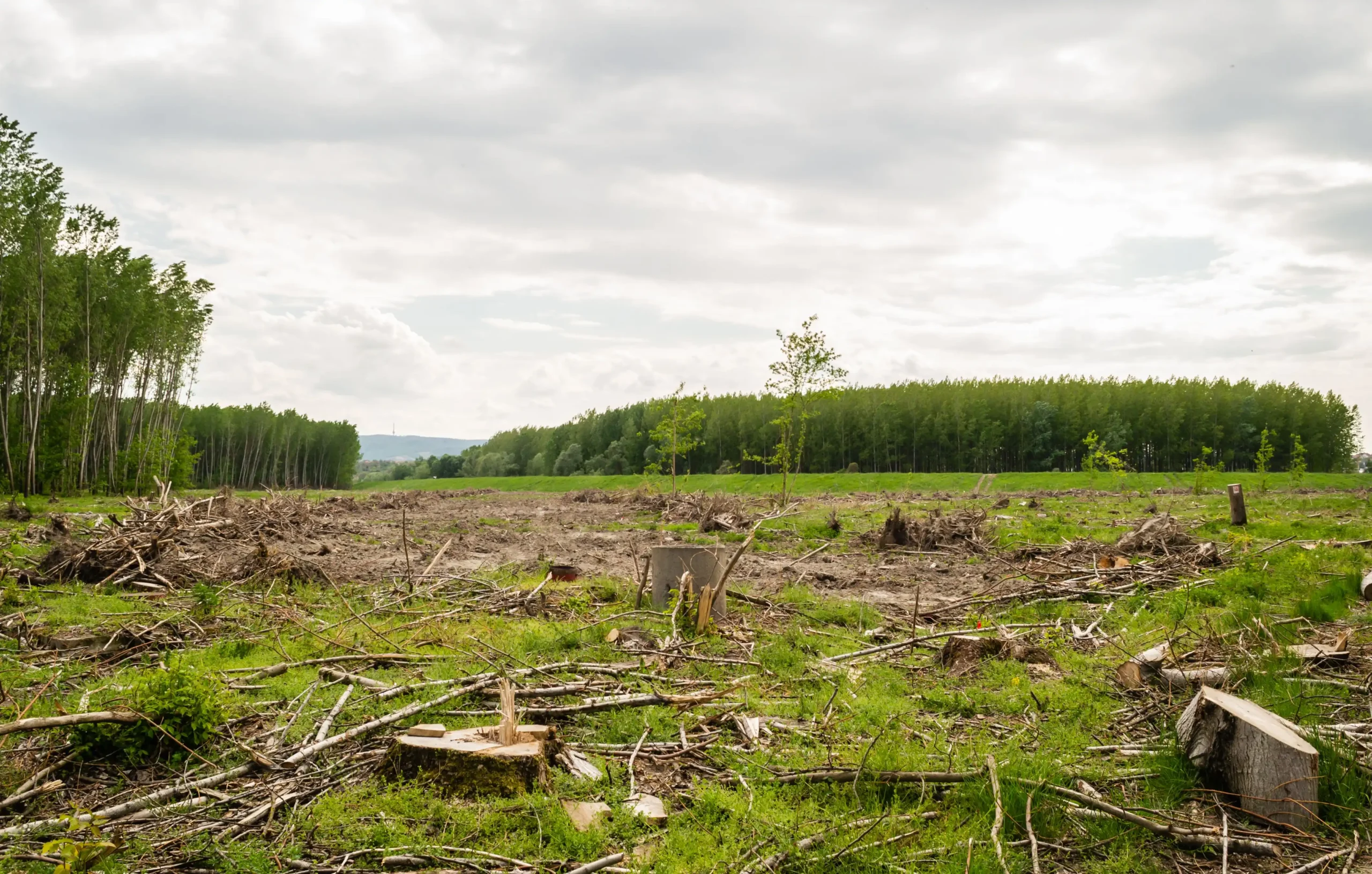
New research published in Nature says damage to pollinators, fisheries and forests could add US$162bn a year to sovereign debt interest bills, forcing countries to raise taxes, cut spending or push inflation higher
Biodiversity loss could trigger a “grim” sovereign debt crisis by driving up the cost of government borrowing and forcing countries to raise taxes, cut spending or push inflation higher, economists have warned.
Worrying new research published in Nature found that even a partial collapse of wild pollinators, marine fisheries and tropical forests could add US$162bn a year to sovereign debt interest payments across 23 countries.
A team of economists led by the Universities of Sussex, Sheffield and Heriot-Watt warned that financial markets are failing to price the economic damage caused by nature loss, leaving US$83 trillion of assets exposed to mispricing.
Researchers adjusted S&P Global credit ratings to account for ecological damage and found that countries heavily exposed to biodiversity loss could face severe downgrades.
India’s credit rating would fall by four grades under a partial collapse scenario, while China’s would drop by 5.5 grades on a 20-point scale.
The extra debt servicing costs would amount to US$49bn a year for India and US$70bn for China.
The study estimates that a partial collapse in fisheries, wild pollination and tropical timber would reduce global GDP by US$2 trillion a year.
The countries covered by the research account for 5.5 billion people. Indonesia, Bangladesh, India, China and Malaysia could all face downgrades of four to six grades under the partial collapse scenario.
The researchers said falling credit ratings would force markets to demand higher risk premia, making it more expensive for governments to borrow and leaving taxpayers to carry the cost.
Professor Matthew Agarwala, of the University of Sussex’s Bennett Institute for Innovation and Policy Acceleration, said: “It’s not just financiers who will lose out. As nature loss reduces economic performance, it will become harder for countries to service their debt, straining government budgets and forcing them to raise taxes, cut spending, or push inflation even higher.
“The consequences could be grim. Governments face a stark choice – pay now, by investing in nature recovery, or pay later through higher borrowing costs.”
Sovereign credit ratings assess how likely countries are to repay their debts and directly affect the price governments pay to borrow.
The costs can feed through to taxpayers. In the UK, 11 pence of every pound of tax collected goes towards paying interest on the national debt, more than the shares spent on education, defence, public order and safety, or the environment.
Sovereign ratings can also affect borrowing costs across the wider economy, including for businesses, financial institutions and pension funds.
The researchers said credit ratings have long been used as an early warning system for investors when economies are hit by political instability, war or unsustainable debt burdens, but have so far failed to account properly for ecological degradation.
Professor Pati Klusak, from Edinburgh Business School, said: “The 2008 global financial crisis was an example of what happens when markets and ratings agencies ignore new risks. By integrating ecological science with credit ratings models, our work reveals that the financial system risks once again sleepwalking into a catastrophe.”
The research team has spent the past five years developing machine learning techniques to incorporate environmental science into credit risk assessments.
Dr Matt Burke, of Sheffield University Management School, added: “Environmental scientists and financial markets need to get better at talking to each other. Biodiversity finance is becoming a bit of a buzzword, but most of the research being published on this ignores the underlying science, the pace of nature loss, and the consequences for people and livelihoods.”
The study found that biodiversity-driven downgrades across the 23 countries would increase annual debt interest payments by more than US$162bn, equivalent to nearly three-quarters of global overseas development aid.
The researchers said the pressure could leave several countries at risk of sovereign debt default.
If the additional debt servicing costs were met through new taxes, they would absorb about 1.8 per cent of after-tax income for the median Indonesian, rising to 2.3 per cent in Malaysia and 2.5 per cent in India.
The study compares the projected extra debt costs with the UN Global Biodiversity Framework target of mobilising US$200bn a year across 196 countries, arguing that the cost of protecting nature is far lower than the cost of losing it.
The work was carried out by researchers from the University of Sussex, University of Sheffield, Edinburgh Business School and SOAS.
Regulators, central banks and credit rating agencies must now include nature-related and climate-related financial risks in mainstream risk assessments, the paper warns.
Arend Kulenkampff, Innovative Finance Lead at NatureFinance, said: “Protecting nature costs far less than losing it. Yet this simple truth rarely reaches the financial decisions that determine its fate.
“For sovereigns facing debt distress, the stakes are existential: stripping forests, grasslands, and watersheds to service today’s debt destroys the very foundations of future solvency. This research exists to make that cost visible before it is too late.”
READ MORE: New Hindu Kush Himalaya glacier reports warn of deepening risk to Asia’s water security. New reports published today lay bare the accelerating loss of ice across the Hindu Kush Himalaya, where glaciers are retreating at increasing speed in a region critical to the water security of nearly two billion people. Here, our editor-at-large Stanley Johnson, drawing on his long career as an environmentalist and ahead of the 30 March re-release of his book In the Footsteps of Marco Polo, reflects on changes to a mountain system whose fate matters far beyond the high Pamirs.
Do you have news to share or expertise to contribute? The European welcomes insights from business leaders and sector specialists. Get in touch with our editorial team to find out more.
Main image: Photo by Zoran Milosavljevic via Pexels
TOP STORIES
-
 MPs tune in to Britain’s Eurovision ‘nul points’ problem
 -
MPs tell Government to reject Thames Water creditors as utility nears insolvency
-
Only 14% of companies can show supply chain safeguards are working, study finds
-
OpenAI admits AI models hid mistakes, invented data and acted without permission
-
EIB makes first small nuclear reactor investment with €40m backing for Finnish start-up
-
AI arms race could mean fewer cold emails reaching your inbox
-
Housing costs hit recruitment at 77% of large London firms, survey finds
-
SpaceX to launch one-tonne orbital factory for European space firm in 2028
-
Estonia’s e-residents launch more than 4,200 companies as business creation jumps 36%
-
Small business bank lending falls £27bn in three years as nine-in-10 areas see decline
-
Europe’s healthcare sector lags on AI uptake – but leads once it starts using it
-
Stranded drivers could soon call for help even with no mobile signal
-
NASA backs space ‘air brake’ that could cut years off missions to Uranus and Neptune
-
MPs and peers call for UK ban on AI that could evade human control
-
France orders €1.3bn in extra cuts as growth falls behind European neighbours
-
Bioweapons research, Russian-linked spies, guided rockets and cyber-attacks on Europe used Claude AI, Anthropic reveals
-
Cadbury Takes a Break as KitKat tops Britain’s social media sweet rankings
-
European network alliance doubles in size as digital sovereignty drive accelerates
-
European insurance giants join New York summit on future of AI
-
Oxford leads £10m international study as resistance threatens new TB treatments
-
Inside the world’s wildest new mini golf course with caves, 13ft waterfalls… and sharks
-
Apple’s new boss bets £1,999 on first folding iPhone
-
‘Double delight’ as rare red pandas born at Whipsnade Zoo
-
This Japanese ski resort has just been named the world’s best place for seasonal work
-
Nearly 4m Londoners experienced mental health challenges last year, study finds